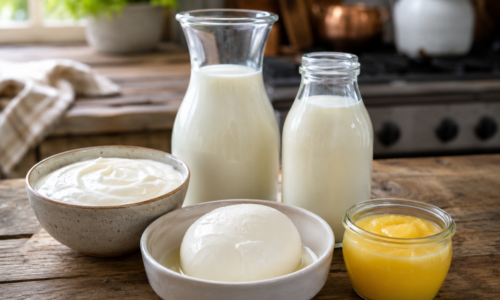
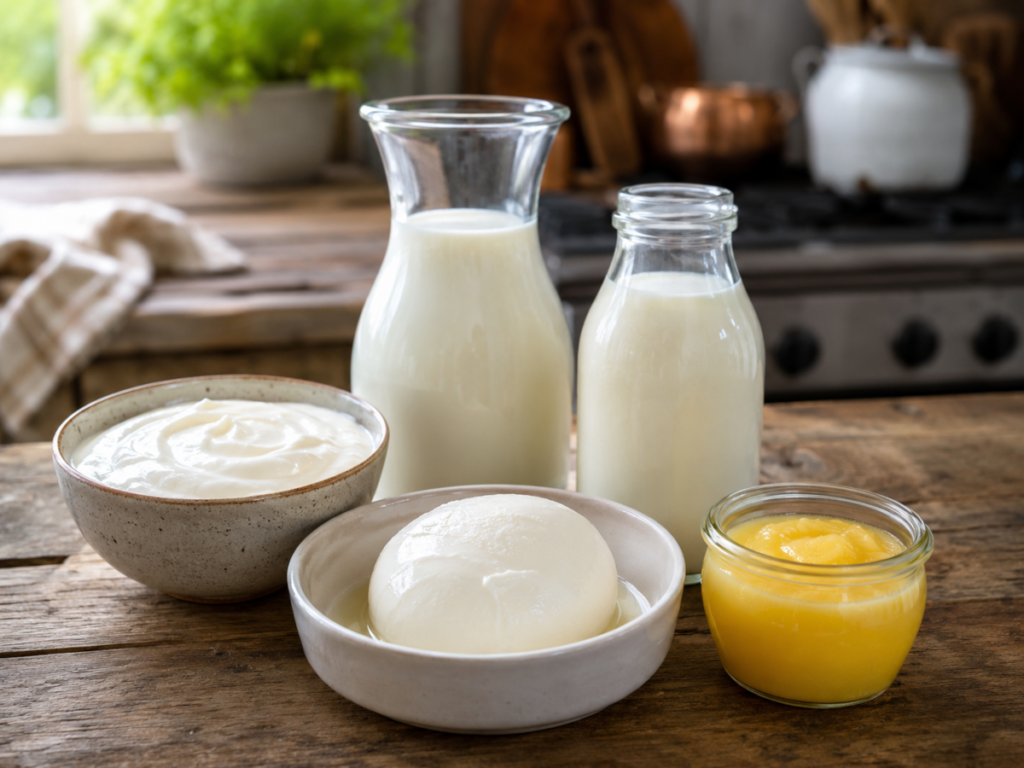
Dairy often becomes one of the most confusing parts of a low-lectin lifestyle. Some people remove it immediately, assuming every milk product belongs on the same avoidance list. Others keep eating conventional cheese, cream, and yogurt because dairy is not a plant food and therefore does not fit the usual lectin discussion. Both approaches miss the real issue.
The main concern is usually not lectin content. It is the type of milk protein, the amount of lactose, the degree of processing, and the individual response of the person eating it. One person may tolerate butter but react to milk. Another may feel fine with goat cheese yet struggle with ordinary cow’s-milk yogurt. Someone else may need to avoid dairy proteins completely. This is where non-A1 dairy becomes useful. It gives people a way to test whether the problem is conventional cow’s milk rather than dairy as a whole.
A1 and A2 Are Milk Proteins, Not Lectins
Cow’s milk contains several proteins, including whey and casein. Beta-casein is one of the major casein proteins, and it occurs in several genetic forms. The two most discussed forms are A1 and A2 beta-casein. Most conventional dairy herds in the United States produce milk containing a mixture of A1 and A2 beta-casein. Milk labeled A2 comes from cows selected to produce only the A2 form.
During digestion, A1 beta-casein can release a peptide called beta-casomorphin-7, often shortened to BCM-7. A2 beta-casein does not break down in the same way. Researchers have examined whether this difference affects intestinal movement, discomfort, stool patterns, and other digestive symptoms. Human trials have produced promising results for some people, but the evidence is not strong enough to claim that A1 milk causes digestive trouble for everyone. Reviews continue to describe the evidence as suggestive rather than settled.
That distinction matters. A1 beta-casein is not a lectin. Choosing A2 dairy is not the same as removing lectins from food. It is a separate dietary adjustment that may fit well beside a low-lectin plan, especially for people who report bloating, cramping, sluggish digestion, or bowel changes after conventional dairy.
A2 Cow’s Milk Is the Most Familiar Starting Point
A2 cow’s milk looks, tastes, and cooks much like ordinary milk. It contains lactose unless the package specifically says lactose-free, and it still contains milk proteins. Nutritionally, it is generally comparable to conventional cow’s milk.
For someone who enjoys dairy but feels uncomfortable after regular milk, A2 milk is often the easiest experiment. It can be used in coffee, sauces, soups, scrambled eggs, and homemade yogurt without requiring major recipe changes.
The label deserves close attention. Terms such as organic, grass-fed, pasture-raised, raw, or local do not automatically mean A2. Those labels describe farming practices or processing, not the beta-casein type. The package should clearly state that the milk contains only A2 beta-casein.
A2 milk also does not solve every dairy problem. A person with lactose intolerance may still react because the lactose remains. A person with a true cow’s-milk allergy can still react because A2 milk contains casein and whey. It should never be treated as a safe substitute for a medically diagnosed milk allergy.
Goat Dairy Offers More Than a Different Flavor
Goat milk is naturally dominated by A2-type beta-casein, although exact protein patterns vary by breed and genetics. Its fat globules and casein profile also differ from cow’s milk, which may affect texture and digestion. Research comparing goat and cow milk proteins has found meaningful differences in beta-casein and other protein fractions.
The flavor is the biggest barrier for many people. Fresh goat milk can taste mild, while older or strongly flavored products may have the familiar tang people either love or reject immediately. Goat yogurt, chèvre, aged goat cheese, and goat-milk kefir each taste different, so disliking one does not mean every goat product will be unpleasant.
Goat dairy still contains lactose. It also contains casein and whey, so it is not appropriate for someone with a true dairy-protein allergy. The practical advantage is that some people who feel heavy, bloated, or uncomfortable after conventional cow dairy report better tolerance with goat products.
For a low-lectin kitchen, plain goat yogurt can work as a base for herb sauces, salad dressings, dips, and breakfast bowls. Soft goat cheese pairs well with leafy greens, roasted vegetables, eggs, and compliant crackers made from tolerated ingredients. The cleanest choices are usually plain products without gums, starches, sweeteners, or seed-based fillers.
Sheep Dairy Is Rich, Concentrated, and Easy to Portion
Sheep milk is naturally A2-type dairy and is richer in protein, fat, and total solids than typical cow’s milk. That richness is why sheep cheeses and yogurts often taste dense and satisfying even in modest amounts.
Common sheep-milk cheeses include pecorino, manchego, and some traditional feta, although feta may also be made from goat milk, cow milk, or a blend. Reading the ingredient label prevents assumptions.
Sheep dairy works especially well for people who do not want to drink milk but still want a flavorful cultured or aged dairy option. A small amount of grated pecorino can add depth to vegetables, eggs, soups, or grain-free dishes. Plain sheep yogurt can be thick enough to replace sour cream in many recipes.
The same cautions still apply. Sheep milk contains lactose, and sheep proteins can cross-react in people with dairy allergies. “Not cow dairy” does not mean “allergy safe.”
Buffalo Dairy Can Be an Excellent but Overlooked Choice
Water buffalo milk is commonly associated with traditional mozzarella di bufala, but it is also used in yogurt, butter, and other cheeses. Buffalo dairy generally contains A2-type beta-casein and has a naturally rich texture because of its higher fat and solids content.
The practical challenge is availability. Many supermarkets carry buffalo mozzarella, while buffalo yogurt or milk may require a specialty grocer. Ingredient quality also varies. Some products labeled buffalo-style are made with cow’s milk, so the species should be clearly named on the package.
Fresh buffalo mozzarella can be useful in a low-lectin meal built around peeled, deseeded, or pressure-cooked vegetables according to personal tolerance. It also works with leafy greens, herbs, olive oil, roasted mushrooms, or compliant proteins. Portion size matters because the richness can feel heavy even when the protein type is well tolerated.
Butter and Ghee Sit in a Different Category
Butter is mostly milk fat, but it still contains small amounts of milk solids, including proteins. People who are sensitive to A1 casein may tolerate butter better than milk or cheese because the protein content is much lower. That does not make ordinary butter completely free of A1 protein.
Butter made from verified A2 cow’s milk, goat milk, sheep milk, or buffalo milk offers a more direct non-A1 option. These products are less common, but specialty markets and farm-based producers may carry them.
Ghee goes a step further. It is made by heating butter and removing water and milk solids, leaving almost pure butterfat. Properly prepared ghee contains very little lactose and very little milk protein. This makes it one of the most frequently tolerated dairy-derived fats among people who do not handle milk well.
Still, “very little” is not “none.” Someone with a severe milk allergy should not assume ghee is safe. People dealing with ordinary digestive intolerance may find it useful for sautéing, roasting, or finishing vegetables because it has a higher smoke point than whole butter and a concentrated buttery flavor.
Fermentation Changes the Experience
Yogurt and kefir deserve separate attention because fermentation changes lactose content and digestion. Live cultures help break down some lactose, and the bacteria in yogurt can assist lactose digestion during the meal. This is one reason some people tolerate yogurt better than an equal amount of milk.
Fermentation does not remove A1 beta-casein from conventional cow dairy. A regular cow’s-milk yogurt may still contain A1 protein even if it is organic, cultured, or probiotic. A person specifically testing non-A1 dairy should look for A2 cow yogurt or choose goat, sheep, or buffalo yogurt.
Plain, unsweetened products are the better starting point. Flavored yogurts often contain cane sugar, syrups, fruit concentrates, gums, starches, or other additives that can muddy the experiment. If symptoms appear, it becomes difficult to tell whether the dairy protein, lactose, sweetener, or thickener was responsible.
Kefir is more complex. It contains a wider mix of microbes and can be more tart. Some people do very well with it. Others react to fermented foods because of histamine sensitivity or another digestive issue. A low-lectin label does not predict that response.
Aged Cheese May Reduce Lactose, Not Milk Protein
Hard, aged cheeses are often very low in lactose because much of the lactose leaves with the whey or is consumed during fermentation and aging. This can make aged cheese easier for people with lactose intolerance. It does not remove casein.
A conventional aged cheddar may contain little lactose yet still contain A1 beta-casein. For a true non-A1 trial, choose cheese made from verified A2 cow milk, goat milk, sheep milk, or buffalo milk.
This distinction helps explain why a person may tolerate aged pecorino but react to a glass of milk. The differences involve both animal source and lactose level. The cheese is lower in lactose, more concentrated, and eaten in a smaller portion. Several variables changed at once. For clearer results, test one product at a time rather than adding three new cheeses in the same week.
Plant-Based “Dairy” Is Not Automatically a Better Fit
Coconut milk and coconut cream are common dairy substitutes in low-lectin cooking because they contain no milk proteins and no lactose. They work well in curries, soups, sauces, and desserts. Unsweetened coconut yogurt can also be useful, provided the ingredient list is simple.
Other plant milks require more care. Almond milk may fit some versions of a low-lectin plan, particularly when made from blanched almonds, but many commercial products include gums, emulsifiers, seed oils, sweeteners, or protein blends. Cashew milk, oat milk, pea-protein milk, and soy milk may conflict with a person’s specific low-lectin approach or individual tolerance.
A plant-based carton can look healthy while functioning like a highly engineered food. Read the full ingredient list. The shortest label is not always perfect, but it is easier to evaluate.
Build a Personal Dairy Trial Instead of Guessing
A structured trial produces better information than switching products randomly. Begin during a relatively stable period, not during travel, illness, a restaurant-heavy week, or a major flare of digestive symptoms.
Remove conventional A1 cow dairy for ten to fourteen days while keeping the rest of the diet as consistent as reasonably possible. Then test one non-A1 option in a modest serving. A practical sequence might begin with ghee, followed by plain goat or sheep yogurt, aged sheep or goat cheese, and finally A2 cow’s milk.
Track the serving size, time eaten, digestive symptoms, skin changes, congestion, energy, headache, and bowel response. Symptoms that appear within minutes may mean something different from symptoms that build over the next day. A written record is far more reliable than trying to remember how a meal felt three days later.
Stop the trial and seek medical advice if dairy causes hives, wheezing, throat tightness, facial swelling, repeated vomiting, faintness, or another sign of an allergic reaction. Digestive discomfort is unpleasant. An immune reaction can become dangerous.
The most useful result is not proving that one dairy category is universally good or bad. It is identifying the specific form, amount, and frequency your body can handle without turning every meal into a chemistry experiment.