
When most people first hear about lectins, they immediately look for a list. What can I eat. What should I avoid. What needs to be modified. That instinct makes sense. Food lists feel concrete. They offer structure in a space that can quickly feel confusing.
But a low-lectin approach is not just about memorizing categories. It is about understanding patterns. Lectins are a group of carbohydrate-binding proteins found in many plants. They are part of a plant’s natural defense system. Some lectins are reduced through cooking, soaking, fermenting, or peeling. Others remain active depending on how the food is prepared and how your body responds.
This is why two people can eat the same food and have completely different outcomes. One feels energized. The other feels bloated, fatigued, or inflamed. A starter food list is helpful, but it works best when paired with awareness. Think of it as a guide, not a rigid rulebook.
Understanding the Goal of a Low-Lectin Approach
The goal is not to eliminate all lectins. That would be nearly impossible and unnecessary for most people. Instead, the focus is on reducing exposure to the most problematic sources while supporting digestion and gut integrity.
Many of the foods highest in lectins are also staples in modern diets. Beans, grains, and certain vegetables are often promoted as universally healthy. For many people, they are. But for others, especially those dealing with digestive issues or inflammatory symptoms, these foods can become triggers. A starter list helps you identify where to begin reducing that load.
The Core Low-Lectin Foundation Foods
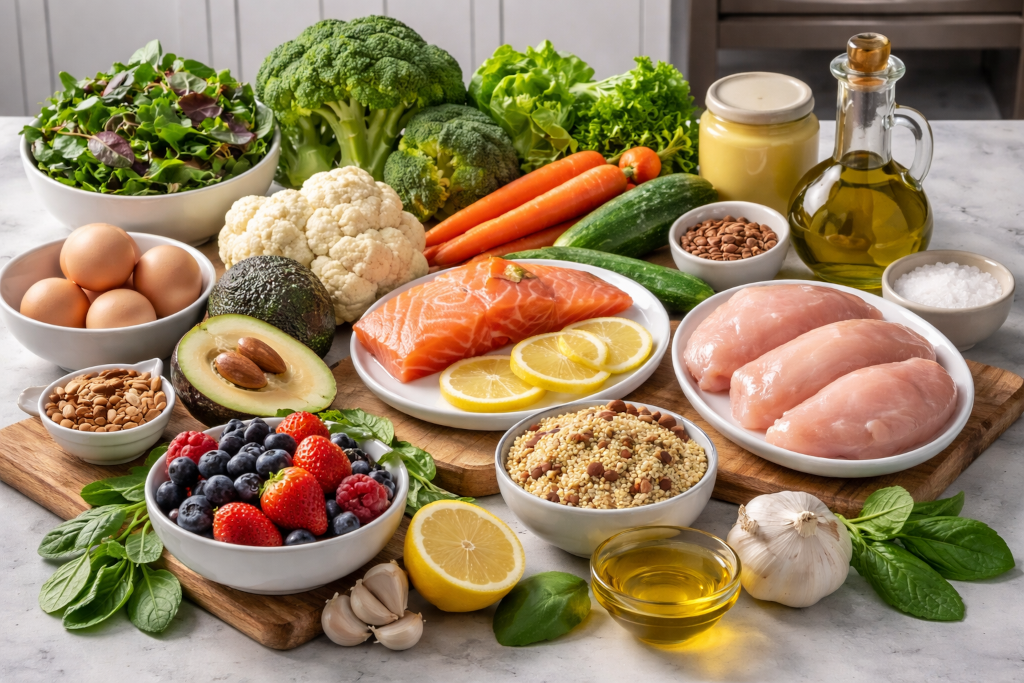
If you are just starting out, it helps to focus on foods that are naturally lower in lectins and require minimal preparation adjustments. Animal proteins are one of the simplest places to start. Beef, chicken, turkey, lamb, and most fish do not contain lectins in the same way plant foods do. Eggs are also generally well tolerated. These foods provide a stable base for meals while you experiment with plant-based additions.
Healthy fats are another cornerstone. Olive oil, avocado oil, butter, and ghee offer energy without introducing significant lectin content. They also support satiety, which can make the transition easier.
Certain vegetables tend to be more reliable choices. Leafy greens like lettuce, spinach, and arugula are commonly well tolerated. Cruciferous vegetables such as broccoli, cauliflower, and cabbage often work well for beginners. Root vegetables like sweet potatoes and carrots are also frequently included, though individual tolerance can vary.
Fruits are more nuanced. Many people do well with fruits that have lower lectin activity or are consumed in moderation. Berries, apples, and citrus fruits are often included in starter approaches. These foods form the backbone of a low-lectin lifestyle. They are simple, accessible, and flexible enough to build a wide variety of meals.
Foods That Often Require Modification
One of the biggest misconceptions about lectins is that foods fall into two categories. Safe or unsafe. The reality is more layered. Many lectin-containing foods can be made more tolerable through proper preparation.
Legumes are a classic example. Beans, lentils, and chickpeas contain higher levels of lectins when raw or undercooked. However, soaking and pressure cooking can significantly reduce lectin activity. Traditional cultures have used these methods for generations, long before lectins were formally studied.
Grains present a similar situation. Whole grains such as wheat, barley, and oats contain lectins and other compounds that can be difficult for some individuals. Fermentation, like sourdough preparation, can alter some of these components. Still, many people on a low-lectin path choose to limit or avoid grains, at least initially, to better understand their own tolerance.
Nightshade vegetables are another group that often requires attention. Tomatoes, peppers, eggplant, and white potatoes are commonly discussed in lectin conversations. The skins and seeds tend to contain higher concentrations of lectins. Removing these parts or cooking the vegetables thoroughly can sometimes improve tolerance, though not always.
The key idea is that preparation matters. A food that causes discomfort in one form may be better tolerated in another.
Foods Commonly Reduced or Avoided at First
For beginners, it can be helpful to temporarily reduce certain foods that are consistently associated with higher lectin content or digestive sensitivity. Beans and legumes are often at the top of this list, especially when not prepared using traditional methods. This includes kidney beans, black beans, and soy products.
Grains, particularly refined wheat products, are another category many people choose to step away from during the early stages. Bread, pasta, and cereals are deeply embedded in modern diets, which can make this shift feel significant. Nightshades can also be worth experimenting with. Removing them for a period of time and then reintroducing them carefully can help identify whether they play a role in symptoms.
Certain nuts and seeds, especially those with skins or hulls, may also be reduced initially. Peanuts and cashews are often mentioned in this context. This is not about labeling these foods as harmful across the board. It is about creating a clean baseline so you can observe how your body responds.
Building a Simple Starter Plate
A practical way to apply a low-lectin food list is to think in terms of meal structure rather than restriction. Imagine a plate built around a protein source, a selection of low-lectin vegetables, and a healthy fat.
For example, grilled chicken with sautéed spinach and roasted carrots cooked in olive oil. Or a piece of salmon with steamed broccoli and a side of avocado. These meals are not complicated, yet they provide balance and nourishment. This approach reduces decision fatigue. Instead of asking what you cannot eat, you focus on what you can build.
The Role of Individual Variation
One of the most important aspects of a low-lectin lifestyle is recognizing that there is no universal response. Scientific research on lectins continues to evolve. Studies have shown that certain lectins can interact with the gut lining, influence immune signaling, or resist digestion under specific conditions. At the same time, many lectin-containing foods also provide fiber, vitamins, and beneficial compounds.
This duality is why context matters. Gut health, microbiome diversity, cooking methods, and overall diet all influence how lectins affect the body. Someone with a resilient digestive system may tolerate a wide range of foods without issue. Someone dealing with inflammation or gut sensitivity may need a more tailored approach.
This is why a starter list is just that. A starting point.
Transitioning Without Overwhelm
Changing how you eat can feel like a major disruption, especially when familiar foods are involved. The key is to make changes gradually. Start by building a few reliable meals using low-lectin foundation foods. Once those meals feel routine, begin experimenting with modifications. Try pressure-cooked legumes. Test peeled and deseeded vegetables. Pay attention to how you feel after eating.
You do not need to overhaul everything overnight. Small, consistent adjustments are more sustainable and often more informative.
Reintroducing and Refining
After a period of simplification, many people begin reintroducing foods one at a time. This step is where the process becomes more personalized. If you reintroduce tomatoes, for example, you might start with a peeled and cooked version. Notice how your body responds over the next day or two. If there are no issues, you may choose to include them more regularly. If symptoms return, that information becomes part of your personal framework.
This method turns a general food list into your own tailored guide.
Beyond the List
A low-lectin lifestyle is not only about food choices. Sleep quality, stress levels, and overall lifestyle patterns also influence digestion and inflammation. Eating in a relaxed state, chewing thoroughly, and allowing time between meals can all support better outcomes. These factors are often overlooked but can be just as important as what is on your plate.
A Practical Starting Point
If you were to walk into your kitchen today and begin a low-lectin approach, it might look something like this. You build meals around clean protein sources and simple vegetables. You cook with olive oil or butter. You reduce or pause foods that are more likely to cause issues. You pay attention to preparation methods. And most importantly, you observe how your body responds.
There is no need for perfection. The goal is clarity.
Final Thoughts
The idea of a starter low-lectin food list is appealing because it offers direction. And direction is valuable when you are navigating something new. But the real power comes from understanding why the list exists.
Lectins are not a single problem with a single solution. They are part of a complex relationship between food, preparation, and individual biology.
When you approach them with curiosity instead of fear, the process becomes less restrictive and more empowering. You are not just following a list. You are learning how your body responds to the world of food around you.
And that knowledge stays with you long after the list is no longer needed.