When people begin exploring digestive health, they often focus on the obvious suspects. Gluten, sugar, processed foods, and sometimes lectins take center stage. But there is another category that tends to slip under the radar, even though it plays a constant role in how our bodies respond to food. That category is dietary fats, specifically the oils we cook with and consume daily.
Oils are not just passive carriers of calories. They actively influence inflammation, cellular repair, microbiome balance, and even the integrity of the gut lining itself. For someone trying to reduce lectin exposure or recover from digestive distress, the type of oil used can quietly support healing or continuously work against it.
Understanding which oils help and which ones irritate is less about fear and more about awareness. Once you see how these fats behave in the body, your choices become more intentional and often more effective.
The Gut Barrier and Why It Matters
The gut lining is a thin but powerful interface between the outside world and your internal systems. It regulates what gets absorbed into the bloodstream and what gets rejected. When functioning properly, it acts like a selective filter. When compromised, it can become more permeable, allowing unwanted particles to pass through. This is often referred to as increased intestinal permeability.
Certain dietary components can either support the repair of this barrier or contribute to its breakdown. Oils fall directly into this category because they interact with cell membranes, inflammatory pathways, and gut bacteria.
The goal is not to eliminate fat. Fat is essential. The goal is to choose fats that stabilize the gut environment rather than destabilize it.
What Makes an Oil Supportive or Harmful
Not all oils are created equal, and their effects on the gut come down to a few key factors.
First is fatty acid composition. Oils are made up of different types of fats, including saturated, monounsaturated, and polyunsaturated fats. Each behaves differently in the body.
Second is stability. Some oils are highly stable when exposed to heat and oxygen, while others oxidize easily. Oxidized oils can generate compounds that irritate the gut lining and promote inflammation.
Third is processing. Highly refined oils often undergo chemical extraction, bleaching, and deodorizing. This process strips beneficial compounds and can introduce residues that the body does not handle well.
Lastly is the ratio of omega 6 to omega 3 fatty acids. Modern diets tend to be heavily skewed toward omega 6, which in excess can promote inflammatory signaling.
With these factors in mind, the difference between supportive and irritating oils becomes much clearer.
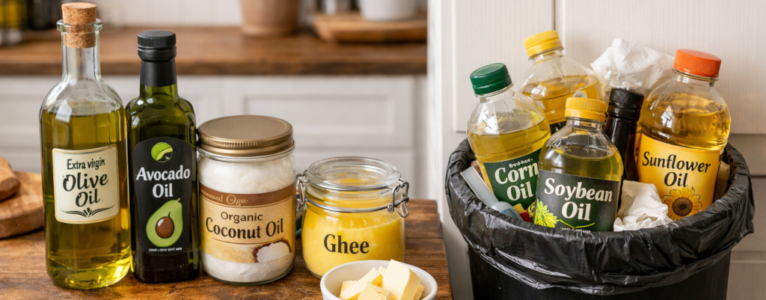
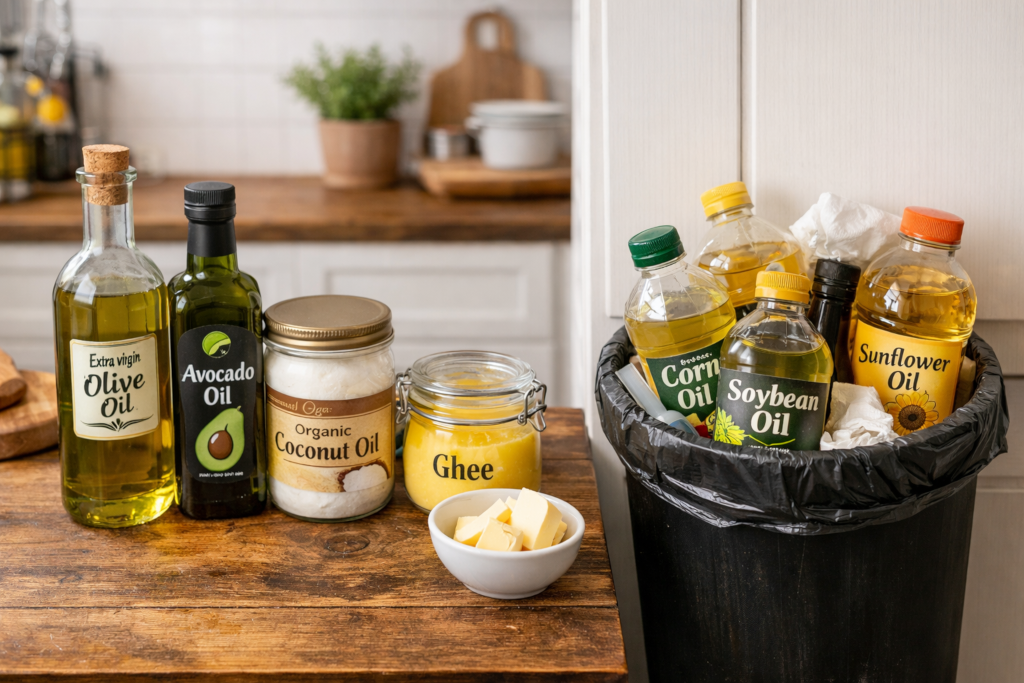
Oils That Support Gut Repair
Certain oils consistently show properties that align with gut healing. They are stable, less inflammatory, and often contain compounds that support cellular integrity.
Olive Oil as a Foundation
Extra virgin olive oil stands out as one of the most well studied and widely recommended oils for digestive health. It is rich in monounsaturated fats, particularly oleic acid, which has been associated with reduced inflammation.
Beyond its fat profile, olive oil contains polyphenols. These compounds have antioxidant properties and can support a healthier gut microbiome. Some research suggests that these polyphenols act as prebiotics, helping beneficial bacteria thrive.
Olive oil is best used at low to medium heat or added after cooking. Its stability is decent, but its real value lies in its unprocessed nature and bioactive compounds.
Avocado Oil and Stability
Avocado oil shares many similarities with olive oil but offers higher heat stability. It is also rich in monounsaturated fats and contains vitamin E, which supports cellular repair.
Because of its high smoke point, avocado oil is a practical choice for cooking methods that require more heat, such as sautéing or light frying. This makes it easier to maintain gut-friendly practices without sacrificing cooking flexibility.
Coconut Oil and MCTs
Coconut oil is unique because it is high in saturated fats, particularly medium chain triglycerides. These fats are metabolized differently than long chain fats. They are more easily absorbed and used for energy, which can be beneficial for individuals with compromised digestion.
Some of the fatty acids in coconut oil, such as lauric acid, have antimicrobial properties. This can help balance gut bacteria, especially when there is an overgrowth of less desirable microbes.
However, coconut oil should be used in moderation. While supportive, excessive intake may not suit everyone, especially those sensitive to saturated fats.
Grass Fed Animal Fats
Traditional fats like tallow and butter from grass fed sources can also play a role in gut support. These fats contain fat soluble vitamins and, in the case of butter, small amounts of butyrate.
Butyrate is a short chain fatty acid that serves as a primary fuel source for the cells lining the colon. It is directly involved in maintaining the integrity of the gut barrier.
Clarified butter, or ghee, is often better tolerated for those sensitive to dairy proteins, as it removes most of the lactose and casein.
Oils That Tend to Irritate the Gut
On the other side of the spectrum are oils that can contribute to inflammation, oxidative stress, and irritation of the gut lining.
Industrial Seed Oils
Common seed oils such as soybean oil, corn oil, canola oil, sunflower oil, and safflower oil are widely used in processed foods and restaurant cooking. While not inherently toxic, their high omega 6 content becomes problematic when consumed in excess.
These oils are also prone to oxidation, especially when heated repeatedly. Oxidized fats can form compounds that disrupt cell membranes and promote inflammatory responses.
In a diet already high in lectin exposure and processed foods, these oils can amplify gut irritation rather than support recovery.
Highly Refined Vegetable Oils
The issue is not just the source but the processing. Oils that have been refined, bleached, and deodorized lose many of their beneficial compounds. What remains is often a stripped down fat that is more susceptible to damage.
During processing, solvents and high heat are used, which can leave behind residues and degrade the oil’s natural structure. The body recognizes these altered compounds differently, often triggering stress responses.
Reused Cooking Oils
One of the most overlooked contributors to gut irritation is the repeated use of cooking oil. This is common in commercial food preparation where oils are heated multiple times.
Each heating cycle increases oxidation and the formation of harmful byproducts. These compounds can irritate the digestive tract and contribute to systemic inflammation.
Even at home, repeatedly heating the same oil can have similar effects, though typically on a smaller scale.
The Interaction Between Oils and Lectins
While lectins and oils are different components, they intersect in meaningful ways. Lectins can stress the gut lining, especially when consumed in large amounts or without proper preparation techniques.
If the oils in the diet are also promoting inflammation, the combined effect can make it harder for the gut to repair itself. On the other hand, using stable, anti inflammatory oils can help buffer some of the stress caused by lectins.
This does not mean oils cancel out lectins. It means they influence the environment in which the gut responds to them.
For someone following a low lectin lifestyle, oil selection becomes an important secondary layer of support.
Practical Shifts Without Overcomplication
Improving oil choices does not require a complete overhaul overnight. Small, consistent changes tend to be more sustainable and effective.
One approach is to replace commonly used oils with more stable alternatives. For example, switching from generic vegetable oil to avocado oil for cooking and using extra virgin olive oil for finishing dishes.
Another is to reduce reliance on heavily processed foods, where low quality oils are often hidden. This aligns naturally with a low lectin approach that already emphasizes whole, prepared foods.
It is also helpful to pay attention to how oils are stored. Light, heat, and air can degrade oils over time. Keeping them in dark, cool environments helps preserve their quality.
Listening to the Body
No two individuals respond to foods in exactly the same way. While general patterns exist, personal experience still matters.
Some people may find that certain oils feel better than others, even within the “good” category. Others may notice improvements simply by removing highly processed oils from their diet.
Tracking how you feel after meals, especially in terms of digestion, energy, and comfort, can provide valuable feedback. This does not need to be overly technical. Even simple observations can guide better decisions over time.
A Bigger Picture Perspective
It is easy to isolate one component of diet and expect it to carry the entire weight of health. Oils are important, but they are part of a larger system that includes sleep, stress, movement, and overall food quality.
What makes oil selection powerful is its consistency. Oils are used daily, often multiple times a day. This makes them a constant influence on the gut environment.
Choosing oils that support repair rather than irritation is not about perfection. It is about tipping the balance in a direction that allows the body to function more efficiently.
Closing Thoughts
The conversation around gut health is evolving, and oils are becoming a more recognized piece of that puzzle. While they may not be as visible as other dietary factors, their impact is steady and cumulative.
By focusing on stability, processing, and fatty acid balance, it becomes easier to distinguish between oils that support healing and those that hinder it.
For anyone navigating lectin sensitivity or broader digestive concerns, this awareness adds another layer of control. It turns everyday cooking into an opportunity to reinforce the body’s natural repair processes rather than disrupt them.
Over time, these choices compound. And in the context of gut health, that compounding effect can make all the difference.