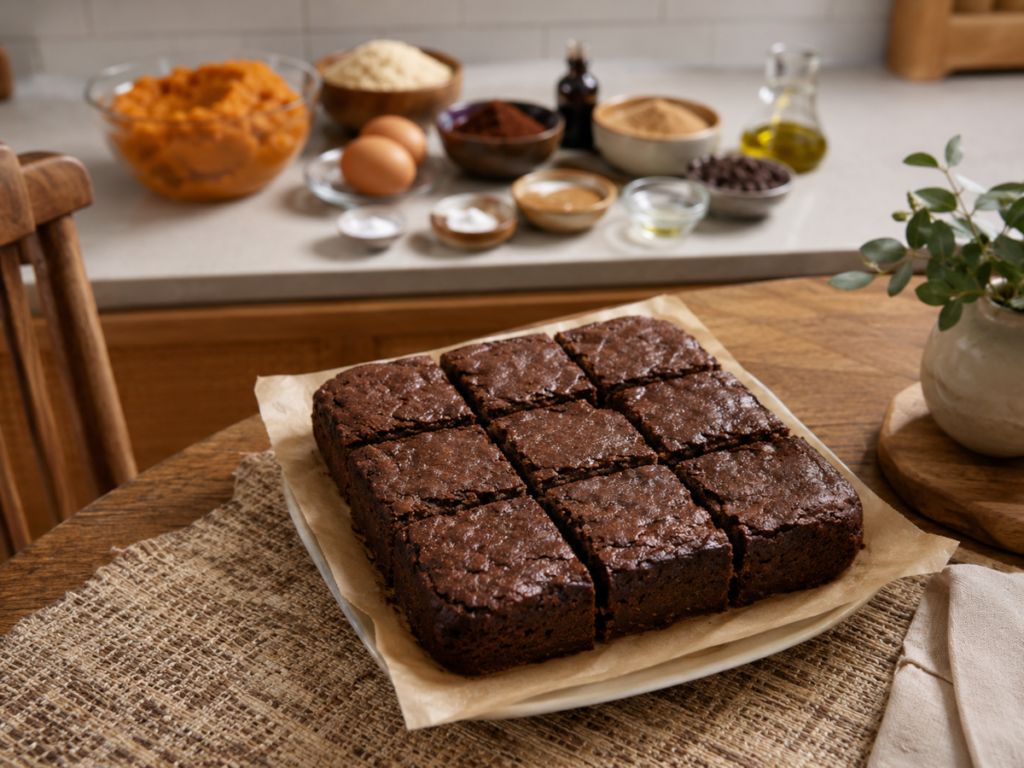
There is something almost rebellious about a brownie that begins with a sweet potato. Most of us grew up thinking of brownies as a treat built from white flour, refined sugar, and a generous amount of chocolate, the kind of dessert that tastes wonderful but often leaves the body feeling like it just got ambushed. For someone following a low-lectin lifestyle, traditional brownies can be a little complicated. Wheat flour, certain grain-based blends, and heavily processed mixes may not fit the way you are trying to eat, especially if your goal is to support steadier digestion and avoid common trigger ingredients.
That is where sweet potato brownies earn their place in the low-lectin kitchen. Sweet potatoes are naturally comforting, gently sweet, and surprisingly useful in baking because they bring moisture, body, and softness without needing wheat flour. They also give brownies that dense, fudgy texture many of us secretly want anyway. In a low-lectin approach, the goal is not to make dessert disappear from life. The better goal is to rebuild familiar foods with ingredients that feel more supportive, more intentional, and easier to personalize.
Sweet potatoes are not just a clever baking trick. They contain starch, fiber, minerals, and plant compounds, and research reviews describe them as a nutrient-dense tuber with carbohydrates, dietary fiber, protein, minerals, vitamins, and bioactive compounds such as polyphenols and anthocyanins, especially in certain colored varieties. For everyday readers, that simply means this brownie base is doing more than replacing flour. It is bringing real food structure to a dessert that still tastes like dessert.
Why Sweet Potatoes Work So Well in a Low-Lectin Brownie
One of the biggest challenges in low-lectin baking is texture. Remove wheat flour, and suddenly the familiar chew and structure of baked goods can get weird. Some grain-free desserts become dry, crumbly, eggy, or overly oily. Sweet potato helps solve that problem because it blends into a smooth, creamy base that holds moisture beautifully. When mashed into batter, it behaves almost like a natural binder, helping the brownies stay soft without leaning too heavily on starches or gums.
From a digestive perspective, sweet potatoes also make sense for many people because they are not part of the nightshade family. That distinction matters because some low-lectin eaters are careful with nightshades such as tomatoes, peppers, eggplant, and white potatoes, especially when skins and seeds are involved. Sweet potatoes belong to a different botanical family, and they are often treated as a more compatible starch option in many low-lectin kitchens. As always, individual tolerance matters, but for many people, cooked sweet potato is a gentle bridge between comfort food and mindful eating.
Cooking also matters. Lectins are proteins found in many plant foods, and their activity can often be reduced by preparation methods such as soaking, boiling, stewing, and other wet high-heat cooking techniques. Harvard’s Nutrition Source notes that cooking, especially wet high-heat methods, can inactivate many lectins, and a narrative review on anti-nutrients similarly reports that soaking, boiling, and autoclaving can denature lectins in foods where they are a concern. This recipe starts with cooked sweet potato, not raw shreds or undercooked chunks, which fits the practical low-lectin mindset: preparation is part of the food.
The other quiet advantage is sweetness. Sweet potato lets you reduce the amount of added sweetener without making the brownies taste like a compromise. It does not replace sugar entirely, and it should not be treated like magic, but it softens the sharp edge of cocoa and helps create a rounded chocolate flavor. That makes these brownies feel rich without needing to become a sugar bomb.
Sweet Potato Brownies
Ingredients
- 1 cup cooked, mashed sweet potato, cooled
- 2 large pasture-raised eggs
- 1/2 cup blanched almond flour
- 1/4 cup unsweetened cocoa powder
- 1/3 cup coconut sugar or allulose-style granulated sweetener
- 1/4 cup almond butter or tahini
- 3 tablespoons melted coconut oil or avocado oil
- 1 teaspoon vanilla extract
- 1/2 teaspoon baking powder
- 1/4 teaspoon sea salt
- 1/3 cup chopped 85 percent dark chocolate or low-sugar chocolate chips, optional
Instructions
- Preheat the oven to 350 degrees Fahrenheit. Line an 8-inch square baking pan with parchment paper, leaving a little overhang so the brownies can be lifted out later.
- In a mixing bowl, whisk together the mashed sweet potato, eggs, almond butter, melted oil, vanilla, and sweetener until the mixture looks smooth and glossy. A few tiny sweet potato fibers are fine, but large lumps should be mashed out.
- Add the almond flour, cocoa powder, baking powder, and sea salt. Stir until the batter is thick and evenly combined. Fold in the chopped dark chocolate if using.
- Spread the batter into the prepared pan and smooth the top with a spatula. Bake for 28 to 34 minutes, or until the edges look set and the center no longer jiggles. A toothpick should come out with moist crumbs, not wet batter.
- Let the brownies cool in the pan for at least 30 minutes before slicing. For the cleanest cuts and fudgiest texture, chill them in the refrigerator for 1 to 2 hours before serving.
Making the Brownies Fit Your Body, Not Someone Else’s Rules
One thing I always like to remind readers is that a low-lectin lifestyle should not become a contest of perfection. It is more useful as a way of paying attention. A food can be generally compatible with the lifestyle and still need adjustment for your personal digestion, blood sugar response, or ingredient tolerance. Brownies are still brownies, even when they are made with sweet potato, almond flour, and dark chocolate. They are a treat, not a meal plan.
That said, this recipe gives you several ways to make the dessert gentler. If you are sensitive to nuts, tahini can replace almond butter, though it will give the brownies a slightly earthier flavor. If almond flour does not sit well with you, finely milled cassava flour can be tested in a smaller amount, usually starting around 1/4 cup rather than a full 1/2 cup, because cassava absorbs moisture differently. If you are watching sugar intake, use a lower-glycemic granulated sweetener and choose very dark chocolate or skip the chocolate chips.
Sweet potatoes are starchy, so portion size still matters. Modern nutrition discussions around sweet potatoes often point to their fiber and resistant starch as helpful features, especially compared with more refined carbohydrates, but preparation and serving size influence how the body responds. Recent coverage from nutrition experts has noted that sweet potatoes can be part of a blood-sugar-conscious diet when paired wisely and prepared without heavy sugary toppings. In brownie form, that means enjoying one square slowly rather than treating the pan like a personal challenge from the universe.
For people using the “Tracking Low-lectin” mindset, this is a good recipe to log. Dessert reactions can be sneaky because they may come from several directions at once: cocoa, sweetener, fat, nuts, portion size, or even timing. If you eat a brownie after a balanced meal and feel fine, that tells you something. If you eat two on an empty stomach with coffee and feel off, that tells you something too. The food journal is not there to shame you. It is there to help you become your own best detective.
A Few Kitchen Notes for Better Flavor and Texture
The best version of this recipe starts with a sweet potato that has been cooked until completely tender. Baking gives the richest flavor because it concentrates the natural sweetness, while steaming or boiling gives a milder result. If you boil the sweet potato, drain it very well and let it steam-dry for a few minutes before mashing. Extra water can make the brownies too soft in the center.
For the smoothest batter, use room-temperature eggs and fully cooled sweet potato. Hot sweet potato can partially cook the eggs before the batter reaches the oven, which may create an uneven texture. If your mashed sweet potato is stringy, a quick pass through a food processor can make the batter silkier. This is especially helpful if you are serving the brownies to someone who gets suspicious the moment they hear a vegetable is involved.
The cocoa powder matters too. A good unsweetened cocoa gives these brownies their deep chocolate flavor, so this is not the place for an old container that has been hiding in the pantry since the last presidential administration. Dutch-process cocoa will taste smoother and darker, while natural cocoa may taste a little sharper and fruitier. Either can work, but the final flavor will shift slightly.
Cooling is not optional if you want a true brownie texture. Right out of the oven, these may seem almost too soft. As they cool, the almond flour, cocoa, sweet potato starches, and fats settle into that fudgy structure. Chilling makes them even better, which is excellent news for anyone who likes make-ahead desserts. Store them covered in the refrigerator for up to 4 days, or freeze individual squares for later.
Dessert as Part of a Sustainable Low-Lectin Life
A low-lectin lifestyle becomes easier when it includes foods that feel emotionally satisfying. Nobody wants to live forever on plain greens and perfectly measured proteins while pretending not to hear the brownies calling from another dimension. The goal is to create a way of eating that has enough structure to support your body and enough flexibility to support your life.
These sweet potato brownies are a good example of that balance. They use cooked whole-food ingredients, avoid wheat flour, skip the usual boxed-mix fillers, and still deliver the familiar pleasure of a chocolate dessert. They also invite personalization, which is one of the most important skills in this lifestyle. Maybe you tolerate almond flour beautifully. Maybe you do better with less sweetener. Maybe you prefer them chilled with a spoonful of coconut yogurt, or served warm with a few crushed toasted nuts if those fit your plan.
The science of lectins and digestive health is still more nuanced than internet arguments often make it sound. Lectins are not simply “bad,” and plant foods are not automatically harmful. What matters is the food, the preparation method, the person, and the pattern over time. Cooking can reduce lectin activity in many foods, and thoughtful preparation can turn ingredients that might be challenging in one form into foods that are easier to enjoy in another.
So yes, a brownie can belong here. Not as a loophole, not as a cheat, and not as a fake health halo pretending dessert has become broccoli. It belongs because food should be practical, pleasurable, and personal. A warm square of sweet potato brownie can be a small reminder that low-lectin living does not have to feel narrow. With the right ingredients and a little kitchen creativity, it can feel surprisingly abundant.