
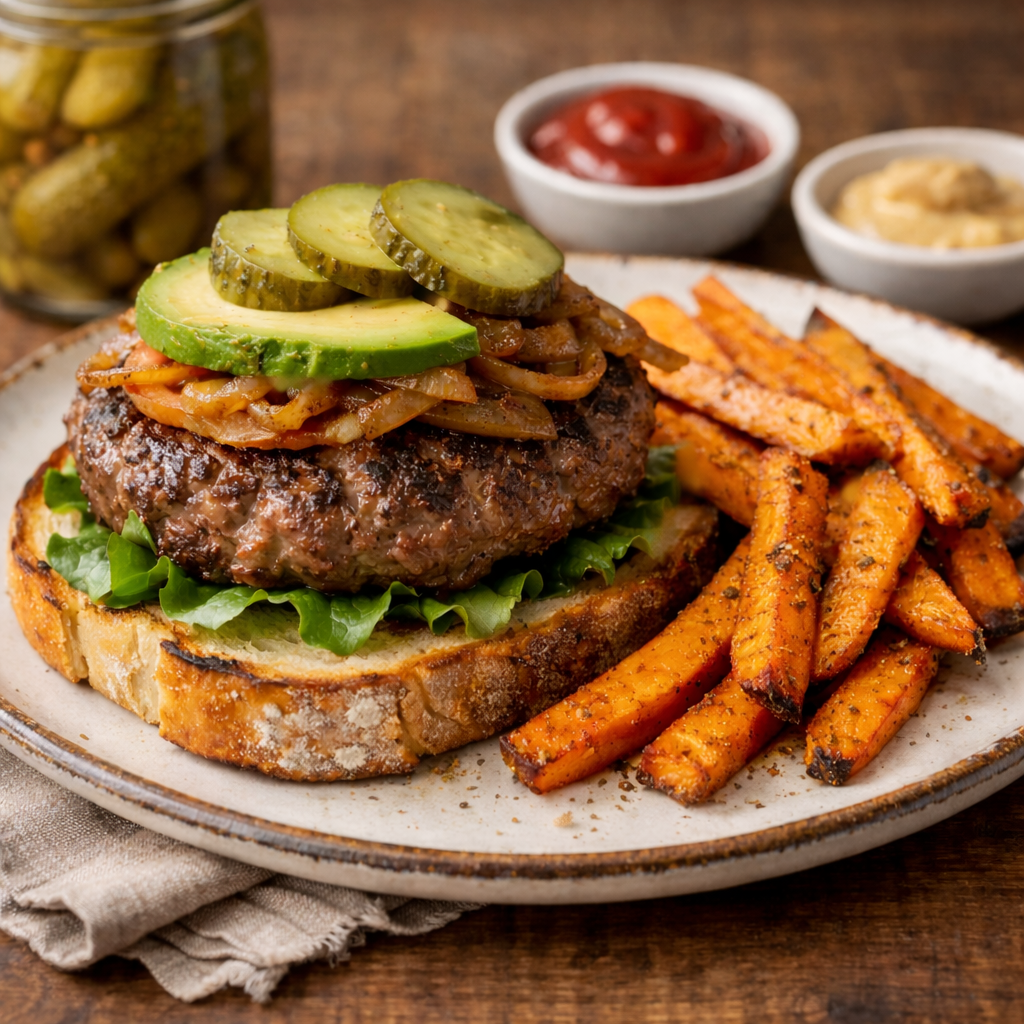
Few foods carry the cultural weight of a good burger. It is a meal that crosses continents and generations. Backyard grills, roadside diners, late-night kitchens, and family gatherings all seem to have their own version. For people exploring a low-lectin lifestyle, however, burgers often become one of the first meals that raises questions. The typical burger meal is built around ingredients that may contain lectins in meaningful amounts, particularly conventional wheat buns and certain condiments.
Yet when we look more closely at how lectins behave in food and how preparation methods affect them, the story becomes more nuanced. A thoughtfully constructed burger meal can actually fit quite comfortably into a lectin-conscious approach to eating. In fact, a plate built around grass-fed beef, fermented sourdough bread, and properly prepared sweet potatoes provides a fascinating example of how traditional cooking methods and ingredient choices can reshape a familiar comfort food.
Understanding why this combination works requires stepping back and examining how lectins interact with our food supply, how fermentation changes grains, and why certain root vegetables behave differently than many other plant foods.
A Quick Refresher on Lectins
Lectins are carbohydrate-binding proteins found in many plants and animals. In plants, they often function as a natural defense system. Seeds, grains, legumes, and certain vegetables contain lectins that can bind to carbohydrates on cell surfaces. In nature, this property discourages insects, animals, and microorganisms from consuming the plant before it has a chance to reproduce.
In the human diet, lectins are incredibly common. They appear in wheat, beans, peanuts, soy, tomatoes, peppers, and many other everyday foods. For most people eating a varied diet, lectins pass through the digestive system without causing noticeable problems. However, for some individuals, high lectin exposure may contribute to digestive discomfort or irritation of the gut lining, especially when foods are eaten raw or undercooked.
Modern research shows that lectins are not uniform in their behavior. Some are easily destroyed by heat, others are reduced through soaking or fermentation, and some persist unless more intensive cooking methods are used. This means that preparation techniques often matter just as much as the ingredient itself.
The burger meal we are exploring illustrates this principle well.
Grass-Fed Beef and the Absence of Lectins
At the center of the plate sits the burger patty itself. From a lectin perspective, meat is straightforward. Animal proteins do not contain plant lectins. That makes beef, poultry, fish, and eggs some of the simplest protein sources for people who are sensitive to lectins.
Grass-fed beef adds another dimension to the conversation. While the lectin content of beef does not change dramatically based on diet, the nutritional profile of grass-fed cattle does. Grass-fed beef typically contains higher levels of omega-3 fatty acids, more conjugated linoleic acid (CLA), and slightly higher concentrations of certain vitamins such as vitamin E.
These differences arise because cattle raised on pasture consume a natural diet of grasses rather than grain-based feed. Grain feeding alters the fat composition of the meat, while pasture feeding tends to maintain a profile that is somewhat closer to what cattle evolved to produce.
From a lectin standpoint, the burger patty itself is not the problematic part of the meal. The challenge usually comes from the bun and side dishes.
The Sourdough Advantage
Conventional hamburger buns are typically made from refined wheat flour. Wheat contains several types of lectins, including wheat germ agglutinin. While the concentration in baked bread is lower than in raw grain, some people find that large amounts of conventional wheat products still trigger digestive discomfort.
This is where sourdough fermentation becomes particularly interesting.
Traditional sourdough bread is created through a slow fermentation process driven by naturally occurring yeasts and lactic acid bacteria. During fermentation, microorganisms break down starches, proteins, and certain antinutrients present in the flour.
Researchers studying sourdough fermentation have observed that this microbial activity can partially degrade compounds such as phytates and certain lectins. The process also alters gluten proteins, making them easier for some individuals to digest.
The key factor is time. True sourdough fermentation often occurs over many hours or even days. This extended fermentation allows enzymes and microbes to transform the grain in ways that modern fast bread production does not replicate.
While sourdough bread still contains wheat components and should not be considered lectin-free, many people who follow a lectin-aware lifestyle find it easier to tolerate than standard commercial buns.
In the context of a burger meal, sourdough provides a fascinating example of how traditional food preparation can shift the nutritional landscape.
Sweet Potatoes and the Root Vegetable Advantage
No burger plate feels complete without fries, and sweet potatoes offer a particularly interesting companion to the meal.
Unlike many high-lectin foods that come from seeds or legumes, sweet potatoes are storage roots. Plants store energy in their roots in the form of starch and sugars. Because these structures are meant to nourish the plant itself rather than protect seeds from predators, they often contain fewer defensive lectins.
Sweet potatoes do contain small amounts of lectin-like proteins, but they are generally considered mild compared to those found in legumes or certain grains. Cooking further reduces these proteins, making roasted or baked sweet potatoes widely tolerated by people who are reducing their lectin exposure.
They also provide an impressive nutritional profile. Sweet potatoes are rich in beta carotene, fiber, potassium, and vitamin C. Their natural sweetness allows them to caramelize beautifully in the oven, creating fries that satisfy the same craving as traditional potato fries.
Cooking Techniques That Matter
One of the most overlooked aspects of lectin reduction is simply how food is cooked.
Heat plays a powerful role in altering protein structures. Many lectins lose their ability to bind to carbohydrates when exposed to sufficient heat. Boiling, roasting, and pressure cooking are particularly effective methods.
Fermentation, soaking, peeling, and deseeding can also reduce lectin exposure depending on the food involved.
In the burger meal described here, several of these techniques appear naturally. The beef is cooked at high heat, sourdough undergoes fermentation before baking, and sweet potatoes are roasted until tender.
What emerges is a meal that demonstrates how traditional cooking practices can quietly reshape the chemistry of everyday foods.
Grass-Fed Beef Burgers, Sourdough Bread, and Sweet Potato Fries (Low-Lectin)
Ingredients
- -- FOR THE BURGERS --
- 1 pound grass-fed ground beef
- 1 teaspoon sea salt
- 1/2 teaspoon black pepper
- 1 teaspoon garlic powder
- 4 slices sourdough bread or 4 small sourdough rolls
- Butter or olive oil for toasting the bread
- Optional toppings such as lettuce, caramelized onions, avocado slices, or fermented pickles
- -- FOR THE SWEET POTATO FRIES --
- 2 large sweet potatoes
- 2 tablespoons olive oil
- 1 teaspoon sea salt
- 1/2 teaspoon smoked paprika
- 1/2 teaspoon garlic powder
Instructions
- Preheat the oven to 425°F (218°C).
- Start by preparing the sweet potato fries. Wash and peel the sweet potatoes if desired. Slice them into thin fry-shaped strips. Try to keep the pieces roughly the same size so they cook evenly.
- Place the sweet potato strips in a large bowl and toss them with olive oil, salt, smoked paprika, and garlic powder. Spread them out on a baking sheet in a single layer. Roasting works best when the fries are not crowded.
- Bake for about 25 to 30 minutes, turning once halfway through, until the edges become lightly browned and the fries are tender.
- While the fries cook, prepare the burger patties. Place the ground beef in a bowl and gently mix in the salt, pepper, and garlic powder. Avoid overworking the meat since that can make the burgers dense.
- Divide the mixture into four equal portions and shape them into patties slightly wider than the bread slices. The patties will shrink slightly as they cook.
- Heat a skillet or grill pan over medium-high heat. Cook the burgers for about 3 to 4 minutes per side for medium doneness, adjusting based on thickness and personal preference.
- Meanwhile, lightly toast the sourdough bread in a separate pan with a small amount of butter or olive oil. Toasting the bread adds flavor and helps prevent it from becoming soggy when the burger is assembled.
- Place each cooked burger on a toasted slice of sourdough and add any desired toppings. Serve alongside the roasted sweet potato fries.
The Bigger Lesson Behind the Plate
Meals like this reveal something important about lectin-aware eating. The goal is rarely to eliminate every trace of lectins from the diet. That would be nearly impossible given how widespread these proteins are in plant foods.
Instead, the focus often shifts toward understanding how lectins behave and how preparation methods influence them.
Fermentation, cooking, ingredient selection, and food variety all play roles. A burger built from grass-fed beef, fermented sourdough, and roasted sweet potatoes demonstrates how thoughtful choices can transform a familiar comfort meal into something that aligns with a lectin-conscious approach.
Food traditions developed over centuries often reflect this principle. Fermented breads, slow-cooked legumes, peeled root vegetables, and properly prepared grains appear across many cultures. These techniques evolved long before scientists could identify lectins or analyze their molecular structure.
Today, modern research simply helps us understand why those traditions often worked so well.
A Balanced Approach to Lectin Awareness
The conversation around lectins has sometimes become polarized. Some voices frame lectins as dangerous toxins that must be avoided at all costs. Others dismiss concerns entirely.
Reality usually lies somewhere in the middle.
Lectins are a natural part of many plant foods, and most are significantly reduced through cooking and preparation. For individuals who experience digestive sensitivity, adjusting food choices and preparation methods can sometimes make a meaningful difference.
The goal is not fear of food but curiosity about how food works.
Meals like a grass-fed burger on sourdough with roasted sweet potato fries demonstrate that lectin-aware eating does not have to feel restrictive. With a little understanding of ingredients and preparation techniques, even iconic comfort foods can remain part of the table.
And sometimes, those meals become the most satisfying of all, not just because they taste good, but because they reflect a deeper understanding of the food we eat and how it interacts with our bodies.