Comfort food has a way of anchoring us. The aromas that drift through the kitchen while something warm simmers on the stove can instantly connect us to memories of family dinners, favorite restaurants, or meals that simply made us feel better after a long day. Traditional Italian risotto sits squarely in that category. Creamy, rich, and deeply satisfying, it is built on Arborio rice slowly cooked with broth while being stirred until the starch creates a silky texture.
For people exploring a low-lectin lifestyle, however, even beloved classics sometimes require a thoughtful adjustment. Rice itself is not the highest lectin food in the modern diet, but many people working to calm digestive inflammation or rebalance their gut find that rotating grains or experimenting with alternatives can help broaden their options. That is where millet steps in.
Millet is an ancient grain that has nourished humans for thousands of years across Africa and Asia. In recent years it has quietly gained attention among people seeking lectin-friendly foods because it naturally contains very low levels of problematic lectins and tends to be gentle on digestion when properly prepared. What makes millet especially interesting is its texture. When cooked slowly with liquid and stirred occasionally, the small golden grains soften and release starch in a way that feels surprisingly similar to traditional risotto.
The result is a dish that keeps the soul of risotto intact while fitting comfortably within a low-lectin kitchen.
Why Millet Fits Naturally into a Low-Lectin Lifestyle
Understanding why millet works well in this context starts with a quick look at lectins themselves. Lectins are proteins that plants use as part of their natural defense system. They can bind to carbohydrates and are found in varying amounts across many foods, especially legumes, grains, and nightshade vegetables. In most cases they are reduced or neutralized through cooking, soaking, fermentation, or pressure cooking.
However, some people find that reducing their lectin exposure can ease digestive discomfort, joint inflammation, or unexplained fatigue. Modern research is still evolving in this area, but one consistent takeaway is that lectin content varies widely between foods.
Millet happens to fall on the gentler end of the spectrum. Compared to many grains, it tends to be easier to digest and does not rely on heavy processing to become safe to eat. That makes it a flexible ingredient for people who are experimenting with low-lectin cooking but still want satisfying meals that feel familiar.
There is also a nutritional bonus. Millet contains magnesium, phosphorus, and a respectable amount of plant-based protein. Its mild, slightly nutty flavor makes it a good canvas for richer ingredients such as mushrooms, herbs, and good quality fats like olive oil.
In other words, millet does not just replace rice in a recipe. It opens the door to a new texture and flavor profile that happens to work beautifully with the slow-cooked method of risotto.
The Role of Mushrooms in a Low-Lectin Kitchen
Mushrooms often become unsung heroes in low-lectin cooking. Unlike many vegetables that carry seeds or skins where lectins concentrate, mushrooms are fungi and naturally free from lectins. They also bring something incredibly valuable to plant-forward dishes: umami.
Umami is the savory taste that gives foods depth and richness. It is what makes broth comforting, aged cheese complex, and roasted vegetables satisfying. Mushrooms are packed with natural glutamates that create this effect.
When mushrooms are sautéed slowly, their water content evaporates and their flavor becomes concentrated. The result is a deep, earthy base that mimics the richness people often associate with meat or heavy cream sauces.
Wild mushrooms are particularly suited to this dish because their flavor profile tends to be more complex than common white button mushrooms. Varieties like shiitake, oyster, or chanterelle offer layers of aroma that transform a simple grain dish into something restaurant-worthy.
Combined with millet, they create a risotto that feels luxurious without relying on ingredients that might trouble sensitive digestion.
How the Cooking Process Creates the Creamy Texture
One of the defining characteristics of risotto is its texture. Traditional recipes rely on Arborio rice because of its high starch content. As the rice cooks and is stirred with broth, the starch gradually releases into the liquid and forms a creamy consistency. Millet behaves in a similar way, though the process is slightly different.
Millet grains are smaller and cook more quickly than Arborio rice. When toasted briefly before adding liquid, they develop a deeper flavor and maintain a pleasant bite. As they simmer in broth, the grains absorb liquid and soften while releasing just enough starch to create a naturally creamy texture.
Frequent stirring is helpful but not mandatory in the same obsessive way traditional risotto requires. This makes millet risotto a little more forgiving for home cooks.
The key is patience. Allowing the broth to absorb gradually helps the grains swell and create the comforting consistency people expect from risotto.
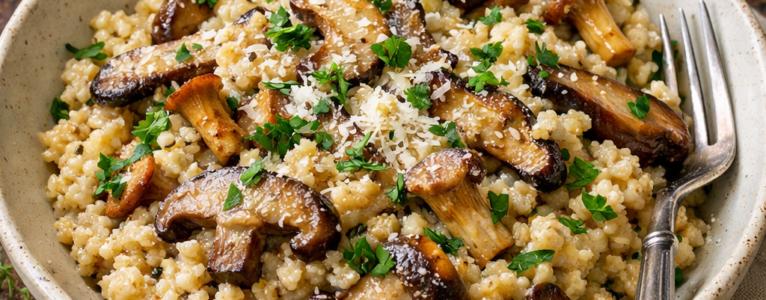
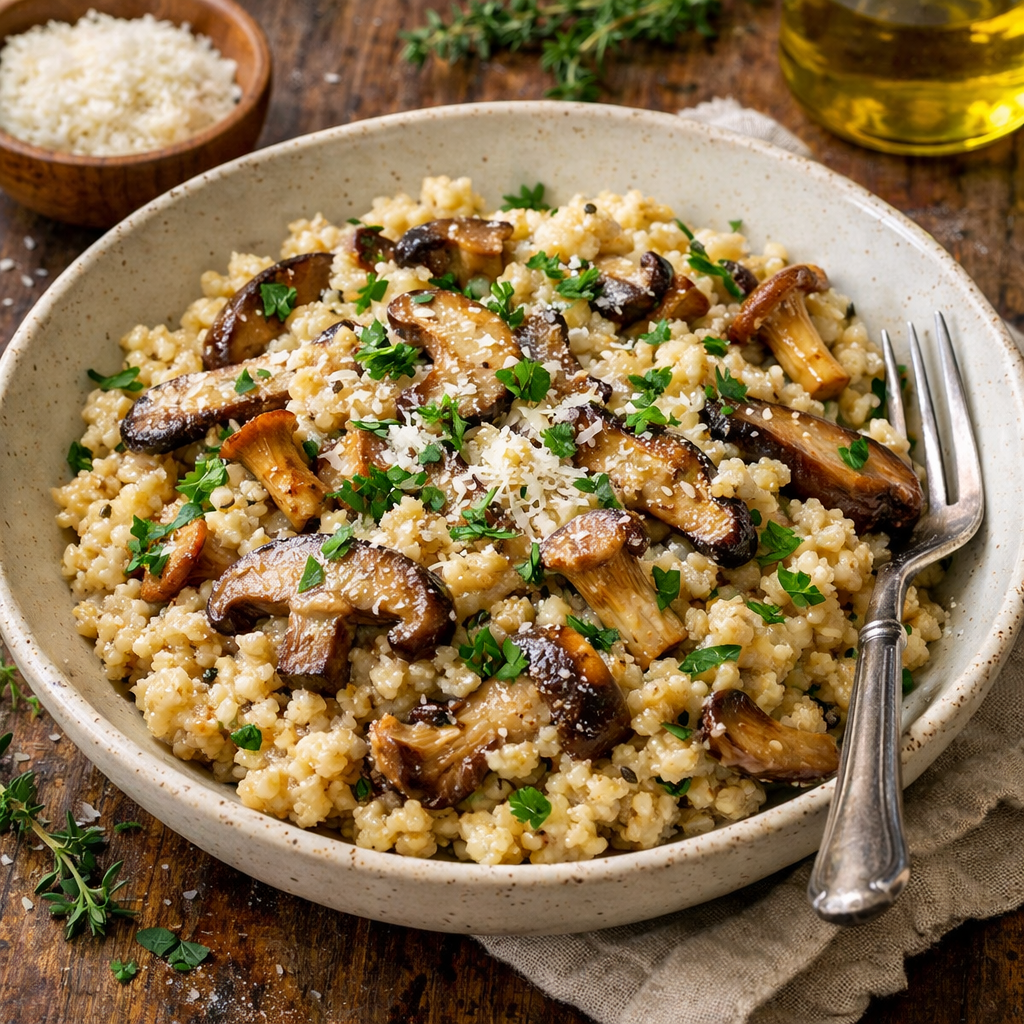
Millet “Risotto” with Wild Mushrooms (Low-Lectin)
Ingredients
- 1 cup hulled millet
- 3 cups low-lectin vegetable broth or homemade bone broth
- 1 cup mixed wild mushrooms, sliced
- 1 small shallot, finely chopped
- 2 cloves garlic, minced
- 2 tablespoons extra virgin olive oil
- 2 tablespoons grass-fed butter or ghee
- ¼ cup grated aged parmesan cheese (optional but traditional)
- 1 tablespoon fresh thyme leaves
- Salt and black pepper to taste
- Fresh parsley for garnish
Instructions
- Begin by rinsing the millet under cool water. This step removes dust and helps the grains cook more evenly.
- In a large skillet or saucepan, warm one tablespoon of olive oil over medium heat. Add the millet and toast it gently for two to three minutes. The grains will turn slightly golden and release a nutty aroma. This small step adds depth to the finished dish.
- Remove the millet from the pan and set it aside.
- Add the remaining olive oil and the butter or ghee to the same pan. When the fat melts, add the chopped shallot and cook until it becomes soft and fragrant. Stir in the garlic and cook for another thirty seconds.
- Add the sliced wild mushrooms and allow them to cook slowly. At first they will release moisture. Continue sautéing until the liquid evaporates and the mushrooms begin to brown. This stage is where their flavor intensifies.
- Return the toasted millet to the pan and stir everything together.
- Begin adding the broth about half a cup at a time. Allow each addition of liquid to absorb before adding the next. Stir occasionally to keep the grains moving and prevent sticking.
- After about fifteen to twenty minutes, the millet should become tender while still holding its shape. The mixture should appear creamy but not soupy.
- Stir in the thyme and grated parmesan if using. Taste and adjust with salt and black pepper.
- Finish the dish with fresh parsley and an additional drizzle of olive oil.
The result is a bowl of food that feels indulgent yet remains aligned with a low-lectin philosophy.
Why This Dish Supports Digestive Comfort
For people exploring lectin reduction, comfort foods often need to be reinvented. Many traditional dishes rely on ingredients that contain lectins in concentrated forms. Beans, nightshades, and certain grains can cause discomfort for individuals who are particularly sensitive.
Millet risotto avoids several of those common triggers.
Millet itself is gentle and easy to digest for most people. Mushrooms provide richness without seeds or skins where lectins concentrate. Olive oil and butter add satisfying fats that help the body absorb fat-soluble nutrients. Even the cooking method plays a role. Slow cooking in broth breaks down the grain structure and makes the dish easier on the digestive system.
For people who are transitioning toward a lower lectin lifestyle, meals like this demonstrate an important lesson. You do not have to abandon comfort foods entirely. With thoughtful substitutions and preparation techniques, familiar dishes can be adapted in ways that feel nourishing rather than restrictive.
A Broader Lesson from the Low-Lectin Kitchen
One of the most interesting patterns that emerges when people begin exploring lectin-aware cooking is that it naturally encourages culinary curiosity. Ingredients that may have once been overlooked suddenly become valuable tools. Millet is a perfect example.
For decades it remained a relatively obscure grain in many Western kitchens. Yet historically it has been a staple food for millions of people. Its resilience as a crop and its nutritional profile made it a reliable source of energy in regions where other grains struggled to grow.
When modern cooks rediscover ingredients like millet, they are not inventing something new. They are reconnecting with older food traditions that understood how to balance flavor, digestion, and nutrition long before the term “lectin” entered popular conversation.
The low-lectin lifestyle often works best when it is approached with this kind of curiosity rather than strict avoidance. Instead of focusing solely on what cannot be eaten, the kitchen becomes a place to explore grains, vegetables, and cooking techniques that may have been forgotten or overlooked.
The Emotional Side of Food Still Matters
Scientific discussions about lectins, digestion, and inflammation are important, but food is never only about science. It is also about comfort, connection, and enjoyment. A warm bowl of millet risotto with mushrooms accomplishes something subtle but powerful. It proves that dietary adjustments do not have to feel like punishment.
The dish still delivers the slow-cooked aroma that fills the kitchen. It still invites people to sit down and enjoy a meal that feels rich and satisfying. And it still offers the pleasure of discovering that nourishing food can also taste indulgent. For many people navigating digestive challenges, that emotional reassurance matters as much as the nutritional details.
A Small Grain with Big Possibilities
Millet risotto is only one example of how this ancient grain can shine in modern cooking. It can also appear in breakfast porridges, grain bowls, salads, or even baked dishes where its mild flavor absorbs surrounding ingredients.
But as a risotto base, millet reveals something unique about the flexibility of low-lectin cooking. With just a handful of ingredients and a patient cooking method, it becomes a dish that rivals the comfort of its traditional counterpart.
For anyone exploring a low-lectin lifestyle, recipes like this serve as a reminder that good food does not disappear when dietary awareness increases. In many ways, it becomes more interesting.
Millet “risotto” with wild mushrooms stands as proof that thoughtful cooking can bridge the gap between modern nutritional research and the timeless human desire for meals that are both satisfying and nourishing.