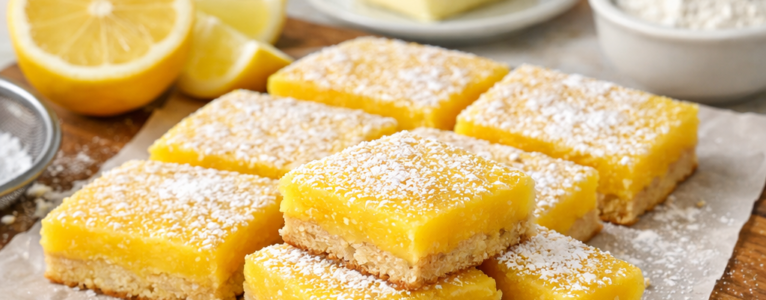
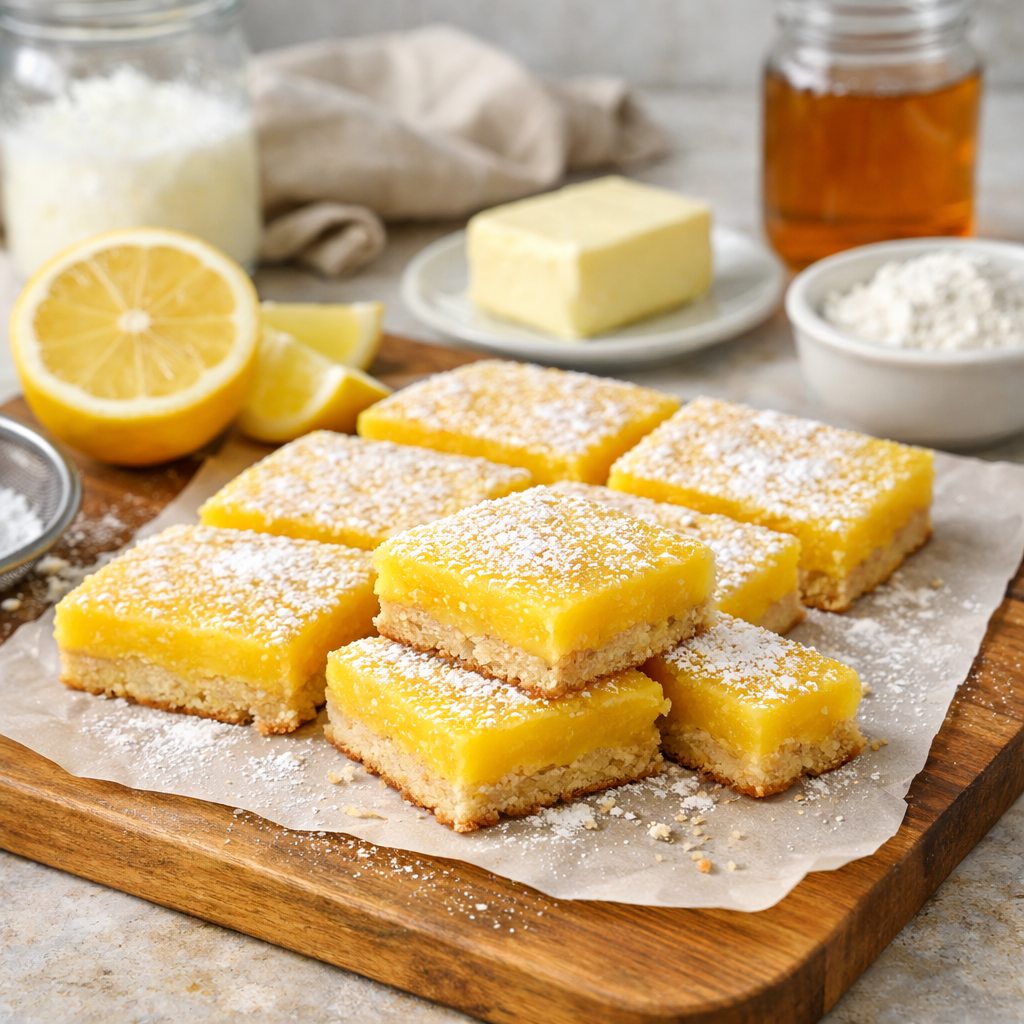
There is something almost universal about the appeal of a lemon bar. The balance of tart citrus and gentle sweetness feels clean, refreshing, and satisfying in a way that heavier desserts often are not. For many people transitioning into a lower lectin lifestyle, however, traditional lemon bars can quietly become a problem. What once felt like a simple treat can introduce ingredients that contribute to digestive discomfort, inflammation, or subtle but persistent gut irritation.
This is where adaptation becomes more than just a dietary restriction. It becomes an opportunity to rethink how food is prepared, how ingredients interact with the body, and how enjoyment does not have to be sacrificed in the process.
Coconut flour lemon bars are a great example of that shift. They preserve the spirit of the original dessert while aligning more closely with modern understandings of lectins, gut health, and ingredient quality.
Understanding the Shift Away from Traditional Ingredients
Traditional lemon bars are built on a wheat-based crust and a sugar-heavy filling. Wheat, especially modern hybridized varieties, contains lectins that may be problematic for some individuals. These lectins can interact with the gut lining, particularly in those who are already sensitive or dealing with digestive imbalance.
Coconut flour offers an alternative that is naturally grain-free and lower in problematic lectins. It behaves differently than wheat flour, requiring adjustments in moisture and structure, but it brings its own benefits. It is rich in fiber, absorbs liquid efficiently, and contributes a subtle sweetness that pairs well with citrus.
The fat component matters just as much. Using grass-fed butter or coconut oil is not only about flavor but also about how fats are processed in the body. Grass-fed butter contains beneficial fatty acids and fat-soluble vitamins, while coconut oil provides medium-chain triglycerides that are more readily used for energy.
When you combine these elements with fresh lemon juice, you are not just creating a dessert. You are assembling a food that aligns with a broader philosophy of reducing dietary stress while still enjoying what you eat.
The Role of Citrus in a Low-Lectin Lifestyle
Lemons are often overlooked in conversations about lectins, largely because they are not a major source of them. Instead, they offer vitamin C, antioxidants, and natural acids that can support digestion.
In many traditional diets, acidic components like lemon have been used to balance meals, aid in nutrient absorption, and enhance flavor without relying on heavy seasoning or processed additives.
In the context of a low lectin approach, lemon serves another purpose. It provides intensity. When you reduce or remove certain ingredients, especially refined sugars or processed grains, flavor can feel muted at first. Lemon brings that brightness back. It sharpens the profile of the dish and makes it feel complete.
Texture, Expectation, and Adaptation
One of the biggest adjustments people face when changing their diet is not flavor but texture. Coconut flour does not behave like wheat flour. It is more absorbent and produces a slightly denser, more delicate crumb. This is not a flaw. It is simply different.
When you approach a recipe like coconut flour lemon bars, it helps to let go of the expectation that it should feel exactly like the version you remember. Instead, you begin to appreciate the new texture for what it is. Slightly softer, a bit more tender, and often more satisfying in smaller portions.
This shift in expectation is part of the larger transition. Food is no longer just about replication. It becomes about refinement.
Coconut Flour Lemon Bars
This recipe is designed to be simple, approachable, and aligned with low lectin principles while still delivering a classic lemon bar experience.
Servings: Approximately 9 to 12 bars depending on portion size
Ingredients
For the crust
- 1/2 cup coconut flour
- 1/4 cup grass-fed butter or coconut oil, melted
- 2 tablespoons honey or maple syrup
- 1/4 teaspoon sea salt
For the filling
- 3 large eggs
- 1/2 cup fresh lemon juice
- Zest of 1 lemon
- 1/3 cup honey or maple syrup
- 2 tablespoons coconut flour
- 1/4 teaspoon baking soda
- Pinch of sea salt
Instructions
- Preheat your oven to 350°F and line a small baking dish with parchment paper. This will help with easy removal later.
- Start by preparing the crust. In a mixing bowl, combine the coconut flour, melted butter or coconut oil, honey, and salt. Stir until a soft dough forms. Coconut flour absorbs liquid quickly, so give it a moment to fully hydrate.
- Press the dough evenly into the bottom of your prepared baking dish. Try to keep the thickness consistent so it bakes evenly. Place it in the oven and bake for about 10 to 12 minutes, or until it becomes lightly golden.
- While the crust is baking, prepare the filling. In a separate bowl, whisk together the eggs, lemon juice, lemon zest, honey, coconut flour, baking soda, and salt. Mix until smooth and well combined.
- Once the crust is done, remove it from the oven and let it cool slightly for a few minutes. Then pour the lemon filling over the crust.
- Return the dish to the oven and bake for another 15 to 18 minutes. The center should be set but still slightly soft to the touch.
- Allow the bars to cool completely before slicing. This step is important, as it helps the filling firm up and makes cutting cleaner.
Why This Recipe Works
This recipe is not just a substitution. It is a rebalancing of ingredients. The coconut flour provides structure while keeping lectin exposure lower than traditional grains. The eggs act as both a binder and a source of protein, giving the filling its smooth, custard-like consistency.
The natural sweeteners offer a gentler alternative to refined sugar, and the lemon provides the defining flavor. Each component plays a role that supports both the texture and the nutritional profile of the dish.
Practical Tips for Consistency
Working with coconut flour can take a bit of practice. Because it is highly absorbent, even small changes in liquid can affect the final result. If your mixture feels too dry, a small addition of liquid can help. If it feels too wet, allowing it to sit for a minute often solves the issue as the flour continues to absorb moisture.
Fresh lemon juice is strongly recommended. Bottled versions can lack the brightness and complexity that make this dessert stand out. Letting the bars cool fully before cutting is also key. It can be tempting to slice into them early, but patience here makes a noticeable difference in texture.
The Bigger Picture: Desserts Without Compromise
One of the most common concerns people have when exploring a low lectin lifestyle is the fear of losing enjoyment in food. Desserts, in particular, carry emotional weight. They are tied to memories, celebrations, and comfort. Recipes like coconut flour lemon bars show that enjoyment does not have to be sacrificed. It simply evolves.
Instead of relying on ingredients that may contribute to long term discomfort, you begin to build meals and treats that support how you want to feel. Over time, this shift becomes less about restriction and more about preference. You start to notice how your body responds. You begin to associate certain foods with clarity, energy, and comfort rather than heaviness or irritation.
A Personal Reflection on Adaptation
Every dietary shift has a moment where it feels like something is being lost. A favorite recipe that no longer fits. A familiar texture that is hard to replicate. A tradition that needs to be adjusted. But over time, something else happens.
You begin to build a new set of favorites. Recipes that are not just acceptable replacements, but genuinely enjoyable in their own right. Coconut flour lemon bars can become one of those recipes.
They are simple, adaptable, and aligned with a deeper understanding of how food interacts with the body. They reflect the idea that health and enjoyment are not opposing forces, but can exist together when approached thoughtfully.
Closing Thoughts
The journey into a low lectin lifestyle is not about perfection. It is about awareness, experimentation, and gradual improvement. It is about learning how different ingredients affect you and making choices that support your goals.
Coconut flour lemon bars are a small but meaningful part of that journey. They show that even something as classic as a dessert can be reimagined in a way that aligns with modern nutritional insights.
And perhaps more importantly, they remind us that food should still be something we look forward to.