

Some dinners solve a problem before the first bite ever reaches the plate. They do not require a pile of specialty ingredients, three mixing bowls, or an hour of cleanup. They do not depend on a complicated sauce to create flavor. They simply bring together a few dependable foods, cook them properly, and produce a meal that feels substantial without leaving the kitchen looking like a small disaster.
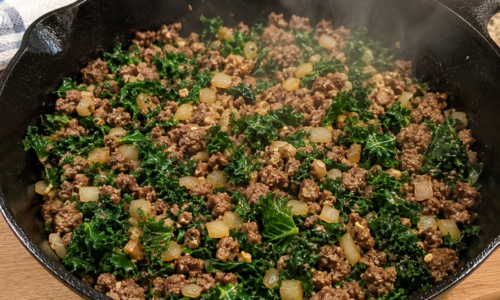
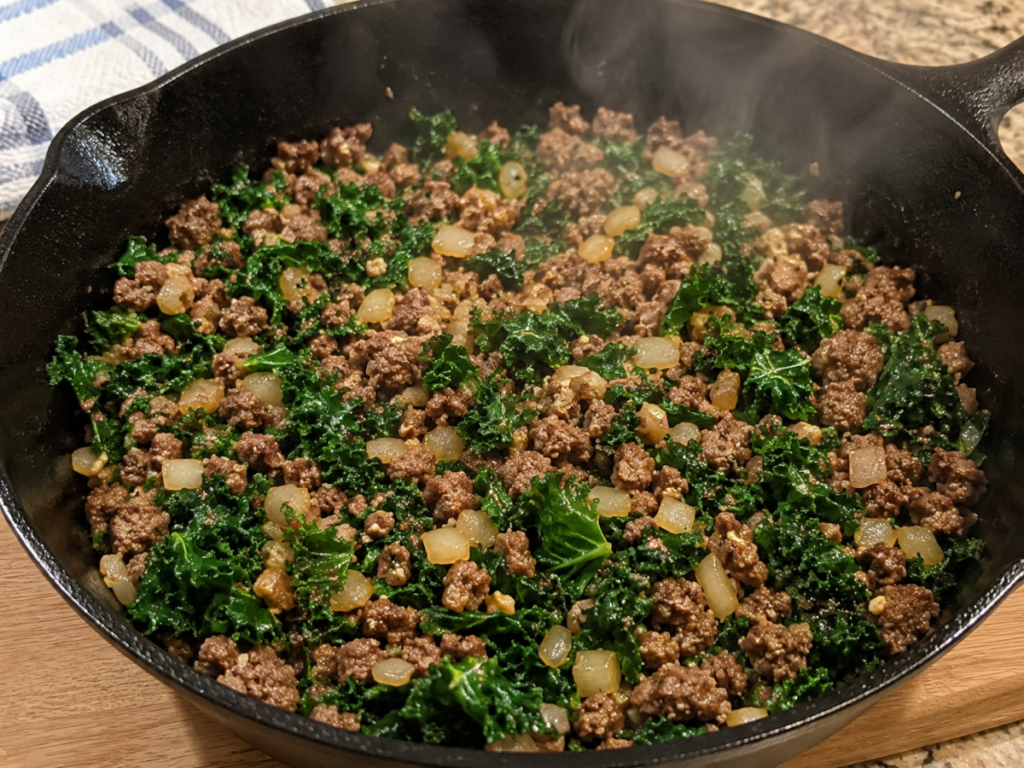
Ground beef with onions, garlic, and kale is exactly that kind of dinner. The beef provides richness and staying power. The onions soften and sweeten in the rendered fat. Garlic adds depth, while kale absorbs the savory juices left behind in the pan. Sea salt and black pepper finish the job without covering up what the ingredients already do well. It is straightforward food. That is part of its strength.
For people following a low-lectin lifestyle, this combination is especially useful because it avoids many of the ingredients that can turn an otherwise simple skillet meal into a personal tolerance experiment. There are no beans, grains, conventional pasta, bread crumbs, sugary sauces, or nightshade-heavy seasoning blends. It is meat, aromatic vegetables, leafy greens, and basic seasoning cooked in one pan. That simplicity makes the recipe easy to repeat, adjust, and trust.
Why This Combination Works So Well
Ground beef and kale might not sound like an exciting pairing on paper. In the skillet, they make perfect sense. Beef brings fat, protein, and deeply browned flavor. Kale brings texture, freshness, and a mild bitterness that cuts through the richness of the meat. Onions bridge the two, becoming soft and lightly sweet as they cook. Garlic sharpens the savory side of the dish without needing a bottled sauce.
The cooking order matters. Starting with the beef creates browned bits and rendered fat in the pan. The onions and garlic then cook in that flavor rather than in plain water or a large amount of added oil. When the kale goes in last, it picks up whatever remains at the bottom of the skillet.
Nothing valuable gets washed away. This is one reason one-pan meals often taste better than their short ingredient lists suggest. Each ingredient contributes something to the next stage of cooking. The pan becomes the sauce.
A Naturally Low-Lectin Foundation
Beef does not contain plant lectins. Kale, onions, and garlic are also commonly included in lower-lectin eating patterns, making this dish a practical foundation for people who prefer to limit foods with larger amounts of active dietary lectins.
Lectins are proteins found in many plants, though the amounts and biological activity differ widely among foods. Raw and undercooked legumes, especially certain beans, receive the most food-safety attention because proper soaking and boiling are needed to deactivate their active lectins. Research and public health guidance continue to emphasize that preparation method matters more than simply placing every plant food into the same category. This skillet does not contain legumes or grains, so it avoids the foods that usually require the most discussion about lectin reduction.
That does not mean everyone will respond to every ingredient identically. Garlic and onions, for example, contain fermentable carbohydrates that may bother some people with sensitive digestion. That reaction is separate from lectin content. A person can tolerate a food from a lectin standpoint and still find that a large serving causes bloating or discomfort. Personal response still counts.
For a gentler version, reduce the onion, cook it until very soft, and use one garlic clove instead of three. Garlic-infused olive oil can also add flavor for people who choose to limit whole garlic, though individual tolerance should guide that adjustment.
Kale Becomes Better in the Beef Pan
Raw kale can be tough, bulky, and stubborn. Cooked kale is a different ingredient. Heat softens its fibers, reduces its volume, and takes away some of the aggressive chew that gives kale a bad reputation. Cooking it in the same pan as the beef gives the leaves a thin coating of fat and savory juices, which makes them taste less grassy and more like part of the meal.
Kale supplies fiber along with vitamin K, vitamin C, vitamin A precursors, folate, manganese, and carotenoids such as lutein and zeaxanthin. The beef adds dietary fat, which also makes sense alongside a leafy green containing fat-soluble nutrients. This does not turn dinner into medicine, and it should not be described that way. It simply creates a balanced pairing in which the ingredients complement each other nutritionally as well as in flavor.
People taking warfarin or another medication affected by vitamin K intake should discuss major dietary changes with their healthcare professional. The usual concern is not that kale must always be avoided. Consistency in vitamin K intake may matter for medication management.
Choosing Ground Beef for the Skillet
The fat percentage changes the character of the finished dish.
An 80/20 ground beef blend produces more rendered fat, deeper flavor, and a richer coating for the kale. It can also leave more grease in the pan than some people enjoy.
A 90/10 blend cooks a little cleaner while still providing enough fat to brown properly. For this recipe, it is a good middle ground. The meat stays flavorful, but the skillet is less likely to become oily.
Very lean beef, such as 93/7 or leaner, also works. It may need a tablespoon of extra-virgin olive oil or avocado oil before the onions are added, especially if the pan becomes dry after the beef cooks.
Pasture-raised or grass-finished beef may fit the purchasing standards of some low-lectin households. It is not required for the mechanics of the recipe. Buy the best beef that fits your priorities and budget rather than allowing an idealized label to stop you from making a useful home-cooked meal.
One-Pan Ground Beef with Garlic Kale
Servings: 4
Prep time: 10 minutes
Cook time: 20 minutes
Total time: 30 minutes
Ingredients
- 1 pound ground beef, preferably 85/15 or 90/10
- 1 medium yellow onion, diced
- 3 garlic cloves, minced
- 1 large bunch kale, about 8 packed cups chopped
- 1 teaspoon sea salt, divided, plus more to taste
- 1/2 teaspoon freshly ground black pepper, plus more to taste
- 1 tablespoon extra-virgin olive oil or avocado oil, only if needed
- 2 tablespoons water or low-lectin-friendly beef broth, only if needed to help the kale wilt
Preparing the Kale
- Remove the thick center stems before chopping the kale. The thinner sections near the top can remain, but the large lower stems tend to stay fibrous longer than the leaves.
- Stack several leaves, roll them loosely, and slice them into ribbons. Cut the ribbons once or twice in the opposite direction so the pieces are easy to eat.
- Wash the chopped kale thoroughly and dry it well. A little water clinging to the leaves is fine because it creates steam in the skillet. Soaking-wet kale, however, can water down the browned flavor.
Directions
- Place a large skillet over medium-high heat. A 12-inch cast-iron or stainless-steel skillet works well because it gives the beef enough room to brown instead of steam.
- Add the ground beef and break it into several large pieces. Let it sit undisturbed for two to three minutes so the underside can develop color.
- Break the beef into smaller crumbles with a wooden spoon or sturdy spatula. Season it with about half of the sea salt and black pepper. Continue cooking until the meat is browned and no pink areas remain.
- Ground beef should reach an internal temperature of 160°F, or 71.1°C, for food safety. Check the thickest portion with an instant-read thermometer rather than relying only on color.
- If the pan contains a large pool of grease, carefully spoon some out. Leave one to two tablespoons behind to cook the vegetables.
- Reduce the heat to medium. Add the diced onion and stir it into the beef. Cook for four to five minutes, until the onion becomes soft and lightly golden.
- Add the minced garlic and cook for 30 to 60 seconds. Keep it moving. Garlic can go from fragrant to bitter quickly, especially in a hot skillet.
- Add the chopped kale in two or three batches. Stir each batch into the beef mixture as it begins to collapse. This looks like far too much kale at first. Within several minutes, it will shrink dramatically.
- Sprinkle in the remaining sea salt and black pepper. Cover the skillet for two minutes to trap steam, then uncover and stir.
- Continue cooking for another three to five minutes, depending on how soft you prefer the kale. Add one or two tablespoons of water or broth if the pan becomes dry before the leaves are tender.
- Taste and adjust the seasoning. Serve hot.
Browning Is the Difference Between Fine and Flavorful
The biggest mistake with ground beef is constant stirring. Moving the meat around from the moment it hits the pan prevents good contact with the hot cooking surface. Moisture escapes, collects beneath the beef, and causes it to simmer in its own liquid. The meat turns gray before it develops much flavor. A better approach is to let the beef sit.
Spread it across the skillet, press it down lightly, and leave it alone for a couple of minutes. Once a browned crust forms, begin breaking it apart. That short pause creates the roasted, savory notes that carry the entire dish.
Crowding also affects browning. A small skillet traps steam, especially if the beef is cold or contains a lot of surface moisture. Use a wide pan and allow it to heat before adding the meat. The onions benefit from patience too. They do not need to become fully caramelized, but they should soften enough to lose their raw edge. Adding the garlic after the onions protects it from burning during the longer cooking period.
How Soft Should the Kale Be?
There is no single correct texture. Some people prefer kale with a little bite left in the leaves. Others want it cooked until fully tender and almost silky. Both versions work with this recipe. For firmer kale, leave the skillet uncovered and cook it for three to four minutes after adding the last batch. For softer kale, add two tablespoons of water, cover the pan, and let the leaves steam for five minutes. Stir once or twice so the bottom does not scorch.
The variety of kale also makes a difference. Curly kale is widely available and holds its structure well. Lacinato kale, sometimes sold as dinosaur kale or Tuscan kale, has flatter leaves and often becomes tender more quickly. Baby kale wilts almost immediately. Add it after the beef and onions are fully cooked, then stir just until the leaves collapse.
Making the Recipe Work for Meal Prep
This skillet reheats well because it does not contain a delicate sauce or crisp coating that falls apart overnight. Divide the cooked mixture among four containers and refrigerate it promptly. Keep the containers sealed and use them within a safe refrigerated storage period. Reheat only the portion you plan to eat, bringing it back to a steaming-hot temperature.
The kale may darken slightly in storage, but the flavor usually becomes more blended by the next day. The onion and garlic settle into the beef, while the greens continue absorbing the seasoned juices.
For a larger batch, double the ingredients but brown the beef in two rounds. Cooking two pounds of meat at once in an average skillet creates too much moisture and weakens the browning. Return both batches to the pan before adding the onions and kale.
Easy Adjustments Without Losing the Point
The basic version is deliberately spare, but it can support a few additions without becoming a different recipe. Sliced mushrooms can be cooked after the beef and before the onions. Let them release their moisture and begin to brown before moving forward.
A spoonful of extra-virgin olive oil added at the end gives the kale a softer texture and a fruitier finish. A small squeeze of lemon can brighten the skillet for people who tolerate citrus. Fresh herbs work too. Parsley keeps the flavor clean, while rosemary creates a heavier, more aromatic result. Use rosemary lightly because it can dominate ground beef and garlic.
For more heat, crushed red pepper would be the common choice, though peppers belong to the nightshade family and may not suit every low-lectin plan. Freshly ground black pepper provides warmth without introducing another major ingredient category.
The dish can also be served with mashed cauliflower, roasted cabbage, sautéed mushrooms, or a simple avocado salad. It does not need a grain underneath it to feel complete.
Common Problems and Simple Fixes
Watery beef usually means the pan was too small, the heat was too low, or the meat was stirred too soon. Let excess liquid evaporate before adding the onion. Bitter garlic usually means it cooked too long or touched an overheated bare section of the pan. Add it only after the onions have softened, and stir it constantly.
Tough kale needs more time, more steam, or smaller pieces. Add a splash of water, cover the pan, and cook it for several extra minutes. Greasy kale means too much rendered beef fat was left in the skillet. Remove the excess before adding the vegetables, but leave enough to coat the bottom of the pan.
Bland results usually come from underseasoning the beef at the beginning. Seasoning only at the end leaves the meat tasting flat inside, even when the surface tastes salty. Divide the sea salt between the beef and the kale so each part of the dish receives attention.