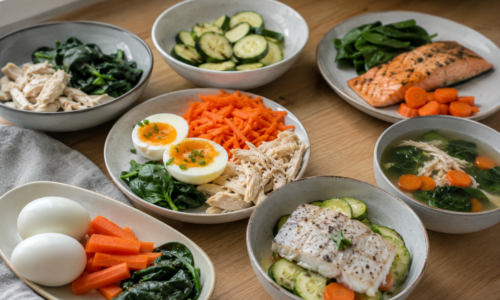
Some days, the digestive system feels ordinary. You eat, move on, and barely think about it. Other days, even a familiar meal can feel heavy, noisy, or unpredictable. Bloating builds. Appetite drops. Reflux appears. The stomach feels full too quickly, or the intestines seem irritated by foods that were tolerated just fine last week. Those are the days when complicated meal planning fails.
A sensitive digestion day does not call for culinary ambition. It calls for structure. The goal is not to create the “perfect” healing meal or strip the diet down to almost nothing. The goal is to reduce digestive workload while still eating enough protein, fluid, minerals, and energy to get through the day.
That is where templates help. A template gives you a repeatable meal shape without forcing you to eat the exact same food every time. You choose one gentle protein, one well-cooked plant food, one simple fat, and an optional easy carbohydrate based on your tolerance. Fewer decisions. Fewer ingredients. Less guessing.
Sensitive Digestion Is Not One Single Problem
The phrase “sensitive digestion” can describe several different experiences. One person may be dealing with upper abdominal fullness and burping. Another may have loose stools. Someone else may feel constipated, gassy, or mildly nauseated. These symptoms do not all have the same cause, and they do not always respond to the same foods.
Meal size, fat content, fiber type, food texture, caffeine, carbonation, and fermentable carbohydrates can all change how a meal feels. NIDDK guidance for several digestive disorders reflects this individual pattern. Foods that aggravate indigestion or gas differ from person to person, though fatty meals, large fiber loads, carbonated drinks, and certain grains or fruits may worsen symptoms in some people. This means the safest template is not a universal list of “good” and “bad” foods. It is a method for simplifying a meal using foods you already know reasonably well.
Your normal low-lectin plan still matters, but a rough digestion day may require a temporary adjustment in texture and portion size. A large raw salad may fit your usual food philosophy and still be a poor choice when your stomach feels unsettled. The same can be true for a large serving of nuts, a rich cream sauce, or a mountain of cruciferous vegetables. The food may not be wrong. The timing may be.
The Four-Part Gentle Meal Template
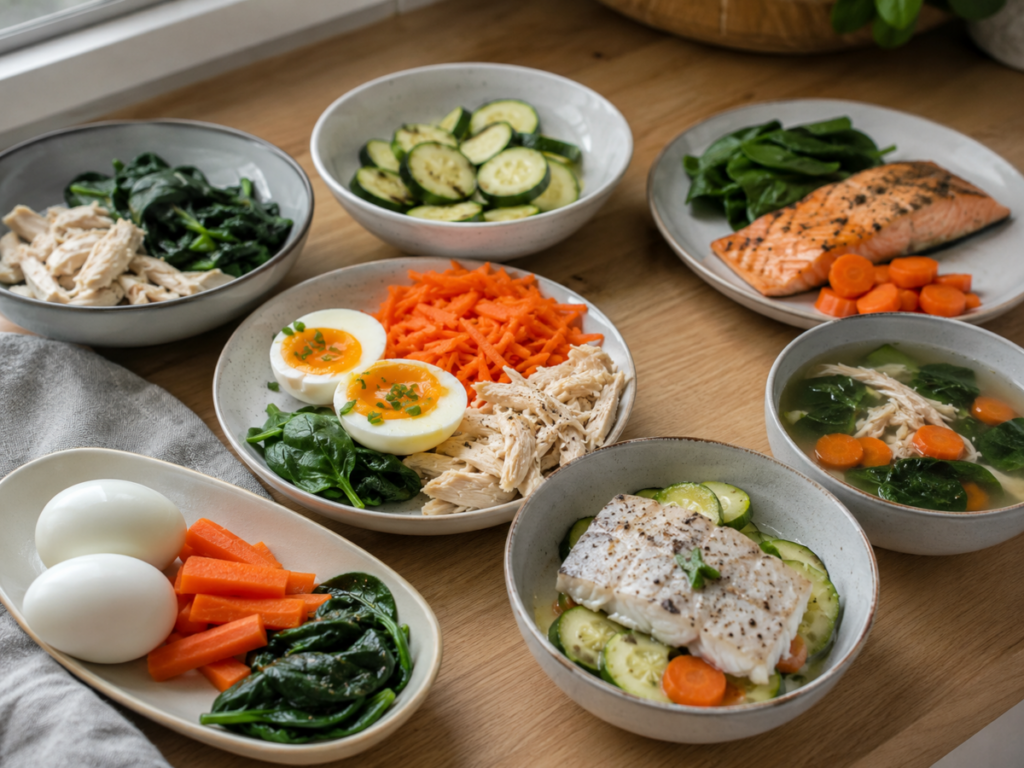
A dependable sensitive-day meal can be built from four parts. First, choose a straightforward protein. Eggs, gently cooked fish, shredded chicken, turkey, or another personally tolerated protein usually gives the meal enough substance without creating a long ingredient list.
Second, add a cooked vegetable with a soft texture. Peeled zucchini, carrots, asparagus tips, spinach, peeled summer squash, or well-cooked greens may work better than raw vegetables on a touchy day. Cooking softens plant structure and often makes chewing and portion control easier.
Third, use a modest amount of fat. Extra virgin olive oil, avocado oil, ghee, or another tolerated fat can add calories and flavor, but more is not always better during active discomfort. High-fat foods can worsen fullness or bloating for some people, especially when stomach emptying already feels slow.
Fourth, add an optional gentle carbohydrate if it fits your version of low-lectin eating. This might be a small serving of peeled sweet potato, pressure-cooked millet, sorghum, or another food you have already tested. Sensitive days are a bad time to experiment with a brand-new grain, flour, resistant starch product, or packaged substitute. The plate does not need to look impressive. It needs to feel manageable.
Template One: Soft Protein Plus One Cooked Vegetable
This is the most reliable place to start. Build the meal around softly scrambled eggs, poached fish, baked salmon, shredded chicken, or ground turkey cooked without a heavy crust. Pair it with one vegetable cooked until tender. Add salt, a small drizzle of oil, and perhaps a mild herb such as parsley, dill, or thyme. A plate of soft eggs with wilted spinach works. So does baked cod with peeled zucchini. Shredded chicken with well-cooked carrots is another useful combination.
Keeping the vegetable count to one may sound overly simple, but that is the point. A bowl containing onions, garlic, cauliflower, cabbage, peppers, mushrooms, nuts, seeds, and three sauces may be nutritious on paper while still creating a miserable afternoon for a sensitive gut. Ingredient stacking matters.
This template is especially useful when you feel bloated, tired, or uncertain about the trigger. It gives you nutrition without creating a food investigation worthy of a detective novel.
Template Two: The Broth Bowl
A broth bowl is not the same as surviving on clear liquid. It is a light meal built around warm broth, tender protein, and one or two soft additions. Start with homemade broth or a packaged broth with a short ingredient list. Add shredded chicken, turkey, fish, or a gently poached egg. Then add well-cooked spinach, peeled zucchini, carrots, or another tolerated vegetable. A spoonful of olive oil can raise the calorie content if fat is sitting well.
Warm liquids can be easier to sip slowly when appetite is low. They also make it simple to control texture. Clinical guidance for delayed stomach emptying often includes soft foods, soups, and smaller meals because they may be easier to tolerate than a large solid plate. That does not mean every person with digestive discomfort has gastroparesis. It simply shows why texture and meal volume can matter.
Avoid turning the broth bowl into a hidden ingredient bomb. Many commercial broths contain onion powder, garlic, gums, starches, sugar, yeast extracts, or vague flavor blends. Some people tolerate those ingredients. Others do not. Read the label instead of assuming broth is automatically gentle.
Template Three: The Small Breakfast Plate
Breakfast can become strangely complicated in low-lectin eating. People start combining alternative flours, sweeteners, nut butters, seeds, fruit, dairy substitutes, protein powders, and supplements into one meal. On a good day, that might work. On a sensitive day, it becomes too many moving parts. Use a smaller plate.
Try one or two eggs with a side of cooked spinach. Choose plain unsweetened coconut yogurt only if you already know it agrees with you, then add a modest portion of a tolerated fruit. Use leftover chicken or fish if savory breakfasts feel better than sweet ones. The key is to stop chasing the traditional idea of breakfast. Your digestive system does not care whether chicken belongs at 8 a.m. It cares about volume, composition, and tolerance.
Coffee deserves separate attention. Caffeine may worsen indigestion for some people, and coffee can feel harsher when consumed on an empty stomach. On a sensitive day, reduce the amount, drink it with food, switch to a milder option, or skip it. That is not surrender. It is troubleshooting.
Template Four: The Mini-Meal Sequence
A full plate can feel intimidating when you are nauseated, overly full, or recovering from a digestive flare. In that case, split the meal. Eat a small portion of protein first. Pause. Add a few bites of soft vegetables later. Have broth or water between meals rather than flooding the stomach during the meal if large fluid volumes make you uncomfortable.
Smaller, more frequent meals are commonly recommended when fullness and slow stomach emptying are problems. Even without a diagnosed motility disorder, some people find that three compact meals and one small snack feel better than two enormous plates. A mini-meal might be one egg and a few bites of zucchini. Two hours later, it could be shredded chicken in broth. Later still, a small piece of fish with cooked carrots.
This approach has one weakness. It can become accidental under-eating. A person feels uncomfortable, eats tiny amounts all day, then reaches evening exhausted and ravenous. Track what you actually ate. Sensitive digestion does not erase the body’s need for protein and calories.
Template Five: Protein and Purée
Purées are useful when chewing, texture, or intestinal bulk feels like too much. Pair a soft protein with a vegetable purée made from a tolerated food. Carrot purée, peeled zucchini soup, mashed cauliflower for those who tolerate it, or smooth cooked greens can work. Use broth to thin the texture and add only enough fat to make the meal satisfying.
There is a major difference between temporarily choosing softer food and living indefinitely on a highly restricted, low-fiber menu. Low-fiber or low-residue approaches are clinical tools with specific uses, and the definition of “low residue” itself has not always been consistent across medical practice.
Use the softer texture as a short-term adjustment unless a clinician has given you a different plan. Fiber supports bowel function and gut microbes, but more fiber is not automatically better during every symptom pattern. Fiber type, dose, and timing all matter.
Template Six: The Leftover Rescue Bowl
Sensitive digestion often becomes harder because the person is already tired. Cooking from scratch three times in one day is not realistic. A leftover rescue bowl solves that problem. Keep plain cooked proteins in the refrigerator or freezer in single-meal portions. Do the same with one or two cooked vegetables. Reheat them gently with broth or a splash of water, then add salt and a mild herb. The best rescue components are intentionally plain. Sauce can be added later on stronger days. A freezer portion of shredded chicken is more flexible than a fully seasoned casserole.
Food safety still applies. Cool leftovers promptly, refrigerate them safely, and reheat thoroughly. Be aware that cooling cooked starches can increase resistant starch through retrogradation. Resistant starch escapes digestion in the small intestine and is fermented in the colon. That can be helpful for some people, but it may increase gas or discomfort in others. A chilled and reheated starch is not automatically gentler just because it has a lower glycemic response. Gut comfort and blood sugar response are related to different mechanisms.
Seasoning Without Starting a Fire
Sensitive meals do not need to taste like wet cardboard. Use salt, fresh parsley, dill, thyme, rosemary, ginger, or a small squeeze of lemon if acid is not a problem for you. Garlic-infused oil may offer flavor without the same fermentable carbohydrate load as garlic pieces, though personal tolerance still decides the matter.
Skip aggressive seasoning when symptoms are active. Heavy chili, large amounts of black pepper, rich sauces, sugar alcohols, and highly acidic dressings can make an already irritated meal harder to judge. Seasoning is also where packaged foods become deceptive. A plain-looking rotisserie chicken may contain sugar, starch, gums, spice blends, or seed oils. A “healthy” soup may contain beans, tomatoes, corn, onion, garlic, and thickeners. Convenient does not always mean simple.
Match the Template to the Symptom
Different symptoms call for different adjustments. For early fullness, nausea, or upper abdominal heaviness, reduce meal size, soften texture, and keep fat moderate. For gas and bloating, reduce ingredient stacking and watch large servings of fermentable carbohydrates. Low FODMAP research shows that reducing certain poorly absorbed carbohydrates can improve symptoms in people with IBS, but the full diet is meant to be structured and personalized rather than followed as a permanent blanket restriction.
For loose stools, choose simple meals and avoid pouring extra fat into everything. For constipation, do not assume the answer is a massive fiber increase. Some people feel worse when they suddenly add bran, raw vegetables, or large amounts of seeds. Increase food and fluid thoughtfully, and pay attention to the type of fiber rather than treating all fiber as identical. For reflux, keep portions smaller and avoid lying down soon after eating. NIDDK guidance suggests leaving at least three hours between a meal and bedtime when nighttime reflux is an issue.
Build a Personal Three-Day Safety Menu
A safety menu is a short list of meals you can repeat for one to three days when digestion feels unpredictable. It should be made from foods you have already tested, not foods that merely appear on somebody else’s approved list. Choose two proteins, three cooked vegetables, one broth, one optional carbohydrate, and two mild seasonings. From that small set, build several combinations.
For example, eggs with spinach for breakfast, chicken and carrot broth for lunch, and baked fish with peeled zucchini for dinner. The next day, rotate the same ingredients into different forms. Make a soft egg bowl, a chicken and zucchini plate, and a fish broth with carrots.
Record the symptom pattern, the portion size, and how long the discomfort lasted. A food diary can help identify personal triggers and patterns, especially for gas and bloating. The point is not to obsess over every bite. It is to separate a true pattern from a single bad afternoon.
Persistent vomiting, black or bloody stool, severe abdominal pain, unintentional weight loss, dehydration, trouble swallowing, fever, or symptoms that repeatedly interfere with eating deserve medical evaluation. A meal template can reduce friction around food. It cannot diagnose ulcers, gallbladder disease, inflammatory bowel disease, infection, obstruction, or a motility disorder.