Busy weeks do not respect good intentions. You can buy the cleanest ingredients, plan the perfect low-lectin meals, and tell yourself Sunday night that this is the week everything stays on track. Then Tuesday arrives with errands, work, family demands, a late appointment, and that quiet little voice whispering that takeout would be easier.
That is where batch cooking earns its place.
Batch cooking is not about spending an entire weekend chained to the stove. That sounds miserable, and most people will not keep doing it. The better approach is building flexible meal templates that give you ready-to-use parts, not five days of identical leftovers. Low-lectin eating works best when meals stay simple, repeatable, and easy to adjust. You want food that is prepared enough to save you, but not so rigid that you feel trapped by it.
A good batch cooking system gives you three things: clean proteins, safe vegetables, and flavorful fats or sauces. From there, you can build bowls, plates, soups, breakfast skillets, lettuce wraps, and quick reheated meals without starting from zero every time.
The Real Problem Is Decision Fatigue
Most people do not fall off a low-lectin plan because they forgot what to eat. They fall off because they are tired. Food decisions pile up all day. What is for breakfast? What can I pack? What is safe at the restaurant? Is there anything at home? Can I eat this without reacting tomorrow?
Low-lectin eating adds another layer because the usual convenience foods often depend on grains, beans, seed oils, nightshades, corn, soy, and mystery sauces. That does not mean the lifestyle is too hard. It means the kitchen needs a backup system.
Batch cooking removes the repeated decision. Instead of asking, “What do I make?” you ask, “Which protein, which vegetable, and which fat am I putting together?” That small shift matters. It turns meals from a daily negotiation into assembly. The goal is not perfection. The goal is fewer weak points.
The Low-Lectin Batch Cooking Formula
A reliable weekly batch can be built around five pieces. First, prepare one or two proteins. These could be pasture-raised eggs, wild-caught salmon, pressure-cooked chicken, turkey patties, grass-fed beef, lamb, or compliant seafood. Protein is the anchor because it keeps meals satisfying and reduces the urge to snack.
Second, cook two or three vegetables. Greens, asparagus, broccoli, cauliflower, cabbage, Brussels sprouts, mushrooms, celery, onions, and peeled or seeded approved vegetables can all work depending on your tolerance. The exact list depends on where someone is in the low-lectin process, but the principle stays the same.
Third, make one raw or lightly prepped item. This could be washed greens, sliced avocado, chopped herbs, lemon wedges, cucumber if tolerated and peeled, or a simple salad base. Freshness keeps batch meals from feeling like cafeteria food.
Fourth, prepare one sauce or finishing fat. Olive oil, avocado oil, lemon herb dressing, garlic oil, basil oil, compliant pesto, or a simple tahini-free herb sauce can change the personality of a meal fast.
Fifth, keep one emergency item ready. This is the food you reach for when the day goes sideways. It might be cooked turkey patties in the fridge, frozen salmon portions, hard-boiled pasture-raised eggs, or a container of soup. That is the template. Not complicated. Not glamorous. Very effective.
Template One: The Protein Plus Greens Plate
This is the workhorse meal for busy weeks. It is plain in the best possible way. You batch cook a protein, cook a green vegetable, and keep a finishing fat ready. A simple version might be roasted chicken thighs, sautéed spinach, and olive oil with lemon. Another version might be salmon, asparagus, and avocado oil with herbs. Turkey patties with cabbage and garlic oil also work well.
The reason this template succeeds is that it does not ask much from your brain. The food already knows what it is doing. Protein gives structure. Greens bring fiber, minerals, and volume. Fat carries flavor and helps the meal feel complete.
For meal prep, cook the protein slightly under your ideal final texture if you plan to reheat it. Salmon, for example, can dry out fast. Chicken and turkey usually tolerate reheating better. Greens should be cooked enough to remove excess water, but not so long that they turn limp and bitter by day three. This template is especially helpful for lunches. Pack the protein and vegetables together, then add the dressing or oil after reheating. That keeps the meal from getting soggy.
Template Two: The Low-Lectin Bowl Without the Grain
A bowl does not need rice, quinoa, beans, or corn to feel like a real meal. The bowl format is about layers, not grains. Start with a base of greens, cauliflower rice, sautéed cabbage, shredded lettuce, or roasted broccoli. Add protein. Add something creamy, such as avocado if tolerated. Add something sharp, like lemon juice or vinegar. Finish with herbs and olive oil.
One good batch version is cauliflower rice, turkey meatballs, sautéed mushrooms, parsley, and lemon olive oil. Another is shredded cabbage, grass-fed beef, avocado, cilantro, and a garlic-lime dressing. For a seafood bowl, use greens, salmon, cucumber if tolerated, dill, and a lemon avocado oil dressing.
The trick is moisture control. Wet ingredients ruin bowls fast. Store cooked vegetables separately from raw greens. Keep sauces in small containers. Add avocado right before eating when possible. A bowl should feel fresh even if half the parts were cooked two days ago. This is where batch cooking feels less like leftovers and more like a restaurant-style build. Same ingredients, different arrangement.
Template Three: The Soup Base That Saves the Week
Soup is underrated in low-lectin meal planning. It is forgiving, easy to digest for many people, and one of the best ways to turn simple ingredients into comfort food. A good low-lectin soup base starts with broth, protein, aromatics, and vegetables. Use homemade broth or a carefully chosen store-bought version without yeast extract, soy, corn derivatives, sugar, or suspicious “natural flavors” if those bother you. Add cooked chicken, turkey, lamb, or seafood near the end depending on the soup.
A basic batch might include broth, chicken, celery, onions, mushrooms, and greens. Another version could use turkey, cauliflower, garlic, herbs, and olive oil. For a thicker texture, blend cooked cauliflower into the broth instead of using flour or starch.
Soup also works well as an emergency meal because it freezes cleanly. Freeze it in single-serving portions. Future you will be grateful. Just avoid freezing delicate greens too long if texture bothers you. Add fresh greens during reheating instead. Batch soup should be simple. A complicated soup becomes one more project. A simple soup becomes insurance.
Template Four: Breakfast Building Blocks
Breakfast is where many people panic because standard quick options are often grain-heavy. Cereal, toast, muffins, breakfast bars, oatmeal, and sweetened yogurts may not fit a strict low-lectin plan. That leaves people staring into the fridge like it owes them answers. Batch cooking fixes that.
Prepare breakfast building blocks instead of full breakfasts. Hard-boiled pasture-raised eggs, cooked greens, turkey patties, smoked salmon if tolerated and cleanly sourced, chopped herbs, and avocado can become several different breakfasts.
One day it is eggs with greens and olive oil. The next day it is a turkey patty with avocado and sautéed mushrooms. Another day it is salmon over greens with lemon. None of these need much cooking if the parts are ready.
For people who prefer warm breakfasts, make a skillet base. Cook cabbage, mushrooms, onions, and greens ahead of time. In the morning, reheat a scoop in a pan and add eggs or leftover protein. Five minutes. Done. This approach beats forcing yourself into elaborate low-lectin breakfast recipes that look good online but collapse under real weekday pressure.
Template Five: The Reintroduction-Safe Batch
People in the elimination phase often make a mistake with batch cooking. They cook too many new things at once. Then they react and have no idea what caused it. Batch cooking should be boring during elimination. That is not a flaw. It is the point. Use known-safe foods as the base. If you are testing one food, keep it separate and clearly portioned.
For example, batch cook chicken, greens, cauliflower, and olive oil as your safe meal structure. Then test one reintroduction food at one meal, not mixed into the whole week’s batch. Do not put a trial ingredient into a giant soup pot unless you are ready to throw out the entire pot if it does not agree with you.
This is especially true for nightshades, legumes, grains, dairy, nuts, and seeds. Tolerance can be personal. A food that works beautifully for one person can be a problem for another. The batch rule is simple: safe foods go in bulk, test foods stay separate.
Flavor Without Lectin Trouble
Low-lectin meals fail when they become bland punishment. Nobody wants plain chicken and steamed greens forever. Flavor matters, and it can be added without leaning on common troublemakers. Use herbs aggressively. Parsley, basil, cilantro, rosemary, thyme, dill, oregano, and chives can change a meal fast. Use acid. Lemon juice and approved vinegars brighten food without much effort. Use garlic and onions if tolerated. Use quality fats, especially olive oil and avocado oil.
Make one sauce per week. Not five. One. A lemon herb oil can carry fish, chicken, greens, and bowls. A basil garlic oil can make turkey patties feel completely different. A simple avocado dressing can turn leftovers into something that feels planned.
Keep sauces clean and short. Long ingredient lists are where hidden lectins and additives sneak in. Many bottled dressings contain soybean oil, corn syrup, gums, starches, seed oils, or vague flavor blends. Homemade is usually safer and better.
Storage Matters More Than People Think
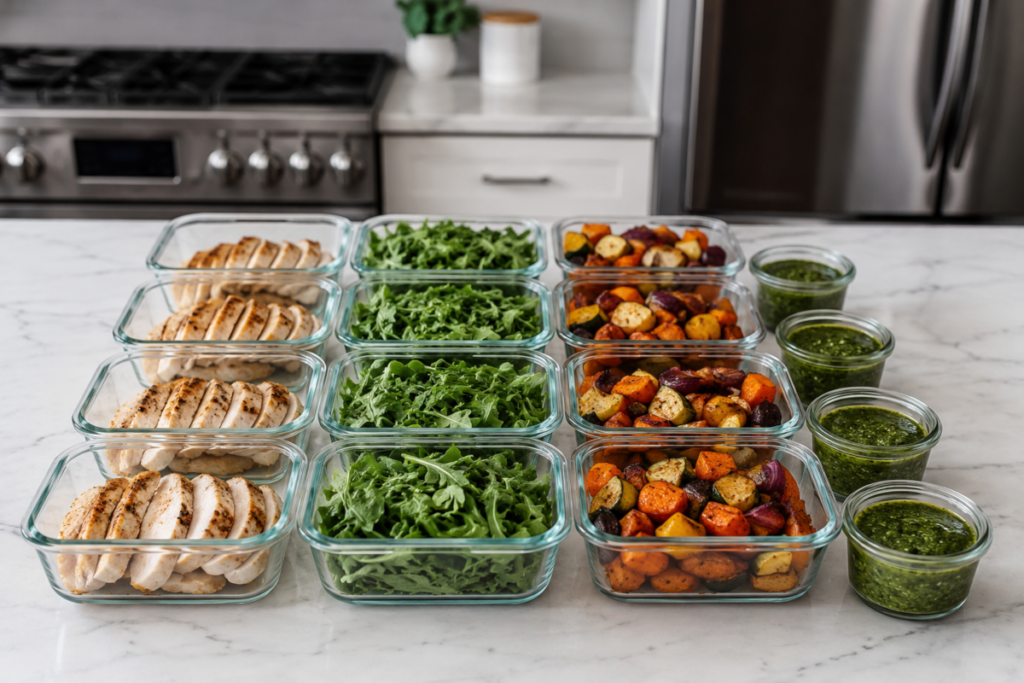
A batch cooking plan can fall apart because of bad storage. Food that tastes good on Sunday can become sad by Wednesday if everything is packed together in one wet container. Store by component. Proteins in one container. Cooked vegetables in another. Raw greens dry and separate. Sauces in small jars. Avocado whole until needed. Herbs wrapped lightly or stored in a container with a paper towel.
Glass containers are excellent because they reheat well and do not hold smells as much as plastic. Labeling helps too, especially if you cook several proteins or freeze portions. A simple label with the food and date prevents the mystery-container problem.
For safety, cool cooked food before refrigerating, but do not leave it sitting out for hours. Most cooked meals are best within three to four days in the fridge. Freeze anything you will not eat in that window. Low-lectin eating should not include gambling with old chicken.
A Simple Two-Hour Weekly Prep
A practical prep session does not need to be dramatic. Set a timer, put on music, and cook enough to make weekdays easier. Start with protein. Roast chicken thighs or bake turkey patties while another pan cooks vegetables. While those cook, wash greens, chop herbs, and mix a dressing. If you are making soup, start it early and let it simmer while everything else comes together.
A strong weekly prep might look like this:
- Cook one tray of chicken thighs.
- Make one batch of turkey patties.
- Sauté cabbage and mushrooms.
- Roast broccoli or cauliflower.
- Wash salad greens.
- Mix lemon herb olive oil.
- Boil six pasture-raised eggs.
- Freeze two portions of soup or protein for emergencies.
That is enough food to create many meals without eating the same plate every day.
The Busy Week Assembly Plan
Once the components are ready, weekday meals become quick builds. Monday lunch can be chicken, broccoli, greens, and lemon oil. Monday dinner can be turkey patties with cabbage and avocado. Tuesday breakfast can be eggs with sautéed mushrooms. Tuesday lunch can be a chicken bowl with cauliflower rice and herbs. Wednesday dinner can be soup with extra greens added during reheating.
The same batch keeps changing because the format changes. Plate. Bowl. Soup. Skillet. Salad. Lettuce wrap. This is the difference between meal prep that feels restrictive and meal prep that actually supports a real life. People often think variety means cooking more recipes. Most of the time, variety means changing texture, temperature, sauce, and presentation.
The Freezer Is Your Safety Net
The freezer is not just for forgotten leftovers. It should be part of the plan from the beginning. Freeze single portions of soup, cooked proteins, and plain cooked vegetables. Avoid freezing delicate salad greens, avocado, and watery raw vegetables. Use flat freezer bags or small containers so food thaws quickly. Label everything.
The best freezer meals are simple. Plain turkey patties are more useful than a complicated casserole. Broth-based soup is more useful than a mystery mix of half-tolerated ingredients. Cooked chicken is more flexible than a fully sauced dish. A good freezer stash protects you from the worst food decisions. The night you almost order something that will make you feel awful, a ten-minute reheated meal can save the whole week.
Batch Cooking Should Match Your Tolerance Level
Low-lectin eating is not one identical plan for every person forever. Some people are in a strict reset phase. Some are maintaining. Some are testing reintroductions. Some know they tolerate pressure-cooked lentils or peeled and seeded tomatoes, while others do not. Your batch cooking should reflect your current stage.
During a strict phase, keep ingredients clean and repetitive. During maintenance, add more variety and controlled flexibility. During reintroduction, isolate test foods. During travel-heavy or stressful weeks, rely on the safest meals you know. This is not about fear. It is about reducing noise. The fewer variables in your food, the easier it is to understand your body’s feedback.
The Best Template Is the One You Will Repeat
A batch cooking plan that looks impressive but exhausts you is a bad plan. The best system is the one you can repeat when life is messy. Pick two proteins, two vegetables, one raw base, one sauce, and one emergency option. That is enough. Do not turn Sunday into a cooking marathon unless you genuinely enjoy it. Most people need a rhythm, not a production.
Low-lectin eating becomes easier when your kitchen has answers before hunger starts asking questions. A prepared fridge does not remove every challenge, but it gives you a fighting chance on the days when convenience food starts looking seductive. Keep the templates simple, keep the ingredients honest, and let repetition do some of the work.