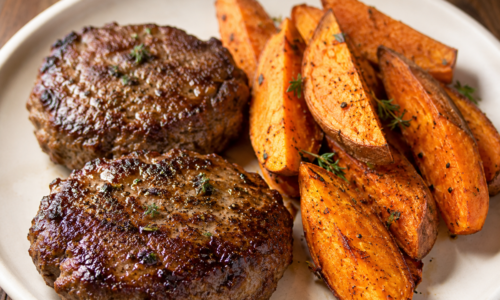
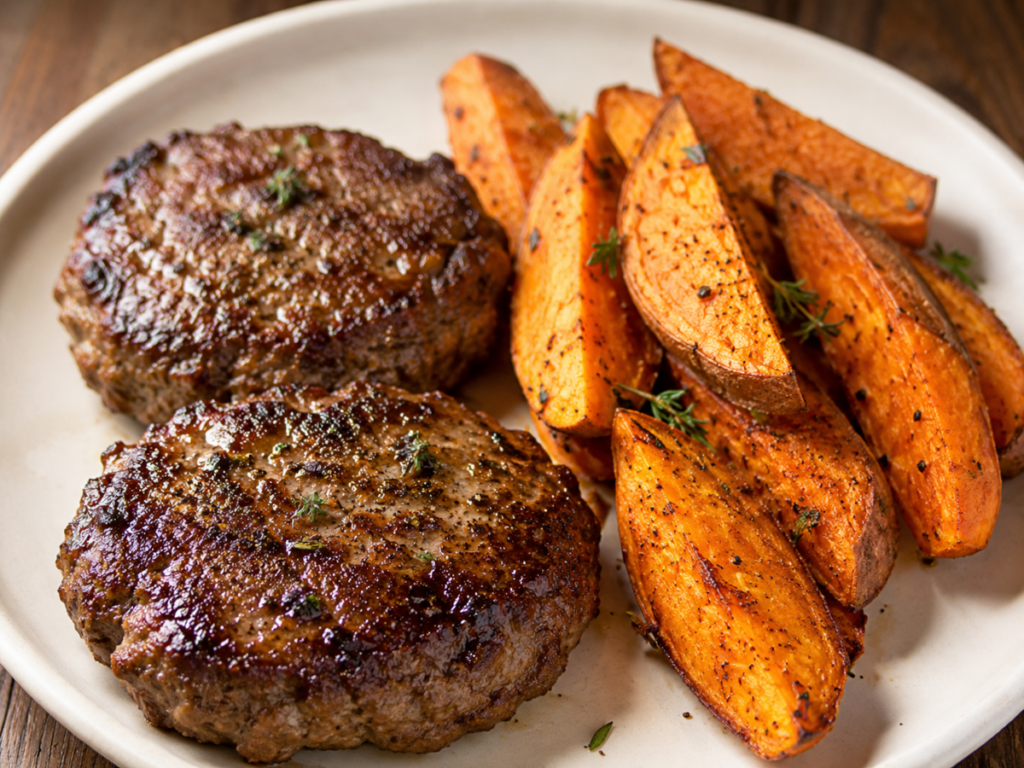
Some meals earn a permanent place in the rotation because they solve several problems at once. They are easy enough for a weeknight, familiar enough that nobody at the table needs convincing, and flexible enough to fit the way you actually eat rather than forcing you into a complicated recipe. Grass-fed beef patties with roasted sweet potato wedges fit that description especially well for someone building meals around a low-lectin approach.
The plate is intentionally simple: seasoned ground beef formed into patties and seared in a hot skillet, with peeled sweet potato wedges roasted in avocado oil until browned at the edges and soft through the center. There is no bun to work around, no sugary sauce covering the beef, and no long ingredient list hiding behind the word “seasoning.” The result is a straightforward protein-and-vegetable meal that can be adjusted easily for appetite, tolerance, and whatever else is being served that day.
A Simple Plate Can Make Low-Lectin Eating Easier
A low-lectin routine becomes much easier to maintain when not every dinner feels like a special project. Recipes with twelve specialty ingredients may be fun on the weekend, but the meals that carry most people through a month are usually the ones that can be made almost from memory. This one relies on two main foods, beef and sweet potato, plus avocado oil and basic seasonings.
Beef also gives the meal a substantial protein center rather than leaving the side dish to do all the work. Meat is a source of heme iron, and beef is also a commonly consumed source of zinc, two nutrients involved in many normal body functions. That does not make grass-fed beef automatically superior to every other protein choice, but it does make a plain beef patty a practical foundation for a filling meal.
The grass-fed label may matter to you for farming practices, flavor, personal preference, or how you choose to shop. It does not need to carry a larger health promise than the evidence can support. Ground beef varies in fat content regardless of the feeding system, so the package label still matters when deciding how rich or lean you want the patties to be.
Where Sweet Potatoes Fit in a Low-Lectin Kitchen
Sweet potatoes often appear in low-lectin meal plans because they are treated differently from many grains, legumes, and white potatoes in common low-lectin frameworks. That practical use should not be confused with a clinical rule that every person must follow. Research on dietary lectins is much more complicated than a simple list of foods that are universally good or bad, and the effects of food preparation vary according to the lectin and the food involved. Studies of plant foods show that heat processing, soaking, and boiling can reduce active lectins in many foods, especially legumes, but the degree of reduction is not identical across foods or cooking methods.
For this recipe, the sweet potatoes are peeled because that preparation fits the intended low-lectin style and creates a tender wedge with a clean roasted surface. Peeling also changes the fiber content somewhat, so it is better viewed as a dietary preference rather than a universal nutrition upgrade. Orange-fleshed sweet potatoes remain a useful source of beta-carotene, a carotenoid that gives them much of their orange color.
Roasting changes the experience of sweet potato more than boiling does. The exterior dries and browns, the inside becomes soft, and the natural sweetness becomes more noticeable. That makes portion size easy to adjust because the wedges feel like a real side dish rather than a substitute that is supposed to imitate something else.
Grass-Fed Beef Patties with Roasted Sweet Potato Wedges
Ingredients
- 2 medium to large sweet potatoes, peeled
- 1 1/2 tablespoons avocado oil
- 1/2 teaspoon sea salt
- 1/2 teaspoon garlic powder
- 1/4 teaspoon freshly ground black pepper
- 1/2 teaspoon dried rosemary or thyme, optional
- 1 1/2 pounds grass-fed ground beef
- 1 teaspoon sea salt
- 1 teaspoon garlic powder
- 1/2 teaspoon onion powder
- 1/2 teaspoon freshly ground black pepper
- 1 teaspoon avocado oil, if needed for the skillet
Instructions
- Heat the oven to 425°F. Line a large rimmed baking sheet with parchment paper or leave the pan bare if you prefer stronger browning.
- Cut the peeled sweet potatoes lengthwise into halves, then cut each half into evenly sized wedges. Aim for pieces that are close in thickness so they finish cooking at roughly the same time.
- Place the wedges in a large bowl. Add the avocado oil, salt, garlic powder, pepper, and rosemary or thyme if using. Toss until the surfaces are lightly and evenly coated.
- Arrange the wedges on the baking sheet in a single layer with a little room between them. Roast for 15 minutes, turn each wedge, then continue roasting for another 10 to 15 minutes. They are ready when the centers are tender and the edges have developed browned spots.
- While the sweet potatoes roast, place the ground beef in a bowl and add the salt, garlic powder, onion powder, and black pepper. Mix gently with your hands just until the seasonings are distributed. Overworking the meat can make the finished patties firmer and denser than necessary.
- Divide the beef into four equal portions and shape them into patties about 3/4 inch thick. Press a shallow indentation into the center of each patty with your fingertips so the middle is less likely to bulge as it cooks.
- Heat a heavy skillet over medium-high heat. If the beef is fairly lean or your pan tends to stick, add about a teaspoon of avocado oil. Place the patties in the hot skillet without crowding them and cook until a browned crust develops, then flip and finish cooking on the second side.
- Cook ground beef patties to an internal temperature of 160°F as measured with a food thermometer. USDA food-safety guidance recommends 160°F for ground beef because grinding can distribute bacteria through the meat, making surface color alone an unreliable measure of doneness.
- Let the patties rest briefly while the sweet potatoes finish. Serve one patty with a portion of roasted wedges, adding a tolerated green vegetable or simple salad if you want a larger plate.
The Small Details That Make Better Patties
Ground beef does not need much handling to become a good burger-style patty. In fact, less is usually better. Once salt and dry seasoning are added, mix only until everything is spread through the meat, then stop. Packing the beef tightly or repeatedly kneading it can produce a texture closer to meatloaf than a tender skillet patty.
A hot pan is equally important. The goal is to let the first side stay in contact with the skillet long enough to brown instead of nudging, pressing, or flipping it repeatedly. Pressing down on the patty with a spatula may look satisfying, but it also squeezes out juices that would be better left inside the meat.
The amount of fat in the ground beef will change the cooking experience. A leaner package may benefit from a light coating of avocado oil in the skillet, while a richer grind will render enough of its own fat. If the pan accumulates a large amount of rendered fat, spooning some out before cooking another batch can reduce splattering and help the next patties sear rather than shallow-fry.
Better Sweet Potato Wedges Start with Even Cutting
The most common problem with roasted wedges is not the oven temperature. It is inconsistent size. Thin pieces can darken before thick pieces become tender, which leaves you choosing between burnt edges and undercooked centers. Cutting the wedges as evenly as possible gives you much more control without adding any extra ingredients.
Spacing matters too. If the wedges are piled against one another, the moisture they release becomes trapped around the food and encourages steaming. A single layer with visible space between pieces allows more of the surface to dry and brown.
If you want softer wedges, cut them slightly thicker and roast until easily pierced with a fork. If you prefer more browned surface area, cut somewhat narrower wedges and turn them carefully halfway through. There is no need to chase restaurant-style crispness here, since sweet potatoes naturally stay softer than conventional fried potatoes when roasted this way.
Seasoning Without Turning Dinner into a Formula
Salt, garlic, onion, and black pepper keep the beef familiar, but this is an easy recipe to change without losing its basic character. Dried rosemary, thyme, oregano, or a little smoked seasoning can shift the flavor in another direction. If a particular spice blend works well for you, use it, but check premixed seasonings for added sugar, starches, or ingredients you may be trying to limit.
The same flexibility applies to the sweet potatoes. Rosemary gives them a savory edge, while garlic and black pepper keep them from tasting dessert-like. If you prefer a simpler side, avocado oil and salt alone are enough.
Low-lectin cooking tends to work better over time when a meal can bend without breaking. A recipe that only works with one brand, one specialty ingredient, and one exact combination becomes harder to repeat. Beef patties and roasted wedges provide a base that can stay consistent while vegetables, herbs, portion sizes, and toppings change around it.
Adjust the Meal to Your Own Tolerance and Goals
Food tolerance is personal, and a meal being labeled low-lectin does not guarantee that every ingredient will feel equally comfortable for every person. Sweet potato portions can be reduced or increased according to appetite, carbohydrate needs, digestive response, and whatever else is on the plate. Someone tracking meals may find it more useful to keep the preparation consistent for a few servings rather than changing several ingredients at once, since consistency makes patterns easier to observe.
The same principle applies if you are deciding whether sweet potatoes belong in your regular rotation. Instead of assigning them a permanent label after one meal, consider the amount eaten, how they were prepared, what was eaten alongside them, and how you felt afterward. A food journal can help separate a repeatable pattern from an isolated reaction, especially when the rest of the meal stays simple.
For a larger dinner, add sautéed greens, roasted cruciferous vegetables, or another side that already fits your personal food list. For a lighter meal, one patty and a modest handful of wedges may be enough. The value of this recipe is not that it creates a perfect low-lectin plate, but that it gives you a dependable structure with very little friction.
Make Extra Without Creating a Week of Reheated Burgers
This recipe scales easily, which makes it useful for batch cooking, but the components are best stored separately. Extra cooked patties can be refrigerated in a covered container, while the roasted sweet potatoes should go into their own container so moisture from one does not soften the other.
For reheating, a skillet works well for the beef because it warms the surface quickly without requiring another full cooking cycle. Sweet potato wedges regain more texture in an oven, toaster oven, or air fryer than they do in a microwave. If convenience matters more than crisp edges, the microwave is still perfectly workable.
That small amount of advance cooking can turn another meal into a five-minute decision instead of a new recipe. A patty can become lunch beside leftover greens, while the wedges can be paired with eggs or another tolerated protein. Simple food earns its place in a sustainable eating pattern by being useful more than once, and this meal is built to do exactly that.