Changing ingredients is easy. Recreating what those ingredients actually do in a dish is the part that takes practice. A bowl of pasta is not satisfying only because it contains wheat, and chili is not hearty only because it contains beans. Texture, moisture, fat, browning, acidity, aroma, and the way a food carries seasoning all help create the experience we associate with a familiar meal.
That matters in low-lectin cooking because substitutions can go wrong even when the replacement technically fits the eating plan. Cauliflower can replace rice, but it can also turn watery. Coconut flour can replace part of a conventional flour mixture, but too much can make baked food dry and dense. A vegetable puree can stand in for a tomato-based sauce, but without enough acidity and savory depth it may taste flat. The better approach is to ask what job the original ingredient performs, then choose a replacement that performs as much of that job as possible.
Good Substitutions Start With Function, Not With a Food List
Most ingredients contribute more than one thing. Wheat flour provides bulk, absorbs water, helps form structure, and in yeast breads develops an elastic gluten network. Potatoes supply starch, tenderness, mild flavor, and a creamy texture when mashed. Beans bring starch, protein, body, and a slightly creamy interior surrounded by a firmer outer layer. Tomatoes contribute moisture, acidity, sweetness, glutamate-rich savory flavor, and color.
This is why one-for-one substitution often disappoints. A cup of one flour is not automatically equivalent to a cup of another, and a pile of chopped vegetables does not automatically reproduce the texture of beans or grains. A successful swap often uses two or three ingredients to replace the different functions of one original ingredient. That may sound more complicated, but it becomes intuitive once you begin thinking in terms of moisture, structure, fat, acidity, and texture.
Low-lectin eating also has to leave room for personal tolerance. The scientific discussion around dietary lectins is more complicated than the simple idea that all lectin-containing foods are harmful. Lectins are a broad family of carbohydrate-binding proteins found in many foods, and their activity differs by food and preparation method. Harvard’s Nutrition Source notes that soaking, sprouting, fermenting, and especially cooking can reduce or deactivate many anti-nutrients, including lectins.
Food safety guidance provides a useful example of why preparation matters. The FDA specifically warns about phytohaemagglutinin in raw or undercooked beans, especially kidney beans, while noting that properly cooked and canned beans contain low levels that do not pose the same problem. Someone following a low-lectin lifestyle may still choose to limit or avoid beans for personal reasons, but that is different from saying that all properly cooked beans are unsafe.
Replacing Wheat Flour Without Creating Dry, Heavy Food
Flour substitution is one of the easiest places to lose both texture and enjoyment. Wheat flour behaves the way it does partly because its proteins form gluten, which traps gas and creates elasticity in breads and baked goods. Gluten-free baking research consistently treats structure as a formulation problem rather than a simple flour swap, often combining flours, starches, proteins, eggs, or hydrocolloids to reproduce some of gluten’s physical behavior.
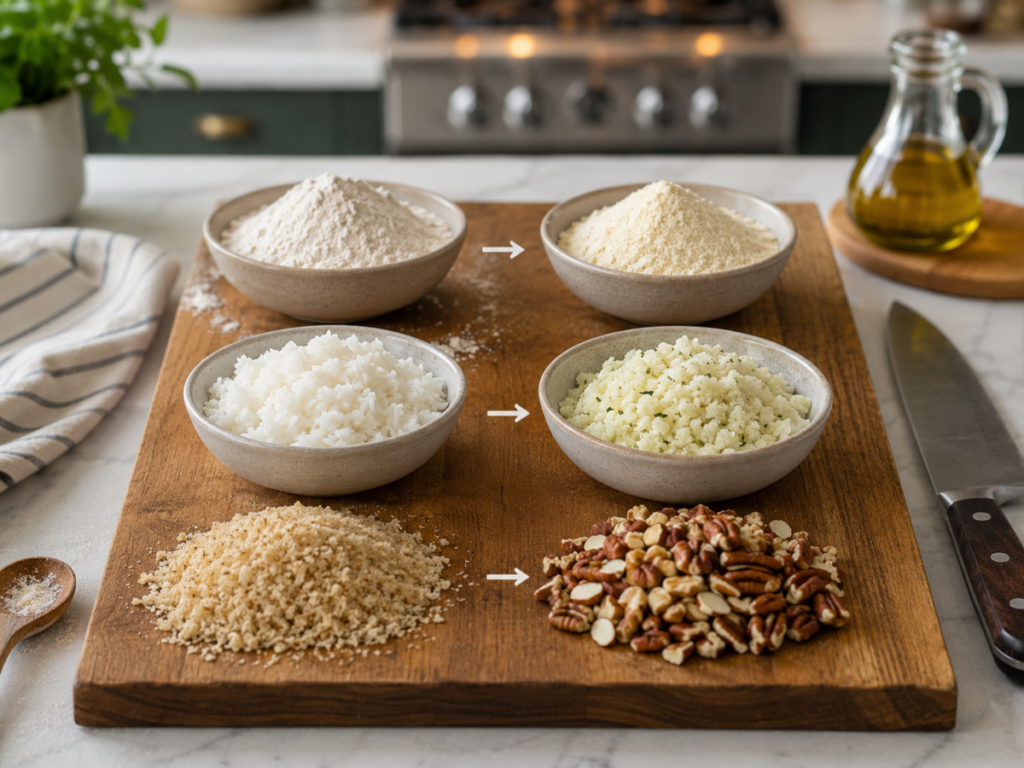
In a low-lectin kitchen, cassava flour, coconut flour, blanched almond flour, and other plan-compatible options can each be useful, but they do not behave alike. Cassava flour is mild and can give baked foods a familiar starch-based chew. Coconut flour is highly absorbent, so recipes usually need far less of it along with more liquid or eggs. Blanched almond flour brings fat and tenderness, which makes it useful in cookies, muffins, coatings, and quick breads where softness is welcome.
The best results often come from blending. A cassava-based dough may benefit from a small amount of another flour for tenderness, while almond flour may need eggs or another binder if the recipe requires more structure. In pancakes or muffins, adding fat and allowing the batter to rest for a few minutes can improve hydration and reduce a gritty texture. Recipes designed specifically for these flours are usually more reliable than taking a conventional recipe and replacing the wheat by volume.
Keeping the Bite in Pasta and Grain Replacements
Many grain replacements fail because they are cooked until soft and then expected to behave like pasta or rice. Texture is the missing piece. Cauliflower rice works best when the pieces are small and dry, then cooked quickly enough to soften without releasing so much water that they become mushy.
For fried-rice-style dishes, starting with refrigerated or well-drained cauliflower rice can help keep the pieces separate. A wide skillet also gives moisture more room to evaporate. Seasoning should be concentrated because cauliflower contains more water than dry rice and can dilute sauces if too much liquid is added.
For noodle dishes, spiralized vegetables can work, but different vegetables provide different results. Zucchini-style noodles are soft and release water quickly, while cabbage ribbons stay firmer and can stand up to longer cooking. Hearts of palm noodles, where compatible with the individual’s plan and tolerance, offer a denser bite that may work better in creamy or oil-based sauces. The choice should match the dish rather than treating every noodle substitute as interchangeable.
A useful trick is to preserve the sauce-to-solid ratio of the original meal. If a replacement vegetable releases water, reduce the sauce separately before combining everything. This keeps the final dish rich instead of soupy and allows the seasonings to cling to the food.
Replacing Beans Without Losing Hearty Texture
Beans are harder to replace than they first appear because they contribute both bulk and a specific creamy-firm texture. Removing them from chili, soups, and stews can leave a dish feeling thin even when plenty of vegetables remain. The solution is to rebuild body in layers.
Mushrooms are useful for savory depth and chew, especially when browned before being added to a stew. Chopped cauliflower stems, celery root, turnip, or other firm vegetables can contribute small tender pieces that hold their shape. A modest amount of cauliflower puree or another compatible vegetable puree can thicken the liquid and restore some of the body that bean starch would normally provide.
Meat-based dishes can also gain structure from coarsely crumbled ground meat rather than finely broken pieces. In a bean-free chili, for example, browned beef or turkey, mushrooms, diced firm vegetables, and a reduced broth can create a dense spoonful without trying to imitate beans exactly. The goal is not to disguise one food as another. It is to preserve the satisfying balance of soft, chewy, thick, and savory components.
Building Tomato-Free Sauces With Sweetness, Acidity, and Savory Depth
Tomato replacement becomes much easier when its flavor is broken into parts. Tomatoes provide sweetness, acidity, moisture, savory compounds, and a cooked fruit-and-vegetable character. A replacement sauce needs more than red color.
Roasted carrots can supply sweetness and body. Roasted vegetables that fit the individual’s plan can deepen color, while onions and garlic can provide aromatic richness. A small amount of vinegar or citrus can replace some of the acidity that tomato normally supplies. Mushrooms, meat drippings, aged cheese where tolerated, or a concentrated stock can supply savory depth.
Texture matters here too. A puree made only from watery vegetables will taste thin no matter how carefully it is seasoned. Roasting before blending drives off some moisture and creates browned flavors, while simmering the finished sauce concentrates it further. Olive oil added near the end can round out acidity and give the sauce a smoother mouthfeel.
For pizza-style or casserole dishes, make the sauce slightly thicker than seems necessary. Vegetable toppings and cheeses release moisture while cooking, so a sauce that begins thick often finishes at the right consistency.
Replacing White Potatoes Without Losing Creaminess or Crisp Edges
Potatoes are popular because they can be fluffy, creamy, crisp, or chewy depending on preparation. No single substitute reproduces all of those qualities, so the cooking method should determine the replacement.
Cauliflower works well for mash when it is cooked until tender and then dried before blending. Excess water is the main reason cauliflower mash becomes loose. Draining thoroughly, returning it briefly to a warm pan, then adding butter, olive oil, cream, or another preferred fat can produce a denser texture.
Turnips, rutabaga, celery root, and similar root vegetables can give roasted dishes more chew and browning than cauliflower. Cutting the pieces evenly, drying their surfaces, coating them lightly with fat, and giving them enough space on the pan encourages browning instead of steaming. They will not taste exactly like potatoes, but crisp edges and a soft interior can preserve much of the eating experience.
If sweet potatoes fit a person’s chosen low-lectin framework, they can also provide starch and creaminess, although their sweetness changes the character of savory recipes. Balancing that sweetness with salt, herbs, garlic, or acidic ingredients can make the swap feel more natural.
Swapping Nuts, Seeds, and Crunchy Toppings
Crunch is often overlooked until it disappears. Peanuts, cashews, breadcrumbs, crackers, and grain-based toppings may be removed in some low-lectin approaches, but the dish still benefits from contrast. Toasted macadamias, pecans, walnuts, or blanched almonds can add both fat and crunch where those foods fit the person’s plan.
For casserole toppings, chopped nuts can be combined with grated hard cheese, herbs, and a small amount of compatible flour or oil. The mixture browns differently from breadcrumbs, but it can still create a crisp surface. For salads, nuts can replace croutons more effectively if they are toasted and salted rather than added raw, because roasting creates aromas and a firmer bite that better match the role of a crunchy garnish.
The same principle applies to coatings. A nut-flour coating will not behave exactly like wheat breadcrumbs, so thin pieces of meat or fish generally work better than very thick cuts. A light coating, moderate heat, and enough cooking fat to encourage browning can give a crisp exterior without requiring a heavy breading layer.
Preserving Richness When Dairy or Commercial Sauces Are Changed
Some people following a low-lectin lifestyle also make choices about dairy type, added sugars, gums, or highly processed sauces. Those decisions are separate from lectin content itself, but they often overlap in real kitchens. Removing a creamy dressing or bottled sauce can make a meal feel much leaner and less satisfying unless fat, salt, and acidity are rebuilt.
Olive oil, avocado oil, egg-based mayonnaise made with preferred ingredients, tahini where tolerated, or cultured dairy that fits the individual’s plan can provide body. Acid can come from lemon, lime, or vinegar, while herbs, garlic, mustard, and spices can supply aroma and sharpness. If a sauce tastes flat, the missing element is often salt or acid rather than more seasoning.
Homemade sauces also make it easier to control consistency. A thin dressing works for leafy salads, while roasted vegetables usually benefit from something thicker that clings to the surface. Reducing stock, blending in roasted vegetables, or emulsifying oil into an acidic base can change texture without relying on flour or starch.
The Most Useful Swap Is the One That Makes Dinner Feel Normal
Long-term eating habits are easier to maintain when meals still feel like meals rather than collections of permitted ingredients. That means a substitution should be judged by what happens on the plate. Does it brown properly, hold sauce, stay firm enough to chew, provide enough fat, and make the seasonings taste complete?
Tracking can help when several new substitutions are being tested at once. A short note about the ingredient, preparation method, portion, and how the meal felt afterward can reveal patterns that memory tends to blur. This is especially useful when the goal is personal tolerance rather than strict adherence to someone else’s food list.
There is also no prize for forcing a replacement that does not work. If cauliflower rice never feels satisfying in a favorite dish, that dish may be better rebuilt around roasted vegetables, greens, or a different base entirely. Good low-lectin cooking becomes much easier when substitution stops meaning imitation and starts meaning preserving the parts of a meal that made it enjoyable in the first place.