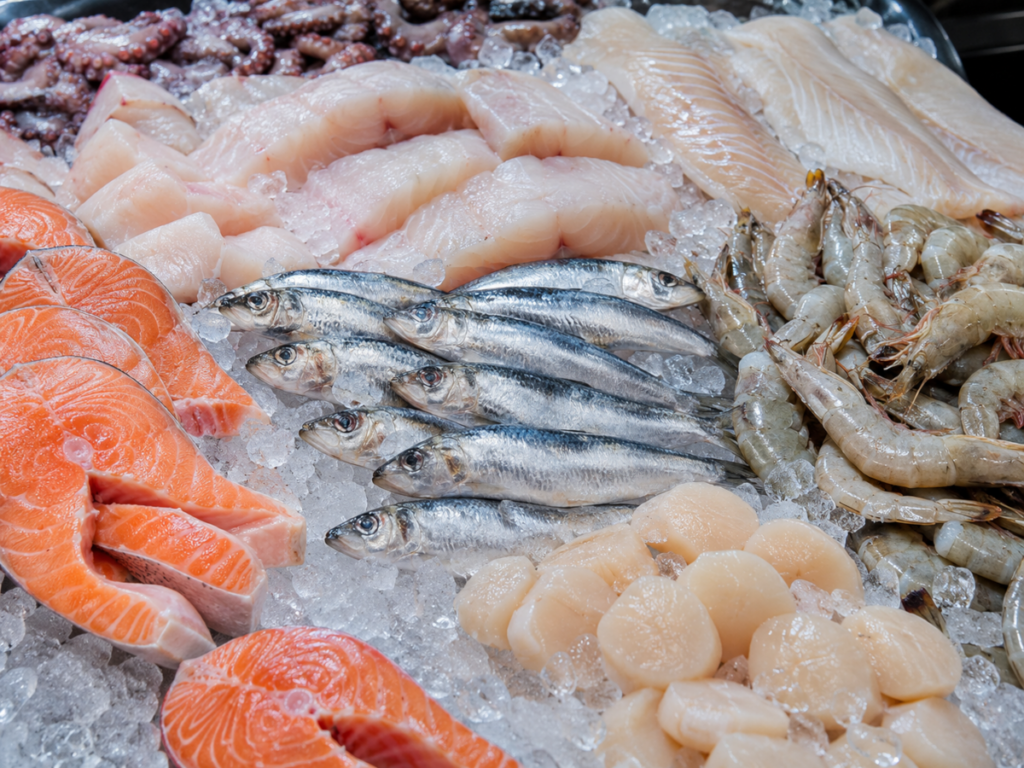
Seafood can fit comfortably into a low-lectin eating pattern because fish and shellfish are naturally very different from the plant foods that contain the lectins most often discussed in nutrition. Yet the seafood counter introduces another set of decisions. Salmon may be labeled wild-caught or farm-raised, shrimp can come from fisheries or aquaculture operations thousands of miles apart, and even oysters and mussels can be raised rather than harvested from wild beds.
For someone following a low-lectin lifestyle, wild-caught seafood often sounds like the obvious choice. In many cases, it can be an excellent choice, but the real differences involve nutrition, feed, environmental conditions, contaminants, farming practices, sustainability, and personal preference more than lectin content itself. Farm-raised seafood also varies so much by species and production system that treating it as a single category misses much of what matters.
Seafood Is Already a Low-Lectin Protein Choice
Lectins are carbohydrate-binding proteins found throughout nature, but the dietary lectins receiving most attention are associated with plant foods, particularly legumes, grains, seeds, and certain other edible plants. Research on food lectins confirms that plant species differ substantially in lectin activity and that preparation methods such as soaking and boiling can reduce the activity of many lectins.
Fish muscle is not considered a significant dietary source of the plant lectins that low-lectin eaters are generally trying to reduce. This makes salmon, cod, sardines, trout, halibut, shrimp, scallops, and many other forms of seafood relatively straightforward protein choices without the soaking, peeling, deseeding, fermentation, or pressure cooking that may be used with certain plant foods.
That distinction becomes useful when discussing farmed fish. Modern aquaculture feeds can contain ingredients derived from soy, wheat, peas, canola, and other plants, but the fact that a fish eats a plant-derived ingredient does not mean the edible fillet should be treated nutritionally as though someone were eating that plant directly. There is no good human evidence showing that intact plant lectins from aquaculture feed accumulate in edible fish flesh at amounts that would make farmed fish a meaningful lectin source.
Plant ingredients can affect the fish itself, including its digestion and nutritional composition, which is one reason aquaculture feed receives so much scientific attention. That issue should be separated from the much broader claim that a person following a low-lectin diet must avoid farmed fish simply because its feed may contain soy or grain.
The Fish’s Diet Can Change the Fat in the Fillet
Feed does matter, particularly with fatty fish such as Atlantic salmon. Researchers studying farmed salmon have documented that changes from marine-based feeds toward greater use of plant oils and plant proteins can alter the fatty acid composition of the finished fillet.
Wild salmon obtain their fats through a natural marine food chain. Farmed salmon receive formulated feed, and the exact recipe can vary considerably between producers and over time. As fishmeal and fish oil have been partially replaced by plant ingredients, the proportion of long-chain marine omega-3 fats in farmed salmon has changed. A study tracking Norwegian farmed Atlantic salmon between 2005 and 2020 found that EPA and DHA levels declined substantially during that period, although farmed salmon remained a meaningful source of both fats.
That does not mean wild salmon always provides more EPA and DHA per serving. Farmed salmon usually contains considerably more total fat, which can offset its lower percentage of marine omega-3 fats. Studies comparing actual portions have sometimes found similar amounts of EPA and DHA in wild and farmed salmon because the farmed fillet contains more fat overall.
The more consistent difference is the overall fatty acid profile. Wild salmon tends to contain a higher proportion of marine omega-3 fats within its total fat, while farmed salmon commonly contains more linoleic acid and other fatty acids reflecting plant oils in the feed. Farmed salmon can still provide generous amounts of EPA and DHA, and newer aquaculture feeds are being developed specifically to maintain or increase those marine omega-3 levels.
For a low-lectin eater who prefers foods that more closely resemble an animal’s natural diet, wild salmon may therefore feel more consistent with that approach. That preference has a reasonable nutritional basis, but it should be described as a preference about feeding practices and fatty acid composition rather than evidence that farmed salmon contains problematic plant lectins.
Wild Does Not Automatically Mean Lower in Contaminants
The contaminant discussion is one of the easiest places for seafood advice to become overly simple. Wild fish live in natural bodies of water where mercury, PCBs, dioxins, and other pollutants may be present. Farmed fish live in managed systems but can also encounter contaminants through their water and feed.
Older concerns about farmed salmon often focused heavily on persistent organic pollutants associated with fishmeal and fish oil. As aquaculture feeds changed, some of those contaminant levels declined. Research comparing Norwegian wild and farmed Atlantic salmon has found higher concentrations of several contaminants, including mercury, dioxins, and certain PCBs, in the wild fish sampled, although measured levels remained below applicable safety limits.
That result should not be turned into the opposite oversimplification that farmed fish is always cleaner. Contamination depends on species, geography, age, food chain position, feed composition, water quality, and production practices. Researchers continue to examine how newer plant-based feed ingredients may introduce different contaminants into aquaculture feeds, which shows why production details matter more than a simple wild-versus-farmed label.
Mercury is especially dependent on species. Nearly all fish contain at least trace amounts of methylmercury, and larger predatory fish that live longer generally accumulate more because they eat other fish throughout their lives. Swordfish, shark, king mackerel, marlin, orange roughy, Gulf of Mexico tilefish, and bigeye tuna are among the higher-mercury choices identified by the FDA and EPA. Salmon, sardines, shrimp, trout, oysters, scallops, and several other commonly eaten seafood choices fall into lower-mercury categories.
That makes species selection more useful than assuming every wild fish is preferable to every farmed fish. Someone eating seafood several times each week can also rotate species rather than relying on the same fish repeatedly.
Aquaculture Practices Matter More Than the Word “Farmed”
A package marked “farm-raised” tells only part of the story. Aquaculture ranges from carefully regulated salmon operations to ponds, inland tanks, offshore pens, shrimp farms, trout raceways, and shellfish beds. These systems have different environmental effects, feed requirements, disease pressures, and management standards.
Antibiotics are another area where context matters. In U.S. aquaculture, antibiotics cannot legally be fed to fish simply to promote growth, and NOAA reports that antibiotic use in salmon aquaculture has declined dramatically as vaccination and improved disease management have become more common. When approved antibiotics are required in U.S. fish farming, their use is regulated and generally involves veterinary oversight.
Practices outside the United States vary by country and producer, so origin can sometimes tell a shopper more than the word “farmed.” At many U.S. grocery stores, fresh and frozen fish and shellfish covered by Country of Origin Labeling rules must identify both the country of origin and whether the seafood is wild or farm-raised. That small label can provide useful information for anyone who wants to investigate a particular producer or production region.
Responsible aquaculture also has a legitimate role in seafood production. NOAA notes that well-managed U.S. wild fisheries and regulated aquaculture can both provide sustainable seafood, while poorly managed systems of either type can create environmental problems.
Shellfish Changes the Wild-versus-Farmed Conversation
Shellfish provides a good example of why a blanket rule against farmed seafood can become unnecessarily restrictive. Oysters, mussels, and many clams are commonly farmed, but unlike farmed salmon, they do not require formulated feed during grow-out. They filter naturally occurring phytoplankton and organic material from the surrounding water.
That means the plant-based-feed concern sometimes raised about farmed finfish does not apply in the same way to farmed bivalves. Well-managed oyster and clam farms can even provide environmental benefits by removing nutrients from the water as the animals filter-feed.
Food safety still deserves attention. Because shellfish filter large volumes of water, they can concentrate naturally occurring bacteria, marine toxins, and other substances from their environment. Regulators monitor approved growing areas, but raw oysters and other raw shellfish still carry a greater foodborne illness risk than thoroughly cooked seafood.
For someone building low-lectin meals, farmed oysters, mussels, clams, and scallops therefore should not automatically be grouped with concerns about grain-fed or soy-fed animals. Their biology and production methods are quite different.
A Practical Way to Shop for Seafood
The seafood counter becomes easier to manage once the decision is based on several pieces of information rather than a single label. Species, origin, method of production, freshness, cooking plans, price, and how often the food will be eaten all deserve consideration.
Wild-caught salmon, sardines, mackerel, cod, haddock, pollock, halibut, and many other fish can provide excellent low-lectin protein choices. Responsibly farmed trout, salmon, oysters, mussels, clams, and other seafood can also fit. The FDA recommends seafood as part of a healthy eating pattern and emphasizes variety, particularly among lower-mercury species.
For readers who want to favor wild seafood without turning it into an absolute rule, a workable approach is to prioritize wild-caught fish when the price, source, and species make sense, then keep well-sourced farmed options available for convenience and variety. Wild salmon might be chosen for its natural diet and fatty acid profile, while farmed mussels or oysters may be chosen because their production requires no formulated feed. A responsibly raised farmed trout can also be a more practical weekly meal than an expensive wild fish shipped from far away.
Preparation can remain simple. Grilling, roasting, poaching, pan-searing, steaming, or pressure cooking seafood with olive oil, avocado oil, butter, ghee, herbs, garlic, lemon, leafy greens, cruciferous vegetables, mushrooms, or other foods that fit an individual’s low-lectin plan keeps the meal focused on whole ingredients. Heavily breaded fish, sugary glazes, commercial sauces, seed-heavy coatings, and unknown restaurant marinades may introduce more low-lectin concerns than the fish itself.
Tracking tolerance can also keep the decision grounded in experience. If two salmon meals produce different digestive responses, recording the complete meal is more informative than immediately blaming whether the salmon was farmed or wild. Sauces, cooking oils, side dishes, portion size, alcohol, spices, and foods eaten earlier in the day can all change how a meal feels afterward.
Wild-caught seafood remains a strong preference for people who value natural feeding patterns and less dependence on formulated aquaculture feed. Farm-raised seafood, however, covers too many different species and production systems to dismiss as a single category. Reading the species, origin, and production method provides far more useful information, and it leaves room for seafood choices that fit both a low-lectin eating pattern and the practical realities of shopping, cooking, budgeting, and eating well over the long term.