

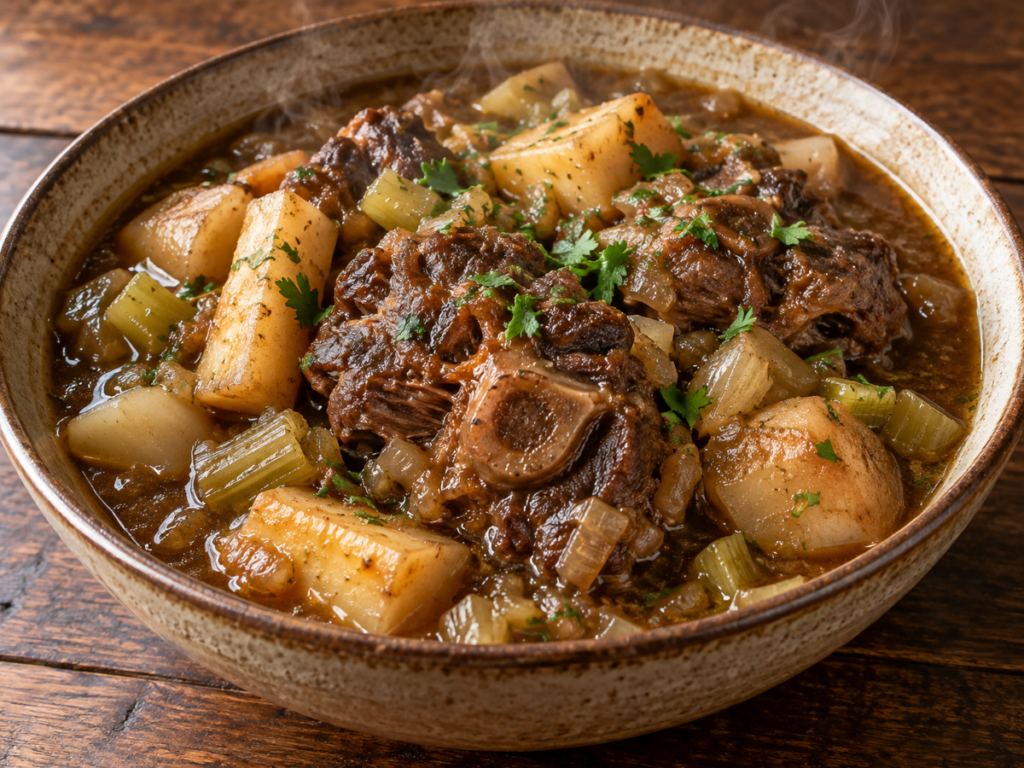
Rich, tender beef, earthy root vegetables, and a deeply flavored broth come together in a comforting low-lectin meal that makes excellent use of pressure cooking.
There is something especially satisfying about a pot of oxtail stew. The broth becomes rich and silky, the meat grows tender enough to pull away from the bone, and the vegetables absorb the flavors of everything cooking around them. Traditionally, reaching that point requires several hours of slow simmering, but a pressure cooker can accomplish much of the same transformation in considerably less time.
For someone following a low-lectin lifestyle, oxtail stew offers another advantage. The dish can be built around simple ingredients without relying on tomatoes, potatoes, beans, wheat flour, or commercial thickening mixes. Parsnips and turnips provide the substance often associated with traditional beef stew, while herbs, garlic, onion, and beef broth create a flavorful base.
The result is a hearty meal with a relatively short ingredient list and plenty of room for personal adjustments. It is particularly useful for colder evenings, weekend meal preparation, or occasions when a comforting dinner sounds appealing but spending four hours tending a pot does not.
Why Oxtail Works So Well in a Pressure Cooker
Despite its name, oxtail is simply a culinary term for the tail of cattle. The pieces are cut into thick sections containing bone, marrow, connective tissue, fat, and surrounding meat. Because the tail is a heavily worked muscle, its meat contains considerable connective tissue and can be tough when cooked quickly using dry heat.
That connective tissue is one of the reasons oxtail makes such an excellent stew. Much of it contains collagen, a structural protein that gradually changes into gelatin during prolonged cooking with moisture. As this happens, the meat becomes tender and the surrounding liquid takes on a fuller, smoother consistency.
A pressure cooker accelerates the process by trapping steam and increasing the cooking temperature above what is possible in an ordinary uncovered pot of boiling water. Under these conditions, tough cuts of meat can become tender much faster than they would during conventional simmering.
Oxtail also contributes flavor from several sources. The browned meat produces savory notes, the bones and surrounding tissue add body, and the fat carries many of the aromas released by garlic and herbs. Because some oxtail pieces contain more bone than meat, purchasing approximately three pounds is reasonable for a stew intended to serve four to six people.
The gelatin-rich broth is sometimes associated with claims about collagen supporting skin, joints, and digestive health. Although collagen-derived nutrients can contribute to overall protein intake, eating gelatin-rich stew does not mean that its collagen directly rebuilds connective tissues or repairs the intestinal lining. Its most dependable benefits in this recipe are culinary, providing body, texture, and flavor.
Choosing Parsnips and Turnips Instead of Potatoes
Traditional beef stews frequently rely on white potatoes for bulk and substance. Potatoes belong to the nightshade family, which some people following a low-lectin dietary approach prefer to limit. Parsnips and turnips provide an alternative with their own distinctive flavors and textures.
Parsnips resemble pale carrots, although their flavor is sweeter, earthier, and slightly nutty. Cooking softens their texture and brings out their natural sweetness, making them particularly well suited to savory beef dishes. They also provide dietary fiber, potassium, and other nutrients, although the exact amounts depend on serving size and preparation.
Turnips have a different character. Their flavor can be mildly peppery when raw, particularly in larger or older roots, but cooking softens that sharpness. The flesh becomes tender, and its slightly bitter undertone helps balance the sweetness of the parsnips and richness of the oxtail.
Neither vegetable needs to serve as an exact imitation of a potato. Their different characteristics create a more interesting combination, especially when cut into generous chunks that retain some structure during cooking.
From a low-lectin perspective, parsnips and turnips are commonly included among root vegetables used in place of nightshades. They are not generally considered major dietary sources of the lectins associated with undercooked legumes. However, direct research measuring specific lectin activity in every root vegetable is limited, so describing them as completely lectin-free would be more certain than the evidence allows.
Peeling the vegetables is a reasonable preparation choice, particularly for older turnips with tougher skins. Younger, tender roots can also be thoroughly washed and cooked with their skins when personal preference and tolerance allow.
Understanding the Role of Pressure Cooking in Low-Lectin Food Preparation
Pressure cooking has become popular in low-lectin kitchens because moist heat can reduce the activity of certain plant lectins. Lectins are carbohydrate-binding proteins found in many foods, and some varieties are more resistant to digestion or cooking than others.
The clearest food-safety concern involves improperly cooked beans, particularly red kidney beans, which can contain substantial amounts of the lectin phytohaemagglutinin. Inadequate cooking can leave enough active lectin to cause acute gastrointestinal illness. Proper heat treatment greatly reduces that risk.
The [European Food Safety Authority’s 2026 assessment of plant lectins](https://www.efsa.europa.eu/en/plain-language-summary/risks-human-health-related-presence-plant-lectins-food) describes how appropriate soaking and cooking can inactivate lectins, although the results depend on the particular food and preparation conditions.
There is an important distinction between reducing biologically active lectins in certain foods and demonstrating that restricting lectins broadly improves human health. Research establishing long-term benefits from low-lectin diets in the general population remains limited, and properly prepared lectin-containing foods can still be valuable sources of nutrition.
For this particular stew, pressure cooking serves primarily to tenderize the oxtail and develop the broth. The selected vegetables are already compatible with many low-lectin meal plans, so there is no need to claim that pressure cooking removes every trace of lectin from the completed dish.
An additional practical benefit is that the recipe avoids dried legumes entirely. There is no need to manage separate soaking schedules or special bean-cooking precautions.
Recipe: Pressure-Cooked Oxtail Stew with Parsnips and Turnips
This recipe uses a two-stage pressure-cooking method. The oxtail cooks first to develop tenderness and flavor, while the root vegetables are added later so they do not disintegrate during the longer cooking cycle.
Pressure-Cooked Oxtail Stew with Parsnips and Turnips
Ingredients
- 3 pounds beef oxtail, cut into sections
- 2 tablespoons extra virgin olive oil or avocado oil
- 2 medium parsnips, peeled and cut into 1½-inch chunks
- 2 medium turnips, peeled and cut into 1½-inch chunks
- 1 medium yellow onion, diced
- 3 garlic cloves, minced
- 2 celery stalks, chopped
- 2 cups unsalted or low-sodium beef broth, preferably without tomato-based additives
- 1 teaspoon dried thyme, or 3 fresh thyme sprigs
- 1 teaspoon dried rosemary, or 1 fresh sprig
- 2 bay leaves
- 1 teaspoon sea salt, divided, plus more to taste
- ½ teaspoon freshly ground black pepper
- 1 tablespoon apple cider vinegar (optional)
- 2 tablespoons freshly chopped parsley, for garnish
Instructions
- Prepare and season the oxtail. Pat the oxtail pieces dry with paper towels to remove excess surface moisture. Season them evenly with approximately half the salt and the black pepper, making sure the exposed meat receives some seasoning.
- Brown the meat in batches. Set the pressure cooker to its sauté setting and add the olive oil or avocado oil. Once hot, brown the oxtail pieces in batches for approximately 2 to 3 minutes per exposed meaty side, allowing a golden-brown crust to develop without crowding the pot.
- Transfer each browned batch to a plate while the remaining pieces cook. Browning adds flavor through the Maillard reaction, a series of chemical changes that occur when proteins and sugars react under heat.
- Sauté the aromatic vegetables. With the oxtail temporarily removed, add the diced onion and celery to the cooker. Cook for approximately 3 to 4 minutes, stirring regularly, then add the garlic and cook for another 30 to 60 seconds until fragrant.
- Pour in about half a cup of the measured beef broth and scrape the browned bits from the bottom of the cooker with a wooden spoon. This step captures flavor while helping prevent food from sticking during pressure cooking.
- Pressure-cook the oxtail. Return the browned oxtail and any accumulated juices to the pot. Add the remaining broth, thyme, rosemary, bay leaves, remaining salt, and optional apple cider vinegar.
- Close and seal the pressure cooker according to the manufacturer's instructions. Set it to high pressure for **50 minutes**, then allow the pressure to release naturally for approximately 15 to 20 minutes before carefully releasing any remaining pressure according to the appliance instructions.
- Check tenderness before adding the vegetables. Open the cooker after the pressure indicator confirms that it is safe. The meat should yield easily when tested with a fork, although some larger oxtail sections may require additional cooking.
- If the meat still feels firm, reseal the cooker and cook for another 8 to 10 minutes at high pressure before reassessing. Waiting until the beef is tender prevents the root vegetables from being exposed to unnecessary cooking time.
- Add the parsnips and turnips. Gently stir the prepared parsnips and turnips into the liquid, arranging them around the oxtail pieces. Close the lid again and pressure-cook on high for approximately 3 minutes, then carefully release the pressure following the manufacturer's instructions and precautions for hot liquids.
- The vegetables should be tender when pierced with a fork while retaining enough structure to hold their shape. Larger chunks may require a short additional simmer on the sauté setting.
- Finish the broth and adjust the seasoning. Remove the bay leaves and any woody herb stems, then skim off excess surface fat with a spoon if desired. Taste the broth and adjust the salt or black pepper to preference.
- For a slightly thicker stew, switch to the sauté setting and simmer uncovered for 5 to 10 minutes, stirring gently. Another option is to mash a few cooked parsnip pieces into the broth, which provides natural thickening without flour or cornstarch.
- Serve the stew. Ladle the stew into deep serving bowls, distributing the vegetables and meaty oxtail pieces evenly. Sprinkle with freshly chopped parsley and serve hot, taking care to remove bones while eating.
Getting the Broth Just Right
A successful oxtail stew depends heavily on the balance between liquid, fat, gelatin, and seasoning. Too much liquid can leave the dish tasting diluted, while too little can prevent the pressure cooker from functioning properly.
Two cups of broth generally provide enough liquid for this recipe in a compatible 6- or 8-quart electric pressure cooker, but the appliance manufacturer’s minimum-liquid requirements should always take priority. The stew should also remain below the applicable maximum-fill line, particularly because the oxtail pieces occupy considerable space.
Using unsalted or low-sodium broth allows better control over the finished seasoning. Commercial beef broths can contain substantial sodium, so adding salt gradually is preferable to correcting an oversalted stew afterward.
The fat content of oxtail varies considerably. Some cuts have thick outer layers of fat, while others are relatively lean, and the amount released into the stew will reflect those differences.
For a lighter finished dish, spoon visible fat from the broth after cooking. If preparing the stew ahead of time, refrigeration allows the fat to solidify on the surface, making it easier to remove before reheating.
A chilled oxtail stew may also develop a jelly-like consistency. This is a normal result of dissolved gelatin and does not mean the dish has spoiled, provided it was handled and refrigerated safely. The broth loosens again when heated.
Ingredient Adjustments for Individual Food Tolerance
One of the advantages of this recipe is that it can be adjusted without changing the basic cooking method. Most modifications involve the supporting vegetables, herbs, and seasonings rather than the oxtail itself.
Garlic and onion are commonly accepted in low-lectin meal plans, but they can be troublesome for some people because they contain fermentable carbohydrates known as fructans. People sensitive to these compounds may experience gas, bloating, or other digestive symptoms even when lectin intake is low.
Reducing or omitting the onion and garlic may be helpful for those individuals. Chives or the green portions of scallions can provide a milder onion-like flavor, while plain garlic-infused oil can offer garlic flavor without much of the fructan content when properly prepared.
Parsnips can be replaced partly with additional turnips for a less sweet stew. Rutabaga is another option, bringing a slightly sweeter flavor than turnips and a texture that holds together well in hearty dishes.
Fresh mushrooms can also be added for additional savory flavor, especially varieties such as cremini or shiitake. For the best texture, sauté them separately or add them after the main pressure-cooking cycle rather than exposing them to the full oxtail cooking time.
Herbs provide another easy area for experimentation. Thyme and rosemary create a familiar beef-stew flavor, while parsley, sage, and a modest amount of oregano can produce a different character without introducing complicated sauces or seasoning blends.
For anyone tracking individual food responses, changing one or two ingredients at a time may make patterns easier to recognize. Digestive symptoms can have many causes, however, so a reaction after a meal does not by itself establish that lectins were responsible.
Serving Oxtail Stew as Part of a Low-Lectin Meal
This stew is substantial enough to serve on its own, particularly when the bowl contains a generous portion of meat and root vegetables. The broth adds moisture and richness, making it a satisfying dish without requiring bread, pasta, or a grain-based accompaniment.
For those who prefer a more complete plate, several sides fit comfortably into a low-lectin cooking approach.
Steamed asparagus or sautéed leafy greens provide color and a different texture alongside the slow-cooked meat. Cauliflower mash is another useful accompaniment because it absorbs the broth without competing heavily with the stew’s flavor.
Pressure-cooked white rice may also work for individuals who include properly prepared rice in their personal dietary plan. Rice tolerance and dietary preferences vary, so it is best treated as an optional addition rather than an essential component of the recipe.
Because oxtail is a rich cut with variable amounts of fat, serving sizes can be adjusted according to appetite and individual digestive comfort. A smaller portion with additional cooked vegetables may be preferable for someone who finds very fatty meals difficult to tolerate.
Preparing, Refrigerating, and Reheating Leftovers
Oxtail stew is particularly suitable for advance meal preparation. As the cooked ingredients rest together, the broth and vegetables continue to share flavors, often producing a more integrated taste when the meal is reheated.
The most important consideration is cooling the stew promptly. Large pots of hot food cool slowly, so dividing the stew into shallow containers helps bring the temperature down more quickly.
According to [USDA food safety guidance](https://www.fsis.usda.gov/food-safety/safe-food-handling-and-preparation/food-safety-basics/leftovers-and-food-safety), cooked leftovers should be refrigerated within two hours and generally consumed within three to four days. Leftovers intended for longer storage can be frozen, with three to four months providing a useful quality window.
When reheating, warm the stew thoroughly to an internal temperature of 165°F (74°C). Adding a small amount of broth or water can help restore the original consistency if the gelatin-rich liquid has thickened considerably during refrigeration.
For convenient individual portions, remove the meat from the bones before storing the stew. This makes reheating easier, reduces the risk of encountering small bones while eating, and allows the meat and vegetables to be distributed more evenly among containers.
Parsnips and turnips may soften further during storage and reheating, especially if they were cut into smaller pieces. Keeping them in relatively large chunks during the original preparation helps preserve their texture for subsequent meals.
A refrigerated portion can be reheated gently in a covered saucepan, with the broth loosened as needed. Frozen portions can be thawed in the refrigerator before reheating, or heated directly from frozen when enough time and liquid are allowed for safe, even warming.
For a different meal later in the week, the deboned oxtail and its broth can also be combined with freshly cooked zucchini noodles, sautéed mushrooms, or additional steamed vegetables. These additions work best near the end of reheating, allowing the original stew to provide the foundation while the new vegetables retain their individual textures.
