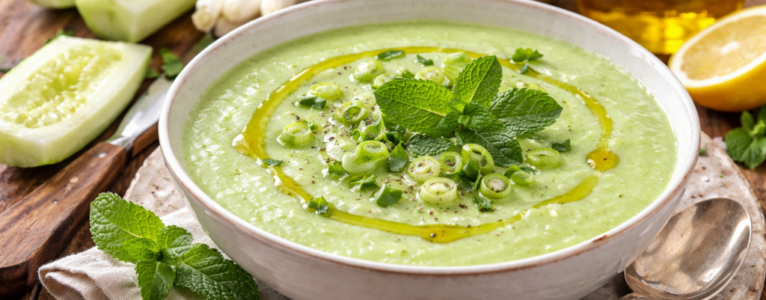
There is something quietly powerful about cold food done right. Not just food that happens to be cold, but food that is intentionally designed to cool the body, calm the digestive system, and give you a break from heavy, reactive meals. Gazpacho is one of those dishes that has been around long before modern nutrition debates. Traditionally, it leans heavily on tomatoes, peppers, and bread. For many people, that classic version works just fine. For others, especially those exploring a low-lectin lifestyle, it can be a source of discomfort that is difficult to trace.
What makes a chilled soup like gazpacho so interesting in a low-lectin context is not just what goes into it, but what is left out. When you begin to remove common irritants such as nightshades and certain seeds, you are not simply subtracting ingredients. You are reshaping the entire experience of the dish. The result can feel lighter, cleaner, and surprisingly more refreshing.
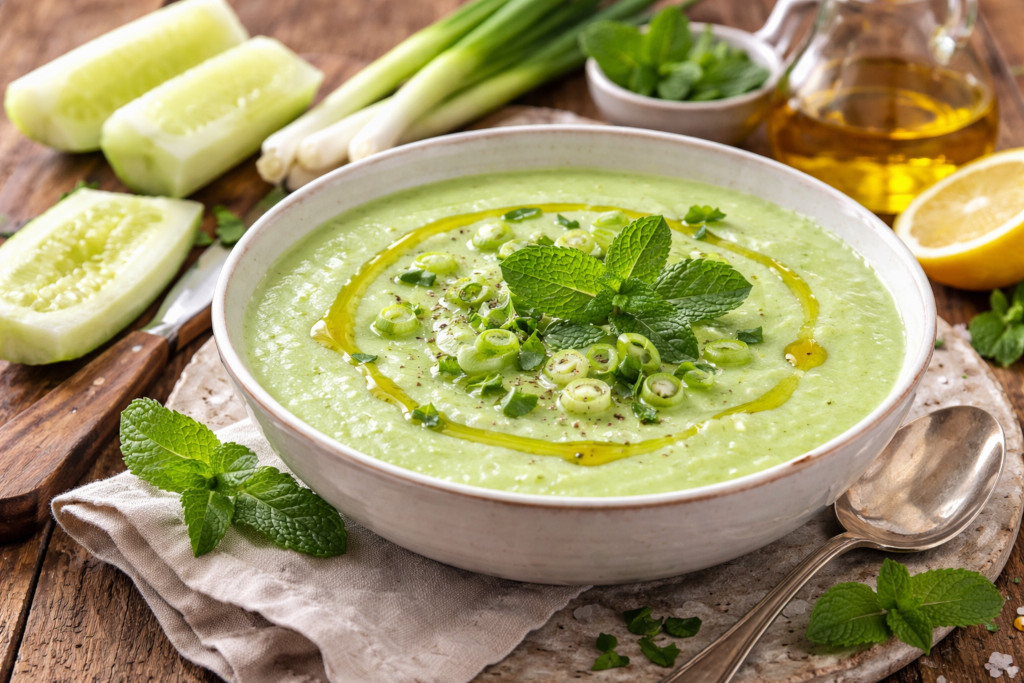
This version, built around peeled and deseeded cucumber, fresh mint, and high-quality olive oil, is not trying to imitate traditional gazpacho. It stands on its own. It is a different kind of comfort. One that leans into hydration, simplicity, and digestive ease.
Why Cucumber Becomes the Star
Cucumbers are often overlooked because they seem too simple. They are mostly water, mild in flavor, and easy to dismiss. Yet that simplicity is exactly what makes them so valuable in a low-lectin kitchen.
The outer skin and the seeds of many vegetables can contain higher concentrations of lectins or other compounds that may irritate sensitive individuals. In cucumbers, the seeds are also where bitterness can develop, especially in larger or more mature varieties. By peeling and deseeding, you are not only reducing potential lectin exposure, you are refining the texture and taste at the same time.
What remains is the cleanest part of the vegetable. It blends smoothly, carries flavor well, and provides a hydrating base that feels almost restorative on a warm day or after a heavy meal.
There is also a mechanical benefit. A smoother base means less work for your digestive system. When food is already broken down into a soft, uniform texture, your body can process it more efficiently. For people who experience bloating or discomfort, this can make a noticeable difference.
The Role of Healthy Fats in a Cold Soup
At first glance, adding a generous amount of olive oil to a chilled soup might seem counterintuitive. Many people still associate fat with heaviness. In reality, the right fats can do the opposite.
Extra virgin olive oil is rich in monounsaturated fats and polyphenols. These compounds are not just passive calories. They play active roles in satiety, inflammation signaling, and even how flavors are perceived on the palate.
In a dish like this, olive oil acts as both a flavor enhancer and a structural element. It gives the soup body. Without it, the cucumber base would feel thin and watery. With it, the soup becomes silky and cohesive.
From a low-lectin perspective, olive oil is also a reliable staple. It is minimally processed, widely tolerated, and fits into most dietary frameworks that prioritize whole foods and gentle preparation methods.
Mint, Scallions, and the Subtle Layering of Flavor
When you remove strong ingredients like tomatoes and peppers, you create space for more delicate flavors to come forward. This is where mint and scallions shine. Mint brings a cooling sensation that goes beyond temperature. It interacts with receptors in the mouth that create a perception of freshness. This can make the dish feel even more refreshing than it actually is.
Scallions, particularly the green tops, provide a mild onion-like flavor without the intensity that can sometimes irritate sensitive digestion. They add depth without overwhelming the dish. Together, these ingredients build a layered flavor profile that feels complete, even though it is composed of relatively few elements.
A Note on Lectins and Preparation
Lectins are part of a plant’s natural defense system. They bind to carbohydrates, which in nature can discourage pests from consuming seeds and other vital parts of the plant. In humans, that same binding ability can interact with the gut lining in ways that are not always comfortable for everyone.
It is important to keep perspective. Lectins are not inherently harmful in all contexts. Many foods that contain lectins are nutritious and well tolerated when properly prepared. The issue arises when individual sensitivity, digestive health, and preparation methods intersect.
Peeling, deseeding, fermenting, and cooking are all ways that traditional cultures have reduced potential irritants in food long before the science was fully understood. This recipe follows that same logic. It does not eliminate all lectins from the diet. It simply reduces exposure in a thoughtful and practical way.
Deseeded Cucumber & Mint Gazpacho
Ingredients
- 4 large cucumbers, peeled and fully deseeded
- 3 scallions, green parts only, roughly chopped
- 1 cup fresh mint leaves, loosely packed
- 1 small clove garlic, peeled (optional and adjust to tolerance)
- 1/3 cup extra virgin olive oil
- 2 tablespoons fresh lemon juice
- 1/2 teaspoon sea salt, or to taste
- 1/4 teaspoon ground white pepper
- 1/2 to 1 cup cold filtered water, depending on desired thickness
- -- Optional Garnish --
- Finely chopped fresh herbs such as parsley or additional mint
- A light drizzle of olive oil
- Thin slices of peeled cucumber
Instructions
- Start by preparing the cucumbers. After peeling, slice them lengthwise and use a spoon to remove all seeds. Take your time with this step. The cleaner the flesh, the smoother and more refined the final soup will be.
- Roughly chop the cucumber flesh and place it into a blender. Add the scallions, mint leaves, and garlic if using. Pour in the olive oil and lemon juice.
- Blend on high until the mixture becomes completely smooth. Pause and scrape down the sides if needed. Once the base is fully blended, begin adding cold water a little at a time until you reach your desired consistency. Some prefer a thicker, almost creamy texture, while others like it more drinkable.
- Add the salt and white pepper, then blend briefly again to incorporate.
- Taste the soup. This is an important moment. Because the ingredient list is simple, small adjustments can make a big difference. You might want a touch more lemon for brightness or a pinch more salt to bring everything together.
- Once satisfied, transfer the soup to a container and refrigerate for at least one to two hours. Chilling allows the flavors to settle and develop.
- Serve cold, topped with your chosen garnish.
What This Dish Does Differently
This gazpacho does not rely on intensity to be satisfying. It relies on balance. Hydration from the cucumber, richness from the olive oil, brightness from the lemon, and freshness from the mint all work together without competing.
For people exploring a low-lectin lifestyle, this kind of dish can feel like a reset. It is simple, but not boring. It is gentle, but not lacking. It also fits into a broader pattern of eating that emphasizes preparation over restriction. Instead of asking what needs to be removed, it asks how food can be adjusted to work better for the individual.
When to Use a Dish Like This
There are moments when this soup fits naturally into your routine. Hot weather is the obvious one, but it goes beyond that. It can be a midday meal when you want something light that will not slow you down.
It can be a starter that prepares your digestive system for a larger meal. It can even be a recovery meal after a period of dietary excess or discomfort. Because it is easy to digest and hydrating, it often feels supportive rather than demanding.
Final Thoughts
One of the biggest shifts that happens when people explore lectin awareness is a change in how they think about food preparation. It becomes less about strict rules and more about understanding patterns.
Peeling and deseeding a cucumber might seem like a small step. In reality, it reflects a larger mindset. You are paying attention to how food interacts with your body. You are making small adjustments that add up over time.
This cucumber and mint gazpacho is a simple expression of that idea. It does not try to be everything at once. It focuses on doing one thing well. Offering a clean, refreshing, and approachable meal that aligns with a low-lectin perspective.
And sometimes, that is exactly what the body has been asking for.