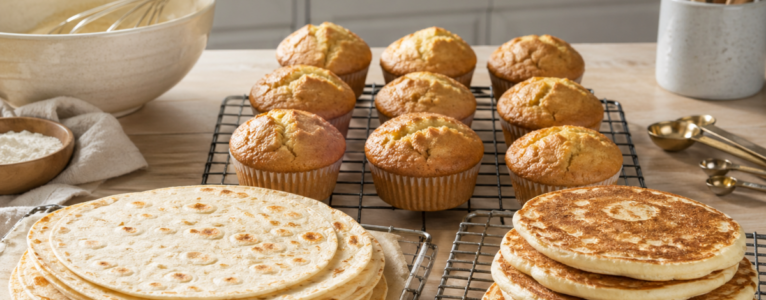
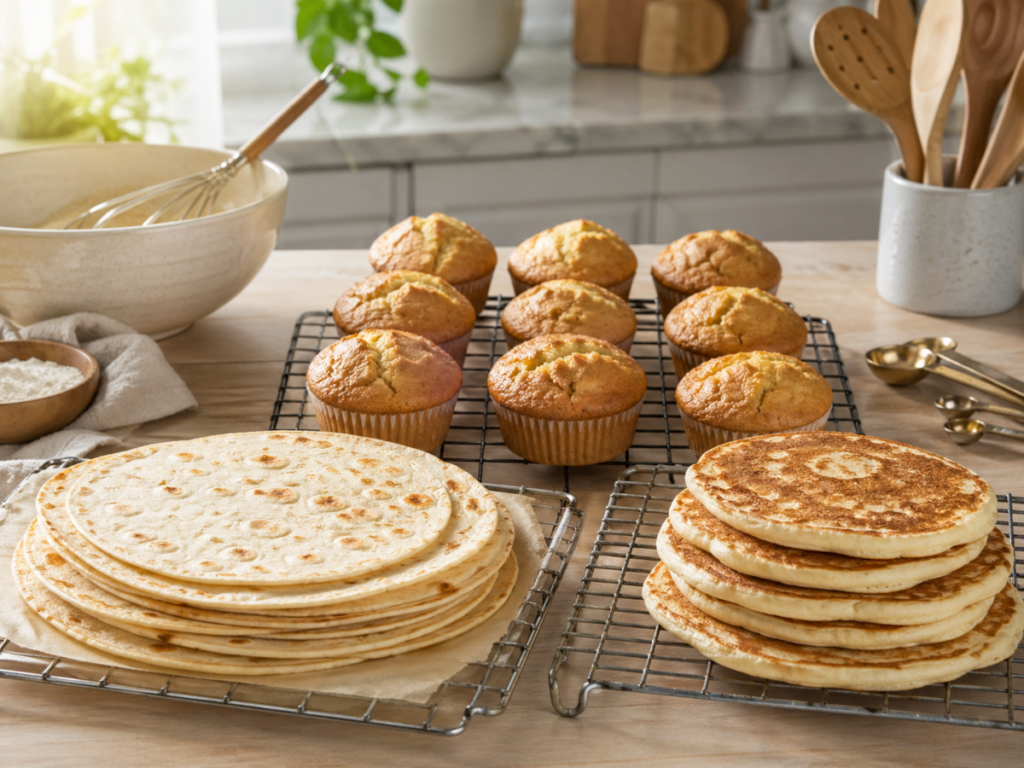
For many people starting a low-lectin lifestyle, flour is one of the first kitchen questions that feels bigger than expected. Bread, pancakes, muffins, pizza crust, coatings, thickened sauces, cookies, biscuits, and even “healthy” snack recipes often begin with some kind of flour. When traditional wheat flour, corn flour, chickpea flour, oat flour, and many grain-based blends are moved off the everyday list, the kitchen can suddenly feel unfamiliar. It is not just a matter of replacing one scoop with another. Flour gives structure, absorbs moisture, browns, binds, stretches, thickens, and carries flavor. When the flour changes, the whole recipe changes with it.
That is where a thoughtful substitution guide becomes more helpful than a simple swap chart. Cassava flour, coconut flour, almond flour, tigernut flour, green banana flour, arrowroot, tapioca starch, and other low-lectin-friendly options each bring their own personality to the mixing bowl. Some are soft and starchy. Some are rich and nutty. Some drink liquid like a sponge. Some crumble if they are asked to do the job of gluten. The goal is not to find one perfect flour that replaces wheat in every recipe. The better goal is to understand what each flour does best, then build recipes around those strengths.
Modern nutrition discussions around lectins also benefit from nuance. Lectins are plant proteins that can bind to carbohydrates, and they appear in many plant foods. Research and nutrition experts generally agree that cooking, soaking, boiling, pressure cooking, fermentation, sprouting, and removing skins or seeds can reduce active lectins in many foods, especially legumes and grains. That does not mean every person must avoid every lectin-containing ingredient forever. It does mean that people following a low-lectin approach often choose flours carefully, especially when they are trying to calm digestion, simplify ingredients, or build a more consistent routine.
Why Low-Lectin Baking Feels Different
Traditional wheat flour is hard to replace because it contains gluten-forming proteins that create stretch, chew, lift, and structure. Gluten is what lets pizza dough pull into a thin sheet without falling apart. It helps bread trap gas as it rises. It gives cookies that familiar bend before they break. Many low-lectin-friendly flours do not behave this way, which is why a recipe that looks perfect in the bowl can come out crumbly, gummy, dense, or dry.
This is not a failure of the lifestyle. It is simply baking chemistry asking for a different strategy. When you remove wheat, you often need to rebuild structure using eggs, psyllium husk, gelatin, flax alternatives if tolerated, starches, or careful moisture control. A cassava tortilla may need hot water and resting time. Coconut flour muffins may need more eggs than expected. Almond flour cookies may need a lower oven temperature because the natural fats brown quickly. Once you stop expecting these flours to act like wheat, they become much easier to work with.
There is also a difference between “flour” and “starch,” even though recipes sometimes use them together. Almond flour and coconut flour contain fiber, fat, and protein. Cassava flour is made from the whole cassava root and brings more body than pure starch. Tapioca starch, arrowroot starch, and potato starch are more refined and usually act as binders, crisping agents, or texture helpers rather than full stand-alone flours. A good low-lectin flour blend often uses both types. The flour provides body and flavor. The starch helps with tenderness, chew, or crispness.
The most practical mindset is this: replace the function, not just the ingredient. If wheat flour was providing structure, you need structure. If it was thickening gravy, you need thickening. If it was giving a cookie a soft crumb, you need a flour that supports tenderness. This is why one low-lectin flour might be wonderful in flatbread but disappointing in cake, while another makes beautiful muffins but terrible pizza crust.
Cassava Flour: The Friendly Starting Point
Cassava flour is often the first stop for people looking for a low-lectin flour substitute because it feels familiar. It has a mild flavor, a pale color, and a soft texture that can resemble all-purpose flour more closely than many nut or seed-based options. It is made from cassava root, also known as yuca or manioc, rather than from a grain or legume. For many low-lectin kitchens, that makes it a useful bridge between old recipes and new habits.
Its biggest strength is versatility. Cassava flour can work in tortillas, pancakes, muffins, brownies, dumpling-style doughs, and some cookies. In certain recipes, it can get closer to a one-for-one substitution than almond or coconut flour, but that does not mean it is automatically identical to wheat flour. Cassava has no gluten, so it may need extra binding. It can also become gummy if overused or underbaked, especially in dense breads or thick batters.
Cassava flour is mostly carbohydrate, and research on cassava products notes that cassava can contain resistant starch, a type of starch that resists digestion in the small intestine and may behave more like fermentable fiber in the gut. Cassava safety also depends on proper processing because raw or poorly processed cassava can contain cyanogenic glycosides, compounds that can produce cyanide. Commercial cassava flour from reputable food brands is generally processed for safe use, but this is one reason quality sourcing matters.
In the kitchen, cassava works best when you give it time to hydrate. A dough that looks slightly sticky may firm up after a short rest. Pancake batter may thicken as it sits. Tortilla dough often becomes easier to roll after the flour has absorbed the liquid fully. If a cassava recipe feels gritty or cracks at the edges, it may need a little more moisture, a touch more fat, or a few extra minutes of resting before cooking.
Cassava also pairs beautifully with starches. A little tapioca starch or arrowroot can make cassava-based flatbreads more flexible and can help baked goods feel less heavy. For crispy coatings, cassava flour can create a pleasant crust, especially when combined with seasonings and cooked in a hot pan. For sauces and gravies, however, pure starches like arrowroot or tapioca may be smoother than cassava flour because cassava can add body and opacity.
Coconut Flour: Powerful, Absorbent, and Easy to Overdo
Coconut flour is one of the most useful low-lectin-friendly flours, but it is also one of the least forgiving. It is made from dried coconut meat after much of the fat has been removed, leaving a flour that is high in fiber and extremely absorbent. This is the flour that humbles people quickly. A recipe may call for only a quarter cup, and that small amount can thicken an entire bowl of batter.
Because coconut flour absorbs so much liquid, it should not be swapped cup-for-cup for wheat flour, cassava flour, or almond flour. It usually needs more eggs, more moisture, and more resting time. In many recipes, coconut flour works best as a supporting flour rather than the main flour. A spoonful can help tighten a loose batter, add fiber, or create a tender crumb. Too much can turn pancakes dry, muffins dense, and cookies chalky.
The flavor is another factor. Coconut flour has a mild sweetness and a faint coconut aroma. That can be lovely in pancakes, breakfast muffins, cookies, cakes, and dessert-style recipes. It may be less ideal in savory breads unless the other flavors are strong enough to balance it. Garlic, herbs, olive oil, lemon, and cheese-style flavors can help, but coconut flour rarely disappears completely.
For low-lectin baking, coconut flour is especially useful when a recipe already includes eggs. Eggs provide structure, moisture, and lift, which coconut flour needs. This is why coconut flour appears so often in muffin, pancake, waffle, and quick bread recipes. It is less natural in crisp crackers or chewy pizza crust unless it is blended with other flours. Think of coconut flour as a concentrated tool. Small amount, big effect.
Almond Flour: Tender, Rich, and Better for Crumb Than Stretch
Almond flour brings comfort to low-lectin baking because it makes things taste good. It is rich, slightly sweet, and naturally tender because almonds contain fat. Blanched almond flour, made from almonds without skins, usually produces a softer texture than almond meal, which can be coarser and darker. For cookies, cakes, muffins, crumbles, tart crusts, and breaded coatings, almond flour can be a beautiful option.
Its weakness is structure. Almond flour does not stretch or bind like wheat flour. It can make baked goods fragile, especially when used alone. A muffin made with almond flour may taste moist and rich but fall apart if there are not enough eggs, binders, or starches. Cookies may spread because of the natural fat. Cakes may brown before the inside is fully set. These issues are manageable, but they are part of the flour’s nature.
Almond flour also behaves differently from cassava flour. Cassava is starchier and more neutral. Almond flour is richer and heavier. If you replace cassava with almond flour in a recipe, the result may become softer, denser, and more crumbly. If you replace almond flour with cassava, the result may become drier or chewier. This is why almond flour often works best in recipes designed for it rather than as a blind swap.
From a low-lectin perspective, almonds are often used in moderation by people who tolerate them well. Some individuals are sensitive to nuts, and almond flour can become easy to overeat because it compresses many almonds into a small serving. A few almond flour cookies may contain far more almonds than someone would normally eat by the handful. That does not make almond flour “bad,” but it does make portion awareness helpful.
The Supporting Cast: Tigernut, Green Banana, Arrowroot, and Tapioca
Once cassava, coconut, and almond flour become familiar, the next level is learning how the supporting flours and starches can improve texture. Tigernut flour is not actually made from nuts. It comes from small tubers, and it has a naturally sweet, earthy flavor. It can be wonderful in cookies, pie crusts, breakfast bakes, and crumble toppings. Its texture can be slightly gritty depending on the brand, so it often works better blended with cassava, almond, or a starch.
Green banana flour is another interesting option. It is made from unripe bananas and is valued partly because of its resistant starch content. Its flavor can be mild when baked, though raw batter may smell noticeably banana-like. It can thicken quickly and may create dense results if too much is used. In low-lectin kitchens, it is often more useful as part of a blend than as the entire flour base.
Arrowroot and tapioca starch are the quiet problem-solvers. Arrowroot is excellent for thickening sauces, gravies, fruit fillings, and glossy pan sauces. Tapioca starch adds chew, stretch, and browning, which is why it often appears in tortillas, flatbreads, pizza crusts, and gluten-free blends. Too much tapioca can become gummy, while too much arrowroot can become slick or gel-like. Used carefully, they help low-lectin baked goods feel less sandy and more familiar.
A simple way to think about these ingredients is to divide them by job. Cassava gives body. Almond gives richness. Coconut absorbs moisture. Tigernut adds sweetness and texture. Green banana adds density and resistant starch. Arrowroot smooths and thickens. Tapioca adds chew and flexibility. Once you see them this way, flour substitution becomes less like guessing and more like adjusting knobs on a recipe.
Building Better Low-Lectin Flour Blends at Home
The best low-lectin flour blend depends on what you are making. A pancake wants softness and moisture. A tortilla wants flexibility. A cookie wants tenderness and browning. A fried coating wants crispness. A muffin wants structure without becoming rubbery. No single flour does all of that perfectly, so blending is often the secret.
For soft baked goods, a blend of almond flour with a smaller amount of coconut flour can work well because the almond provides richness while the coconut controls moisture. For more neutral baking, cassava flour with a little arrowroot or tapioca can create a familiar texture. For cookies and crusts, almond and tigernut can produce a naturally sweet, crumbly bite. For wraps or flatbreads, cassava and tapioca often perform better than nut-heavy blends because they can bend without breaking.
Hydration is where many substitutions succeed or fail. Gluten-free and grain-free flours often need time to absorb liquid fully. Letting batters rest for 10 to 20 minutes can improve texture before baking or cooking. If the batter becomes too thick, add liquid gradually. If it stays too loose, a small amount of coconut flour can tighten it, but add it slowly because it continues absorbing after mixing.
Temperature matters too. Almond flour browns faster than cassava. Coconut flour can dry out if overbaked. Cassava can seem done on the outside while still gummy in the middle if the recipe is too thick. Lower oven temperatures and slightly longer bake times often help nut-based baked goods set without burning. Thin shapes, such as tortillas, crackers, and pancakes, are usually easier than tall loaves when you are still learning.
The most important rule is to change one thing at a time. If you replace the flour, reduce the sugar, change the eggs, swap the fat, and alter the oven temperature all at once, you will not know what caused the result. Low-lectin baking becomes much easier when you treat it as a kitchen notebook process. Write down the flour blend, liquid amount, resting time, bake time, and texture. That small habit turns frustration into progress.
Choosing the Right Flour for the Right Recipe
When converting a favorite recipe, begin by asking what you loved about the original. If it was chewy, cassava and tapioca may be your best starting point. If it was tender and rich, almond flour may carry the recipe better. If it was light and cake-like, you may need eggs, a little coconut flour, and careful leavening. If it was crisp, a starch-supported blend may matter more than a heavy nut flour.
For pancakes, cassava flour gives a familiar base, while almond flour adds richness and coconut flour helps absorb excess liquid. For muffins, almond and coconut are often a strong pair, but cassava can make the crumb lighter if the recipe feels too heavy. For cookies, almond flour gives softness, tigernut gives a pleasant sweetness, and cassava can help reduce crumbling. For sauces, arrowroot is usually easier than whole flours. For breading chicken, fish, or vegetables, cassava flour or almond flour can both work, depending on whether you want a crisp coating or a richer, browned crust.
It also helps to remember that low-lectin does not have to mean recreating every wheat-based food exactly. Sometimes the better path is to make something new that satisfies the same craving. Instead of trying to force cassava into a tall sandwich loaf, you might make flatbread. Instead of expecting coconut flour to make a classic baguette, use it in pancakes or breakfast muffins. Instead of comparing almond flour cookies to bakery wheat cookies, appreciate them as tender, rich treats with their own identity.
That shift is important emotionally as well as practically. Food changes can feel restrictive when every new recipe is judged against the old version. They become more sustainable when the kitchen starts producing meals that feel good in their own right. A low-lectin lifestyle is easier to maintain when it is built around workable routines, enjoyable textures, and ingredients that make sense for your body.
A Practical, Sustainable Way Forward
Flour substitution is not about memorizing a perfect chart. It is about learning how ingredients behave. Cassava is the friendly all-purpose starting point, but it still needs support. Coconut flour is powerful and absorbent, best used with care. Almond flour is rich and tender, but it needs help with structure. Tigernut, green banana, arrowroot, and tapioca can round out the toolbox when a recipe needs sweetness, density, gloss, chew, or flexibility.
For readers following Living Low-Lectin, this kind of kitchen confidence matters. The goal is not perfection. The goal is consistency, awareness, and the ability to make food choices without feeling lost. A flour blend that works for your morning pancakes, a coating that makes dinner satisfying, or a muffin recipe that does not upset your routine can make the lifestyle feel less like a rulebook and more like a practical way of cooking.
Start with one recipe you already miss. Choose the flour based on the job it needs to do. Give the batter time to rest. Keep notes. Adjust gently. Over time, the strange ingredients on the pantry shelf become familiar tools, and low-lectin baking becomes less intimidating. That is when substitution stops feeling like sacrifice and starts feeling like skill.