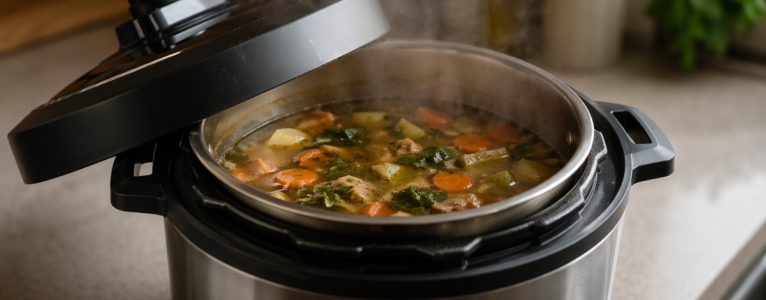
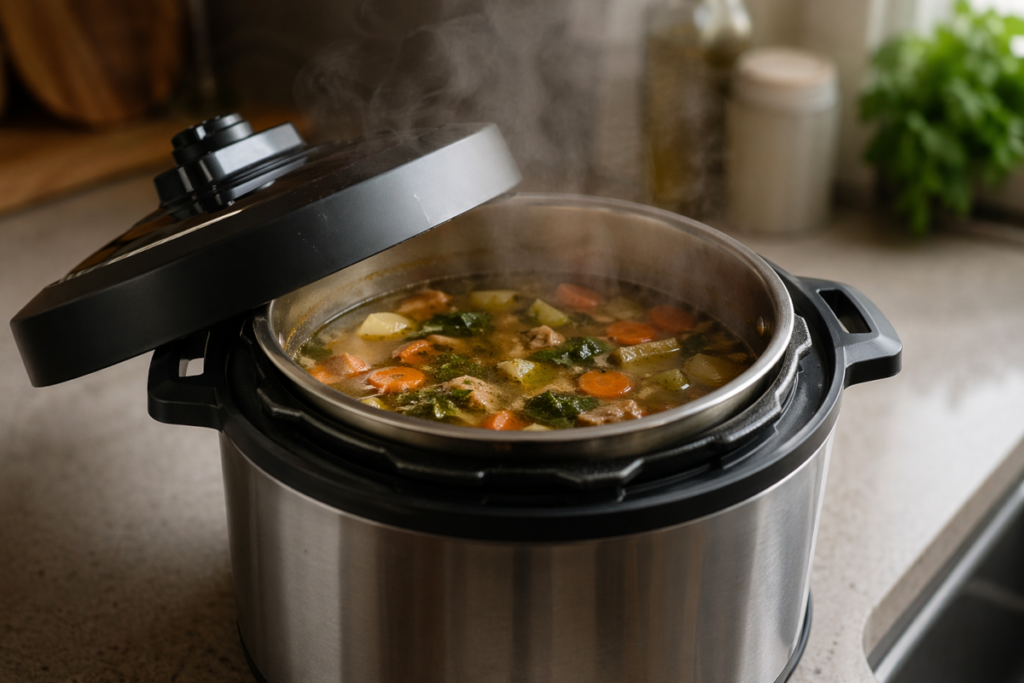
There is something deeply reassuring about a warm bowl of soup or stew. It slows you down, invites you to sit, and delivers nourishment in a way that feels both simple and complete. For those following a low lectin lifestyle, that comfort can sometimes feel complicated. Many traditional soups rely on ingredients like beans, nightshades, and grains that may not align with your goals. The good news is that soups and stews are actually one of the most flexible and forgiving formats for building meals that are both lectin-conscious and deeply satisfying.
When you bring a pressure cooker into the picture, everything becomes even more approachable. Pressure cooking is not just about convenience. It is one of the most effective tools for reducing lectin activity in certain foods while also enhancing texture and flavor. This makes it an ideal method for anyone looking to expand their low lectin recipe options without sacrificing variety or depth.
This article is not about following rigid recipes. It is about understanding how to compose your own soups and stews with confidence, using principles that support digestion while still allowing creativity in the kitchen.
Why Pressure Cooking Changes the Game
Pressure cooking works by raising the temperature of water above its normal boiling point. This creates an environment where food breaks down more efficiently, both structurally and chemically. From a low lectin perspective, this matters because lectins are proteins, and proteins can be denatured through sufficient heat and pressure.
This is why pressure cooking is often recommended when preparing certain foods that would otherwise be problematic. Properly prepared legumes, for example, can become more tolerable when soaked, rinsed, and cooked under pressure. That said, many people on a low lectin path still choose to avoid them entirely or use them sparingly, depending on personal sensitivity.
Even when you are not working with traditionally high lectin ingredients, the pressure cooker still offers major advantages. It allows tougher cuts of meat to become tender without long simmer times. It helps mineral-rich broths develop more quickly. It also encourages flavors to meld in a way that feels slow-cooked, even when it is not.
From a practical standpoint, this means you can focus less on long preparation windows and more on thoughtful ingredient selection.
Building a Lectin-Conscious Foundation
Every great soup or stew begins with a base. In traditional cooking, that base often includes tomatoes, beans, or grain-based thickeners. On a low lectin lifestyle, the foundation shifts slightly, but it does not lose its richness.
Start with a high-quality broth. Bone broth, chicken broth, or a well-constructed vegetable broth made from lectin-friendly vegetables creates the backbone of your dish. These broths provide minerals, collagen, and depth of flavor that make the entire meal feel complete.
From there, think in layers rather than categories. Instead of asking what type of soup you are making, consider what role each ingredient plays. Aromatics like garlic, onion, and herbs build the initial flavor profile. Fats such as olive oil or avocado oil help carry those flavors and support satiety. Vegetables add texture and nutritional variety, while proteins anchor the meal.
The key is choosing ingredients that align with low lectin principles while still offering diversity. Zucchini, carrots, leafy greens, mushrooms, and cruciferous vegetables all work beautifully in soups and stews. When prepared properly, even peeled and pressure-cooked root vegetables can add a comforting, hearty element without overwhelming the dish.
Rethinking Texture Without Traditional Thickeners
One of the most common concerns when moving away from conventional soup ingredients is texture. Many classic recipes rely on flour, cornstarch, or legumes to create thickness. Without those, it can feel like something is missing.
In reality, texture can be built in more natural and digestible ways. Pressure cooking itself helps break down vegetables, allowing them to partially dissolve into the broth. This creates a subtle thickening effect without the need for added starches.
You can also use techniques like blending a portion of the soup and returning it to the pot. Cauliflower, when cooked until soft and blended, creates a creamy consistency that works well in both vegetable-based and meat-based stews. Zucchini can serve a similar purpose, especially when paired with healthy fats that enhance its smoothness.
Another approach is to lean into the natural gelatin content of bone broth. As it cools, you may notice it thickening slightly. When reheated, this translates into a richer mouthfeel that gives the impression of a more substantial dish.
Protein Choices That Support the Lifestyle
Protein is where many soups either shine or fall flat. On a low lectin approach, clean and thoughtfully sourced proteins can make a significant difference in how a meal feels both during and after eating.
Chicken, turkey, grass-fed beef, and wild-caught fish all work well in pressure cooker soups. The pressure cooking process helps break down connective tissue, making meats tender and easier to digest. This is particularly helpful for tougher cuts like chuck or shank, which can transform into something incredibly soft and flavorful.
For those who tolerate certain dairy products, adding a small amount of high-quality cheese or cream at the end of cooking can enhance both flavor and texture. The key is moderation and awareness of how your body responds.
If you are experimenting with plant-based options, consider peeled and pressure-cooked legumes in small amounts, or focus more heavily on vegetables and healthy fats to create a balanced dish. The goal is not to force a traditional structure but to create something that works within your personal comfort zone.
Flavor Without Compromise
A common misconception is that removing certain ingredients leads to bland food. In reality, low lectin cooking often encourages a deeper exploration of flavor.
Herbs and spices become your primary tools. Fresh thyme, rosemary, basil, and parsley can completely transform a broth. Warm spices like turmeric, ginger, and cumin add complexity and can also support digestion.
Acidity plays an important role as well. A squeeze of lemon juice or a splash of vinegar added at the end of cooking can brighten the entire dish. This small step often makes the difference between a soup that feels flat and one that feels complete.
Salt should not be overlooked either. Proper seasoning enhances every other element in the pot. When used thoughtfully, it brings out the natural flavors of your ingredients rather than masking them.
Composing Your Own Recipes With Confidence
Once you understand the building blocks, creating your own soups and stews becomes less about following instructions and more about assembling a balanced combination of elements.
Think of your process as a sequence. Start by gently cooking your aromatics in a healthy fat to release their flavor. Add your protein and allow it to develop some initial depth. Introduce your broth and vegetables, keeping in mind how different ingredients cook under pressure. Seal the cooker and allow it to do the heavy lifting.
After cooking, taste and adjust. This is where the dish truly comes together. You may want to add fresh herbs, a touch of acidity, or an extra drizzle of olive oil. These finishing steps are often what elevate a simple soup into something memorable.
It can be helpful to keep a mental framework as you experiment. A balanced soup typically includes a flavorful base, a satisfying protein, a variety of vegetables, and a finishing element that ties everything together. Once you become comfortable with this structure, the possibilities expand quickly.
Practical Ideas to Get You Started
If you are looking for inspiration without relying on rigid recipes, consider a few simple combinations that highlight these principles.
A chicken and herb soup with zucchini, carrots, and leafy greens can serve as a light yet nourishing option. A beef and mushroom stew with a rich bone broth base offers something heartier. A blended cauliflower and garlic soup finished with olive oil creates a creamy experience without traditional dairy.
These are not strict recipes but starting points. Each can be adjusted based on what you have available and how your body responds to different ingredients.
The Bigger Picture of Digestive Support
What makes soups and stews especially valuable on a low lectin lifestyle is not just their ingredient flexibility but their impact on digestion. Warm, cooked foods are generally easier on the digestive system than raw or heavily processed options. The combination of hydration, gentle cooking, and nutrient density supports overall gut comfort.
Pressure cooking enhances this effect by breaking down fibers and proteins into more manageable forms. This does not mean every soup will work for every person, but it does provide a strong foundation for experimentation.
Over time, you may notice patterns in how your body responds to certain ingredients or combinations. This awareness becomes one of your most valuable tools. It allows you to refine your approach and create meals that are not only enjoyable but also supportive of your long-term goals.
Bringing It All Together
Creating lectin-friendly soups and stews is less about restriction and more about intention. With a pressure cooker, you gain a powerful tool that simplifies the process while expanding your options. By focusing on quality ingredients, thoughtful preparation, and balanced composition, you can build meals that feel both comforting and aligned with your lifestyle.
The beauty of this approach is that it evolves with you. As you become more familiar with your preferences and tolerances, your recipes will naturally become more personalized. What begins as a cautious exploration often turns into a creative outlet, where each pot becomes an opportunity to learn, adjust, and enjoy.
In the end, a bowl of soup is more than just a meal. It is a reflection of how you choose to nourish yourself, one thoughtful ingredient at a time.