Flare-up days have a way of shrinking the whole world down to one question: “What can I eat that will not make this worse?” For someone living low-lectin, that question can feel even more complicated because the usual comfort foods may not fit the plan, and the foods that normally feel supportive may suddenly seem too rough, too fibrous, too spicy, or simply too much.
A slow recovery meal is not about chasing perfection. It is about lowering the workload on digestion while still giving the body warmth, fluid, protein, minerals, and a sense of calm. During digestive upset, many medical sources recommend fluids, gradual reintroduction of simple low-fiber foods, and temporarily avoiding fatty, highly seasoned, or high-fiber foods until symptoms settle. In a low-lectin kitchen, that same idea can be translated into soft-cooked vegetables, gentle proteins, peeled or deseeded produce when tolerated, broths, simple starches that fit your version of the plan, and meals that are smaller, warmer, and easier to digest.
Why Flare-Up Meals Need to Be Gentle
On better days, a low-lectin plate might include a colorful range of vegetables, healthy fats, herbs, and satisfying proteins. But a flare-up day is different. The digestive system may be more reactive, appetite may be lower, and foods that are usually fine can feel heavy. That does not always mean those foods are “bad.” It may simply mean the timing, texture, fiber load, or preparation method is not right for that moment.
This is where slow recovery eating helps. Instead of asking, “What is the healthiest meal I can possibly make?” the better question becomes, “What is the least stressful nourishing meal I can manage right now?” A bowl of soft chicken and vegetable broth may not look exciting on social media, but on a rough digestive day, it can be exactly the kind of quiet support the body is asking for.
Fiber is a good example of how context matters. Long term, fiber-rich foods can support the gut microbiome, and research continues to connect fiber and fermented foods with digestive and overall health benefits. But during some flare-ups, especially when the gut feels irritated, large amounts of raw vegetables, peels, seeds, legumes, nuts, or coarse fibers may be harder to tolerate. Cleveland Clinic guidance on low-fiber eating notes that raw vegetables, seeds, skins, whole grains, beans, lentils, nuts, and popcorn are often limited when the goal is to give digestion a short-term break.
For low-lectin living, that dovetails naturally with techniques many people already use: peeling, deseeding, pressure cooking, slow simmering, and choosing cooked foods over raw foods when the body feels sensitive. The goal is not to abandon nutrient density forever. It is to step down the intensity, let the body stabilize, then gently rebuild.
Building a Recovery Bowl
A good flare-up meal often starts with liquid. Broth, soup, and soft stews can help because they bring hydration and minerals along with food. Harvard Health notes that soups and other fluid-rich foods can contribute to hydration, which is especially helpful when appetite is low or the body is recovering. For a low-lectin recovery bowl, start with a clean broth, homemade if possible, or a simple store-bought option without questionable additives, gums, seed oils, or hidden ingredients that do not suit your plan.
From there, add a gentle protein. Well-cooked chicken, turkey, white fish, eggs if tolerated, or a small portion of tender meat can help make the meal more grounding. Protein matters because flare-up days can easily become “tea and crackers” days, where the body receives fluid but not enough building material for repair. The key is texture. Shredded chicken in broth is usually easier than a grilled chicken breast. Soft fish is usually easier than a heavily seared steak. Scrambled eggs may be easier than fried eggs cooked in a lot of fat.
Vegetables should be treated kindly. Think zucchini without seeds if needed, peeled carrots if they fit your plan, cauliflower cooked until very soft, spinach wilted into broth, or small amounts of well-cooked greens. This is not the day for a crunchy raw salad with a dramatic dressing. Cooking breaks down structure and can make foods easier to tolerate, while peeling and deseeding reduce some of the rougher parts of plant foods. In low-lectin terms, this also supports the broader strategy of reducing exposure from skins and seeds in certain foods.
A simple recovery bowl might look like broth with shredded chicken, soft-cooked zucchini, a little cauliflower rice, and a drizzle of olive oil added at the end rather than a heavy amount of fat cooked into the meal. Herbs such as parsley, thyme, ginger, or a little rosemary can bring comfort without turning the bowl into a spice challenge. Salt may also matter, especially if fluids have been lost, although anyone on sodium restriction should follow medical guidance.
The Comfort of Soft, Simple Food
There is a reason bland food traditions exist across cultures. When the stomach or intestines are unsettled, the body often asks for warm, soft, repetitive meals. Harvard Health has noted that the classic BRAT diet can be useful briefly, but a less restrictive approach may make more sense for many people. That idea fits beautifully with low-lectin living because the goal is not to survive on four foods. The goal is to build a small rotation of safe, gentle meals that still offer nourishment.
For some people, a slow recovery breakfast may be a soft egg with sautéed greens cooked down until silky. For others, it may be a warm bowl of pressure-cooked millet or sorghum if those are personally tolerated within their low-lectin approach. Someone else might do better with broth first, then a small protein meal later. The right choice depends on the person, the symptoms, and the history of what has worked before.
Texture often matters as much as ingredients. A pureed soup may feel easier than a chunky stew. A small bowl may feel safer than a full plate. Warm food may feel more soothing than cold food. Even chewing matters because digestion begins before food reaches the stomach, and poorly chewed food can make an already sensitive gut work harder.
Fat should be used with respect on flare-up days. Healthy fats such as olive oil and avocado can be part of a low-lectin lifestyle, but during digestive upset, large fatty meals may worsen symptoms for some people. Mayo Clinic advises avoiding fatty foods and highly seasoned foods for a few days during diarrhea recovery. That does not mean fat must disappear. It means a teaspoon of olive oil may be wiser than a rich sauce, heavy cream substitute, or oversized avocado portion.
A Gentle Day of Eating Without Turning It Into a Rulebook
A flare-up day does not need a complicated meal plan. It needs a rhythm. Start with fluids. Move into something warm and simple. Keep portions small. Repeat what works. Let the body earn its way back to variety.
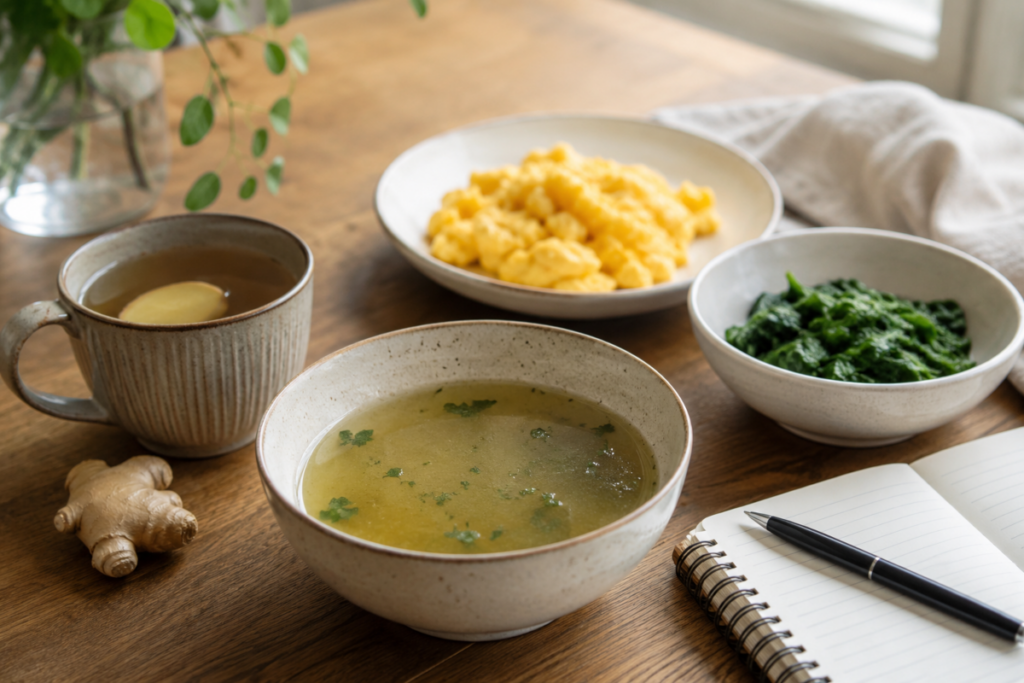
In the morning, that might mean warm water or ginger tea, followed by a small portion of soft scrambled egg or broth. Midday might be a chicken and vegetable soup with the vegetables cooked until tender. Dinner might be baked fish with a small serving of mashed cauliflower or a simple broth-based stew. If the appetite is low, the goal may be several small meals rather than three full ones. Cleveland Clinic guidance for flare-ups in ulcerative colitis also points toward smaller meals and low-fiber options such as cooked vegetables, white rice, fish, and eggs, while emphasizing that people still need fuel.
Low-lectin recovery meals can also use preparation as a form of safety. Pressure cooking can be useful for certain higher-lectin foods when they are part of someone’s plan, especially legumes, though many people avoid legumes entirely during flares because of fiber and tolerance issues. Peeling and deseeding vegetables can make a meal feel gentler. Slow simmering can soften ingredients. Blending can turn a soup into something easier to sip.
One of the most practical habits is keeping a “flare-up shelf” or freezer stash. This might include homemade broth frozen in portions, cooked shredded chicken, peeled and chopped low-lectin vegetables, tolerated herbs, and a few simple freezer meals that are intentionally boring in the best possible way. On a normal day, boring food sounds disappointing. On a flare-up day, boring can feel like mercy.
Returning to Variety Slowly
The mistake many people make after a flare-up is rushing back to normal meals the moment they feel a little better. That can work sometimes, but it can also restart the cycle. A slower return gives the digestive system a chance to show what it is ready for. Think of it like turning a dimmer switch instead of flipping the lights on full blast.
After a day or two of gentle meals, you might add a little more vegetable variety, slightly larger portions, or a bit more fat. Then you might bring back a favorite low-lectin sauce, a fermented food if tolerated, or a more textured side dish. Fermented foods can support the gut microbiome for many people, but they are not always comfortable during active symptoms, so timing and personal tolerance matter.
This is where tracking becomes powerful. A flare-up can feel mysterious in the moment, but patterns often appear over time. Was it a specific food, a stressful week, poor sleep, eating too quickly, a restaurant meal, or stacking too many “maybe foods” together? The companion mindset behind Tracking Low-lectin fits here because the goal is not self-blame. The goal is information. A simple note about symptoms, meals, sleep, stress, and preparation methods can help you make better decisions next time.
Slow recovery meals also remind us that low-lectin living is not only about removing foods. It is about learning how to prepare, pace, and personalize food. Some days call for culinary creativity. Flare-up days call for humility. The body is not asking for a gourmet performance. It is asking for warmth, patience, hydration, and less digestive noise.
The most supportive flare-up meal is the one that helps you feel safe enough to eat. A quiet bowl of broth. Soft vegetables. Tender protein. Gentle seasoning. A smaller portion. A slower pace. These are not glamorous tools, but they are deeply useful ones. And in the long run, knowing how to recover may be just as important as knowing what to avoid.