For many people, the idea of a satisfying meal is still tied to something dense and starchy. A bowl of pasta, a pile of rice, or a thick slice of bread has long been associated with feeling full. When those foods are reduced or removed in a low lectin lifestyle, there is often a brief period of uncertainty. The question becomes simple but important: what actually makes a meal feel complete?
Satiety is not just about volume or heaviness. It is a complex interplay between protein, fats, fiber, micronutrients, and even how food is prepared and eaten. Research over the past decade has consistently shown that protein and fat play a far more powerful role in regulating appetite hormones than refined or high glycemic carbohydrates. When meals are built around these elements, fullness becomes more stable, and energy levels tend to even out.
Within a low lectin framework, this shift is especially valuable. Many high starch foods that people rely on for fullness can also be sources of lectins or may contribute to digestive irritation in sensitive individuals. By rethinking how meals are structured, it becomes possible to feel deeply satisfied without relying on heavy starches at all.
The Science of Staying Full Without Starch
To understand how this works, it helps to look at what happens in the body after eating. Foods that are high in refined carbohydrates tend to digest quickly, leading to a rapid rise in blood sugar followed by a drop. That drop often triggers hunger again, sometimes within just a couple of hours. This cycle can create a pattern where fullness feels short lived and inconsistent.
Protein, on the other hand, stimulates the release of satiety hormones such as peptide YY and GLP 1. These hormones send signals to the brain that you have eaten enough. Fat slows gastric emptying, meaning food stays in the stomach longer, extending that feeling of satisfaction. When combined, protein and fat create a steady, sustained sense of fullness that does not rely on sheer quantity of food.
Fiber also plays a role, but in a low lectin lifestyle, the source of that fiber matters. Non lectin dense vegetables, properly prepared foods, and certain low lectin plant sources can provide bulk and support digestion without the same inflammatory concerns that some high lectin foods may introduce.
What this means in practical terms is that a meal does not need to be heavy to be satisfying. It needs to be strategically built.
Building Meals That Actually Satisfy
When people transition away from starch heavy meals, one of the most common mistakes is simply removing the starch without replacing its functional role. A plate that once had pasta or rice suddenly feels empty if nothing steps in to provide satiety.
A more effective approach is to think in terms of anchors. Every meal should have a strong protein anchor, supported by healthy fats and complemented by vegetables that add both texture and nutritional diversity. This creates a layered experience of fullness rather than a single heavy component.
Consider a simple example. A grilled chicken breast on its own might feel lean and incomplete. Pair it with olive oil roasted zucchini, a handful of arugula tossed in avocado oil, and a small portion of olives, and the entire meal shifts. The added fats enhance flavor, improve mouthfeel, and extend satiety. The vegetables add volume and texture without relying on starch.
This approach also aligns well with digestive health. Meals that are balanced in this way tend to be easier on the gut, especially when ingredients are prepared thoughtfully through peeling, deseeding, or cooking methods that reduce lectin content.
The Role of Texture, Temperature, and Timing
Satiety is not only biochemical. It is also sensory. Texture, temperature, and even the pace at which a meal is eaten can influence how full a person feels.
Warm, cooked foods often feel more satisfying than cold or raw meals, especially for individuals with sensitive digestion. Cooking breaks down fibers, making nutrients more accessible and easing the workload on the digestive system. This is one reason why a warm plate of sautéed vegetables with a well cooked protein can feel more comforting and filling than a large raw salad.
Texture also matters. Creamy elements such as avocado, blended vegetable purées, or even a well made dressing can create a sense of richness that contributes to satisfaction. Crunch from lightly cooked vegetables or seeds can add contrast, making the meal more engaging and less monotonous.
Timing plays a subtle but important role as well. Eating slowly allows the body time to register fullness signals. When meals are rushed, it is easy to overshoot satiety or, paradoxically, feel unsatisfied because the brain has not fully processed the experience of eating.
Practical Meal Ideas That Deliver Lasting Fullness
To make this more tangible, it helps to walk through a few meal concepts that consistently provide high satiety without relying on heavy starches. These are not rigid recipes but frameworks that can be adapted based on preference and availability.
One approach centers on a protein rich skillet meal. Imagine ground turkey or grass fed beef cooked with garlic and herbs, combined with chopped spinach and zucchini. As the vegetables soften, they absorb the flavors of the protein and cooking fat. A drizzle of olive oil at the end adds richness, while a squeeze of lemon brightens the dish. The result is deeply satisfying without feeling heavy.
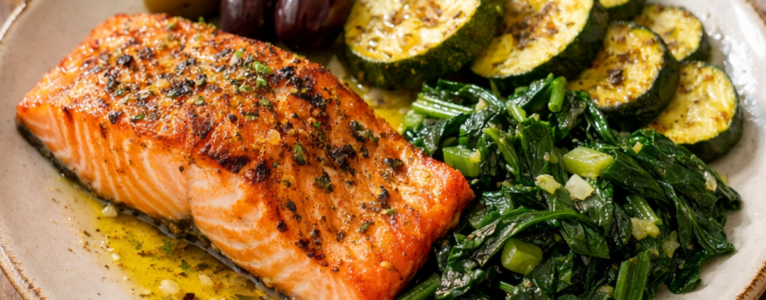
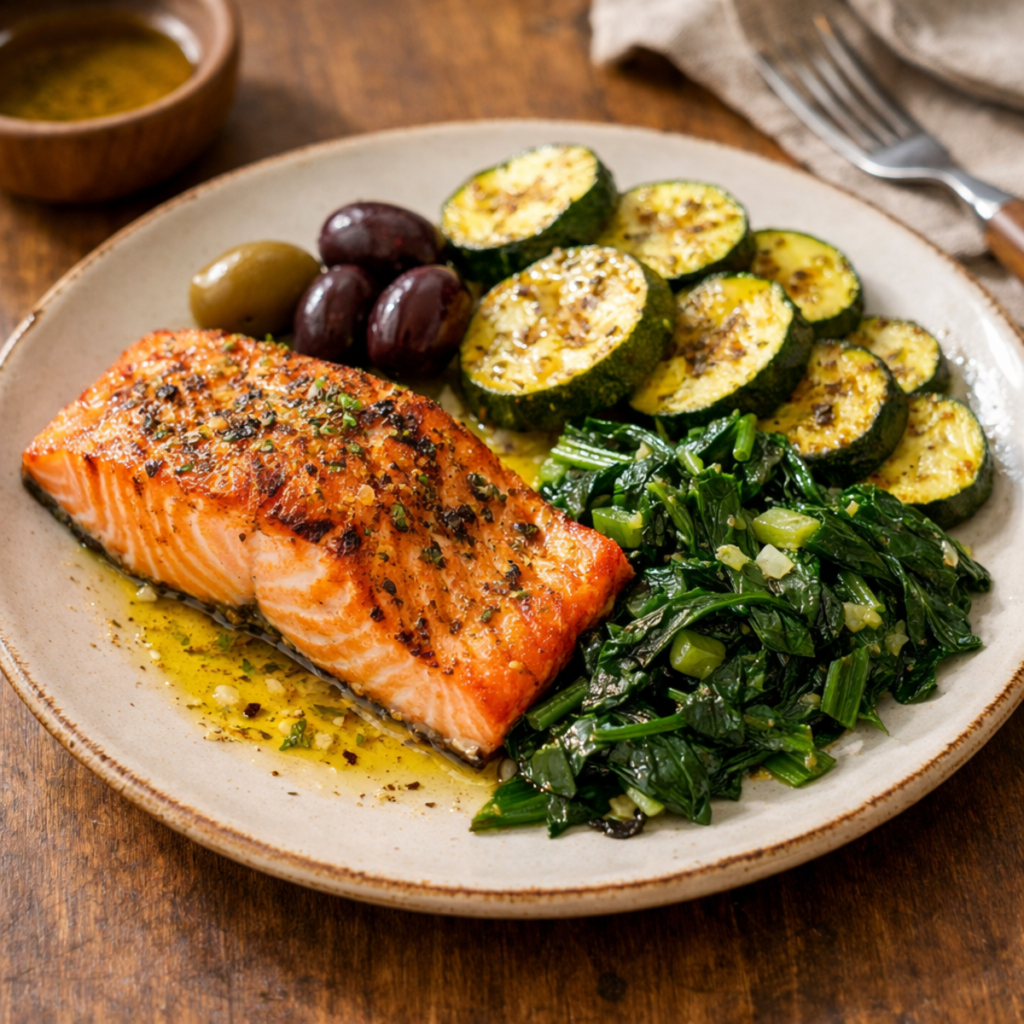
Another idea leans into seafood. A piece of seared salmon served alongside roasted asparagus and a small portion of sautéed mushrooms creates a balanced plate. The natural fats in the salmon contribute significantly to satiety, while the vegetables provide texture and micronutrients. A simple sauce made from olive oil and fresh herbs can elevate the entire dish without introducing unnecessary complexity.
Egg based meals also offer remarkable flexibility. A well made omelet filled with sautéed greens and a bit of goat cheese can serve as either breakfast or dinner. The combination of protein and fat keeps hunger at bay for hours, and the ingredients can be adjusted to suit tolerance and taste.
For those who enjoy something lighter, a composed salad can still be highly satisfying when built correctly. The key is to avoid treating it as a low calorie afterthought. Start with a base of leafy greens, then add a substantial protein such as grilled chicken or shrimp. Include healthy fats like avocado or olives, and finish with a generous dressing made from olive oil. This transforms the salad into a complete meal rather than a side dish.
Supporting Digestion While Staying Full
One of the advantages of moving away from heavy starches is the opportunity to support digestion more directly. Meals that emphasize properly prepared proteins and vegetables tend to reduce bloating and discomfort for many individuals.
Preparation methods make a significant difference. Peeling and deseeding certain vegetables can lower lectin exposure. Cooking techniques such as pressure cooking, roasting, or slow simmering can further improve digestibility. These steps do not just reduce potential irritants, they also enhance flavor and texture, making meals more enjoyable.
Hydration is another often overlooked factor. Drinking enough water throughout the day supports digestion and can influence how full a person feels. However, it is generally best to avoid large amounts of liquid during meals, as this can dilute digestive enzymes and potentially slow the breakdown of food.
Listening to the body is essential. Satiety is not a fixed number of calories or a specific portion size. It is a signal that can be learned and refined over time. By paying attention to how different meals feel, it becomes easier to identify what truly satisfies without relying on outdated assumptions about fullness.
A Sustainable Shift in How You Eat
Moving away from heavy starches is not about restriction. It is about redefining what satisfaction looks and feels like. When meals are built around protein, healthy fats, and thoughtfully prepared vegetables, fullness becomes more stable and predictable.
This approach also supports long term consistency. Meals that keep you satisfied are easier to maintain because they reduce the constant pull of hunger. Over time, this can lead to more intuitive eating patterns and a stronger connection to the body’s signals.
For those following a low lectin lifestyle, this shift aligns naturally with the goal of reducing potential irritants while supporting overall wellness. It is not about eliminating entire categories of food without replacement. It is about building something better in their place.
In practice, this means approaching each meal with intention. Choose a strong protein, add meaningful fats, include vegetables that are both nourishing and well prepared, and pay attention to how it all comes together. The result is a way of eating that feels satisfying, sustainable, and supportive of both digestive health and daily energy.
Over time, the reliance on heavy starches fades not because it is forced, but because it is no longer necessary.