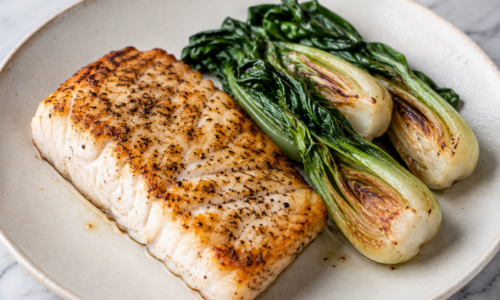
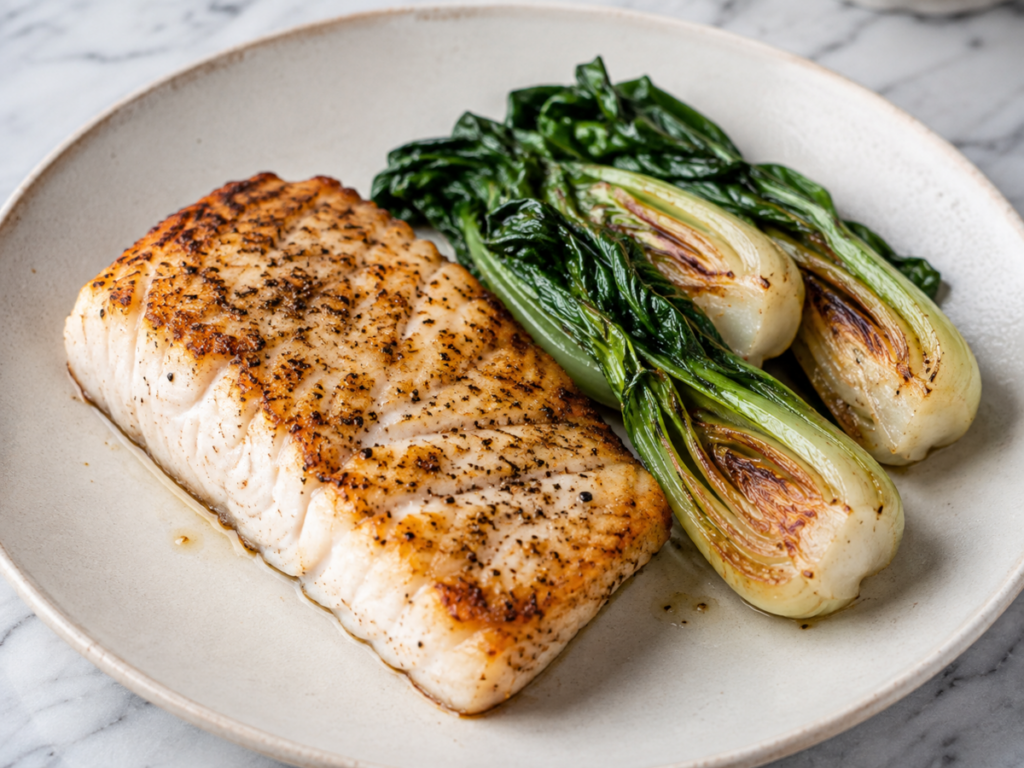
Some dinners earn a regular place in the kitchen because they solve several problems at once. They cook quickly, keep the ingredient list short, and leave you feeling satisfied without the heaviness that can follow a complicated meal. Pan-seared wild-caught mahi-mahi with sautéed baby bok choy fits that description almost perfectly.
The fish is firm enough to handle a hot skillet without falling apart, yet tender enough to flake under a fork. A light coating of salt and black pepper gives it all the seasoning it really needs. Beside it, baby bok choy cooks in minutes, developing browned edges while the pale stems retain a gentle crunch. This is not a recipe that hides behind sauce. The quality of the fish, the heat of the pan, and the timing do the work.
For anyone building meals around a low-lectin lifestyle, that simplicity matters. Fresh fish does not require soaking, peeling, seed removal, or pressure cooking. Bok choy is a leafy cruciferous vegetable rather than a grain, bean, or nightshade. The plate comes together from straightforward whole foods, without breading, flour, sugary glaze, soy sauce, or a long list of packaged ingredients.
Why Mahi-Mahi Works So Well in a Skillet
Mahi-mahi has a mild, slightly sweet flavor and a firm texture that makes it easier to cook than many delicate white fish. NOAA describes wild-caught Atlantic mahi-mahi as a year-round seafood option with a mild taste and firm flesh. U.S. wild-caught mahi-mahi is managed under federal fishing regulations, making sourcing information worth checking on the package or at the seafood counter.
That firm structure is especially helpful for pan searing. Thin fish such as sole can tear during flipping, while very fatty fish can release more oil than expected. Mahi-mahi sits between those extremes. It develops a browned surface, holds together when turned, and still flakes nicely when fully cooked. The main danger is overcooking it.
Mahi-mahi is relatively lean, so it does not have a large amount of internal fat protecting it from prolonged heat. Once the center is cooked, extra time in the pan can quickly shift the texture from moist and flaky to dry and dense. A thick fillet may need a few more minutes, but it should not be left sizzling while the rest of dinner gets organized. Have the bok choy washed, dried, and cut before the fish touches the pan. That small bit of preparation changes the entire rhythm of the recipe.
The Low-Lectin Logic Behind the Plate
A low-lectin meal does not need to imitate a conventional dinner with substitute bread, alternative pasta, or packaged snack foods. It can be built more directly. Start with a dependable protein. Add a tolerated vegetable. Cook both in a stable fat and season them clearly.
Mahi-mahi supplies the protein anchor, while bok choy adds volume, texture, and the freshness that prevents a fish dinner from feeling too rich. Coconut oil or ghee provides enough heat tolerance for fast stovetop cooking. Neither ingredient requires a thick sauce to make the meal feel complete.
This approach also removes several common sources of hidden ingredients. Restaurant fish may arrive dusted with wheat flour, cooked in a seed-oil blend, or coated in a glaze containing sugar, soy, cornstarch, or commercial seasoning mixes. Cooking the same style of meal at home gives you direct control over every ingredient.
Black pepper is included here because many people tolerate it well in culinary amounts. Personal tolerance still gets the final vote. Anyone who has identified pepper as a trigger can leave it off and season the fish with salt alone, fresh herbs, or a small amount of lemon after cooking. Low-lectin eating works better when it remains adjustable rather than rigid.
Bok Choy Deserves Better Than Being Boiled Soft
Baby bok choy is often overcooked. Its leaves collapse, its stems become watery, and its clean flavor disappears into the pan. Flash-frying produces a better result. High heat browns the cut surfaces while the thick stems stay slightly crisp. The leaves wilt quickly and pick up the flavor of the cooking fat. The finished vegetable tastes fresh, savory, and faintly sweet rather than soggy.
Bok choy belongs to the brassica family, along with cabbage, broccoli, cauliflower, and Brussels sprouts. Research on pak choi has identified naturally occurring glucosinolates, a group of sulfur-containing plant compounds found throughout cruciferous vegetables. The amount and type can differ among plant varieties and growing conditions, so these vegetables should be viewed as whole foods rather than as standardized supplement doses.
Concerns about brassica vegetables and thyroid health are often repeated without much context. A 2024 review found that normal dietary intake of brassica vegetables generally did not impair thyroid function, particularly in people with adequate iodine intake. Anyone with a diagnosed thyroid condition should still follow guidance from their own clinician, especially if their diet is highly restricted.
For this recipe, the practical point is much simpler. Bok choy cooks fast, pairs naturally with fish, and brings a different texture to every bite.
Choosing Good Mahi-Mahi
Fresh mahi-mahi should have firm flesh and a mild ocean-like smell. A strong fishy, sour, or ammonia-like odor is a warning sign. Fresh fillets should not show dried edges, heavy discoloration, or soft areas that fail to spring back when pressed.
Frozen fish can be equally useful and is often easier to keep on hand. Look for fillets that are individually frozen, tightly sealed, and free from thick ice buildup inside the package. Excessive ice crystals may suggest that the fish thawed and refroze somewhere along the supply chain.
Thaw frozen mahi-mahi overnight in the refrigerator whenever possible. For faster thawing, keep the fish sealed and place it in cold water, changing the water as needed. Do not leave seafood sitting at room temperature for an extended period.
After thawing, pat the fillets thoroughly dry. This step is not cosmetic. Surface moisture creates steam, and steam blocks browning. Dry fish forms a better crust and is less likely to stick to the pan.
Wild-Caught Mahi-Mahi with Sautéed Bok Choy
Ingredients
- 2 wild-caught mahi-mahi fillets, about 5 to 6 ounces each
- 4 baby bok choy
- 1 1/2 tablespoons coconut oil or ghee, divided
- 1/2 teaspoon fine sea salt, divided
- 1/4 teaspoon freshly ground black pepper, or less to taste
- 1 small garlic clove, thinly sliced, optional
- 1 to 2 teaspoons fresh lemon juice, optional
Instructions
- Remove the mahi-mahi from the refrigerator about 10 minutes before cooking. Pat each fillet dry on all sides with a clean paper towel.
- Season the fish with about 1/4 teaspoon of the salt and the black pepper. Press the seasoning lightly into the surface so it stays in place when the fillets enter the skillet.
- Trim the very bottom of each baby bok choy, keeping enough of the base intact to hold the leaves together. Slice each head in half lengthwise. Rinse carefully between the stalks, where sand often collects, then dry thoroughly.
- A wet vegetable will spit aggressively when it hits hot fat. Drying also helps the cut surface brown rather than steam.
- Heat a heavy skillet over medium-high heat for about 2 minutes. Cast iron or stainless steel works well, although a dependable nonstick skillet can make flipping easier.
- Add 1 tablespoon of coconut oil or ghee. Once the fat is hot and shimmering, place the mahi-mahi in the skillet with the presentation side facing down.
- Let the fish cook without moving it for 3 to 4 minutes. The underside should release more easily once a crust has formed. Trying to flip too early can tear the surface.
- Turn the fillets carefully with a thin spatula. Reduce the heat to medium and cook for another 3 to 5 minutes, depending on thickness.
- The FDA recommends cooking finfish to an internal temperature of 145°F, measured in the thickest section. The flesh should be opaque and separate easily with a fork.
- Transfer the cooked mahi-mahi to a plate and let it rest while the bok choy cooks.
- Return the skillet to medium-high heat. Add the remaining coconut oil or ghee.
- Place the bok choy cut side down in the hot skillet. Cook for about 2 minutes without moving it, allowing the flat surfaces to brown.
- Flip the bok choy. Add the sliced garlic, if using, and sprinkle the remaining salt over the vegetables. Cook for another 1 to 2 minutes, stirring the garlic so it does not burn.
- The leaves should be wilted, the cut sides lightly browned, and the stems still firm enough to offer a little resistance when bitten. Remove the skillet from the heat as soon as that point is reached.
- Divide the bok choy between two plates and add one mahi-mahi fillet to each. Finish with a small squeeze of fresh lemon juice if tolerated.
Getting the Sear Right
A successful sear depends more on moisture and temperature than on added ingredients.
The fish must be dry. The pan must already be hot. The cooking fat must cover the contact area without turning the fish into something shallow-fried. Once the fillet enters the skillet, leave it alone long enough for the surface proteins to brown and release.
Crowding also causes trouble. A small skillet packed with two large fillets loses heat quickly. Moisture collects, and the fish begins to steam. Use a pan that gives each fillet some open space.
Ghee brings a rich, buttery flavor without the milk solids found in regular butter. Coconut oil contributes a faint coconut note, although refined coconut oil is much more neutral. Either one works. The better choice depends on personal dairy tolerance and the flavor you prefer.
Managing Mercury Without Avoiding Seafood Entirely
Mahi-mahi contains more mercury than many smaller fish, but it is not grouped with the highest-mercury choices such as shark or swordfish. FDA monitoring data reported an average mercury concentration of 0.178 parts per million for mahi-mahi.
The FDA and EPA fish chart places mahi-mahi in the “Good Choices” group for people who are pregnant, may become pregnant, are breastfeeding, or are selecting fish for children. For those groups, the guidance is generally one serving from that category during the week, with no additional fish consumed that week. Other adults can still benefit from varying seafood choices rather than eating the same species repeatedly.
Rotation is the sensible habit. Mahi-mahi can share the menu with lower-mercury seafood such as salmon, sardines, shrimp, pollock, or Atlantic mackerel, based on individual tolerance and dietary goals.
Adjusting the Meal for Appetite and Activity
As written, this recipe creates a protein-forward meal with a generous vegetable side. That may be enough for a lighter dinner, particularly on a less active day.
Someone with higher energy needs may want a tolerated carbohydrate beside it. Roasted sweet potato, pressure-cooked white rice, millet, or winter squash may fit, depending on the person’s version of low-lectin eating. Add the portion deliberately rather than letting starch crowd the fish and vegetables off the plate.
For a larger vegetable serving, double the bok choy or add sautéed mushrooms. A sliced avocado can add richness without changing the cooking process. Fresh herbs such as parsley, cilantro, or chives can brighten the finished plate without turning it into a heavily seasoned dish.
The portion can also be increased by using a 7-ounce fillet for someone who prefers a larger protein serving. The cooking time may rise slightly if the fillet is thicker, which makes a thermometer more reliable than guessing from the clock.
Storing and Reheating Leftovers
Cooked mahi-mahi is best eaten soon after searing, but leftovers can be refrigerated in a covered container. Keep the fish and bok choy separate when possible so the vegetables do not release moisture onto the fish.
Reheat the mahi-mahi gently in a covered skillet over low heat with a teaspoon of water or ghee. High microwave heat can make a lean fillet rubbery before the center warms. The bok choy can be returned to a hot skillet for a minute or two, just long enough to restore some heat without cooking the stems into softness.