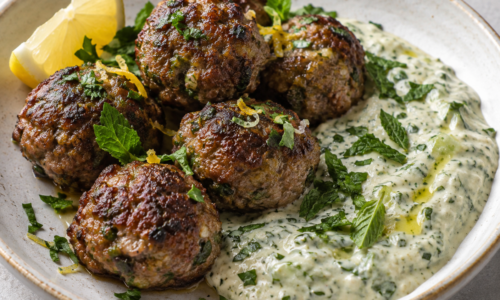
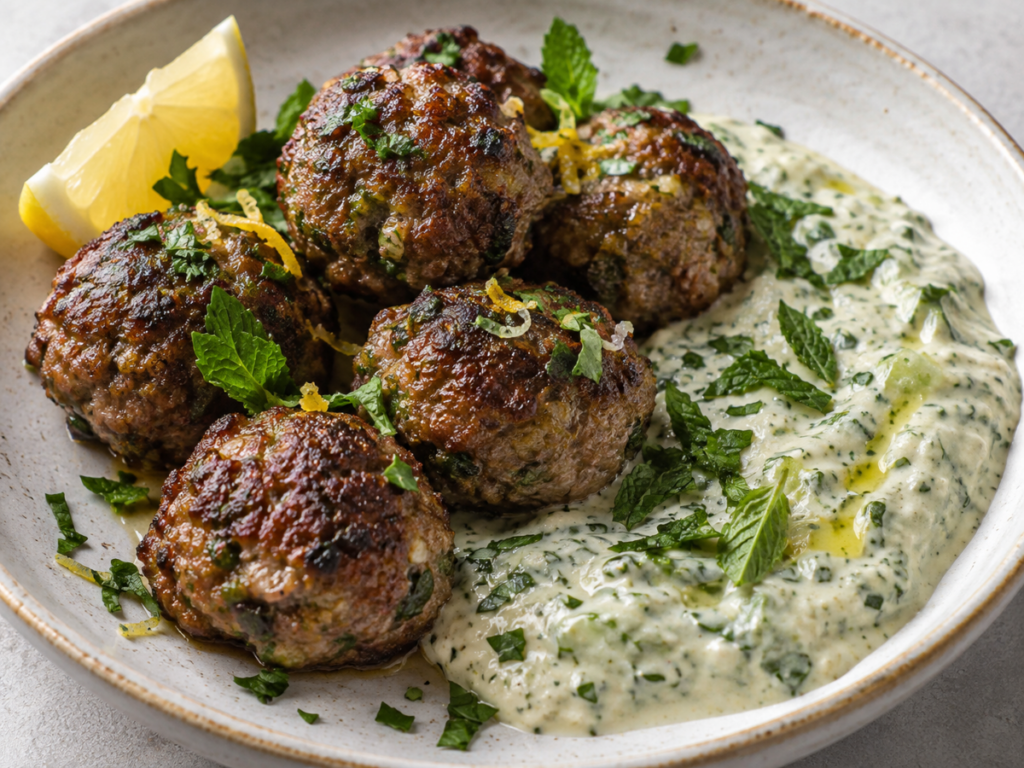
Lamb has a way of making a simple meatball feel like a complete dinner rather than an appetizer. Its rich flavor stands up well to fresh herbs, garlic, lemon, and the cool acidity of a cucumber sauce, which means there is little need for breadcrumbs, sugary glazes, heavy dairy sauces, or a long ingredient list. For a low-lectin kitchen, that combination makes these herbed lamb meatballs especially useful because the meal can be built around protein, herbs, olive oil, and fresh vegetables without relying on grains or legumes.
The cucumber-mint tahini sauce brings a different character to the plate. Tahini adds creaminess and a slightly nutty flavor, cucumber keeps the sauce fresh, and lemon prevents the richness of the lamb and sesame from becoming too heavy. Since low-lectin eating is rarely identical from one household to another, the sauce is also easy to adjust for people who limit sesame or prefer a different creamy base.
Why Lamb Works So Well with Fresh Herbs
Ground lamb has enough natural fat to stay tender without needing bread crumbs or another starchy binder. That is useful in a meatball recipe because removing breadcrumbs can sometimes leave leaner ground meats dry or crumbly, while lamb generally holds together well if it is mixed gently and allowed to chill briefly before cooking.
Lamb also contributes nutrients found naturally in animal foods. Meat provides vitamin B12, zinc, and both heme and nonheme iron, with heme iron generally being absorbed more readily than nonheme iron from plant foods. Vitamin B12 occurs naturally in animal-derived foods, while meat is also among the richer dietary sources of zinc.
Those nutritional qualities do not mean lamb needs to dominate the entire meal. Pairing a moderate portion with leafy greens, cruciferous vegetables, herbs, or another tolerated vegetable creates a plate with more texture and variety while allowing the lamb to provide the main savory element.
Fresh herbs are particularly good partners here because lamb can handle assertive seasoning. Parsley provides a clean herbal base, mint gives the mixture the familiar pairing associated with lamb, oregano brings an earthy note, and lemon zest adds aroma without introducing much additional liquid. The result tastes seasoned throughout rather than depending entirely on sauce after cooking.
Where This Recipe Fits into Low-Lectin Eating
Lectins are carbohydrate-binding proteins found throughout the plant kingdom, and the amount and biological activity differ considerably among foods. Raw and undercooked legumes, particularly certain beans, contain some of the best-known dietary lectins, while heat and other preparation methods can reduce the activity of many lectins. Human research supporting broad claims that all lectin-containing foods cause chronic health problems remains limited, which is one reason a practical low-lectin approach can focus on individual tolerance and food preparation rather than treating every plant food the same way.
This recipe avoids several ingredients that commonly create questions for people following stricter low-lectin plans. There are no bread crumbs, wheat flour, beans, soy ingredients, or pepper-based sauces in the meatballs. The cucumber can be peeled and seeded before going into the sauce, which is a common practical choice among people who prefer to remove skins and seeds from certain produce, although that preparation should be viewed as a dietary preference rather than a medically proven requirement.
Tahini deserves a little more attention because it is made from sesame seeds. Some people following low-lectin diets eat sesame without difficulty, while others limit seeds as part of their personal approach. Tahini is also important from an allergy standpoint because sesame is one of the nine major food allergens recognized in the United States, so anyone with a sesame allergy needs a sesame-free sauce rather than simply using a smaller amount.
For people who tolerate sesame, a smooth tahini works beautifully here. If sesame does not fit your diet, the same cucumber-mint flavor profile can be built with a tolerated plain yogurt, a thick macadamia-based cream, or even an olive-oil-forward herb sauce.
Herbed Lamb Meatballs with Cucumber-Mint Tahini Sauce
Ingredients
- 1 1/2 pounds ground lamb
- 2 tablespoons finely chopped fresh parsley
- 2 tablespoons finely chopped fresh mint
- 1 teaspoon dried oregano
- 2 garlic cloves, finely minced
- 2 tablespoons finely grated onion
- 1 teaspoon lemon zest
- 3/4 teaspoon sea salt
- 1 tablespoon extra virgin olive oil, plus more if needed for the pan
- 1 tablespoon fresh lemon juice
Instructions
- Grate the peeled and seeded cucumber using the large holes of a box grater. Place it in a clean kitchen towel or several layers of paper towel and gently squeeze out the excess moisture.
- Add the tahini, lemon juice, olive oil, garlic, mint, parsley, and sea salt to a bowl. Stir until combined. Tahini may become noticeably thicker when the lemon juice is added, which is normal.
- Add cold water one tablespoon at a time while stirring until the sauce becomes smooth and spoonable. Fold in the drained cucumber and taste for seasoning.
- Refrigerate the sauce while preparing the meatballs. A short rest gives the garlic, lemon, cucumber, and herbs time to blend into the tahini.
- Place the ground lamb in a large mixing bowl. Add the parsley, mint, oregano, garlic, grated onion, lemon zest, sea salt, olive oil, and lemon juice.
- Mix with clean hands just until the herbs and seasonings are evenly distributed. Avoid repeatedly squeezing or compacting the mixture because heavily worked ground meat can produce a firmer meatball.
- Form the mixture into approximately 16 meatballs, each about 1 1/2 inches across. Place them on a plate or parchment-lined tray. If time allows, refrigerate them for about 15 minutes so the meatballs firm slightly before cooking.
- Heat a large skillet over medium to medium-high heat. Add a small amount of olive oil if the pan needs it, then arrange the meatballs in a single layer without crowding them.
- Cook for approximately 12 to 16 minutes, turning every few minutes so several sides develop a browned surface. Reduce the heat slightly if the outside is browning much faster than the center is cooking.
- Check the center of one of the largest meatballs with an instant-read thermometer. Ground lamb should reach an internal temperature of 160 degrees Fahrenheit according to USDA food-safety guidance.
- Transfer the cooked meatballs to a clean plate. Serve warm with the chilled cucumber-mint tahini sauce spooned alongside or drizzled lightly over the top.
Getting Tender Meatballs Without Breadcrumbs
Breadcrumbs in traditional meatballs do more than add bulk. They absorb moisture and help create a softer texture, so simply removing them from a recipe does not always produce the same result. Lamb makes that adjustment easier because its natural fat contributes moisture and tenderness on its own.
The grated onion also helps. Grating rather than chopping it distributes small amounts of moisture and onion flavor throughout the mixture without leaving large pieces that can make the meatballs harder to shape. Squeezing the mixture repeatedly is unnecessary, and packing the meatballs as tightly as possible works against the tender texture we are after.
Size matters as well. Keeping the meatballs reasonably uniform means they reach the proper internal temperature at roughly the same time. If some are twice the size of others, the smaller ones can dry out while the larger pieces are still cooking in the center.
The thermometer is more dependable than judging lamb by color. USDA guidance calls for ground lamb to reach 160 degrees Fahrenheit, while whole lamb steaks, chops, and roasts have different temperature guidance. The distinction matters because grinding distributes surface bacteria throughout the meat, which is why ground meat is handled differently from an intact chop or roast.
Building a Better Tahini Sauce
Tahini changes texture dramatically when liquid is added. Lemon juice can make it tighten and look almost separated at first, but gradually stirring in cold water turns it smooth and creamy again. Adding the water slowly also gives you control over whether the finished sauce is thick enough for dipping or thin enough to drizzle.
Removing excess water from the cucumber prevents the sauce from becoming watery after it sits. That matters even more if the sauce is being prepared in advance because cucumbers continue releasing moisture after they are grated. Peeling and seeding the cucumber also creates a smoother finished texture.
Fresh mint is the ingredient that connects the sauce to the meatballs. The meatballs contain enough mint to make its presence noticeable without making the lamb taste mint-dominated, while a little extra mint in the cool sauce reinforces that flavor from a different direction. Parsley softens the mint and gives the sauce a more rounded herbal taste.
For a sesame-free version, plain tolerated yogurt can replace the tahini and most of the added water. A blended macadamia cream can also provide body, while a simpler mixture of cucumber, herbs, lemon, olive oil, and salt works when a creamy sauce is unnecessary. These substitutions change the flavor, but they preserve the cooling contrast that makes the sauce so useful with lamb.
Turning the Meatballs into a Complete Meal
These meatballs are easy to place in several different meals without changing the base recipe. A simple dinner could pair them with sautéed leafy greens and roasted cauliflower, while a larger plate might include steamed broccoli, roasted carrots, or a cabbage-based salad dressed with lemon and olive oil. The sauce is strong enough to season vegetables too, so a separate dressing is usually unnecessary.
For a bowl-style meal, start with greens or another tolerated vegetable base, add several lamb meatballs, cucumber, fresh herbs, and a spoonful of tahini sauce. Avocado can add more richness, although the lamb and tahini already provide plenty of fat, so the amount can be adjusted according to appetite and the rest of the meal.
The same meatballs can also work as a handheld meal if you have a bread or wrap that fits your own version of low-lectin eating. Rather than redesigning the meatballs every time, keeping the protein component consistent and changing the vegetables, sauce thickness, or side dishes is an easier way to keep the recipe useful throughout the week.
Adjusting the Recipe Around Individual Tolerance
Low-lectin eating tends to become easier once recipes are treated as frameworks rather than fixed rules. Someone who tolerates tahini may use the sauce exactly as written, while another person may discover through careful food tracking that sesame does not work well for them. Neither situation requires abandoning the lamb meatballs themselves.
The same principle applies to garlic, onion, citrus, and higher-fat meals. Digestive responses can have many causes, and symptoms after a meal do not automatically identify lectins as the reason. Changing one ingredient at a time and recording meals alongside symptoms can provide more useful personal information than removing several unrelated foods at once.
This recipe is especially suitable for that kind of experimentation because the meatball mixture is simple. Parsley, mint, oregano, or lemon can each be adjusted without altering the cooking method, and the sauce remains completely separate from the lamb. That makes it possible to change one component while leaving the rest of the meal familiar.
Making a Batch for Later
Cooked lamb meatballs hold up well for meal preparation because they can be refrigerated separately from the sauce and reheated only as needed. USDA guidance recommends refrigerating cooked leftovers promptly and generally using cooked leftovers within three to four days.
Keep the cucumber-mint tahini sauce in its own covered container so the meatballs are not sitting in a cold, acidic sauce during storage. The sauce may thicken in the refrigerator, but a teaspoon or two of cold water can loosen it again before serving. Reheated meatballs paired with freshly chopped herbs and cool cucumber sauce make the meal feel freshly assembled even when the main cooking was done several days earlier.