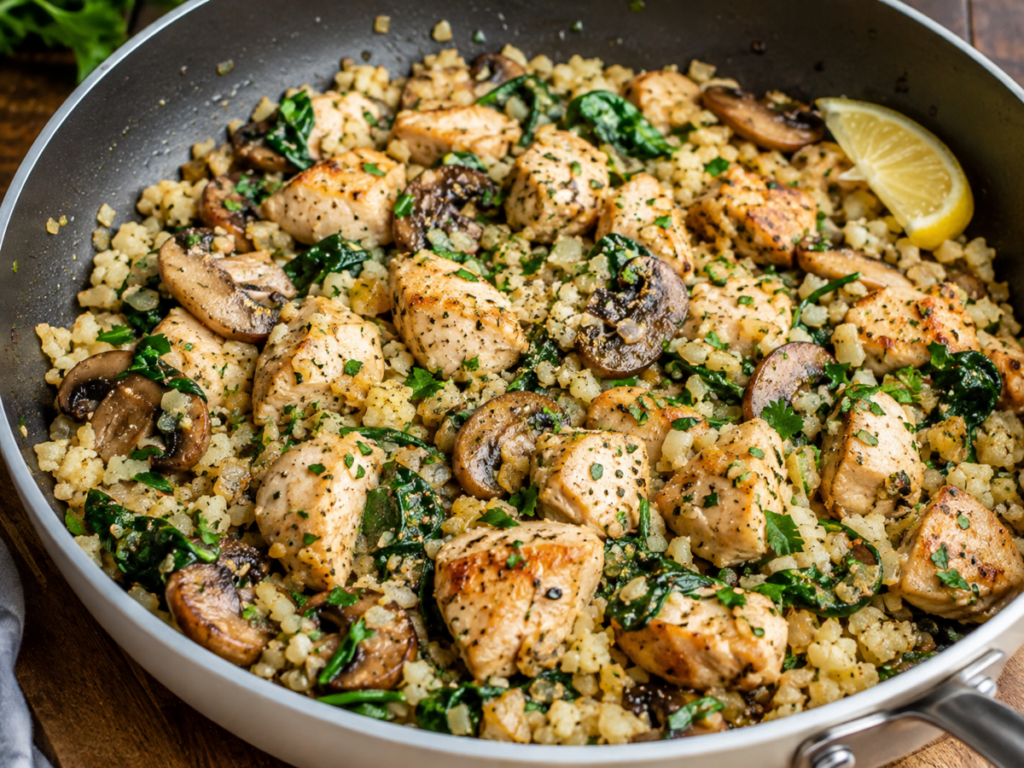
A skillet meal earns its place in a low-lectin kitchen because it solves several problems at once. It can be built from familiar ingredients, cooked in one pan, adjusted for individual tolerance, and reheated without turning into a completely different meal the next day. Chicken and cauliflower rice fit especially well together because the chicken brings satisfying protein while the cauliflower carries seasoning, absorbs pan juices, and gives the dish the feel of a rice-based dinner without relying on a grain.
For people experimenting with lower-lectin eating, meals like this can also make the routine feel less restrictive. There is no need for a long list of specialty products, and there is no complicated preparation step that makes the recipe hard to repeat. The main work is learning how to brown the chicken properly and keep the cauliflower rice from steaming itself into a soft, watery pile.
Why This Combination Works So Well
Chicken is an animal food, so it does not contain the plant lectins that are usually discussed in low-lectin eating. Cauliflower is a cruciferous vegetable, and it is commonly used in low-lectin meal plans as an alternative to grain-based rice. From a general nutrition standpoint, the CDC classifies cauliflower among non-starchy vegetables, and vegetables contribute fiber, vitamins, minerals, and other compounds to the diet.
That distinction matters because a low-lectin approach does not have to mean replacing every removed food with packaged substitutes. A head of cauliflower can become rice in a food processor in less than a minute, and plain frozen cauliflower rice works just as well when time is short. Either version gives the skillet volume and texture while keeping the ingredient list simple.
The scientific conversation around lectins also deserves some restraint. Lectins are carbohydrate-binding proteins found throughout the plant kingdom, with especially high amounts in certain raw legumes and some whole grains. Cooking and other food-processing methods can greatly reduce the activity of many lectins, and research on the long-term effects of lectin intake in humans is still limited. A person who feels better limiting certain foods may still choose to do so, but that practical choice is different from claiming that all lectin-containing foods are harmful to everyone.
The Real Trick Is Controlling Moisture
Cauliflower rice looks simple, but moisture is the difference between a skillet that feels hearty and one that feels waterlogged. Fresh cauliflower contains a great deal of water, and frozen cauliflower releases even more as it thaws in the pan. If the skillet is crowded or covered, that moisture stays trapped and the cauliflower tends to steam.
A wide skillet helps because more surface area allows moisture to escape. Cook the chicken first, remove it temporarily, then cook the vegetables before adding the cauliflower rice. This gives each part of the dish a chance to brown rather than forcing everything to compete for the same hot surface.
Frozen cauliflower rice does not need to be thawed first. Add it directly to a hot skillet, spread it out, and let it cook uncovered. Stir often enough to prevent scorching, but give it short stretches of contact with the hot pan so some of the excess water can evaporate.
This version uses mushrooms, spinach, garlic, onion, lemon, and herbs for flavor without relying on tomato sauce, beans, wheat, corn, or a bottled seasoning blend. The seasoning stays mild enough for meal prep, but the finished skillet still has enough character to work as dinner on its own.
Chicken & Cauliflower Rice Skillet
Ingredients
- 1 1/4 pounds boneless, skinless chicken breasts or thighs, cut into bite-size pieces
- 1 medium head cauliflower, riced, about 5 to 6 cups, or 20 to 24 ounces plain frozen cauliflower rice
- 8 ounces cremini or white mushrooms, sliced
- 2 packed cups baby spinach
- 1/2 medium yellow onion, finely chopped
- 3 cloves garlic, minced
- 2 tablespoons extra-virgin olive oil or avocado oil, divided
- 1 teaspoon dried oregano
- 1/2 teaspoon dried thyme
- 1/2 teaspoon sea salt, plus more to taste
- 1/4 teaspoon black pepper, or to taste
- 1 tablespoon fresh lemon juice
- 1 teaspoon finely grated lemon zest, optional
- 2 tablespoons chopped fresh parsley
- 1 to 2 tablespoons water or unsalted chicken broth, only if needed
Instructions
- Pat the chicken dry with paper towels, then season it with the oregano, thyme, salt, and black pepper. Drying the surface helps the pieces brown more easily instead of releasing extra moisture into the skillet.
- Heat 1 tablespoon of the oil in a large skillet over medium-high heat. Add the chicken in a single layer and cook for about 5 to 7 minutes, turning the pieces as they brown. Once the chicken is nearly cooked through, transfer it to a clean plate.
- Lower the heat to medium and add the remaining tablespoon of oil. Add the onion and mushrooms, then cook for 4 to 5 minutes until the mushrooms have released much of their moisture and the onion has softened. Stir in the garlic and cook for about 30 seconds, just until fragrant.
- Add the cauliflower rice and spread it across the skillet. Cook uncovered for 5 to 7 minutes, stirring occasionally, until it is tender but still has some texture and most visible moisture has cooked away. If the pan becomes too dry before the cauliflower is tender, add a tablespoon of water or broth.
- Return the chicken and any juices from the plate to the skillet. Cook for another 2 to 3 minutes, then check the thickest chicken pieces with a food thermometer. Poultry should reach a safe minimum internal temperature of 165°F, or 73.9°C.
- Add the spinach and stir just until wilted. Remove the skillet from the heat, then stir in the lemon juice, lemon zest if using, and fresh parsley. Taste and adjust the salt, pepper, or lemon before serving.
Choosing Chicken Breasts or Thighs
Chicken breasts keep the dish lean and mild, and they work well when the skillet will be paired with avocado, olive oil, or another source of fat. They also cook quickly, which makes them useful for weeknight meals. The main drawback is that breast meat can become dry if the pieces are small or left in the pan too long after they reach the proper temperature.
Thighs are more forgiving because they contain more fat and tend to stay tender during reheating. They also give the cauliflower rice a richer flavor as their juices mix with the vegetables. Either cut works, so the better choice may simply be the one that fits the texture, budget, and meal-prep plan for the week.
Fresh Versus Frozen Cauliflower Rice
Fresh cauliflower rice gives the cook more control over texture. A food processor can turn florets into rice-sized pieces quickly, though pulsing in short bursts works better than running the machine continuously. Overprocessing can create a mixture that is closer to cauliflower crumbs or puree, which will cook differently in the skillet.
Frozen cauliflower rice is the more convenient option and can be especially useful when meal planning depends on foods that keep longer. Plain frozen vegetables can still fit comfortably into a minimally processed diet, and the CDC includes fresh and frozen vegetables among practical options for home meals. The only adjustment is moisture management, since frozen cauliflower usually needs a little more uncovered cooking time.
Building More Flavor Without Making the Recipe Complicated
A one-pan meal benefits from layered seasoning because there is no separate sauce to carry the flavor. Seasoning the chicken before it hits the skillet gives the meat its own character, while the mushrooms, garlic, onion, lemon, and herbs season the cauliflower from several directions. The lemon goes in at the end because fresh acidity can brighten the finished dish without needing extra salt.
Fresh herbs can change the personality of the skillet without changing its basic structure. Parsley keeps it clean and familiar, basil gives it a softer Mediterranean direction, and chopped rosemary can make the dish feel more savory and substantial. For people who tolerate dairy and include it in their personal version of low-lectin eating, a small amount of grated hard cheese or a spoonful of plain cultured dairy can also be added at the table.
Adjusting the Skillet for Individual Tolerance
Low-lectin eating tends to become more practical when meals are treated as templates rather than fixed rules. Someone who does well with zucchini could add peeled, seeded pieces with the mushrooms. Another person may prefer chopped kale instead of spinach, or may leave out onion if it causes digestive discomfort for reasons unrelated to lectins.
Tracking reactions can help separate a problem with one ingredient from a problem with the whole meal. Garlic, onion, cauliflower, and mushrooms can be troublesome for some people with sensitive digestion because they can provide fermentable carbohydrates, including fructans and mannitol, depending on the food and serving size. This is a separate issue from lectin content and can be relevant for people who are also sensitive to FODMAPs. If a skillet causes bloating or discomfort, changing one ingredient at a time gives much more useful information than abandoning the entire recipe at once.
The same approach applies to portion size. A large serving of cauliflower may bother someone who tolerates a smaller amount without trouble. Food tolerance is often influenced by dose, preparation, what else is eaten at the meal, and the person’s current digestive state, so the most useful version of the recipe is the one that can be repeated comfortably.
Meal Prep and Leftovers
This skillet is well suited to making lunches because the chicken and vegetables can be portioned together in one container. Refrigerate leftovers promptly, and reheat only the portion that is going to be eaten. USDA guidance advises refrigerating cooked poultry leftovers within two hours, which is a useful rule for any batch-cooked chicken meal.
A little added moisture can help during reheating, especially if chicken breast was used. A teaspoon or two of broth or water in the container can keep the cauliflower from drying out, while a squeeze of fresh lemon after reheating restores some of the flavor that fades in the refrigerator. Avocado, chopped herbs, or a spoonful of an appropriate homemade sauce can also make a second-day portion feel different without requiring another full cooking session.
Making the Skillet Part of a Repeatable Routine
The value of this recipe is partly in how easily it can be changed from week to week. The chicken can be replaced with turkey, the spinach can become kale, mushrooms can be increased for a more savory version, and the herb profile can move from oregano and thyme to rosemary and parsley. Keeping the core method the same means the cook gets faster with repetition while the meal still has enough variation to avoid feeling stale.
That kind of repetition can make a low-lectin routine easier to sustain. A dependable skillet, a short list of tolerated vegetables, a protein, and a few seasonings can cover several dinners without demanding a new recipe every night. The pan may look slightly different each time, but the method remains familiar, which is often exactly what a busy kitchen needs.