A low-lectin grocery cart can become expensive surprisingly fast if every familiar food is replaced with a specialty version. Grain-free crackers replace ordinary crackers, premium flours replace wheat flour, packaged snack bars replace simple snacks, and a handful of highly marketed ingredients begin taking up a large share of the grocery budget. Before long, it can seem as though eating low-lectin requires shopping in a completely different food economy.
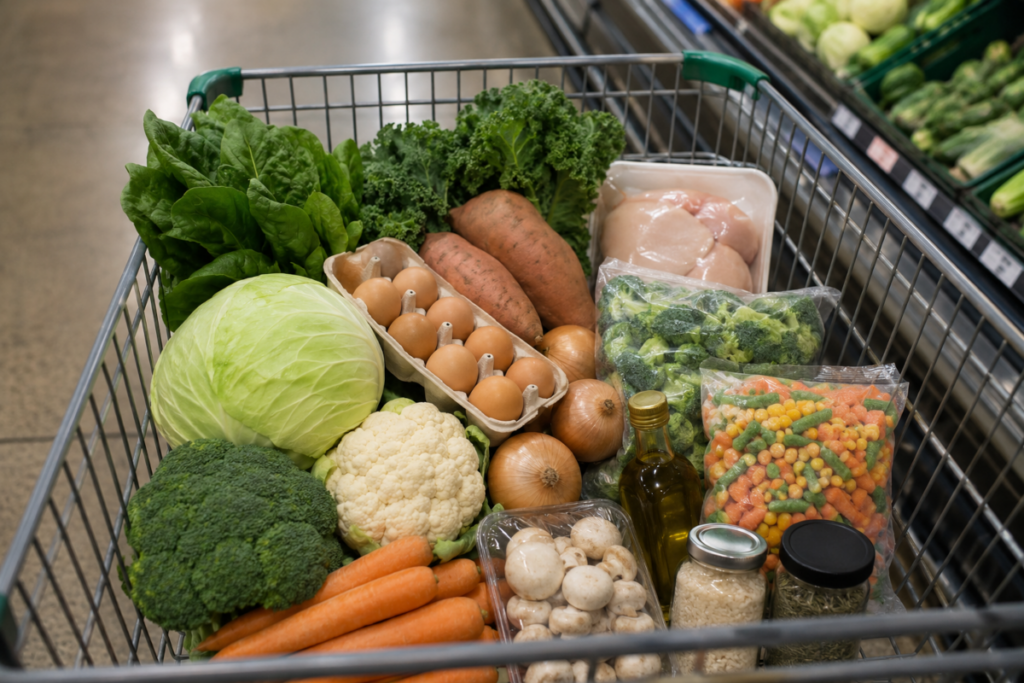
It does not have to work that way. Many foods commonly used in a low-lectin lifestyle are ordinary grocery-store foods that have been around long before anyone placed a dietary label on them. Eggs, cabbage, carrots, broccoli, cauliflower, onions, mushrooms, leafy greens, sweet potatoes, chicken thighs, ground meat, canned fish, frozen vegetables, herbs, olive oil, butter, and other basic ingredients can form the backbone of a practical eating pattern without turning every shopping trip into a specialty-food expedition.
The bigger savings often come from changing how the cart is built rather than finding a cheaper version of every expensive low-lectin product.
The Expensive Part Is Often the Replacement Food
A change in diet frequently begins with substitution. Bread disappears, so a specialty bread takes its place. Pasta disappears, so a specialty pasta goes into the cart. Chips, cookies, breakfast cereal, granola bars, tortillas, and baking mixes can all follow the same pattern.
That approach makes sense psychologically because the meals still look familiar, but it can be one of the most expensive ways to change how you eat. Specialty products often combine costly ingredients such as almond flour, coconut flour, cassava flour, specialty oils, alternative sweeteners, and smaller-scale manufacturing. A small package can cost considerably more than the conventional food it replaces.
There is another way to build the meal. Instead of asking, “What replaces this bread?” the more useful question is often, “What am I actually trying to eat?”
Breakfast might become eggs with sautéed greens and leftover sweet potato rather than an expensive imitation of toast. Lunch might be shredded chicken, cabbage, avocado, herbs, and olive oil instead of a collection of packaged grain-free products. Dinner can be roasted vegetables with chicken thighs and a simple homemade sauce. The meal no longer depends on finding a specialty substitute for everything that was removed.
This shift also reduces the number of ingredients that have only one purpose. A bag of specialty baking flour may sit in the pantry waiting for one particular recipe, while cabbage can become a salad, sautéed side dish, soup ingredient, slaw, or filling for a bowl.
A Low-Lectin Cart Can Be Built From Ordinary Foods
Lectins are carbohydrate-binding proteins found throughout the plant world, with particularly significant amounts in raw legumes and some grains. Cooking and other forms of food preparation can reduce the activity of many lectins, and human research on the long-term effects of dietary lectin exposure remains limited. For people who choose to reduce lectins because of personal tolerance or dietary preference, there is considerable room to build meals around familiar foods rather than expensive products marketed specifically for that purpose.
Vegetables are a good place to begin because several inexpensive choices fit comfortably into many low-lectin approaches. Cabbage deserves more attention than it usually receives. One head can produce several meals, keeps reasonably well in the refrigerator, and works raw, roasted, sautéed, braised, or added to soup.
Carrots, onions, celery, broccoli, cauliflower, mushrooms, radishes, collard greens, kale, and other leafy vegetables can provide similar flexibility. Prices vary by region and season, so the best bargain may change from week to week. USDA pricing data also shows that there is a wide range in vegetable cost per edible serving, which means choosing among vegetables rather than treating all produce as financially interchangeable can make a real difference.
Sweet potatoes can provide a filling starch for people whose version of low-lectin eating includes them. Eggs can cover breakfast, lunch, or dinner. A whole chicken, chicken thighs, ground turkey, ground beef, canned salmon, sardines, or another affordable protein can be paired with vegetables in dozens of ways without requiring a different protein for every meal.
That is a much different grocery strategy from filling a cart with individual products labeled for a particular diet.
Frozen Vegetables Can Be a Budget Tool
Fresh produce has an appealing image, but frozen vegetables deserve a permanent place in a budget-conscious low-lectin kitchen. Broccoli, cauliflower, spinach, chopped greens, and other plain frozen vegetables can be especially useful when the fresh version is expensive, out of season, or likely to spoil before it gets eaten.
USDA data shows that fresh is not consistently cheaper than frozen or canned produce. The least expensive form depends on the particular food, and frozen vegetables may provide more usable servings per pound because much of the trimming and preparation has already been done.
That last point matters more than the price tag alone. A fresh vegetable that costs less per pound is not necessarily a better bargain if stems, damaged leaves, peels, or spoilage send a significant portion into the trash. A frozen bag that moves directly from freezer to skillet may provide better value even when its shelf price looks slightly higher.
Frozen produce also gives the cook more control over portions. Half a bag of broccoli can be used tonight while the other half stays frozen for next week. There is no race against a head of broccoli slowly losing the argument with the refrigerator.
Seasonal buying can help with fresh foods as well. USDA guidance notes that produce bought during its local season may cost less, although availability varies with geography and growing conditions.
Preparation Can Expand the Affordable Foods Available to You
One of the more useful distinctions in lectin discussions is the difference between a food containing lectins and a person consuming a large amount of active lectin. Preparation matters.
Raw and improperly cooked kidney beans provide the clearest food-safety example. They contain phytohaemagglutinin, a lectin that can cause significant gastrointestinal illness when beans are eaten raw or undercooked. The FDA advises soaking dried kidney beans for at least five hours, discarding the soaking water, and boiling them in fresh water for at least 30 minutes. Properly canned and cooked kidney beans contain much lower levels.
Research on beans also shows that sufficient cooking and high-pressure heat processing can greatly reduce lectin activity. In one study of common beans, cooking or autoclaving presoaked beans eliminated measurable phytohaemagglutinin activity using the methods studied. That does not mean every low-lectin eater will choose to eat beans, but it helps explain why food preparation is part of the discussion rather than treating a raw bean and a thoroughly cooked bean as nutritionally identical.
For someone following a very strict low-lectin plan, legumes may remain outside the regular menu. Someone following a more moderate approach may decide that properly prepared or pressure-cooked legumes work for them. Individual tolerance and the structure of the chosen eating plan matter here.
That flexibility can affect the grocery budget because dried foods are often inexpensive. The goal is not to add foods simply because they are cheap, but to avoid spending more because the role of preparation has been overlooked.
Protein Does Not Have to Mean the Most Expensive Cut
Protein can take up a large part of a grocery budget, especially when every meal begins with steak, wild seafood, or boneless premium cuts. There is plenty of room between eating well and buying the most expensive protein in the case.
Chicken thighs are often more economical than chicken breasts and can tolerate reheating better because they contain more fat. Whole chickens can provide meat for several meals plus bones and connective tissue for broth. Ground meats can be stretched across vegetable bowls, stuffed vegetables, soups, lettuce wraps, and skillet meals.
Eggs also earn their place because they can move between meals without feeling out of place. A vegetable scramble at dinner is still dinner, particularly on a night when the alternative is ordering takeout because nothing was planned.
Production labels deserve some perspective as well. Organic, grass-fed, wild-caught, free-range, and pasture-raised foods may reflect agricultural, environmental, ethical, or personal quality preferences. Those choices are separate from the basic question of whether a plant food contains active lectins, so a person does not need to turn every purchase into the premium version simply to describe the overall diet as lower in lectins.
That distinction can relieve a lot of unnecessary financial pressure. Buy the quality level that fits both your priorities and your budget rather than treating the highest-priced label as an entrance requirement.
Use Expensive Ingredients Where They Matter Most
Some ingredients worth keeping may genuinely cost more. Extra-virgin olive oil, avocado oil, ghee, certain nuts, avocados, berries, specialty cheeses, or wild-caught fish can increase the grocery total quickly if they are treated as unlimited staples.
Portion size changes the math. A bottle of good olive oil may last weeks when it is used for dressings and finishing rather than poured freely into every pan. Pecans or walnuts can add texture to a salad without becoming the entire snack. Frozen berries can provide the flavor of berries without requiring several fresh packages to survive the week.
This is where thinking in terms of cost per meal becomes more useful than thinking only about package price. A more expensive ingredient used across fifteen meals may have less effect on the budget than a cheaper packaged food that disappears in two sittings.
Homemade sauces can work the same way. Olive oil, lemon juice, herbs, garlic, vinegar, mustard that fits your ingredient preferences, and seasonings can turn the same basic chicken and vegetables into several different meals. Variety does not always require another main ingredient.
Buy Ingredients That Can Play More Than One Role
Food waste is one of the quiet ways a grocery budget gets away from us. Buying low-lectin ingredients is not economical if a third of them are discarded at the end of the week.
The easiest defense is ingredient overlap. If broccoli is being purchased for one dinner, there should ideally be another place for it later in the week. Roast it with chicken one night, then chop the remainder into an egg scramble or soup. A cabbage can become slaw, a skillet vegetable, and a base for a bowl. Herbs purchased for a sauce can also season eggs and roasted vegetables.
This style of shopping makes meal planning less rigid because ingredients are interchangeable. A plan does not collapse because one dinner changes. The food simply moves somewhere else.
It also makes sales more useful. If cauliflower is expensive but broccoli is inexpensive, the meal can change. If chicken thighs are on sale while the planned fish is unusually costly, the protein can change without rebuilding the entire week.
Shop From Your Kitchen Before Shopping From the Store
A budget-friendly grocery trip begins before the cart comes out. Checking the freezer, refrigerator, and pantry can prevent buying duplicates and can reveal the beginnings of meals that are already paid for.
Half a bag of frozen spinach, two chicken thighs, a few eggs, onions, and a sweet potato may look like unrelated leftovers. They can also cover several servings once they are treated as ingredients rather than scraps.
Meal planning becomes easier when the first question is, “What needs to be used?” Build the first few meals around those foods, then buy what is missing. This approach gradually creates a kitchen in which groceries move through meals instead of accumulating as abandoned recipe ingredients.
Keeping a short record of what gets thrown away can be surprisingly informative. If fresh spinach repeatedly spoils, frozen spinach may be the better purchase. If avocados are consistently eaten before they soften too far, they may deserve their place in the budget. If a specialty flour is used twice a year, buying several alternatives at once probably makes little sense.
A Simple Cart Is Often the Most Sustainable Cart
Low-lectin shopping becomes much easier once every meal stops trying to prove that it belongs to a special diet. A cart containing eggs, chicken thighs, cabbage, broccoli, carrots, mushrooms, greens, sweet potatoes, frozen vegetables, olive oil, butter or ghee, a few fruits, herbs, and seasonings looks remarkably ordinary.
Those ingredients can still produce a week of different meals because cooking methods and seasonings change the experience. Chicken can be roasted one night and shredded into a vegetable bowl another. Cabbage can be crisp and cool at lunch, then soft and savory beside dinner. Frozen greens can disappear into eggs, soups, and skillet meals without leaving another half-used ingredient behind.
The savings tend to appear in these repeated decisions: buying the whole vegetable instead of the pre-cut package, choosing the protein on sale, freezing what will not be eaten soon, cooking enough for tomorrow, using premium ingredients in smaller amounts, and allowing simple meals to remain simple. A low-lectin kitchen built this way can contain plenty of variety while keeping most of its grocery money focused on food that actually becomes meals.