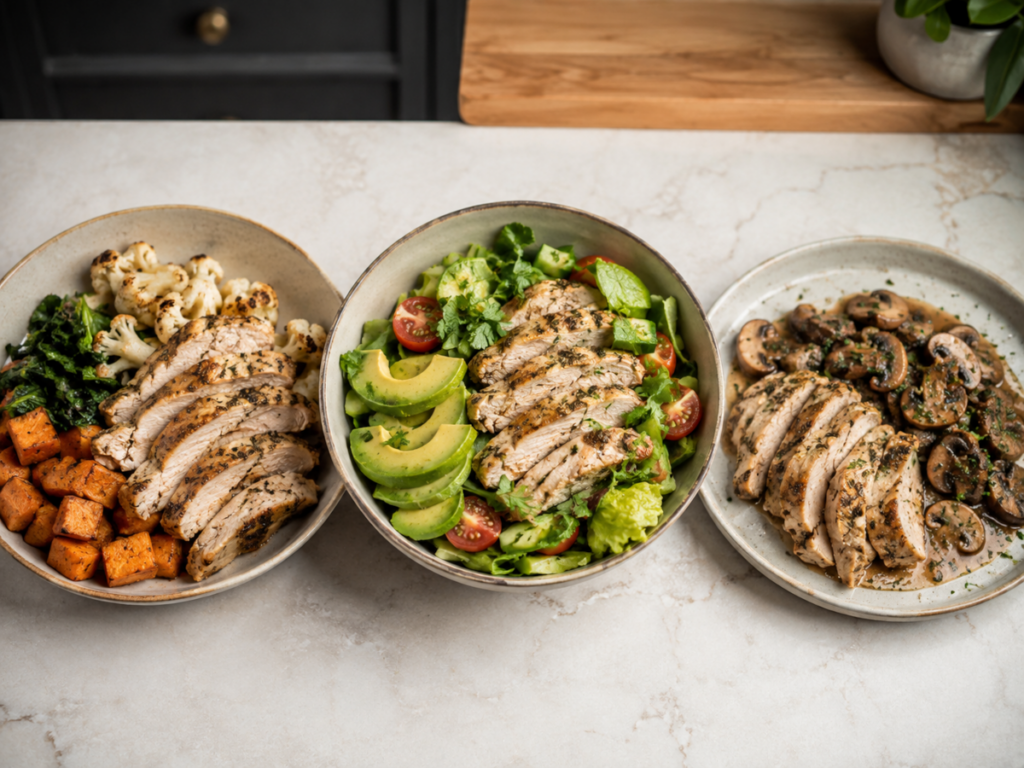
Batch cooking sounds perfect on Sunday afternoon. The refrigerator is organized, several meals are ready, vegetables are chopped, proteins are cooked, and the coming week suddenly looks much easier. Then Thursday arrives, and the container of chicken and roasted vegetables that seemed so practical three days earlier feels strangely unappealing.
That reaction does not necessarily mean batch cooking has failed. More often, the problem is that the meal was finished too early. Preparing five identical dinners saves time, but it also locks five eating occasions into the same flavors, textures, aromas, and combinations.
A better approach is to batch prep ingredients that can become different meals. For someone following a low-lectin lifestyle, that distinction can make meal preparation considerably easier because the foods that require more thought or preparation can be handled ahead of time while the final meal remains flexible.
Why the Same Meal Starts Losing Its Appeal
Our response to food changes as we eat it repeatedly. Researchers use the term sensory-specific satiety to describe the tendency for the pleasantness of a particular food to decline relative to foods with different sensory characteristics. Research has also found that introducing different flavors or condiments can renew interest in foods that have become familiar.
That does not mean everyone will become bored with leftovers after exactly three days. Some people happily eat the same breakfast every morning for years. Others want something different by the second serving.
The practical lesson is simpler than the biology. Repetition becomes more noticeable when everything about a meal remains the same. Chicken seasoned the same way, paired with the same vegetables, covered with the same sauce, and reheated to the same soft texture gives the senses very little that feels new.
This is why changing a sauce or finishing ingredient can have such an outsized effect. The protein may be identical, but lemon and herbs create a different experience from garlic and olive oil. Add avocado, crunchy greens, or toasted approved nuts, and the meal changes again without requiring another hour at the stove.
Prep Components Instead of Finished Meals
The most flexible batch-prep system begins with components. Cook enough food to reduce weekday work, but stop before assembling every ingredient into identical containers.
A useful refrigerator might contain roasted chicken thighs, cooked wild salmon, sautéed greens, roasted cauliflower, washed lettuce, hard-boiled eggs, avocado, a prepared dressing, fresh herbs, and perhaps a pressure-cooked food that fits your personal low-lectin approach. Those ingredients can move in several directions depending on what sounds appealing that day.
The chicken could become a warm bowl with cauliflower and greens at lunch. That evening, the same chicken could be sliced over lettuce with avocado and a lemon-herb dressing. Another portion might be reheated with mushrooms, garlic, and olive oil.
This method also helps with portion flexibility. Hunger does not arrive in identical amounts every day. Separating components makes it easier to increase the protein, add more vegetables, or make a lighter meal without disturbing a preassembled dinner.
Keep the Base Seasoning Simple
One of the easiest batch-cooking mistakes is aggressively seasoning the entire batch for one specific recipe. A large tray of chicken coated in one strong seasoning blend may taste excellent on Monday, but every future use has already been decided.
Instead, build a neutral but flavorful foundation. Salt, garlic, onion, olive oil, herbs, and modest amounts of compatible seasoning can create enough flavor for the food to taste good on its own while leaving room for different finishes later.
Consider roasted chicken seasoned with salt, garlic, rosemary, and olive oil. One portion can later receive lemon juice and parsley. Another can be sliced into a salad with avocado and an olive-oil dressing. A third can be reheated with sautéed mushrooms and thyme.
The same approach works with vegetables. Roasted cauliflower seasoned simply with olive oil, salt, and garlic can accompany fish one day, become part of a warm chicken bowl the next, or be chopped into an egg dish later in the week.
Strong flavors are often better added at serving time. This is especially useful with acids, fresh herbs, sauces, dressings, flavored oils, and crunchy toppings because many of these ingredients lose some of their character after several days in the refrigerator.
Let Sauces Do Some of the Heavy Lifting
A small collection of sauces can make a refrigerator full of familiar ingredients feel much less repetitive. You do not need six sauces either. Two contrasting choices can carry a surprising amount of variation through the week.
One might be bright and acidic, built around extra-virgin olive oil, lemon, garlic, and herbs. Another might be richer, perhaps an avocado-based dressing, basil pesto made with compatible ingredients, or a creamy sauce using an appropriate dairy choice if dairy fits your eating pattern.
The contrast matters more than the number of recipes. Rich versus bright, herbal versus garlicky, creamy versus acidic, and warm versus fresh create meaningful sensory differences even when the central ingredients remain unchanged.
Store sauces separately rather than pouring them over the food during meal prep. Besides preserving flexibility, this usually protects texture. Greens stay fresher without dressing, roasted vegetables retain more of their surface texture, and proteins can be reheated without cooking delicate herbs or acidic sauces again.
Change Texture as Well as Flavor
Flavor fatigue is sometimes really texture fatigue. A refrigerator filled with soft reheated foods can become unappealing even when the seasonings vary. Fresh components solve part of this problem. Crisp lettuce, sliced radishes, celery, cabbage, fresh herbs, avocado, and compatible nuts or seeds can be added at the last minute. A warm chicken and cauliflower bowl feels very different once something cool or crisp enters the picture.
Cooking methods can create similar contrast. If cauliflower was roasted earlier in the week, choose sautéed greens beside it rather than reheating another roasted vegetable. If shredded chicken has a soft texture, pair it with a crisp salad rather than another soft cooked side.
Nuts can also add crunch for people who include them, although choices often differ among low-lectin approaches. Walnuts, pecans, macadamias, and blanched almonds are common options in some low-lectin eating patterns. Personal tolerance and the particular framework being followed should still guide the decision.
Separate the Work That Saves Time From the Work That Creates Variety
Batch prep works best when the time-consuming jobs happen in advance and the quick jobs remain available for later. Cooking a tray of chicken thighs takes planning. Chopping an herb and squeezing lemon over tonight’s portion takes less than a minute.
That suggests a useful division of labor. Wash and chop sturdy vegetables ahead of time. Cook proteins. Roast vegetables. Prepare broth. Boil eggs. Wash salad greens. Make one or two sauces. Leave a few finishing steps for the day you eat the meal. Slice the avocado then. Add fresh herbs then. Toss the salad then. Choose the sauce then.
Those small decisions preserve spontaneity without requiring full-scale cooking every evening. They also give you some control over what sounds appealing based on appetite, weather, schedule, and how your digestion has been responding recently.
Batch Prep Can Support a Low-Lectin Routine Without Making It Rigid
Some foods commonly discussed in low-lectin eating require more preparation than grabbing something directly from the refrigerator. That makes advance cooking especially useful.
Legumes are a good example of why preparation matters scientifically. Raw or inadequately cooked beans can contain biologically active lectins, and research has shown that proper cooking substantially reduces lectin activity. Soaking can reduce some lectin content, but cooking has a much larger effect.
That established food-science finding should not be stretched into the claim that every food containing lectins creates digestive problems or that everyone benefits from avoiding them. Evidence supporting broad low-lectin dietary restriction in humans remains limited, while individual experiences and tolerances vary. For someone who has chosen a low-lectin eating pattern, however, preparing foods according to their preferred method ahead of time can remove a considerable weekday obstacle.
Pressure cooking, peeling, deseeding, soaking, or choosing particular varieties of foods may be part of an individual’s routine depending on what they eat and how strictly they follow a particular approach. Batch prep lets those decisions happen once rather than at every meal.
Avoid Making the Whole Week on Sunday
There is another reason to rethink the traditional seven-day meal-prep marathon: food storage. USDA guidance says most properly handled cooked leftovers can generally be refrigerated for three to four days. Extras intended for later in the week are better frozen rather than left in the refrigerator indefinitely.
Cooked foods should also be refrigerated promptly, and dividing larger amounts into shallow containers helps them cool more quickly. FDA guidance generally follows the two-hour rule for getting perishable foods into refrigeration, with additional precautions when foods are exposed to hotter conditions.
That makes a split batch-prep routine particularly practical. Prepare enough refrigerated food for the first few days and freeze additional portions soon after cooking. Later in the week, thaw a protein or prepared component and combine it with fresh ingredients.
Freezing individual components rather than complete meals preserves the same flexibility. A frozen portion of shredded chicken has many possible destinations. A completely assembled frozen chicken dinner has one.
Build a Meal Matrix Rather Than a Meal Schedule
Rigid meal calendars can create another kind of fatigue. Wednesday’s plan might say salmon and broccoli, while Wednesday’s appetite might strongly disagree. A meal matrix provides structure without assigning every food to a particular date. The idea is to prepare a few choices from several categories and combine them as needed.
For example, a week might begin with two proteins, three vegetables, two fresh components, and two sauces. Chicken thighs and wild salmon could serve as the proteins. Cauliflower, mushrooms, and sautéed greens could make up the cooked vegetables. Lettuce and avocado could supply fresh contrast, while lemon-herb dressing and pesto provide two distinct flavor directions.
Those ingredients already produce numerous meals. Salmon with greens and lemon dressing feels different from salmon over lettuce with avocado. Chicken with mushrooms and pesto has little resemblance to chicken with cauliflower and lemon herbs, even though both came from the same prep session.
There is no need to calculate every possible combination. The point is to create options instead of duplicates.
Use the Freezer as Part of the Rotation
The freezer is often treated as long-term storage, but it can also break up repetition within the same week. Eating chicken three days in a row feels very different from eating chicken Monday, freezing or holding another portion appropriately, eating salmon Tuesday, eggs Wednesday, and returning to chicken later.
Soups, broths, shredded meats, cooked poultry, and many cooked vegetable preparations can work well in this kind of rotation, although texture after freezing varies. Delicate greens, fresh avocado, dressed salads, and other water-rich fresh ingredients are generally better prepared close to serving.
Labeling portions with the food and date prevents the freezer from becoming an archaeological project. It also makes rotation easier because you can deliberately pull something different rather than automatically reaching for yesterday’s leftovers.
Track Which Repetition Actually Bothers You
People often discover that they are perfectly comfortable repeating certain foods. Breakfast may be almost identical every morning while dinner needs variety. Protein repetition may not matter, but eating the same vegetable four times in a row may become tiresome.
That information is worth noticing because efficient meal prep should match actual behavior rather than an idealized weekly menu. If scrambled eggs and avocado remain appealing most mornings, there is little reason to create seven elaborate breakfast recipes merely for variety.
A simple food log can help identify another pattern: whether boredom is being mistaken for poor tolerance, or whether a particular food genuinely seems associated with digestive symptoms. Those observations cannot diagnose a food intolerance, but they can help separate “I do not want this again” from “I repeatedly feel uncomfortable after eating this.”
For someone actively testing personal tolerance, batch cooking can even simplify observation. Keeping a few basic ingredients consistent while changing one component at a time may make patterns easier to notice than eating completely different recipes every day.
The Best Batch Prep Leaves Some Decisions Unmade
Efficient meal prep does not require predicting exactly what you will want to eat five days from now. In many cases, it works better when you do not try. Cook the chicken. Roast the cauliflower. Wash the greens. Make the dressing. Portion what needs freezing. Then leave the final combination open.
On Tuesday, that preparation might become a warm chicken bowl with mushrooms and herbs. On Thursday, the same basic ingredients might become a cool salad with sliced chicken, avocado, greens, and lemon dressing. The labor was still done in advance, but the meal was allowed to become something different.
That small amount of unfinished business is what keeps batch preparation from turning into a refrigerator full of obligations. The goal is to have good food ready when hunger arrives, while preserving enough choice that opening the refrigerator still feels like deciding what to eat rather than accepting what has already been decided for you.