Getting enough dietary fiber can become surprisingly difficult when vegetables are among the foods causing digestive discomfort. Someone following a low-lectin diet may have already reduced beans, traditional grains, and certain seeds, only to discover that large servings of vegetables also cause bloating, abdominal pressure, or irregular bowel movements. Suddenly, many of the foods commonly recommended for increasing fiber are no longer practical choices.
The usual advice to eat more salads, whole grains, and legumes does little to address this situation. Increasing those foods may even intensify symptoms when the underlying problem involves fermentable carbohydrates, certain fiber types, or the amount consumed at one sitting. Fortunately, there are ways to obtain meaningful amounts of fiber without depending on large portions of troublesome vegetables.
A useful approach begins with understanding what fiber does, why some fiber-rich foods are harder to tolerate, and which alternatives fit within a low-lectin eating pattern. Fruits, nuts, selected seeds, cooked vegetables, and supplemental fibers can all play a role. The challenge is choosing sources that contribute useful amounts without introducing the same digestive problems that prompted dietary changes in the first place.
Why Fiber Deserves Attention on a Low-Lectin Diet
Dietary fiber consists primarily of carbohydrates that human digestive enzymes cannot completely break down in the small intestine. Some fibers move through the digestive tract largely unchanged, while others are fermented by microorganisms in the colon. These different behaviors influence stool consistency, intestinal transit, and the production of compounds involved in normal digestive function.
Certain fermentable fibers provide material that intestinal bacteria convert into short-chain fatty acids, including acetate, propionate, and butyrate. Butyrate serves as an energy source for cells lining the colon and participates in normal intestinal function. The amount produced depends on the particular fiber, the microorganisms present, and the conditions within the digestive tract.
Fiber also contributes to health beyond the intestine. Viscous fibers, which thicken when mixed with water, can help lower LDL cholesterol and influence the absorption of carbohydrates. Other fibers increase stool bulk or help retain water, making bowel movements easier to pass.
The U.S. Food and Drug Administration establishes a Daily Value of 28 grams of fiber for a 2,000-calorie diet. Individual recommendations vary with age, sex, and energy requirements, but the figure provides a useful reference for examining how much fiber an ordinary day’s meals contain.
Low-lectin eating can make reaching that amount more challenging when commonly restricted foods are removed without adequate replacements. Meat, fish, eggs, and oils may supply protein, fats, and other nutrients, but they do not provide dietary fiber. A diet built primarily around those ingredients needs additional plant foods or another appropriate fiber source.
Understanding Fiber Before Choosing Alternatives
Fiber is often described as either soluble or insoluble, although those categories do not explain every difference in how it behaves during digestion.
Soluble fibers disperse or dissolve in water, and certain forms create a gel-like mixture. Psyllium is an example of a fiber that retains water and can help soften hard stools or improve the consistency of loose stools. Other soluble fibers, including inulin, are readily fermented by intestinal bacteria and can produce substantial gas.
Insoluble fiber includes structural components of plants that do not dissolve in water. It contributes to stool bulk and is found in many vegetables, fruit skins, nuts, seeds, and whole grains. Some coarse insoluble fibers can aggravate discomfort in people with sensitive digestive systems, particularly when introduced in large amounts.
Fermentation rate is another consideration. Fibers that bacteria break down rapidly may produce gas more quickly than slowly fermented or poorly fermented alternatives. A fiber can therefore be nutritionally useful while remaining difficult for someone with particular digestive sensitivities to tolerate.
Research discussed by Monash University explains why fiber solubility, viscosity, and fermentation rate should be considered together, especially in people with irritable bowel syndrome. These characteristics help explain why increasing one type of fiber may improve bowel function while another produces additional discomfort.
Why Vegetables May Cause Bloating and Digestive Discomfort
Vegetables contain several substances that can influence digestion, and fiber is only part of the explanation.
Raw broccoli, cabbage, kale, and other fibrous vegetables contain plant structures that require considerable chewing and mechanical breakdown. Large portions can increase intestinal bulk, while particular components may undergo bacterial fermentation. Cooking softens the plant tissues and changes their texture, sometimes making the vegetables more comfortable to eat.
Certain vegetables also contain fermentable carbohydrates known as FODMAPs. These compounds can increase water within the intestine or undergo fermentation in the colon, contributing to bloating, gas, and abdominal pain in susceptible individuals. Onions and garlic contain fructans, for example, while cauliflower contains mannitol, a sugar alcohol that some people find difficult to tolerate.
Lectins are a separate category of compounds. They are carbohydrate-binding proteins rather than dietary fibers, and their properties vary considerably among different foods. Although certain lectins can cause problems when foods such as kidney beans are improperly prepared, digestive discomfort after eating an ordinary serving of vegetables does not establish that lectins were responsible.
This distinction matters when selecting alternative foods. Removing lectin-containing ingredients may not resolve a reaction caused by fermentable carbohydrates or a sudden increase in fiber. A low-lectin meal containing large amounts of cauliflower, avocado, or certain added fibers could still cause digestive discomfort for reasons unrelated to lectin activity.
Understanding the likely source of discomfort makes dietary changes more useful. It may be possible to retain vegetables in smaller portions or different preparations instead of excluding entire groups of foods.
Fiber-Rich Fruits That Can Replace Some Vegetable Intake
Fruit offers several practical opportunities for adding fiber without relying on conventional vegetable servings. The amount varies substantially among varieties, and the fruit’s natural sugars, seeds, and fermentable carbohydrates may influence its suitability.
Berries Provide Concentrated Fiber
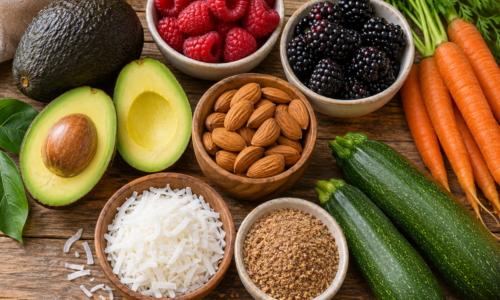
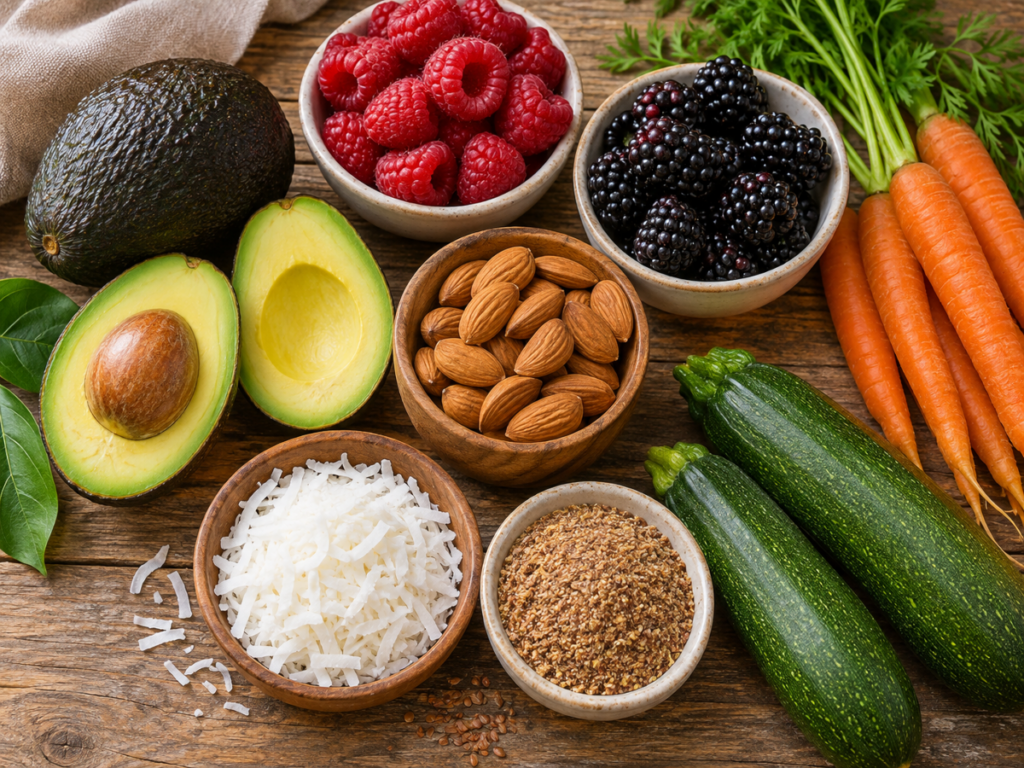
Raspberries and blackberries are among the more concentrated fruit sources of dietary fiber. According to the USDA’s Food Sources of Fiber reference, a cup of raspberries contains approximately 8 grams of fiber, while a cup of blackberries contains about 7.6 grams.
Even half-cup portions can make a worthwhile contribution. Berries can be incorporated into plain yogurt, eaten with breakfast, or blended into smoothies that retain the pulp and seeds. For low-lectin eating plans that restrict certain fruit seeds, their inclusion should reflect those specific restrictions rather than assuming every berry is automatically suitable.
Strawberries, blueberries, and kiwifruit provide additional possibilities, although their fiber concentrations are different. Choosing several tolerated fruits can add variety without requiring every serving to contain a large amount of fiber.
Frozen berries are generally useful alternatives to fresh produce because freezing does not remove their dietary fiber. They are also available year-round and can reduce waste when only modest portions are needed.
Avocados Offer Fiber Alongside Healthy Fats
Avocados can make a substantial contribution to fiber intake while providing predominantly unsaturated fats. The USDA reference lists approximately 5 grams of fiber per cup, although the amount consumed at a typical meal may be considerably smaller.
Their smooth texture makes them useful in mashed spreads, salad dressings, and sauces. Avocado can also replace some of the bulk normally supplied by raw vegetables in a meal, although its calorie content and fat concentration differ from those of most vegetables.
Portion size deserves attention in people who react to fermentable carbohydrates. In 2024, Monash University reported updated findings on avocado carbohydrates, identifying perseitol rather than the sorbitol previously reported in its testing. Perseitol may produce digestive effects similar to other sugar alcohols, although its effects are not fully established.
This helps explain why a small amount of avocado may be comfortable while a much larger serving causes symptoms. A generous portion is not necessarily the most useful choice simply because the food supplies fiber.
Whole Fruit Usually Offers More Fiber Than Juice
Juicing and blending affect the fiber content of fruit differently. Conventional juicing removes much of the pulp and other fibrous material, particularly when the finished juice is strained.
Blending whole fruit generally retains more of its original fiber because the pulp remains in the beverage. The process changes particle size and texture, but it does not remove the fiber in the same way as extracting and straining juice.
A smoothie made from a modest serving of berries and a tolerated liquid can provide fiber without requiring a large bowl of fruit. Serving size still matters, especially when several fruits or concentrated fiber ingredients are combined in one drink.
Nuts, Seeds, and Coconut as Additional Fiber Sources
Nuts can provide useful amounts of fiber in relatively small portions. Almonds contain approximately 3.5 grams per ounce, while pistachios and hazelnuts provide roughly 2.9 and 2.8 grams per ounce, respectively, according to USDA reference values.
These foods are convenient additions to meals that otherwise contain little fiber. Chopped nuts can be sprinkled over breakfast, incorporated into suitable baked recipes, or eaten as a snack. Their fat and calorie content makes portion measurement useful when estimating nutritional intake.
Flaxseed is another option for low-lectin eating plans that permit it. A tablespoon of whole flaxseed provides approximately 2.8 grams of fiber, while a tablespoon of ground flaxseed typically supplies less because it weighs less. Grinding also makes the seed’s interior nutrients more accessible during digestion.
Ground flaxseed can be stirred into yogurt or added to baked foods without significantly changing the overall meal. It absorbs moisture and can thicken mixtures, so recipes may require adjustments when larger quantities are introduced.
Chia seeds provide approximately 4.1 grams of fiber per tablespoon and absorb considerable amounts of liquid. Their ability to form a thick gel makes them useful in certain puddings and breakfast preparations, but concentrated portions can aggravate bloating. Because some low-lectin approaches restrict seeds, chia should be treated as an optional ingredient rather than a universal recommendation.
Unsweetened coconut offers another possibility, particularly in baking. Shredded coconut and coconut flour provide fiber, although coconut flour is much more absorbent than conventional wheat flour. Replacing ordinary flour with coconut flour in equal amounts can produce a dry, dense result unless the recipe has been designed for its moisture requirements.
Nuts and seeds should be selected according to dietary restrictions, allergies, and digestive tolerance. They can contribute meaningful fiber, but large portions are not required for them to be useful.
Making Vegetables Easier to Include
Vegetable discomfort sometimes reflects preparation methods or portion sizes rather than an inability to tolerate every vegetable. Cooking can change texture enough to make certain ingredients easier to eat.
Carrots, zucchini, spinach, and selected squashes are reasonable foods to evaluate individually. They differ in their fiber content and fermentable carbohydrates, so one should not be assumed equivalent to another. A serving of tender cooked carrots may be comfortable even when raw cabbage or a large portion of cauliflower is troublesome.
Steaming and simmering soften plant tissues while allowing control over texture. Roasting can produce tender interiors and concentrated flavor, although it does not necessarily reduce fermentable carbohydrates. The best cooking method depends on the vegetable and the particular reason it causes discomfort.
Blended soups are useful for people who find coarse vegetable textures unpleasant. Cooked carrots or zucchini can be blended with broth to create a smoother consistency while retaining much of their fiber, provided the solids are not strained out.
Peeling and removing seeds can also change texture, but those methods may remove some fiber. They are not reliable techniques for eliminating every type of lectin, nor do they necessarily remove the fermentable carbohydrates responsible for digestive symptoms.
A practical approach is to begin with a modest serving of one familiar cooked vegetable. Keeping the other ingredients consistent makes it easier to observe whether portion size or preparation affects tolerance before adding another vegetable.
Common Fiber Myths That Complicate Low-Lectin Eating
Several misconceptions can make fiber intake seem more difficult than it needs to be.
Myth: Fiber Must Come From Vegetables and Whole Grains
Vegetables and grains are familiar sources, but fiber is also found in fruits, nuts, seeds, and certain specialized ingredients. Eliminating conventional grain products therefore does not automatically make adequate fiber intake impossible.
The nutritional challenge is replacing what those foods previously supplied. Someone who removes beans, wheat products, and several vegetables may need to make deliberate substitutions rather than simply increasing animal protein.
Myth: Raw Vegetables Always Provide Better Fiber
Raw vegetables retain their original structure, but their fiber is not automatically more beneficial than fiber in cooked vegetables. Cooking changes texture and moisture content, while much of the dietary fiber remains present.
Volume comparisons can also be misleading. A cup of cooked spinach may contain considerably more plant material than a cup of raw spinach because cooking causes the leaves to shrink.
If cooking makes a vegetable easier to consume, it may provide a more useful dietary contribution than a larger raw serving that causes discomfort.
Myth: More Fiber Always Improves Digestion
Fiber intake matters, but a rapid increase can produce bloating, gas, and changes in bowel habits. The effect depends on the type of fiber, the amount consumed, and the digestive condition involved.
Someone experiencing constipation may benefit from gradually increasing an appropriate water-holding fiber. A person who reacts strongly to rapidly fermented ingredients may find that simply adding larger quantities of high-fiber foods makes symptoms worse.
Myth: Fiber Supplements Are Interchangeable
Fiber supplements vary in their physical and digestive properties. Psyllium retains water and forms a viscous mixture, while inulin and fructooligosaccharides are more readily fermented by intestinal bacteria.
Products containing those ingredients may be marketed for similar purposes despite behaving differently in the digestive tract. Reading the ingredient list is particularly useful when someone has already identified bloating as a recurring problem.
Can Properly Prepared Beans Still Provide Fiber?
Beans are among the most concentrated familiar sources of dietary fiber, but they are also commonly restricted in low-lectin eating plans.
Raw and undercooked kidney beans contain phytohaemagglutinin, a lectin capable of causing significant gastrointestinal illness. Proper cooking reduces its activity, and commercially canned kidney beans are processed to address this established safety concern.
The FDA’s guidance on natural toxins in food recommends soaking dried kidney beans for at least five hours, discarding the soaking water, and boiling them in fresh water for at least 30 minutes. Cooking raw kidney beans at low temperatures in an ordinary slow cooker is not a dependable substitute for boiling.
Correctly prepared beans can provide fiber as part of a general diet, although their inclusion depends on the restrictions someone follows. They also contain fermentable carbohydrates that can cause gas independently of their lectin content. Proper cooking addresses the established kidney bean lectin hazard, but it does not guarantee that every person will tolerate beans comfortably.
People who exclude legumes can obtain fiber from other foods without attempting to make beans fit their dietary preferences. What matters nutritionally is accounting for the fiber and other nutrients that were previously supplied by those foods.
When Fiber Supplements Can Help Fill the Gap
Obtaining fiber exclusively from food may be difficult during periods when vegetable intake is substantially limited. A supplement can sometimes help fill the gap, although it does not replace the vitamins, minerals, and other components provided by whole plant foods.
Psyllium husk is one of the better-studied supplemental fibers for constipation and stool consistency. It absorbs water and forms a bulky, gel-like material that can help soften hard stools. Compared with rapidly fermentable fibers such as inulin, psyllium is often better tolerated by people who experience gas and bloating, although responses still vary.
Adequate liquid is necessary when taking psyllium. The National Library of Medicine’s psyllium instructions specify that powder or granules should be mixed with at least 8 fluid ounces of liquid. Taking psyllium without sufficient fluid can create a choking or obstruction hazard.
Psyllium can also affect the absorption of certain medications, making product instructions and medication-specific timing important. People with swallowing difficulties, suspected intestinal obstruction, or other relevant gastrointestinal conditions should obtain appropriate medical guidance before using it.
Supplement labels deserve close attention because products marketed as fiber powders may contain added sweeteners, sugar alcohols, or highly fermentable ingredients. A simpler formulation may make it easier to identify which component is responsible if discomfort develops.
Building a Daily Fiber Routine Without Large Vegetable Servings
The most practical way to obtain fiber on a restricted diet is often to distribute modest amounts across several meals. This avoids relying on one large serving of vegetables or a concentrated fiber supplement to supply most of the day’s intake.
Breakfast could include plain yogurt or a suitable alternative with half a cup of raspberries. That portion contributes approximately 4 grams of fiber before any additional ingredients are included. A little ground flaxseed could add more if seeds are part of the selected dietary approach.
Lunch might include salmon, chicken, or another protein with avocado and a modest portion of cooked carrots or zucchini. A snack of almonds can make another contribution without requiring a vegetable serving.
Dinner could combine a protein source with a tolerated cooked vegetable and an appropriate fiber-containing accompaniment. The objective is to assemble meals from foods already known to fit the person’s dietary restrictions, adding variety as those choices become established.
A food record can make this process more precise. Rather than recording only whether a meal contained vegetables, tracking approximate portions and fiber amounts shows where intake may be falling short. Nutrition labels and reliable food composition references are useful because fiber concentrations vary considerably among ingredients.
The National Institute of Diabetes and Digestive and Kidney Diseases recommends increasing fiber gradually and consuming sufficient fluids to help it function properly. People with medically prescribed fluid restrictions need individualized guidance rather than automatically increasing water consumption.
The pace of dietary changes also affects how clearly food reactions can be interpreted. Introducing several new fiber sources simultaneously makes it difficult to determine which one caused discomfort, especially when the foods differ substantially in fermentation rate.
Recognizing When Additional Fiber Is Not the Answer
Persistent digestive discomfort does not always indicate inadequate fiber intake. Constipation, diarrhea, bloating, and abdominal pain can arise from medication effects, food intolerances, intestinal motility problems, irritable bowel syndrome, and other medical conditions.
Increasing fiber may help certain problems but aggravate others. Someone with a diagnosed intestinal narrowing or bowel obstruction, for example, may require restrictions that differ substantially from general high-fiber advice. Persistent symptoms, unexplained weight loss, blood in the stool, or significant abdominal pain warrant medical evaluation rather than repeated food elimination.
For someone following a low-lectin lifestyle, a useful food record can identify more than suspected ingredient reactions. Documenting preparation methods, portion sizes, bowel habits, and approximate fiber intake may reveal that problems occur mainly after large servings, particular fiber supplements, or combinations of highly fermentable foods.
Those observations can guide more specific adjustments, particularly when reviewed with a dietitian familiar with digestive disorders. They can also help identify nutritional gaps created by excluding foods that previously supplied substantial fiber, vitamins, or minerals.
Over time, a dependable selection of fiber-containing foods can become part of ordinary meal preparation. Keeping track of comfortable portions and suitable cooking methods makes grocery shopping and recipe planning easier, while providing a practical basis for reconsidering foods that may have been excluded because of an uncertain digestive reaction.
For example, someone who tolerates cooked carrots but reacts to cauliflower may discover that the difference is associated with fermentable carbohydrates rather than lectin exposure. Recognizing that distinction can prevent unnecessary restrictions and create more opportunities to obtain fiber from familiar, affordable ingredients.