A busy week can wreck a carefully planned way of eating faster than almost anything else. Work runs late. Appointments pile up. The refrigerator looks strangely empty by Wednesday. Hunger arrives before a reasonable meal can be assembled, and suddenly the easiest option is also the one most likely to leave you feeling off track. Batch cooking changes that pattern, but only when it is approached correctly.
The common version of meal prep asks you to cook one enormous recipe, divide it into identical containers, and eat the same meal until you cannot stand the sight of it. That method works for some people. For everyone else, it creates boredom, wasted food, and a strong urge to order something more interesting.
A better low-lectin system is based on templates. You prepare a small collection of compatible components, then combine them differently throughout the week. The cooking is concentrated into one or two sessions, but the meals do not feel copied and pasted. This is less about becoming perfectly organized and more about making the next reasonable choice easy.
Stop Prepping Complete Meals
Complete meals are convenient, but they lock you into decisions you made several days earlier. Maybe roasted chicken, cauliflower, and greens sounded great on Sunday. By Thursday, the fourth identical container may feel like a punishment. Component cooking gives you options.
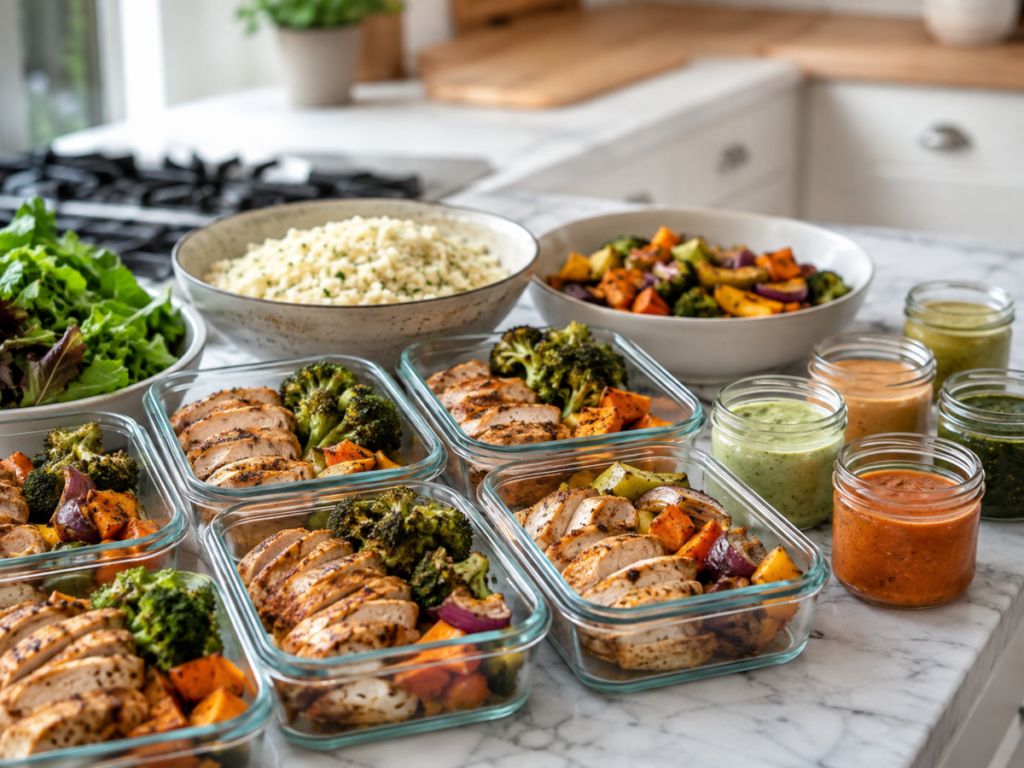
Instead of preparing five finished lunches, cook two proteins, two vegetable bases, one tolerated carbohydrate, and two simple flavor additions. Those parts can become bowls, salads, skillets, soups, wraps, or plated dinners.
Batch cooking itself simply means preparing food in larger quantities so it can be eaten later or repurposed across several meals. The time savings come from performing repetitive tasks once. You wash the cutting board once, heat the oven once, chop several vegetables together, and cook enough protein for more than one sitting.
The basic low-lectin template looks like this:
Protein + vegetables + optional resistant starch or tolerated carbohydrate + healthy fat + flavor
That formula is broad enough to prevent boredom and structured enough to reduce decision fatigue. For example, roasted pasture-raised chicken thighs can become a dinner with sautéed greens, a lunch bowl with cauliflower rice, or a quick soup with broth and chopped vegetables. The chicken stays the same. The meal changes around it.
Build the Week Around Protein
Protein usually requires the most planning, thawing, seasoning, and cooking time. Handle it first. Choose one primary protein for the beginning of the week and one secondary protein for later meals. A practical combination might be roasted chicken and hard-boiled pasture-raised eggs, baked wild-caught salmon and ground turkey, or grass-finished beef patties and pressure-cooked shredded chicken.
Cooking two proteins does not mean preparing elaborate recipes. Keep the seasoning flexible. Salt, garlic, herbs, lemon, and olive or avocado oil can fit into many meals without forcing every dish into one flavor category.
A strongly seasoned barbecue chicken may taste excellent, but it limits what you can do with the leftovers. A simply roasted chicken can accept a garlic-herb dressing on Monday, an avocado-based sauce on Tuesday, and a coconut curry-style sauce on Wednesday.
Cook enough for three or four refrigerated days, then freeze any portion that will not be eaten within that window. USDA guidance recommends using most cooked leftovers within three to four days. Frozen portions can extend the useful life of your batch without asking you to eat the same protein every day. This creates a natural weekly rhythm. Refrigerated food covers the first half of the week. Frozen portions or a short second cooking session cover the rest.
Prepare Vegetables in Two Different Textures
Vegetable fatigue is often texture fatigue. A container filled with soft roasted vegetables may taste satisfying on the first night. After repeated reheating, everything can begin to feel limp and indistinguishable. Preparing vegetables with different textures makes the same collection of ingredients feel more varied.
Use one cooked vegetable base and one fresher or quickly finished option. The cooked base could include roasted cauliflower, broccoli, mushrooms, asparagus, cabbage, peeled zucchini, Brussels sprouts, or winter squash if it fits your personal tolerance. Roast them until just tender rather than deeply soft. They will cook slightly more during reheating.
The second option can be washed salad greens, shredded cabbage, chopped herbs, sliced avocado prepared at serving time, or vegetables that can be sautéed in five minutes. This gives you something crisp, fresh, or newly cooked beside the reheated components.
A tray of roasted cauliflower and mushrooms can support several meals. Serve it beside salmon one night. Chop it into scrambled eggs the next morning. Warm it in broth with shredded chicken for lunch. Add fresh arugula and a lemon dressing for a warm salad. The ingredient list barely changes, but the eating experience does.
Use Carbohydrates According to Tolerance
A low-lectin lifestyle does not require every person to eat the same amount or type of carbohydrate. Personal tolerance, activity level, health goals, appetite, and digestive response all matter.
Some people may build most meals around protein, non-starchy vegetables, and healthy fats. Others may include pressure-cooked sweet potatoes, millet, sorghum, cassava products, green plantains, or another food that has been tested and tolerated. The weekly template should reflect your actual body, not an idealized food chart.
Choose one carbohydrate base rather than cooking several. That keeps preparation manageable and gives you enough servings to judge how the food affects you. A batch of pressure-cooked sweet potatoes, for example, can be served warm with dinner, cubed into a breakfast skillet, or mashed with olive oil and garlic.
Cooling cooked starches can change some of their digestible starch into resistant starch, although the amount varies by food, cooking method, cooling conditions, and reheating. This does not turn a poorly tolerated food into a free food. It simply means storage and temperature can affect how starch behaves.
Treat personal response as the deciding factor. Track the portion, preparation method, and how you feel afterward. The goal is not to squeeze every technically acceptable food into the plan. The goal is to identify the foods that make busy weeks easier without bringing back symptoms you have worked hard to reduce.
The Three-Two-One Batch Template
The easiest starting structure is the three-two-one template. Prepare three vegetables, two proteins, and one optional carbohydrate base. Add fats, herbs, dressings, and seasonings during assembly.
A sample week might include:
- Roasted cauliflower, sautéed kale, and garlic mushrooms
- Herb-roasted chicken thighs and baked wild-caught salmon
- Pressure-cooked sweet potato
These components can produce a surprising number of meals.
Monday dinner may be salmon with kale and sweet potato. Tuesday lunch can be chicken with cauliflower and mushrooms. Tuesday dinner can become a warm chicken bowl with kale and an avocado dressing. Wednesday breakfast might include eggs cooked with leftover mushrooms and chopped chicken. Wednesday dinner can use the remaining salmon over cauliflower with lemon and olive oil.
The template removes the need to write seven separate dinner recipes. You are planning combinations, not performances.
The Protein-First Emergency Template
Some weeks do not allow a full preparation session. In those cases, focus on protein and use faster supporting ingredients. Cook one large protein batch, wash and dry several vegetables, and prepare one sauce. That is enough.
A pan of turkey meatballs, a roasted chicken, or a pot of shredded chicken can carry several days of meals. Pair it with frozen cauliflower rice, bagged greens, pre-cut vegetables, canned compliant artichoke hearts, olives, avocado, or a quick skillet of mushrooms.
Convenience foods are not automatically poor choices. The ingredient label decides whether a shortcut fits your plan. Frozen vegetables with no sauce are often as straightforward as fresh vegetables, and they may reduce both preparation time and food waste.
Keep emergency components in the freezer. Individually frozen fish portions, plain vegetables, homemade broth, cooked meatballs, and single servings of soup can prevent a tiring day from becoming a dietary free-for-all. This template is plain by design. Fancy can wait.
The Sheet-Pan Template
The sheet-pan method works well because one oven cycle can cook most of the week’s core ingredients. Place seasoned chicken thighs or another suitable protein on one side of a large pan. Add firm vegetables that need similar cooking time, such as cauliflower, Brussels sprouts, cabbage wedges, or mushrooms. Use a second pan when the vegetables release a great deal of water or when the protein requires a different temperature.
The mistake is crowding everything together. Overloaded pans trap steam. Vegetables soften instead of browning, and proteins cook less evenly. Spread the food out, use two pans when needed, and rotate them halfway through cooking. Prepare delicate items separately. Leafy greens, fish fillets, fresh herbs, and avocado do not belong in the oven for the same length of time as chicken thighs and cauliflower.
Once cooled and stored, the sheet-pan components can be served as a traditional dinner, chopped into a skillet, added to broth, or placed over fresh greens. The oven does the heavy work while you prepare dressings, wash produce, or portion freezer servings.
The Soup-and-Skillet Template
Soup is one of the best ways to rescue ingredients that are losing their appeal. Start the week with plain roasted or pressure-cooked protein and vegetables. Later, turn the remaining portions into soup with homemade broth, garlic, herbs, and additional greens. The transformation is substantial enough that the meal no longer feels like leftovers.
A skillet offers the same advantage. Chopped chicken, mushrooms, cauliflower rice, and kale can be reheated together with olive oil and garlic. The next version can include egg, herbs, and avocado. Another can use coconut milk and curry seasonings, provided the ingredients fit your personal plan.
Batch cooking works better when at least one meal is designed to absorb small amounts of remaining food. Soup, skillets, omelets, and salads all fill that role. Without an absorption meal, the refrigerator slowly collects half a cup of cauliflower, one chicken thigh, several mushrooms, and a spoonful of dressing. None seems large enough to become dinner. Together, they already are dinner.
Keep Sauces Separate
Flavor additions can make one set of components taste like several different meals. Prepare two small sauces rather than one large batch. Good options include lemon-herb olive oil, avocado and lime dressing, garlic-infused oil, compliant pesto, tahini if tolerated, or an unsweetened coconut sauce. Store sauces separately from cooked food. This protects texture and allows each person to control the amount. It also prevents the whole week from tasting identical.
Check packaged ingredients carefully. Dressings and sauces frequently contain added sugar, soybean oil, corn-derived sweeteners, gums, dairy ingredients, or spices that may not match your chosen low-lectin approach. Homemade versions give you more control, but a short, clean commercial ingredient list can be perfectly practical. A useful sauce should take minutes, not create another major cooking project.
Cool and Store Food Safely
Meal preparation is only helpful when the food is handled safely. Large pots and deep containers cool slowly. Divide cooked food into shallow containers so it chills more quickly, and refrigerate perishable food within two hours. Keep the refrigerator at 40°F or below. The FDA and USDA both recommend shallow storage containers for rapid cooling.
Label containers with the food and cooking date. Memory becomes unreliable during a packed week, especially when several batches look similar. Reheat only the portion you intend to eat. USDA guidance calls for reheating leftovers to an internal temperature of 165°F. Stir microwave-heated food and allow the heat to distribute evenly, since cold pockets can remain even when the edges are steaming.
Do not prepare seven refrigerated days of meat on Sunday and assume it will remain a good choice through Saturday. Refrigerate what you will eat soon and freeze the rest promptly.
Freeze Meals in Usable Portions
A freezer full of giant containers is less helpful than it looks. Once thawed, a six-serving block of soup becomes another leftover problem. Freeze food in the portions you actually use. Single servings work well for lunches and emergency dinners. Two-serving containers suit couples or nights when leftovers are welcome. Freeze sauces in small jars or silicone trays, then transfer the frozen portions to labeled bags.
Leave delicate garnishes out. Fresh herbs, avocado, salad greens, and crisp vegetables should be added after reheating. Broth, soups, cooked meatballs, shredded chicken, roasted turkey, and many cooked vegetable mixtures freeze well. Fish can be frozen after cooking, but its texture may be better when frozen raw in individual portions and cooked on the day it is eaten.
The freezer should function as part of the weekly plan, not as a storage room for food nobody remembers. Move one frozen meal to the refrigerator before bed, and tomorrow’s hardest decision is already handled.