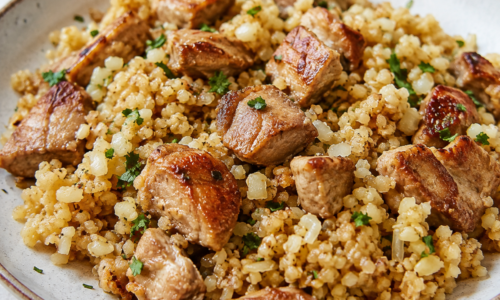
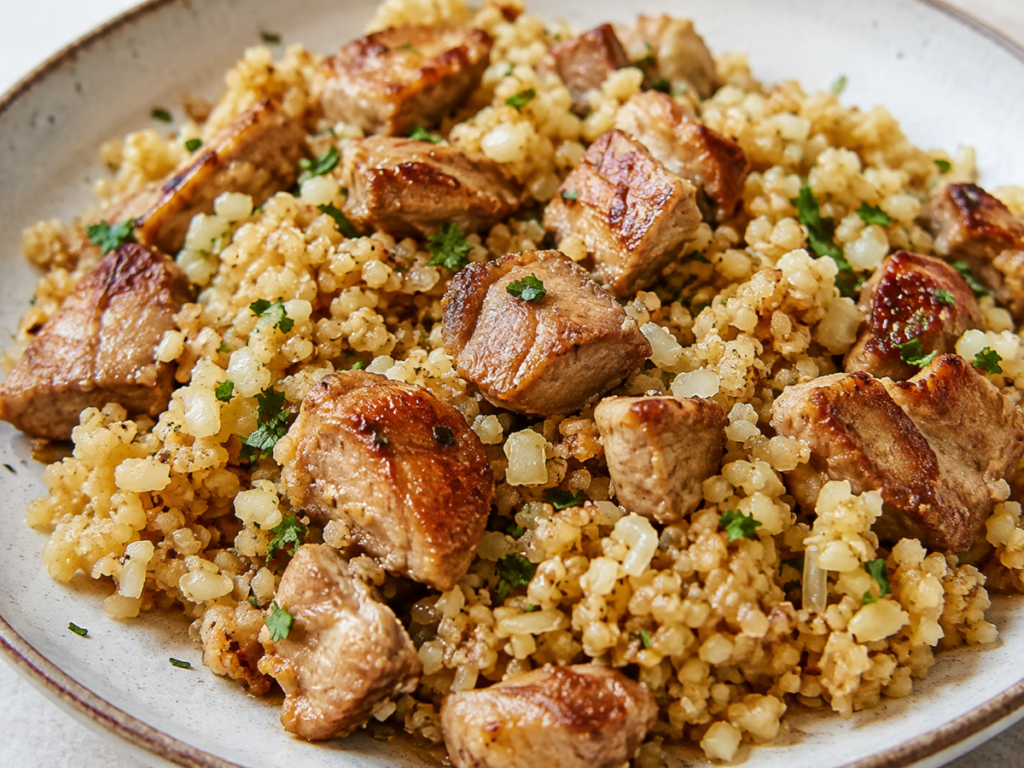
Some of the most useful low-lectin meals are not the ones with the longest ingredient lists. They are the meals that can be made on an ordinary weeknight, use ingredients that are easy to find, and leave behind one skillet instead of a sink full of cookware. Diced chicken thighs with cauliflower rice, onion, garlic, and avocado oil fit that description remarkably well.
This skillet meal is built around a simple formula: protein, a vegetable-based replacement for grain, aromatic ingredients, and enough cooking fat to bring everything together. The chicken thighs stay tender during skillet cooking, while cauliflower rice absorbs the browned bits and savory juices left behind by the chicken. Garlic and onion give the finished dish enough flavor that it does not feel like a restrictive substitute for something else.
For someone following a low-lectin eating pattern, the ingredient list also avoids several foods commonly limited in stricter versions of the diet, including grains, beans, peanuts, and nightshade vegetables. That does not mean everyone needs to avoid those foods. Human evidence supporting broad lectin avoidance remains limited, and many lectin-containing foods provide valuable nutrients when appropriately prepared. Cooking can substantially reduce the activity of certain lectins, particularly those found in legumes, which is one reason food preparation matters as much as the ingredient itself.
Why Chicken Thighs Work So Well in a Skillet
Chicken breast often gets most of the attention in high-protein meals, but boneless chicken thighs are especially well suited to this type of dish. They contain more fat than breast meat, which helps them remain moist while the cauliflower cooks and moisture evaporates from the skillet. Cutting the thighs into bite-sized pieces also increases the surface area that contacts the pan, creating more browned edges and more flavor.
Pasture-raised chicken can be chosen for sourcing, farming, or personal preference, but it should not be confused with a special lectin-removal method. The low-lectin character of this recipe comes mainly from the overall ingredient selection rather than from the chicken’s production label. If pasture-raised chicken is difficult to find or too expensive for a particular week’s grocery budget, another high-quality boneless chicken thigh can still be used without changing the basic cooking method.
Chicken thighs are forgiving, but food safety still matters. The USDA recommends cooking all poultry to a minimum internal temperature of 165°F, measured with a food thermometer. Because the chicken in this recipe is diced, check one or two of the largest pieces rather than assuming that browning on the outside means the center has reached a safe temperature.
Cauliflower Rice Turns the Pan Juices Into Part of the Meal
Riced cauliflower does more than replace conventional rice in this skillet. Its small pieces cook quickly and pick up the flavors already present in the pan, including chicken drippings, onion, garlic, and avocado oil. That makes it particularly useful in one-pan meals where the goal is to build flavor without relying heavily on sauces.
The biggest challenge with cauliflower rice is moisture. Fresh cauliflower naturally contains plenty of water, and frozen cauliflower rice can release even more as it heats. If the skillet becomes crowded or the heat is too low, the cauliflower may steam into a soft, watery mixture instead of developing a tender texture with a few lightly browned edges.
A wide skillet helps because moisture can escape more easily. Leaving the cauliflower uncovered during the final stage of cooking also allows excess water to evaporate. The goal is not to dry it out completely, but to cook it until it is tender and separate enough to act as the vegetable base of the meal.
Cauliflower is also a useful reminder that low-lectin eating does not have to mean eliminating plant foods. The concern around dietary lectins is primarily associated with particular plant proteins and preparation methods, with raw or inadequately cooked legumes being among the clearest examples of foods that can contain biologically active lectins. Research does not support treating every vegetable as though it carries the same lectin exposure or digestive effect.
Garlic and Onion Build Flavor Without a Bottled Sauce
Garlic and onion perform much of the seasoning work in this recipe. Once the chicken has browned, the onion goes directly into the same skillet and picks up the flavorful residue left on the cooking surface. Garlic is added shortly afterward because finely chopped garlic can burn more quickly than diced onion.
This order makes a noticeable difference. Adding everything simultaneously can leave the onion undercooked while the garlic becomes bitter, especially if the skillet is still quite hot from browning the chicken. Giving the onion a few minutes first allows it to soften before the garlic is introduced.
Keeping the seasoning simple also makes the dish easier to evaluate if someone is tracking individual food tolerance. A long list of sauces, spice blends, sweeteners, and packaged seasonings can make it difficult to identify which ingredient may have contributed to a digestive reaction. A meal based on five primary ingredients provides a much cleaner reference point.
Individual tolerance still matters. Garlic and onion are common ingredients, but both can be troublesome for some people with digestive sensitivity, particularly those who react to certain fermentable carbohydrates. A low-lectin eating pattern and a low-FODMAP approach are not the same dietary strategy, so a food that fits one framework may still cause symptoms for an individual following another.
Skillet Chicken Thighs with Garlic Cauliflower Rice
Ingredients
- 1 1/2 pounds boneless, skinless pasture-raised chicken thighs
- 5 cups riced cauliflower, fresh or frozen
- 1 medium onion, finely diced
- 4 garlic cloves, minced
- 2 tablespoons avocado oil, divided
- 3/4 teaspoon sea salt, plus more to taste
- 1 to 2 tablespoons chopped fresh parsley, optional
Instructions
- Cut the chicken thighs into roughly 1-inch pieces, trimming away any large pieces of excess fat if desired. Pat the chicken dry with a paper towel before seasoning it with about half of the salt, since removing excess surface moisture helps the chicken brown rather than immediately steam.
- If using frozen cauliflower rice, there is no need to thaw it completely before cooking. Breaking up large frozen clumps beforehand will help it cook more evenly once it reaches the skillet.
- Heat a large skillet over medium-high heat and add 1 tablespoon of the avocado oil. Once the oil is hot, add the diced chicken in an even layer without packing the pieces tightly together.
- Allow the chicken to cook undisturbed for about 2 to 3 minutes before turning it. Continue cooking for approximately 5 to 7 minutes, stirring occasionally, until the pieces are browned on several sides and approaching doneness.
- Transfer the chicken to a clean plate while the vegetables cook. The chicken will return to the skillet later, so it does not need prolonged cooking at this stage.
- Building the Garlic and Onion Base
- Reduce the heat to medium and add the remaining tablespoon of avocado oil if the skillet looks dry. Add the diced onion and cook for about 3 minutes, stirring occasionally and scraping up the browned bits left by the chicken.
- Add the minced garlic and cook for another 30 to 60 seconds. Keep the garlic moving around the pan during this stage because browned garlic tastes pleasantly savory, while burned garlic can become sharp and bitter.
- Add the riced cauliflower and the remaining salt to the skillet. Stir thoroughly so the cauliflower becomes coated with the avocado oil and mixes with the softened onion and garlic.
- Cook uncovered for about 5 to 7 minutes, stirring every minute or two. If the cauliflower begins releasing a noticeable amount of liquid, spread it across the skillet and give that moisture time to evaporate before stirring again.
- Fresh cauliflower rice may finish sooner than frozen cauliflower. Stop cooking when the pieces are tender but still have enough structure to avoid becoming mashed cauliflower.
- Bringing the Skillet Together
- Return the browned chicken and any accumulated juices from the plate to the skillet. Stir the chicken through the cauliflower mixture and cook everything together for another 2 to 3 minutes.
- Check the largest pieces of chicken with a food thermometer and confirm that they have reached at least 165°F. Once the chicken is safely cooked, taste the cauliflower and adjust the salt if needed.
- Remove the skillet from the heat and scatter chopped parsley across the top if using it. Letting the dish rest for a minute or two before serving gives the cauliflower a chance to absorb more of the juices remaining in the pan.
Getting Better Browning Without Overcooking the Chicken
A common mistake with one-skillet meals is putting too much food into the pan at once. When the diced chicken is piled together, the moisture it releases cannot evaporate quickly enough, and the meat begins simmering in its own juices. It will still cook, but the deeper browned flavor that makes a simple ingredient list work so well will be reduced.
Using a 12-inch skillet makes a noticeable difference for this quantity of chicken. If the skillet is smaller, browning the chicken in two batches is worth the extra few minutes. Once the chicken is cooked, all of it can return to the same skillet, so the recipe still remains a one-pan meal.
The same idea applies to the cauliflower. Frequent stirring can actually slow evaporation because the cauliflower never stays in contact with the hot cooking surface for very long. Giving it short periods of undisturbed cooking allows some pieces to develop light browning while excess moisture escapes.
Adjusting the Dish for Personal Tolerance
The basic recipe is intentionally restrained so it can be adapted without changing its character. Someone who tolerates fresh herbs well might add thyme, rosemary, parsley, or oregano. A squeeze of lemon at the table can provide acidity and brighten the chicken without turning the meal into a heavily seasoned dish.
People who are especially sensitive to onion can reduce the quantity rather than automatically abandoning the recipe. Garlic can be handled the same way, although someone following a medically directed elimination plan should follow the restrictions given for that plan rather than assuming that a low-lectin recipe automatically meets those requirements.
Texture preferences can also guide the ratio of chicken to cauliflower. Increasing the cauliflower creates a lighter vegetable-forward meal, while using slightly more chicken makes the skillet more protein-centered. The cooking method remains largely the same as long as the skillet is large enough to prevent overcrowding.
Tracking these small changes can be more informative than constantly replacing entire meals. If two cloves of garlic work well but four do not, that observation is more useful than simply labeling garlic as either acceptable or unacceptable. Food tolerance often exists on a spectrum, and meal preparation, serving size, frequency, and the combination of foods eaten together can all affect how a meal is experienced.
A Practical Meal for Batch Cooking
This skillet also works well as a small batch-cooking recipe because each portion already contains chicken and vegetables. Divide the finished meal into containers after cooking and add fresh herbs after reheating rather than before storage if you prefer a fresher flavor.
For variety, the same basic skillet method can be repeated later with different tolerated vegetables or herbs instead of creating an entirely different recipe. That kind of repetition can make low-lectin meal planning easier because the cooking technique becomes familiar while the ingredients change gradually.
A simple skillet of tender chicken, cauliflower, onion, and garlic may not look complicated on paper, but that simplicity is part of its usefulness. The browned chicken provides richness, the cauliflower catches the savory pan juices, and the aromatics supply enough depth that no elaborate sauce is needed. On a night when dinner needs to be practical, filling, and compatible with a low-lectin eating pattern, that is often exactly the kind of meal worth keeping in regular rotation.