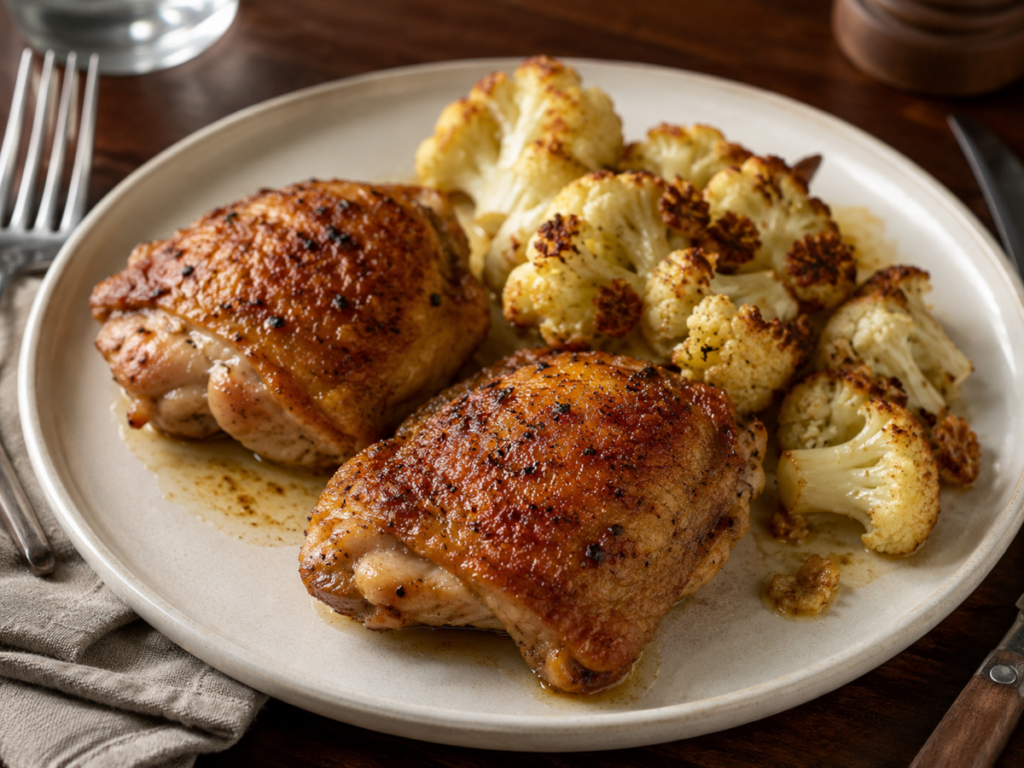
Some dinners earn a permanent place in the weekly rotation because they are inexpensive, satisfying, and nearly impossible to get tired of. Crispy chicken thighs with roasted cauliflower belong in that category.
This is not a recipe pretending to be restaurant food. It is honest home cooking built around two ingredients that respond exceptionally well to high heat. The chicken skin turns crisp and deeply savory in a hot skillet. The cauliflower develops caramelized edges while the garlic mellows and sweetens in the oven. Together, they create a full meal without grains, beans, breading, sugary sauces, or a long list of specialty products.
For someone following a low-lectin lifestyle, that simplicity matters. Every added sauce, coating, seasoning blend, or packaged side introduces another label to inspect. A basic combination of chicken, cauliflower, garlic, sea salt, avocado oil, and olive oil keeps the ingredient list short and understandable.
The result still feels generous. Crisp skin cracks beneath the fork. The meat stays moist and rich. Roasted cauliflower catches the pan juices and becomes more satisfying than a typical steamed vegetable side. This is the kind of low-lectin meal that does not announce itself as a substitute for something else. It simply tastes good.
Why Chicken Thighs Work So Well
Chicken breasts are often treated as the default healthy protein, but thighs are far more forgiving in a skillet. Their higher fat content helps the meat stay moist, even when the skin needs extra cooking time to become crisp.
Skin-on, bone-in thighs are especially useful. The skin protects the meat from direct heat while rendering enough fat to help build a golden crust. The bone also slows the cooking process slightly, giving the exterior time to brown before the interior dries out.
Thighs also carry stronger flavor than breast meat. That allows a very short seasoning list to work. Sea salt, black pepper if tolerated, and avocado oil are enough. There is no need to bury the chicken beneath a sweet glaze or flour coating.
A common mistake is moving the thighs too soon. Once the chicken enters the skillet, the skin needs steady contact with the hot surface. Frequent checking interrupts browning and may tear the skin before it naturally releases from the pan. Let it cook. The skin will tell you when it is ready. Properly browned chicken releases much more easily than pale, partially cooked skin.
Why Pasture-Raised Chicken Gets Attention
The term pasture-raised generally describes birds given meaningful outdoor access where they can move around and engage in natural behaviors. The exact farming practices still differ among producers, so the label should not be treated as a single, tightly standardized production guarantee.
Buying from a trusted farm or producer can provide better information than relying on the front of the package alone. Look for details about outdoor access, feed, antibiotic policies, and processing practices. Third-party certifications may also provide more context.
From a cooking perspective, pasture-raised chicken can sometimes have firmer meat and more pronounced flavor. That variation depends on the breed, age, feed, movement, and farming method. One package may cook a little differently from another, which is another reason to rely on a thermometer instead of a rigid cooking time.
Pasture-raised chicken often costs more. It is not financially realistic for every household, and no one should be made to feel that an affordable conventional chicken thigh ruins an otherwise thoughtful meal. The basic recipe still works. Buy the best option that fits your budget, then cook it properly.
The Low-Lectin Logic Behind the Plate
Chicken is an animal protein and is not considered a dietary source of plant lectins. The bigger concerns usually enter through breading, marinades, sauces, and side dishes.
Commercial chicken seasonings can contain sugar, corn-derived ingredients, soy, maltodextrin, starches, or vague flavoring blends. Bottled marinades may contain soybean oil, corn syrup, tomato concentrates, or pepper-based ingredients that some low-lectin eaters prefer to limit. This recipe avoids that clutter.
Cauliflower is a cruciferous vegetable from the same broad plant family as broccoli, cabbage, kale, and Brussels sprouts. It fits comfortably into many low-lectin meal plans and provides fiber along with naturally occurring plant compounds called glucosinolates.
Research examining cauliflower has found that cooking method affects how many of these compounds remain in the finished vegetable. Boiling can cause greater losses because water-soluble compounds move into the cooking liquid. Dryer methods avoid that particular type of leaching, although heat still changes the vegetable’s chemistry.
That does not mean raw cauliflower is always better. Raw cruciferous vegetables can feel rough on sensitive digestion, especially in large servings. Roasting softens the plant structure, reduces its sharp raw flavor, and makes it easier for many people to eat comfortably. Tolerance gets the final vote.
Avocado Oil for the Skillet
Chicken thighs need enough heat to brown the skin before the meat overcooks. Avocado oil is a practical choice because it has a mild flavor and is commonly used for higher-temperature cooking. Its fat profile is dominated by monounsaturated fats, including oleic acid. Research on avocado oil also describes relatively strong heat performance, though quality, refinement, storage, and repeated heating all affect how any cooking oil behaves.
For searing, refined avocado oil is usually the more practical option because it tends to have a more neutral flavor and greater heat tolerance than less refined versions. The oil should shimmer in the pan, but it should not produce heavy smoke.
More oil is not better. Chicken skin releases its own fat as it cooks. A thin coating is enough to establish contact and reduce sticking during the first few minutes.
Olive Oil for the Cauliflower
Extra-virgin olive oil works beautifully with roasted cauliflower because its grassy, peppery character complements the vegetable’s mild sweetness. It also helps the edges brown and gives salt and minced garlic something to cling to. The cauliflower does not need to swim in oil. Too much oil makes the florets heavy and greasy. Too little leaves them dry and chalky. The goal is a light, even coating. Each floret should look glossy, not saturated.
Garlic needs some care at roasting temperatures. Tiny minced pieces can burn before the cauliflower finishes cooking. Mixing the garlic thoroughly with the olive oil reduces exposed dry spots. Larger minced pieces are safer than garlic grated into a paste.
Another option is adding half the garlic at the beginning and the rest during the final ten minutes. This produces both mellow roasted garlic flavor and a fresher final note.
Crispy Skin Begins Before the Pan
Moisture is the enemy of crisp chicken skin. Chicken thighs often emerge from the package with surface moisture. If they go directly into the skillet, that liquid must evaporate before browning can begin. The skin steams during that delay and may turn rubbery.
Pat the thighs dry thoroughly with paper towels. Get into the folds around the edges. Then season the meat and let it sit uncovered for ten to fifteen minutes while the oven heats and the cauliflower is prepared.
For even better skin, the thighs can be salted and refrigerated uncovered for several hours or overnight. This gives the salt time to season the meat while the refrigerator’s dry air removes surface moisture. A cold skillet method works for certain fatty cuts, but a preheated skillet is more reliable for this recipe. The skin should make a clear sizzling sound as soon as it touches the pan.
No sizzle means no sear.
Pasture-Raised Chicken Thighs with Roasted Cauliflower
Ingredients
- 4 bone-in, skin-on pasture-raised chicken thighs
- 1 tablespoon refined avocado oil
- 1 teaspoon fine sea salt
- 1/2 teaspoon freshly ground black pepper, optional
- 1/2 teaspoon garlic powder, optional
- 1 large head cauliflower, cut into medium florets
- 2 tablespoons extra-virgin olive oil
- 3 garlic cloves, minced
- 3/4 teaspoon sea salt
- 1/4 teaspoon black pepper, optional
- 1 teaspoon fresh lemon juice, optional
- Chopped fresh parsley, optional
- Large oven-safe skillet, preferably cast iron or stainless steel
- Large rimmed baking sheet
- Mixing bowl
- Tongs
- Instant-read meat thermometer
Instructions
- Heat the Oven and Prepare the Cauliflower. Preheat the oven to 425°F. Cut the cauliflower into florets that are reasonably similar in size. Tiny fragments burn quickly, while oversized pieces may remain hard in the center. Medium florets offer the best balance of browned edges and tender interiors. Wash the cauliflower if needed, then dry it thoroughly. Water left between the branches creates steam on the baking sheet. Place the florets in a large bowl. Add the olive oil, minced garlic, sea salt, and black pepper if using. Toss until every piece has a thin coating. Spread the cauliflower across a large rimmed baking sheet in a single layer. Leave some open space between the florets. Crowding traps steam and produces soft cauliflower with very little browning. Place the cut sides down wherever possible. Those flat surfaces make direct contact with the hot metal and develop the darkest roasted edges.
- Dry and Season the Chicken. Pat the chicken thighs dry on all sides. Season them with sea salt, black pepper, and garlic powder if using. Let the seasoned thighs rest while the skillet heats. This short pause takes some of the refrigerator chill off the surface and gives the salt time to begin dissolving. Heat an oven-safe skillet over medium to medium-high heat. Add the avocado oil and swirl it across the pan. The oil should look fluid and shimmering before the chicken goes in.
- Sear the Chicken Skin-Side Down. Place the thighs in the skillet skin-side down. Lower them away from your body to reduce splashing. Press each thigh gently with the tongs for about ten seconds so the full skin surface touches the pan. Do not keep pressing after that. Excess pressure can squeeze moisture from the meat. Cook the thighs skin-side down for 8 to 12 minutes. Adjust the burner as needed. The pan should sound active, but the oil should not smoke heavily. Leave the thighs alone for most of this time. Check one only after the skin has had several uninterrupted minutes to brown. Once the skin is deep golden and releases without tearing, turn the thighs over. Cook the second side for 2 to 3 minutes.
- Roast the Chicken and Cauliflower. Transfer the skillet to the oven. Place the cauliflower baking sheet in the oven at the same time. Roast both for about 20 to 25 minutes. Turn the cauliflower after 15 minutes so more surfaces can brown. Check the chicken with an instant-read thermometer inserted into the thickest portion of the meat without touching the bone. The USDA safe minimum internal temperature for chicken thighs is 165°F. Dark meat often becomes more tender when cooked somewhat beyond the minimum safe temperature, commonly around 175°F to 185°F, because more connective tissue has time to soften. The exact result depends on thigh size and personal preference. If the chicken finishes before the cauliflower, remove the skillet and let the thighs rest while the vegetables continue roasting.
- Rest and Serve. Transfer the chicken thighs to a plate and rest them for 5 to 8 minutes. Keep the skin facing up. Covering them tightly traps steam and softens the crust. Remove the cauliflower when the stems are tender and the edges are deeply browned. Toss with fresh lemon juice and parsley if desired. Spoon a small amount of the rendered chicken fat over the cauliflower for a richer plate. Start with a teaspoon or two. The flavor is powerful, and a little goes a long way.
Fixing Soft Chicken Skin
Soft skin usually traces back to excess moisture, weak heat, or crowding. A wet thigh cannot brown efficiently. A cool pan delays rendering. A crowded skillet traps steam between the pieces. Use a skillet large enough to leave visible space around each thigh. Cook in two batches if necessary. Four large thighs squeezed into a small pan will fight each other for heat.
Skin can also soften while resting. Place the cooked thighs on a wire rack or keep them skin-side up on a plate. Never set the crisp side directly into pooled juices. If the chicken is fully cooked but the skin still needs help, place it under the broiler for one or two minutes. Watch closely. Chicken skin can move from pale to scorched very fast.
Fixing Pale or Mushy Cauliflower
Cauliflower needs open space, dry surfaces, and strong oven heat. A crowded sheet pan behaves more like a covered pot. Moisture released by the florets circulates around them instead of escaping. The vegetable softens, but it never develops the concentrated roasted flavor that makes this side work. Use two baking sheets if the florets look piled up. A second pan is better than a single overcrowded one.
Dark metal baking sheets usually brown vegetables more aggressively than pale or insulated pans. Parchment makes cleanup easier, but direct contact with bare metal may produce stronger browning. Either method works, though the timing may differ slightly. Wait before turning the florets. Moving them every few minutes prevents a crust from forming. Give the cut sides time to darken.
Making the Meal Gentler on Digestion
Cauliflower can cause gas or abdominal pressure in some people because it contains fermentable carbohydrates and fiber. That response does not automatically mean the vegetable is harmful or that lectins are responsible.
Serving size matters. Someone moving from a low-fiber diet to a large plate of roasted cruciferous vegetables may feel uncomfortable simply because the digestive system is handling more fermentable material than usual.
Start with a modest portion, perhaps half a cup of cooked cauliflower, and observe the response. Cook the florets until properly tender rather than leaving the stems nearly raw. Chewing well also matters. Large pieces swallowed quickly leave more physical work for the stomach and intestines.
Garlic can create similar issues for people sensitive to fructans. The recipe can be made without it. Garlic-infused olive oil provides flavor with fewer of the fermentable garlic carbohydrates because those compounds do not dissolve readily into oil. That substitution keeps the meal simple without forcing an ingredient that does not agree with you.
Practical Variations That Keep the Plate Low-Lectin
Fresh rosemary or thyme can be added to the chicken before it enters the oven. Use a light hand because dried herbs can scorch during the skillet sear. Turmeric can be mixed into the cauliflower oil for color and earthiness. A small amount of lemon zest added after roasting gives the meal a brighter edge without adding a sugary sauce.
For a creamier side, mash the roasted cauliflower with a little olive oil, sea salt, and warm unsweetened coconut milk. The browned flavor remains, but the texture becomes softer and more comforting.
Leftover chicken can be removed from the bone and served over mixed greens with avocado, walnuts, and an olive oil dressing. Reheat the skin separately in a dry skillet or toaster oven to restore some crispness.
Store cooked chicken and cauliflower in separate airtight containers. Keeping them apart prevents moisture from the vegetables from softening the chicken skin. Reheat the thighs skin-side up at 375°F until hot, checking that leftovers reach 165°F before serving.