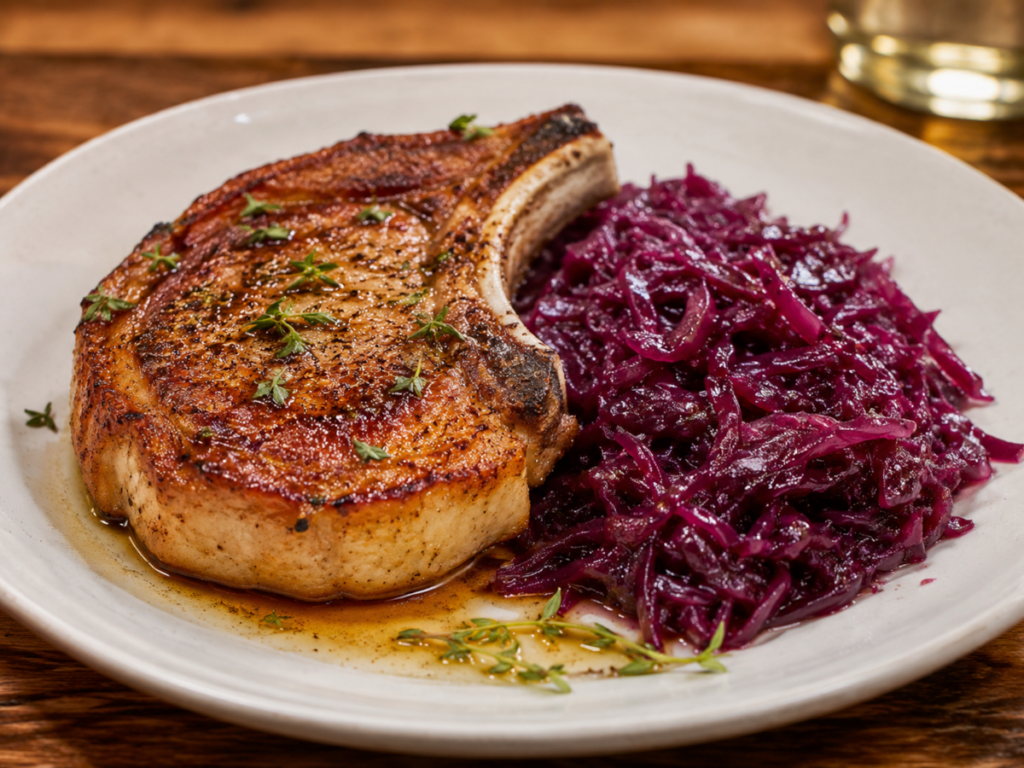
Some dinners earn their place in the weekly rotation because they are fast. Others stay because they are comforting. Pasture-raised pork chops with braised red cabbage manage to be both.
The pork is deeply browned in a hot skillet, scented with fresh thyme, and finished gently so the center remains juicy. Beside it sits a mound of tender red cabbage cooked in ghee and apple cider vinegar until the raw crunch softens into something silky, tangy, and slightly sweet.
It feels like an old-fashioned cold-weather meal, but it fits neatly into a modern low-lectin kitchen. There are no beans, wheat-based coatings, sugary sauces, or nightshade-heavy seasonings. The ingredient list is short, recognizable, and easy to adjust around individual tolerance.
That simplicity matters. Low-lectin cooking works best when it stops feeling like a complicated replacement program and starts feeling like regular food prepared with better judgment.
Why Pork Chops Work Well in a Low-Lectin Meal
Fresh pork is naturally free from the plant lectins associated with foods such as undercooked beans, certain grains, and some seeds. The larger concern is usually not the pork itself. Trouble tends to appear through breaded coatings, sweet bottled marinades, soybean oil, corn-based additives, or seasoning blends filled with ingredients that were never invited to dinner.
A plain pork chop avoids most of that clutter.
Choosing pasture-raised pork may also appeal to people who care about animal husbandry, outdoor access, and sourcing. Still, the label should not be treated as a magic health claim. Farming practices vary considerably between producers. Look for farms and brands that explain how the animals are raised, what they are fed, and whether antibiotics are used routinely.
Bone-in chops are my preferred choice for this recipe. The bone slows cooking slightly and can help the meat stay moist. Thick chops are also much easier to sear without drying out. Thin chops cook quickly, but the margin between browned and overcooked is painfully small.
Aim for chops that are about 1 to 1½ inches thick.
Red Cabbage Deserves More Attention
Red cabbage is often treated as garnish, slaw material, or something that appears once a year beside a holiday roast. That is a waste of a very useful vegetable.
It belongs to the Brassica family, along with broccoli, cauliflower, kale, Brussels sprouts, and green cabbage. Brassica vegetables contain glucosinolates, plant compounds that can be converted into several biologically active substances. Researchers continue to study how growing conditions, preparation, digestion, and the gut microbiota affect those compounds and their possible health effects. The research is promising, but it does not justify treating cabbage as medicine or promising that one serving will prevent disease.
Red cabbage also contains anthocyanins, the pigments responsible for its deep purple-red color. These compounds are part of the broader polyphenol family and have been examined for antioxidant and metabolic effects. Cooking can change their concentration and chemical form, so raw and cooked cabbage are not nutritionally identical. Cooked cabbage still remains a worthwhile whole food, especially when cooking makes it easier for someone to digest and eat regularly.
That last point often gets ignored. A vegetable that looks ideal on a nutrient chart but causes discomfort or never gets eaten is not serving much purpose. Braising breaks down the cabbage’s firm structure, reduces its raw sharpness, and creates a softer texture that many people tolerate better.
The Role of Apple Cider Vinegar
Apple cider vinegar gives the cabbage its bright edge. Without acidity, braised red cabbage can taste flat and overly earthy. Vinegar cuts through the richness of the pork and ghee while helping the cabbage maintain a vivid reddish-purple color.
The acid also changes the flavor as the cabbage cooks. Early in the process, the vinegar smells sharp. After simmering, it becomes rounder and more integrated.
Clinical studies have examined vinegar in connection with post-meal glucose and insulin responses. A systematic review found that vinegar consumption may reduce post-meal glucose and insulin responses under certain conditions, especially alongside higher-carbohydrate meals. That does not turn a spoonful of vinegar into a treatment, and it does not replace medical care, medication, or a balanced eating pattern. In this meal, its primary purpose is culinary.
Use real apple cider vinegar rather than a sweetened vinegar glaze. Glazes commonly contain added sugar, starches, coloring, and other ingredients that change the recipe considerably.
Why Ghee Fits the Braise
Ghee brings richness without adding the milk solids found in ordinary butter. It is produced by heating butter and separating most of the water, proteins, and sugars from the butterfat.
Some people who have trouble with regular dairy find ghee easier to tolerate, though it should not be assumed safe for anyone with a true milk allergy. Small residual amounts of milk proteins may remain depending on the product and manufacturing process.
Ghee also handles skillet heat well and gives the cabbage a satisfying, savory base. Extra-virgin olive oil can be substituted, but the final flavor will be lighter and more herbal.
Pasture-Raised Pork Chops with Braised Red Cabbage
Ingredients
- 1 medium red cabbage, about 2 pounds
- 2 tablespoons ghee, divided
- 3 tablespoons apple cider vinegar
- ½ cup water or unsalted chicken broth
- ½ teaspoon sea salt, plus more as needed
- ¼ teaspoon freshly ground black pepper
- 1 teaspoon fresh thyme leaves
- ½ small green apple, peeled and finely chopped, optional
- 1 teaspoon monk fruit sweetener, optional
- 4 pasture-raised bone-in pork chops, 1 to 1½ inches thick
- 1 teaspoon sea salt
- ½ teaspoon freshly ground black pepper
- 1 tablespoon ghee
- 4 sprigs fresh thyme
- 2 garlic cloves, lightly crushed, optional
- ¼ cup unsalted chicken broth or water
Instructions
- Remove any wilted outer leaves from the cabbage. Cut the head into quarters and remove the dense white core. Slice each quarter into thin ribbons. The pieces do not need to be perfectly uniform, but thinner slices will soften more evenly.
- Heat 1 tablespoon of ghee in a large, heavy-bottomed pot or deep skillet over medium heat. Add the shredded cabbage in batches, stirring as it begins to collapse. A whole cabbage looks enormous at first. Give it a few minutes. The volume will drop quickly.
- Season with salt, pepper, and fresh thyme. Add the chopped green apple if you tolerate it and prefer a more traditional sweet-tart flavor. Apple is not needed for the recipe to work. The cabbage has a mild sweetness of its own, especially after a long braise.
- Pour in the apple cider vinegar and water or broth. Stir well, reduce the heat to low, and cover the pot.
- Cook for 25 to 30 minutes, stirring every 7 or 8 minutes. The cabbage should become tender but not dissolve into mush. Add a splash of water if the bottom becomes dry before the cabbage is ready.
- Remove the lid during the final 5 minutes. Stir in the remaining tablespoon of ghee and allow any excess liquid to reduce. Taste before adding more vinegar or salt. A teaspoon of monk fruit sweetener can soften aggressive acidity, but avoid making the cabbage taste like dessert.
- Take the pork chops out of the refrigerator about 20 minutes before cooking. Pat every surface dry with paper towels. Moisture is the enemy of browning. A wet chop steams before it sears, leaving the exterior pale and rubbery.
- Season both sides with sea salt and black pepper.
- Place a heavy stainless-steel or cast-iron skillet over medium-high heat. Let the pan become properly hot before adding the ghee. Once the fat shimmers, lay the pork chops in the skillet without crowding them.
- Leave them alone for 3 to 4 minutes. Constantly lifting and checking prevents the crust from forming. Flip the chops once the first side has developed a rich brown surface.
- Add the thyme sprigs and crushed garlic, if using. Cook the second side for about 3 minutes. Reduce the heat to medium-low and add the broth or water around the chops, not directly over the browned surface.
- Cover the skillet loosely and cook until the thickest part of each chop reaches 145°F. Check the temperature away from the bone using an instant-read thermometer. USDA guidance calls for whole pork chops to reach at least 145°F, followed by a rest of at least 3 minutes.
- Transfer the chops to a plate and let them rest for 5 minutes. Do not slice into one immediately to check the center. That releases juices onto the plate and does not give reliable information about safety. A thermometer does the job better.
Building Flavor Without a Sugary Marinade
Pork is often paired with brown sugar, maple syrup, sweet barbecue sauce, or fruit preserves. Those combinations can taste good, but they can also bury the meat under unnecessary sweetness.
Fresh thyme takes the meal in a more savory direction. Its woody, earthy flavor stands up to pork without overpowering it. Garlic adds depth, though it can be omitted for people who find garlic difficult to digest.
The browned bits left in the skillet also hold plenty of flavor. After removing the chops, add two or three tablespoons of water or broth and scrape the bottom with a wooden spoon. Simmer for a minute until the liquid reduces slightly, then spoon it over the rested pork.
This simple pan sauce requires no flour, cornstarch, soy sauce, or packaged gravy mix.
Adjusting the Recipe for Personal Tolerance
Low-lectin eating is not supposed to become a competition over who can eliminate the most foods. Personal tolerance still matters.
People who are sensitive to large servings of cruciferous vegetables may want to begin with a smaller portion of cabbage. Longer cooking can make its texture gentler, but it does not guarantee that every digestive system will respond the same way.
The optional apple deserves the same individual judgment. Many low-lectin eaters include peeled fruit in moderate portions, while others reduce fruit during an elimination period or while examining blood sugar patterns. The dish remains flavorful without it.
Chicken thighs can replace the pork chops. Lamb chops also work, though they cook more quickly and bring a stronger flavor. For a dairy-free version, replace the ghee with extra-virgin olive oil or avocado oil.
Avoid turning the recipe into a rigid test of purity. Keep the ingredients simple, record how the meal makes you feel, and adjust the next serving based on actual experience rather than fear.
Serving the Meal
Place a generous spoonful of braised cabbage on each plate and set the pork chop partly against it. Spoon a little of the skillet liquid over the meat.
The plate does not need a starch to feel complete. Pork supplies substantial protein and fat, while cabbage adds volume, fiber, acidity, and color. A side of sautéed mushrooms or steamed broccoli can make the meal larger without introducing grains or legumes.
Serve the pork whole rather than slicing it in advance. A thick chop holds its heat and moisture better when left intact. Provide a sharp steak knife and let each person cut it at the table.
Storing and Reheating Leftovers
Store the pork and cabbage in separate airtight containers in the refrigerator. The cabbage keeps well for three to four days and often tastes better after the flavors have rested overnight.
Reheat the cabbage slowly in a covered skillet with a teaspoon of water. Add a small amount of ghee after it is hot to restore its glossy texture.
Pork chops require gentler treatment. Place them in a covered skillet over low heat with a tablespoon of broth or water. Heat only until warmed through. Repeated high heat will push a tender chop toward dryness, no matter how carefully it was cooked the first time.