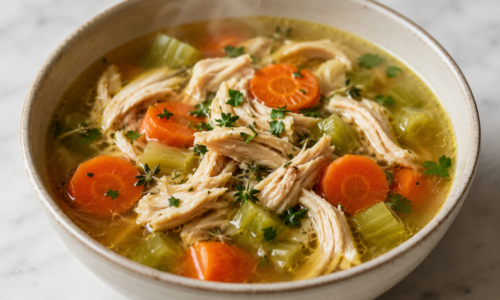
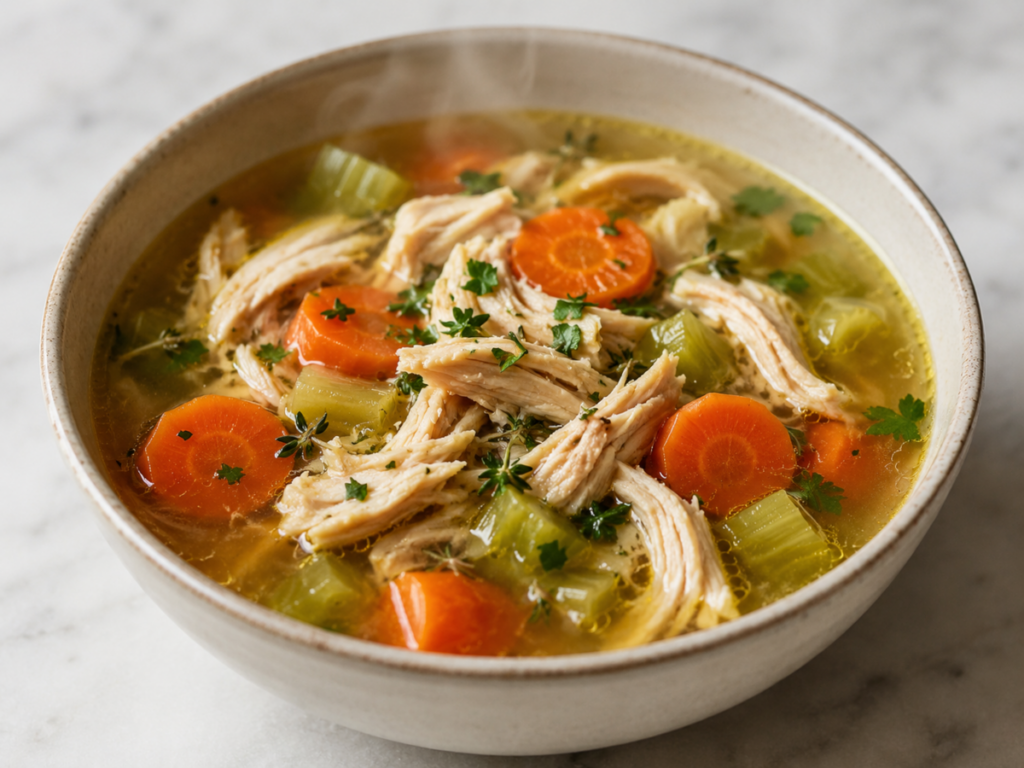
There are few meals as forgiving as a pot of chicken soup, and that matters when eating has become something you think about more carefully. A low-lectin lifestyle can involve reading labels, adjusting familiar recipes, and paying closer attention to how food is prepared, but dinner still has to feel like dinner. Pressure-cooked chicken bone broth soup fits that need well because it is simple, familiar, easy to portion, and built from ingredients that are commonly used in lower-lectin meal patterns.
This version uses pasture-raised chicken, carrots, celery, garlic, fresh herbs, and chicken bone broth. The pressure cooker turns the chicken tender enough to shred while softening the vegetables and drawing their flavors into the broth. It is not a medicinal soup, and bone broth should not be treated as a cure-all, but it can be a useful meal base when you want something warm, protein-centered, and easy to adapt.
Why This Soup Fits a Low-Lectin Kitchen
Lectins are carbohydrate-binding proteins found throughout the plant kingdom, but their amounts and activity differ greatly by food. Raw legumes and some whole grains are among the more concentrated dietary sources, while cooking with moist heat can substantially reduce lectin activity in many foods. Human research on the long-term health effects of dietary lectins remains limited, so sweeping claims about lectins causing chronic disease go beyond the evidence.
This soup takes a straightforward approach. It does not depend on beans, grains, tomatoes, peppers, potatoes, peanuts, or other ingredients that some people limit while following a low-lectin plan. Chicken and bone broth are animal foods rather than sources of plant lectins, while carrots, celery, garlic, and culinary herbs are generally used as supporting vegetables and aromatics rather than as concentrated lectin sources.
That distinction is useful because the pressure cooker is not performing some special detoxifying role in this particular recipe. Its main job here is practical: it cooks the chicken efficiently, produces a tender texture, and brings the soup together in one pot. Pressure cooking can also be relevant in the preparation of certain plant foods where sufficient heat reduces lectin activity, but this soup is low in lectin exposure mainly because of the ingredient choices rather than because the cooker needs to neutralize anything in the chicken.
Bone Broth Is a Food, Not a Promise
Bone broth has acquired a reputation that sometimes outruns the research. It can contain protein, amino acids, and minerals, but the amount depends heavily on the raw materials, cooking method, concentration, and commercial formulation. Research comparing different bone broths has found substantial variation in amino acid content, which is a good reason not to assume every cup delivers a predictable dose of collagen-related nutrients.
That does not make bone broth unhelpful. It gives soup body, savory depth, and a convenient liquid base, and some products contribute meaningful protein. The practical approach is to treat it as food rather than a supplement. If you buy it prepared, read the ingredient list and nutrition panel so you know how much sodium and protein you are actually getting, especially if the broth will be used in several meals during the week.
Homemade broth works just as well if you already prepare it from chicken bones, skin, connective tissue, herbs, and water. A gelatinous texture after refrigeration can tell you that gelatin-forming proteins are present, but it does not turn the broth into a standardized therapeutic product. The value in this recipe is mostly culinary: a good broth makes a simple list of ingredients taste complete.
Choosing Chicken That Shreds Well
Pasture-raised chicken is used here as a sourcing preference, not as a requirement for the recipe to work. If pasture-raised chicken fits your budget and food-buying priorities, use it. If it does not, the same pressure-cooking method works with other fresh chicken, and dietary consistency does not need to depend on buying the most expensive version of every ingredient.
Boneless, skinless thighs are especially forgiving under pressure because they stay moist and shred easily. Chicken breast also works, although it can become drier if it is held under pressure too long. For a mixed batch, you can use half thighs and half breast, which gives you a lighter texture while keeping enough richness in the pot.
Food safety still matters even when a pressure cooker makes chicken seem nearly foolproof. USDA guidance recommends cooking poultry to a minimum internal temperature of 165°F, measured with a food thermometer.
Pressure-Cooked Chicken Bone Broth Soup
Ingredients
- 1 1/2 pounds boneless, skinless pasture-raised chicken thighs
- 6 cups chicken bone broth
- 3 medium carrots, peeled if desired and cut into thick rounds
- 3 celery stalks, cut into 1-inch pieces
- 4 garlic cloves, minced or lightly crushed
- 3 fresh thyme sprigs
- 1 small fresh rosemary sprig
- 1 bay leaf
- 1 tablespoon extra-virgin olive oil, optional
- 1/2 to 1 teaspoon sea salt, depending on the sodium level of the broth
- 1/4 cup chopped fresh parsley
Instructions
- Set the pressure cooker to sauté. Add the olive oil, if using, followed by the garlic. Cook for about 30 seconds, just until fragrant, then turn off the sauté function. Avoid browning the garlic heavily because it can become bitter.
- Add the bone broth, chicken, carrots, celery, thyme, rosemary, bay leaf, and 1/2 teaspoon salt. Arrange the chicken so it sits mostly below the surface of the liquid. Lock the lid according to the manufacturer's directions and set the cooker to high pressure for 12 minutes.
- When the pressure cycle ends, allow a natural release for 10 minutes. Carefully release any remaining pressure, then open the lid once the cooker indicates that it is safe to do so.
- Transfer the chicken to a clean plate or shallow bowl. Confirm that the thickest pieces have reached at least 165°F, then shred the chicken with two forks. Remove the rosemary stem, thyme stems, and bay leaf from the soup.
- Return the shredded chicken to the cooker and stir in the chopped parsley. Taste the broth before adding more salt, since sodium levels vary among packaged bone broths. Serve hot.
- The vegetables will be very tender with this one-cycle method, which suits a soft, comforting soup. If you prefer carrots and celery with more structure, pressure-cook the chicken, broth, garlic, and woody herbs first, then add the vegetables after releasing the pressure and simmer them with the sauté function for about 5 to 7 minutes. That adds one small step but gives you better control over vegetable texture.
Small Ingredient Choices Make the Soup Easier to Live With
A recipe like this becomes more useful when it can flex around real life. Garlic can be reduced or omitted if it does not agree with you, parsley can replace stronger herbs, and extra broth can thin the soup if you prefer more liquid. Thyme, rosemary, garlic, and parsley provide enough aroma that the soup does not need a complicated seasoning blend.
The bone broth deserves the most label attention. Some commercial products are very simple, while others contain yeast extracts, sweeteners, starches, flavor blends, or vegetables you may be trying to avoid. None of those ingredients automatically makes a broth bad, but a short ingredient list makes it easier to know what you are eating and easier to connect a reaction with a specific food if you are tracking tolerance.
Salt is another reason to taste before seasoning. Broth can range from nearly unsalted to quite salty, and pressure cooking does not give you much opportunity to adjust midway through the process. Starting modestly with salt and correcting the finished soup is easier than trying to rescue an over-salted pot.
A Useful Meal for Tracking Food Tolerance
Simple soups can be especially helpful during periods when you are paying close attention to digestion or trying to identify which foods sit well with you. That does not mean the soup itself proves anything about lectins, inflammation, or digestive health. It simply has a relatively short ingredient list, which reduces the number of variables you are changing at one meal.
If you keep a food and symptom log, record the ingredients as they were actually prepared rather than writing only “chicken soup.” Note the broth brand, the amount of garlic, any seasonings, and whether you ate the soup by itself or alongside something else. Patterns are easier to interpret when the record reflects the real meal instead of a broad label.
Individual tolerance still matters. A food can fit a low-lectin framework and still be a poor fit for a particular person, while another food outside a strict version of the plan may be tolerated without difficulty. The useful question is not whether every ingredient passes a universal purity test, but whether the meal supports a way of eating that is practical, nutritionally adequate, and comfortable for the person eating it.
Turning One Pot Into Several Meals
This soup is well suited to batch cooking because it reheats without losing much of its character. Refrigerated soup should be cooled promptly in shallow containers, and federal food-safety guidance lists soups and stews with meat or vegetables at about three to four days in the refrigerator. For longer storage, freeze portions rather than stretching the refrigerator window.
Freezing individual servings makes the soup more useful on days when cooking feels like too much work. Leave a little expansion room in rigid containers, or freeze flat in freezer-safe bags if storage space is tight. When reheating leftovers, federal guidance recommends bringing them to 165°F, and soups can be reheated to a boil.
The basic recipe also gives you room to change the meal without rebuilding it. Add a handful of chopped leafy greens after pressure cooking and let them wilt in the hot broth, increase the chicken for a more protein-heavy bowl, or serve the soup with a side of avocado or another food that fits your own version of low-lectin eating. Those small changes can keep a batch from feeling repetitive while preserving the main advantage of the recipe: a familiar, uncomplicated bowl of chicken soup that does not demand much from the cook.