

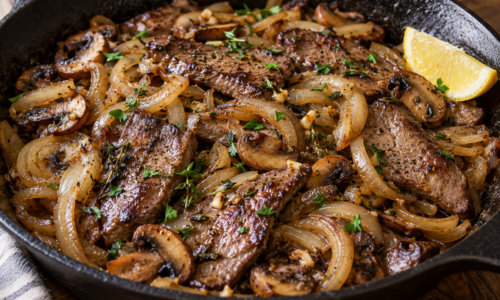
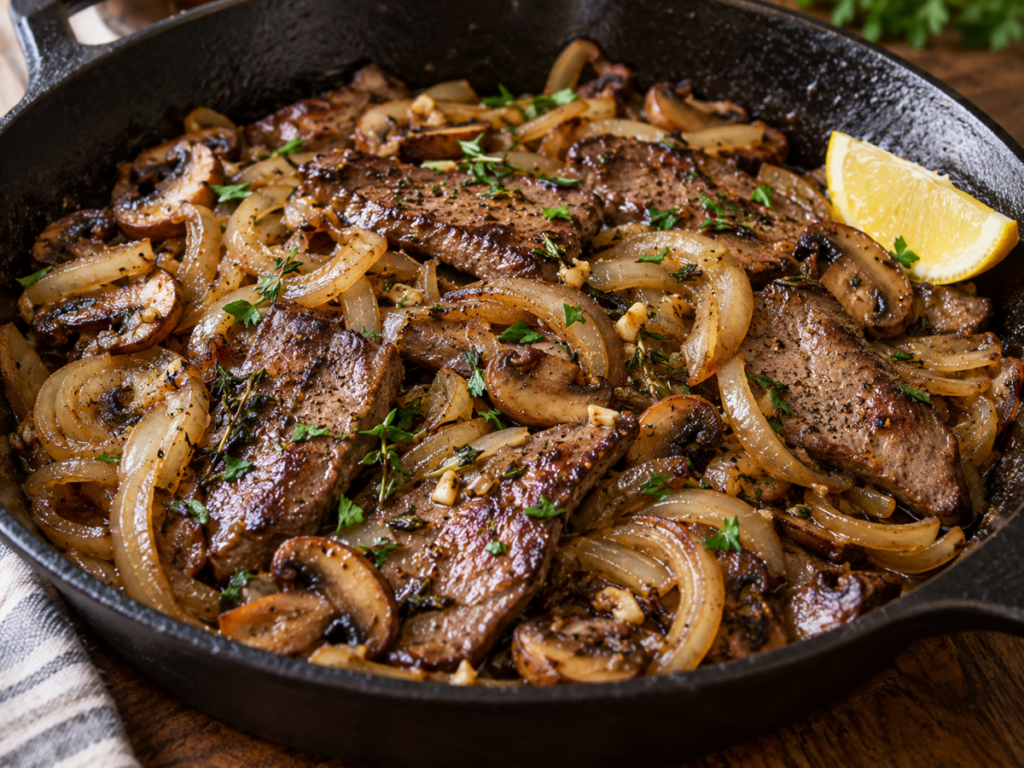
Beef liver and onion skillet tends to be a nutrient-dense low-lectin meal. Beef liver tends to inspire strong reactions. Some people grew up eating liver and onions regularly, while others remember an overcooked piece of liver with a mineral-heavy flavor and a texture closer to shoe leather than dinner. Prepared carefully, though, liver can be tender, richly savory, and balanced by ingredients that soften its stronger flavor rather than trying to hide it.
For someone following a low-lectin lifestyle, a simple skillet of grass-fed beef liver, onions, mushrooms, herbs, and ghee can also fit comfortably into a whole-food meal pattern. There is no need for wheat flour, breading, sugary sauce, or complicated substitutions. The recipe relies on careful cooking, modest seasoning, and the natural sweetness that develops as onions slowly brown.
Why Beef Liver Deserves a Different Kind of Attention
Liver is often described as nutrient-dense, and in this case the description is well supported. A 3-ounce serving of pan-fried beef liver provides about 70.7 micrograms of vitamin B12, while the adult Daily Value is 2.4 micrograms. The same serving provides about 5 milligrams of iron and 2.9 milligrams of riboflavin.
Vitamin B12 contributes to normal red blood cell formation, nervous system function, and DNA synthesis. Iron has roles in oxygen transport and numerous metabolic processes, while riboflavin participates in energy metabolism. These nutrients make liver nutritionally concentrated, but concentration is also the reason liver makes more sense as an occasional food than something that needs to appear on the plate every day.
Beef liver is particularly high in preformed vitamin A. Three ounces of pan-fried beef liver contains about 6,582 micrograms RAE of vitamin A, compared with an adult upper intake level of 3,000 micrograms per day for preformed vitamin A. That does not mean one serving automatically causes vitamin A toxicity, but it does make portion size and frequency worth thinking about, especially for someone who also takes supplements containing retinol or other forms of preformed vitamin A.
Copper is similarly concentrated. A 3-ounce portion of pan-fried beef liver contains about 12.4 milligrams of copper, while the adult tolerable upper intake level is 10 milligrams per day. Again, an occasional meal exceeding a daily reference value should not be confused with chronic excessive intake, but liver is one of those foods where more is not automatically better.
People who are pregnant or could become pregnant should be especially thoughtful about preformed vitamin A intake. Excessive preformed vitamin A during pregnancy can cause birth defects, and the NIH lists a pregnancy upper limit of 3,000 micrograms RAE per day for adults ages 19 to 50. Anyone with a medical reason to restrict vitamin A, iron, copper, or organ meats should follow guidance from their healthcare professional rather than treating liver as a general-purpose nutritional supplement.
Grass-Fed Liver Without Turning the Label Into a Health Claim
Grass-fed beef liver works particularly well for this skillet, especially when it comes from a source you trust. Choosing grass-fed beef can reflect preferences involving animal husbandry, sourcing, flavor, or farming practices, but the grass-fed label does not turn liver into a fundamentally different food. The defining nutritional feature is still that it is liver.
Freshness matters more to the finished dish than marketing language. Look for liver with a deep reddish-brown color, a clean appearance, and no dried edges. Frozen grass-fed liver is also perfectly reasonable, particularly because freezing it in smaller portions makes it easier to cook liver occasionally without feeling pressured to use an entire package at once.
If possible, buy liver that has already been sliced to an even thickness. Thin pieces cook quickly and predictably, which becomes especially helpful because liver can move from tender to firm in a short period.
The Role of Onions, Mushrooms, and Ghee
Onions are more than a traditional companion to liver. Slow cooking converts their sharp raw character into a softer, sweeter flavor that balances the mineral intensity of the meat. Allowing them enough time to brown makes a significant difference in the finished skillet, so this is one part of the recipe that should not be rushed.
Mushrooms add another savory element and give the meal more volume without requiring a starch or bread-based accompaniment. Cremini or button mushrooms both work well. Their moisture needs time to evaporate before they brown, which is why they are cooked before the liver rather than tossed into the skillet at the last minute.
Ghee works well for high-heat searing and provides a buttery flavor without the milk solids found in regular butter. People who tolerate butter well can use it instead, while avocado oil provides a dairy-free alternative. The recipe does not depend on ghee for any special nutritional property, so the cooking fat can be adjusted according to tolerance and preference.
Keeping Liver Tender While Cooking It Safely
One of the persistent problems with liver recipes is that culinary advice often recommends leaving the center quite pink to preserve tenderness. Food-safety guidance deserves consideration here. USDA recommends cooking organ and variety meats, including beef liver, to an internal temperature of 160°F (71.1°C), measured with a food thermometer.
The answer is not to cook thin slices for a long time. Instead, use moderately high heat, avoid crowding the pan, and remove each piece soon after it reaches the recommended temperature. A thin digital thermometer is helpful because visual appearance alone cannot reliably confirm food safety.
Patting the liver dry before cooking also helps. Excess surface moisture causes steaming and slows browning, which can leave you cooking the liver longer than necessary while waiting for a crust to develop.
Some cooks soak liver in milk before cooking to mellow the flavor. This is a culinary preference rather than a required safety step, and the evidence for specific nutritional benefits from soaking is limited. If you find the flavor of liver strong, a 20- to 30-minute soak in A2 milk followed by thorough draining and drying can be worth trying.
Beef Liver & Onion Skillet with Mushrooms
Ingredients
- 12 ounces grass-fed beef liver, sliced about 1/4 inch thick
- 2 medium yellow onions, thinly sliced
- 8 ounces cremini or button mushrooms, sliced
- 2 tablespoons ghee, divided
- 2 garlic cloves, finely minced
- 1 teaspoon fresh thyme leaves, or 1/2 teaspoon dried thyme
- 1/2 teaspoon sea salt, plus more to taste
- Freshly ground black pepper, optional and according to tolerance
- 1 tablespoon chopped fresh parsley, optional
- Lemon wedges for serving, optional
- A2 milk for soaking the liver, optional
Instructions
- Prepare the Liver. If using the optional milk soak, place the sliced liver in a shallow dish and cover it with A2 milk for about 20 to 30 minutes in the refrigerator. Drain the liver well afterward and pat each slice thoroughly dry with paper towels so the surface can brown properly. Trim away any tough connective tissue or obvious membrane if your butcher has not already done so. Season the liver lightly with salt and thyme shortly before it goes into the skillet.
- Caramelize the Onions. Heat 1 tablespoon of ghee in a large cast iron or stainless steel skillet over medium-low to medium heat. Add the sliced onions with a small pinch of salt and cook for about 12 to 15 minutes, stirring periodically, until they become soft and golden brown. True deep caramelization can take considerably longer, but the goal for this skillet is a well-browned, naturally sweet onion that can be prepared during an ordinary weeknight meal. If the skillet becomes dry before the onions soften, reduce the heat rather than adding large amounts of extra fat.
- Brown the Mushrooms. Add the sliced mushrooms to the onions and raise the heat slightly. Cook for another 5 to 7 minutes, stirring occasionally, until the mushrooms release their moisture and begin to brown around the edges. Add the minced garlic during the final minute so it becomes fragrant without burning. Transfer the onion and mushroom mixture to a plate and keep it nearby while the liver cooks.
- Sear the Liver. Return the skillet to medium-high heat and add the remaining tablespoon of ghee. Once the fat is hot, arrange the liver slices in a single layer without overlapping them. Sear until browned on the first side, then turn and finish cooking the second side. Cooking time will depend heavily on thickness, so use a food thermometer rather than relying entirely on the clock, and cook the liver to 160°F (71.1°C) in accordance with USDA guidance. Thin slices may reach temperature quickly, so check early rather than assuming they need several minutes on each side. Remove pieces individually as they reach temperature instead of leaving thinner slices in the pan while thicker ones finish.
- Finish the Skillet. Return the onions, mushrooms, and garlic to the skillet and gently toss them around the liver for about 30 seconds. This brief final heating brings the ingredients together without continuing to cook the liver for several unnecessary minutes. Taste the vegetables and adjust the salt if needed. Scatter fresh parsley over the skillet and serve with a squeeze of lemon if you enjoy a little acidity against the richness of the liver and ghee.
Building the Rest of the Plate
Liver has such a concentrated flavor that it usually benefits from a fairly simple side dish. Roasted cauliflower, sautéed leafy greens, asparagus, broccoli, cabbage, or cauliflower mash can all turn the skillet into a fuller meal without competing with it.
A small portion of pressure-cooked white rice, millet, or another personally tolerated carbohydrate can also work for people whose version of low-lectin eating includes properly prepared grains. Dietary tolerance varies, so the side dish is an easy place to adjust the meal without changing the liver recipe itself.
The onions and mushrooms already provide enough character that a heavy sauce is rarely necessary. If the liver flavor still feels too strong, increasing the proportion of onions and mushrooms is often more useful than adding sweeteners or covering the dish with a rich sauce.
Portion Size Matters More With Liver Than With Most Meats
A steak and a serving of liver may both come from beef, but they should not automatically be treated as nutritionally interchangeable. Liver contains far higher concentrations of several vitamins and minerals, particularly vitamin A, vitamin B12, riboflavin, and copper.
That concentration is part of liver’s appeal, but it also supports a moderate approach. There is little reason to turn liver into a daily ritual simply because it contains nutrients that sound beneficial on paper. An occasional modest serving can provide plenty.
This skillet is also easy to scale down. Someone new to liver can start with a smaller amount of liver and a larger pile of onions and mushrooms, then adjust future portions according to taste and tolerance. A meal does not become nutritionally pointless because the liver portion is two ounces instead of four.
That approach also makes liver easier to fit into long-term meal planning. Freeze small packages, thaw only what you intend to cook, give the onions enough time to brown, and treat liver as a distinctive ingredient rather than a supplement disguised as dinner. Prepared that way, beef liver and onions can become a practical occasional meal instead of something eaten out of obligation.
