

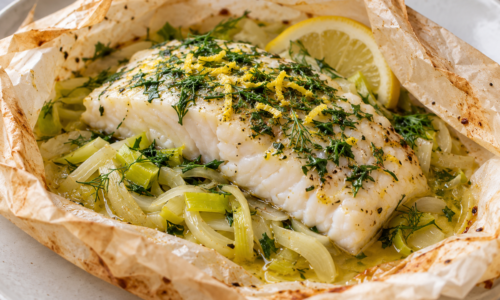
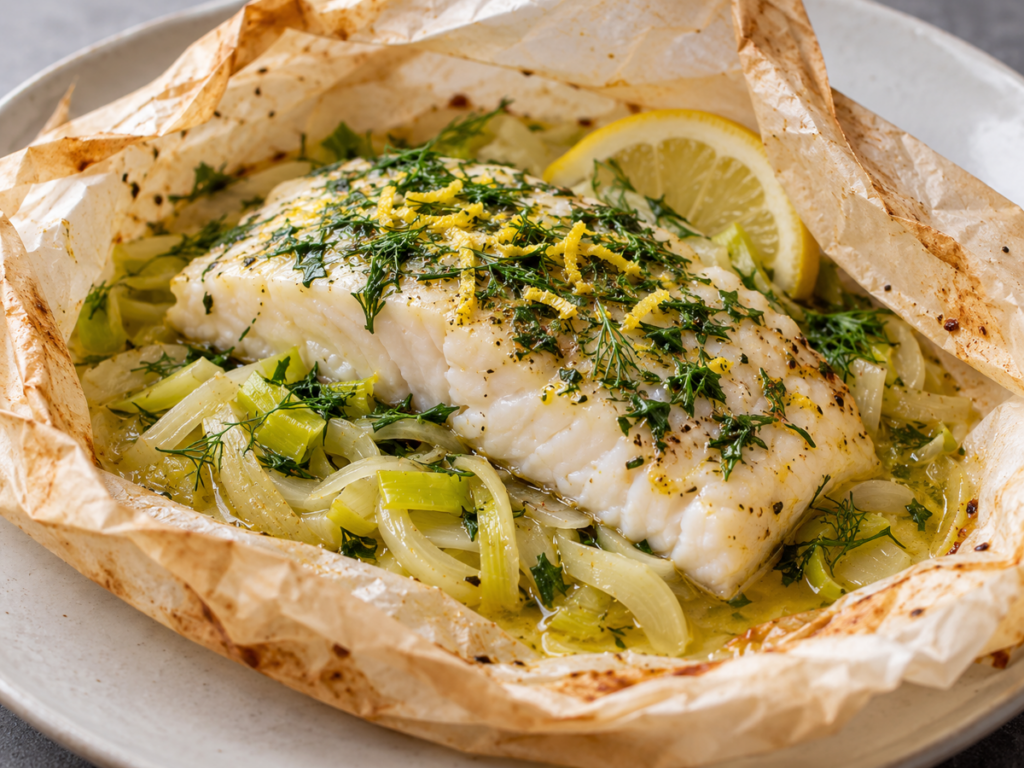
Wild-caught halibut is one of those fish that rewards a gentle cooking method. Its flesh is lean, firm, and mild, which makes it easy to pair with herbs and vegetables, but it can turn dry if it spends too long over high heat. Cooking it en papillote, sealed inside parchment with leeks, fennel, lemon, herbs, and a small amount of grass-fed ghee, gives the fish a moist environment where the aromatics release their flavor without requiring a heavy sauce.
For someone building meals around a low-lectin approach, this combination is also refreshingly simple. Halibut contains no plant lectins, while leeks, fennel, lemon, and herbs fit comfortably into many low-lectin eating patterns. That does not make the dish a medical treatment or prove that avoiding lectins is necessary for everyone. Human research on strict lectin avoidance remains limited, and reactions to foods vary, so the useful part of this recipe is its straightforward ingredient list and easy adaptability.
Why Halibut Works So Well in Parchment
Halibut has a dense, clean texture that holds together well during cooking. NOAA describes U.S. wild-caught Pacific halibut as a lean source of protein that also supplies selenium, phosphorus, and niacin, and notes that it is available fresh for much of the year and frozen year-round. A 100-gram raw portion provides about 21 grams of protein, which makes halibut a substantial main dish without needing a large amount of added fat.
The same leanness that makes halibut appealing also makes timing matter. Unlike an oilier fish, it has less internal fat to cushion it from overcooking. Parchment cooking helps by trapping steam from the vegetables, lemon, and fish itself, so the surface stays moist while the center cooks through.
En papillote also solves a practical weeknight problem because the fish and vegetables cook together in individual packets. There is no splattering skillet, no delicate fillet to flip, and very little cleanup after dinner. The sealed packet carries the aroma of fennel, leek, herbs, and ghee directly into the fish, so a short ingredient list can still produce a layered flavor.
A Low-Lectin Meal Without Making the Plate Complicated
Low-lectin cooking can become overly complicated when every meal is treated like a test of dietary purity. A more workable approach is to build meals from foods that fit your preferred framework, prepare them in ways you tolerate well, and pay attention to how you respond over time. This dish works nicely in that setting because the core ingredients are familiar and easy to identify.
Leeks bring a soft onion-like sweetness once they steam, while fennel becomes tender and lightly sweet rather than sharply anise-flavored. Both vegetables release moisture in the packet, which helps protect the halibut. Lemon adds acidity, fresh herbs add aroma, and ghee coats the fish with enough fat to round out its lean texture.
Grass-fed ghee is included here as a cooking fat, not as a promise of special health effects. Ghee is clarified butter, so most of the water and milk solids have been removed, though people with a diagnosed milk allergy still need to consider whether it is appropriate for them. If ghee does not fit your diet, extra virgin olive oil is the easiest substitution and works well with the same vegetables and herbs.
Choosing Wild-Caught Halibut
If you have access to U.S. wild-caught Pacific halibut, NOAA currently describes it as a responsibly managed seafood choice under U.S. regulations. Fresh Pacific halibut is commonly available from spring into fall, while frozen fillets make the recipe practical year-round. Frozen fish can be an excellent option when it has been handled well, and FDA guidance recommends thawing frozen seafood gradually in the refrigerator when possible.
Look for fillets that are similar in thickness so they finish cooking at about the same time. If one piece is much thinner than the others, it may be ready several minutes earlier. For frozen halibut, thaw it fully, pat it dry, and remove any excess surface moisture before assembling the packets.
Mercury is also worth keeping in perspective, especially for people who are pregnant, breastfeeding, might become pregnant, or are serving fish to children. The FDA and EPA currently place halibut in the “Good Choices” category in their fish-consumption advice, rather than the lower-mercury “Best Choices” category. Their guidance for the groups covered by that advice is one serving per week from the “Good Choices” category, with fish variety encouraged over repeatedly eating the same species.
Wild-Caught Halibut En Papillote with Leeks, Fennel, and Grass-Fed Ghee
Ingredients
- 4 wild-caught halibut fillets, about 5 to 6 ounces each
- 1 medium leek, white and light green parts only, rinsed well and thinly sliced
- 1 small fennel bulb, cored and very thinly sliced
- 2 tablespoons grass-fed ghee, softened or melted
- 1 lemon
- 2 tablespoons chopped fresh dill or flat-leaf parsley
- 1 small garlic clove, finely grated or minced
- 1/2 teaspoon fine sea salt, plus more to taste
- 4 teaspoons water or unsalted fish stock
- Fennel fronds or extra herbs for finishing, optional
Instructions
- Heat the oven to 400 degrees Fahrenheit. Cut four large sheets of parchment paper, each big enough to fold over one piece of fish and leave room around the edges for sealing.
- Divide the sliced leek and fennel among the four parchment sheets, placing the vegetables slightly off center. Add 1 teaspoon of water or unsalted fish stock to each vegetable pile so the packets have a little extra moisture as they heat.
- Pat the halibut dry and season it lightly with sea salt. Set one fillet over each portion of vegetables.
- Stir the ghee with the garlic, chopped herbs, 1 teaspoon finely grated lemon zest, and 1 tablespoon lemon juice. Spoon the mixture over the halibut, dividing it as evenly as possible among the four fillets.
- Fold the empty half of each parchment sheet over the fish. Starting at one edge, make a series of small overlapping folds around the packet until it is tightly sealed. The goal is to trap steam, so press the final fold firmly underneath the packet.
- Transfer the packets to a rimmed baking sheet and bake for 12 to 16 minutes, depending on the thickness of the fish. FDA food-safety guidance recommends cooking finfish to an internal temperature of 145 degrees Fahrenheit. If you are checking with an instant-read thermometer, open one packet carefully because the escaping steam will be hot.
- Let the packets rest for about 2 minutes before opening. Finish with fennel fronds, extra herbs, or a small squeeze of lemon if desired, then serve the fish with the softened leeks, fennel, and juices from the packet.
Getting the Texture Right
The biggest difference between excellent halibut and disappointing halibut is often only a few minutes. Thick fillets need more time than thin ones, and parchment packets continue to hold heat briefly after they leave the oven. Start checking near the lower end of the cooking range if your fillets are around an inch thick or slightly less.
The vegetables should be sliced very thinly because they do not have a long roasting period. Thick wedges of fennel may stay too firm while the fish finishes, so a mandoline or a sharp knife is helpful here. Leeks need a thorough rinse because soil can hide between their layers, especially near the point where the white portion turns green.
Avoid packing the parchment too tightly against the fish. A little empty space inside the packet allows steam to circulate, which helps the fennel and leek soften while the halibut cooks. A properly sealed packet will puff slightly in the oven as steam builds inside.
What to Serve with the Halibut
The parchment packet already contains vegetables, but it is easy to turn the fish into a fuller meal without burying its delicate flavor. Cauliflower mash works well because it catches the lemony cooking juices, and simply sautéed greens give the plate more volume without adding much preparation. A small serving of pressure-cooked white rice can also work for people who include it in their personal low-lectin plan.
For a lighter meal, serve the halibut with arugula, avocado, and a simple olive-oil-and-lemon dressing. Roasted asparagus or broccoli are also easy additions if you want more vegetables on the plate. The mild flavor of halibut benefits from side dishes that stay fairly simple rather than competing with the fennel and herbs.
Leftovers are best handled gently because reheating can dry the fish. Refrigerate cooked halibut promptly in a covered container and reheat only until warmed through, or flake it cold over greens the next day. The softened fennel and leek can be spooned over the fish again so the leftovers keep some of the moisture from the original packet.
Small Adjustments for Different Tastes
The recipe is flexible without needing a long list of substitutions. Dill gives the fish a fresh, slightly grassy character, while parsley keeps the flavor more neutral. Thyme also works well, especially if you prefer an earthier profile with the ghee and fennel.
People who want more acidity can add a thin lemon slice on top of each fillet before sealing the packet. If citrus is not well tolerated, leave it out and use a teaspoon of water or stock in each packet for moisture. A few chopped chives can replace the garlic for a softer allium flavor.
The same parchment method can also be used with other firm white fish, though the cooking time may change. Cod, haddock, or sablefish can all be prepared with the same leek and fennel base, but thickness and fat content affect how quickly the center reaches a safe temperature. A thermometer is more reliable than guessing based only on the clock.
Why This Cooking Method Belongs in a Practical Rotation
En papillote sounds formal, but the technique is simple enough for an ordinary dinner. It gives a lean fish protection from dry oven heat, turns thinly sliced vegetables into their own cooking liquid, and keeps the flavors focused inside one packet. Once you know how tightly to fold the parchment and how long your usual fillets need, the method becomes easy to repeat.
That repeatability matters for anyone trying to make a dietary pattern sustainable rather than exhausting. A meal built around halibut, fennel, leek, herbs, lemon, and ghee does not require specialty sauces or a long prep session, and the recipe can be adjusted around personal tolerance without losing its basic structure. The result is tender fish, soft aromatic vegetables, and a light buttery broth that forms naturally inside the parchment.
