

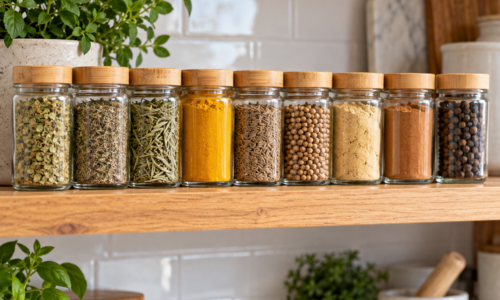
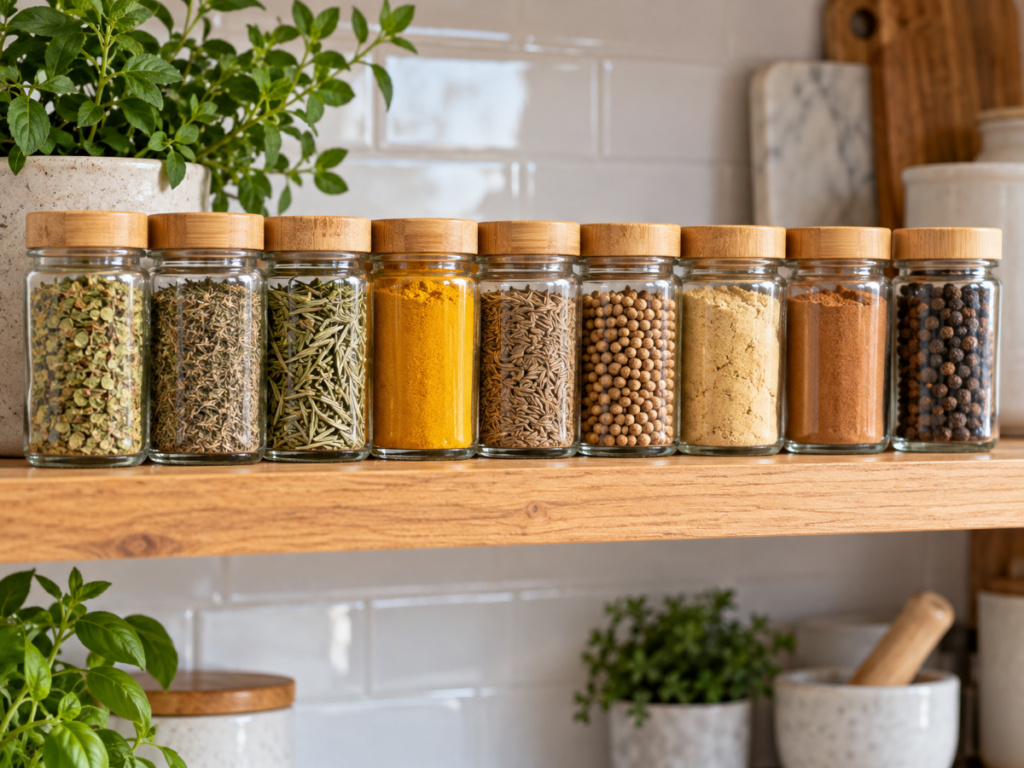
A jar of dried oregano looks simple enough, but spice shopping can become surprisingly complicated when someone is trying to avoid nightshades. The obvious ingredients, such as chili powder, cayenne, paprika, and red pepper flakes, are easy to recognize once you know what to look for. The harder part is dealing with blends, vague ingredient labels, shared processing equipment, and the reality that a seasoning can pick up trace material from another product long before it reaches the kitchen.
For people following a low-lectin lifestyle who also choose to limit or avoid nightshades, this is less about making the spice cabinet restrictive and more about making it understandable. A dependable collection of single-ingredient herbs and spices can still provide plenty of flavor, but it helps to know which ingredients belong to the nightshade family, which ones merely have confusing names, and where cross-contact is most likely to enter the picture.
Nightshade avoidance and low-lectin eating are not exactly the same thing. Some people following a low-lectin approach use certain nightshade foods after specific preparation methods, while others avoid them because of individual tolerance. For someone choosing the stricter route, dried pepper powders deserve special attention because they are concentrated, finely ground, and commonly handled alongside many other spices.
Start by Separating Nightshade Spices From Look-Alikes
Culinary peppers are one of the main sources of confusion because the word “pepper” is used for plants from very different botanical families. Cayenne, chili peppers, red peppers, and sweet peppers come from the genus *Capsicum*, which belongs to the Solanaceae, or nightshade, family. Paprika is made from dried *Capsicum* peppers, so it also falls into the nightshade category.
Black pepper and white pepper are different. They come from *Piper nigrum* in the Piperaceae family, not from *Capsicum* and not from the nightshade family. That botanical difference matters for someone who is avoiding nightshades specifically, even though an individual may still choose to limit black pepper for a separate digestive or tolerance reason.
This distinction opens up far more seasoning options than many people first assume. Basil, oregano, thyme, rosemary, sage, parsley, dill, mint, tarragon, bay leaf, chives, cilantro, and marjoram are not nightshades. Common dry spices such as turmeric, ginger, cumin, coriander, cinnamon, cardamom, cloves, nutmeg, fennel, and black pepper are also outside the nightshade family.
The main dry seasonings to examine closely are those made from *Capsicum* peppers or blends that may contain them. Chili powder, cayenne, paprika, smoked paprika, ancho powder, chipotle powder, crushed red pepper, and many Cajun, taco, barbecue, curry, and seasoned-salt blends can contain nightshade ingredients. The exact formulation matters more than the name on the front of the container.
The Ingredient List Does Not Always Tell the Whole Story
A single-ingredient jar labeled “ground cumin” is usually easier to evaluate than a blend labeled “southwest seasoning.” Packaged foods in the United States can sometimes declare certain flavoring ingredients collectively as “spice” or “spices” rather than naming every individual spice. FDA labeling rules also allow some spices that function as colorings, including paprika and turmeric, to be declared in broader ways under certain circumstances.
That means a person who is carefully avoiding *Capsicum* ingredients should not automatically assume that a product is nightshade-free simply because the label does not spell out paprika or chili pepper. A vague term such as “spices” may be acceptable under labeling rules, yet still leave unanswered questions for someone following a more specific dietary restriction.
This is one reason single-ingredient herbs and spices are often the most practical foundation. They reduce guesswork, make reactions easier to track, and allow you to build your own blends in the kitchen. A homemade Italian blend made from oregano, basil, thyme, rosemary, and marjoram is straightforward. A homemade warm spice blend using cumin, coriander, turmeric, ginger, cinnamon, and black pepper can also provide depth without relying on paprika or chili.
Cross-Contact Is Different From an Ingredient Being Added on Purpose
In food manufacturing, “cross-contact” is a more precise term than “cross-contamination” when the concern is an unintended transfer from one product to another. Shared grinders, conveyors, mixers, filling equipment, storage bins, scoops, and airborne spice dust can all create opportunities for small amounts of one seasoning to reach another product.
FDA guidance on major food allergens describes this kind of transfer as something that can happen through shared equipment, inadequate cleaning, production scheduling, or airborne dust. Nightshades are not one of the federally defined major food allergens, so the same mandatory allergen labeling framework does not apply to them.
That distinction matters. A company may have strong controls for milk, peanuts, sesame, or other regulated allergens while having no special program designed to keep paprika residue out of oregano or cumin. A “may contain” statement is also not a dependable screening tool for nightshade avoidance because precautionary allergen statements are voluntary and are mainly used for allergen concerns recognized by the manufacturer.
For someone who avoids nightshades because of personal tolerance rather than a diagnosed allergy, the practical question becomes how much uncertainty is acceptable. One person may be comfortable with a reputable brand that processes many spices in the same facility. Another may prefer a company willing to confirm dedicated equipment, validated cleaning, or separate production runs. There is no single threshold that fits everyone.
Why Spice Facilities Deserve a Little Extra Attention
Dry spices are often processed through several stages before they reach the consumer. They may be cleaned, dried, milled, blended, treated for microbial control, packed, repacked, or moved between suppliers. Each step creates another point where equipment and handling practices matter.
The FDA has studied spice safety because dried spices can carry microbial hazards such as *Salmonella*. Retail spice samples in the United States have generally shown lower *Salmonella* prevalence than imported shipments at the point of entry, which the agency has linked in part to pathogen-reduction treatment and other controls used before retail sale.
That research is about microbial safety, not nightshade transfer, but it highlights how much processing can happen behind a small spice jar. It also reinforces a useful shopping principle: supplier practices matter. A company that can clearly explain sourcing, processing, cleaning, and lot controls gives a careful consumer more information to work with than one that only provides a generic ingredient statement.
What to Ask a Spice Company
A short email or customer-service message can answer more than the package label. The goal is not to demand a perfectly isolated production line, but to find out whether pepper-based spices share the same equipment as the herb or spice you want to buy.
Useful questions include whether the product is processed on shared grinding or blending equipment with paprika, cayenne, chili powder, or other *Capsicum* ingredients. You can also ask whether the equipment is cleaned between runs, whether the company uses dedicated lines for any products, and whether the finished spice is packed in the same facility where pepper powders are handled.
Companies may not test specifically for nightshade residue, and they may not be able to guarantee complete absence. That does not make the conversation useless. A clear answer such as “we grind paprika on the same line after cumin and perform a dry-cleaning procedure between batches” gives you more information than a vague assurance that the product is “all natural.”
If your sensitivity is strong enough that trace exposure matters, keep the question specific. Asking whether a product is “safe” leaves the definition of safe to the manufacturer. Asking whether ground turmeric shares a grinder, blender, or packing line with paprika produces a more useful answer.
Whole Spices Can Reduce Some of the Guesswork
Buying whole spices is one of the simplest ways to gain more control over seasoning. Whole cumin seeds, coriander seeds, peppercorns, fennel seeds, cardamom pods, cloves, and cinnamon sticks are easier to inspect visually, and they have not necessarily passed through the same grinding equipment used for powdered blends.
Whole spices are not automatically free from cross-contact, since they can still be handled or packed in shared facilities. Even so, purchasing whole spices and grinding them at home can remove one processing step that might otherwise involve common milling equipment.
A small dedicated spice grinder works well for this purpose. If nightshade avoidance is strict in the household, do not use the same grinder for paprika or dried chiles and then expect a quick wipe to remove every trace of powder. Fine spice dust clings to lids, blades, seams, and plastic surfaces more readily than many people expect.
Build a Nightshade-Free Spice Cabinet Around Flavor Families
A reliable spice cabinet is easier to maintain when it is organized around the flavors you actually cook with. Mediterranean cooking can lean on oregano, rosemary, thyme, basil, parsley, garlic, black pepper, and lemon zest. Indian-inspired dishes can use turmeric, cumin, coriander, ginger, cardamom, cinnamon, cloves, and fenugreek while leaving out chile powders.
For smoky flavor without smoked paprika, try ingredients that bring roasted or toasted character rather than trying to duplicate pepper exactly. Toasted cumin, roasted garlic, deeply browned onions, black pepper, or smoked salt can change the profile of a dish, though each produces a different result. The best substitute depends on whether the missing paprika was providing sweetness, smoke, color, heat, or several of those qualities at once.
For heat, black pepper, ginger, mustard, horseradish, and wasabi provide different kinds of sharpness without *Capsicum*. They are not interchangeable with chile heat, but that can be an advantage. A dish can be satisfying without trying to imitate every flavor that was removed.
Be More Careful With Blends Than With Plain Herbs
Seasoning blends are convenient, but they create the most uncertainty. Taco seasoning commonly contains chili powder or paprika. Cajun and Creole blends often contain cayenne and paprika. Barbecue rubs frequently use paprika as a major ingredient, and curry powders vary widely, with some including chile while others do not.
Even blends with mild-sounding names can contain unexpected pepper ingredients. Poultry seasoning, lemon pepper, steak seasoning, seafood seasoning, and herb blends may include paprika, red pepper, or broadly declared spices depending on the brand. Reading the ingredient panel every time is worthwhile because manufacturers can reformulate products.
A practical alternative is to keep a few homemade blends in small labeled jars. Making them yourself takes only a few minutes and gives you control over both the ingredients and the ratios. It also makes meal tracking cleaner because you know exactly what went into the food.
Keep the Home Spice Area From Becoming Its Own Cross-Contact Problem
Careful shopping can be undone by a shared teaspoon. If one person in the household uses paprika and another is trying to avoid it closely, scoops, measuring spoons, grinders, and spice jar rims can move fine powder around the kitchen.
Simple habits reduce that problem. Pour spices into a clean spoon instead of dipping a spoon that has already touched food into the jar. Keep nightshade-based seasonings in a separate section if multiple people use them. Wipe shelves periodically, especially around paprika, cayenne, and chili powder, since fine red powders spread easily.
People with a very low tolerance may decide to keep separate grinders, measuring spoons, or small prep tools. Others may find that ordinary washing is enough for their needs. The right level of separation depends on the reason for avoiding nightshades and on how consistently small exposures seem to matter.
Use Tracking to Decide How Strict You Need to Be
Dietary restrictions become harder to sustain when every unknown is treated as equally risky. A food journal can help separate clear patterns from assumptions. If a single-ingredient herb from a shared facility causes no noticeable issue over repeated use, that information may matter. If a vague spice blend repeatedly lines up with symptoms while simpler seasonings do not, that is also useful information.
Tracking does not prove that a particular ingredient caused a symptom, and symptoms can have many possible explanations. It can still help you decide where extra caution seems worthwhile and where it may only be adding complexity.
For most home cooks, the easiest long-term strategy is a core collection of trusted single-ingredient herbs and spices, a few homemade blends, and a short list of manufacturers that answer sourcing and processing questions clearly. That approach keeps the kitchen flavorful without turning every meal into an investigation, while still giving people who avoid nightshades a practical way to reduce unwanted exposure.
