

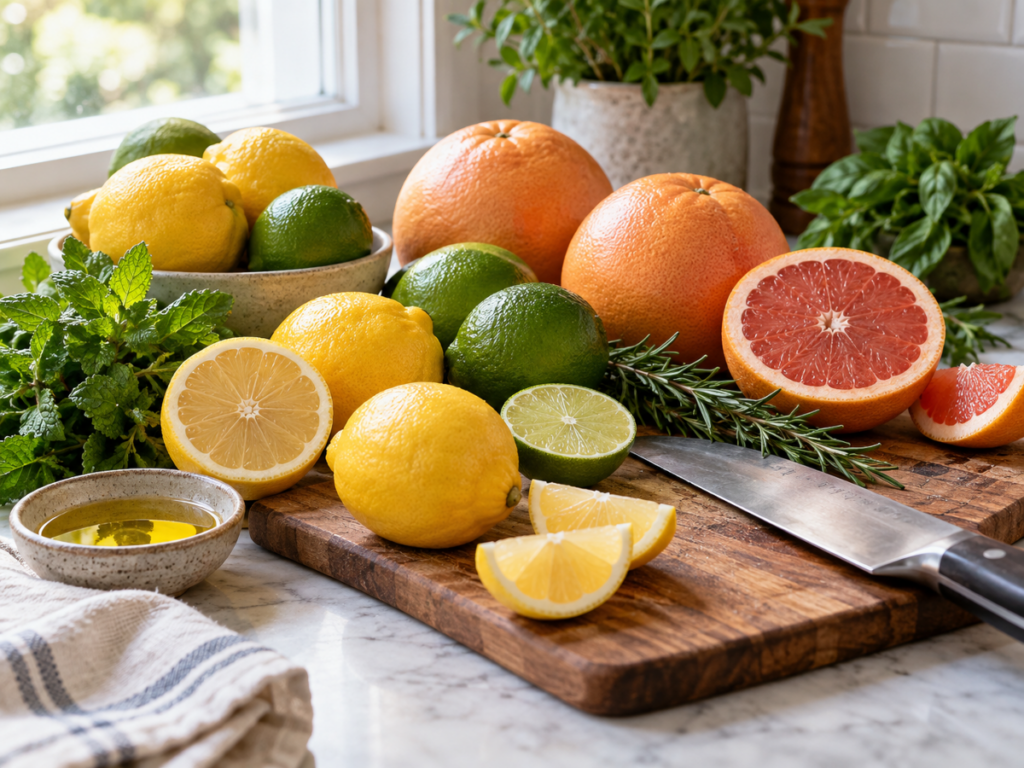
Citrus can occupy an awkward place in a low-lectin kitchen. Lemons and limes are often used to brighten fish, vegetables, dressings, marinades, and sauces, while grapefruit may appear at breakfast or as part of a fruit bowl. Yet the sharp taste of citrus can easily be interpreted as a sign that something about the fruit is harsh or potentially irritating, especially by someone who is already paying close attention to digestion and food tolerance.
The better way to evaluate citrus is to separate two very different issues: lectins and acidity. These are sometimes blended together in dietary discussions, but they are not the same thing. For most people following a low-lectin approach, lemons, limes, and grapefruit raise more practical questions about acid exposure, digestive tolerance, portion size, and medication interactions than they do about lectins.
Citrus Is Not a Major Lectin Target
Lectins are carbohydrate-binding proteins found throughout nature, including in many plants. Their presence alone does not tell us whether a food will cause digestive symptoms, and the amount, type, preparation method, and individual response all matter. Research has found lectin-like activity across a wide variety of foods, including some fruits, but the nutritional consequences of ordinary exposure are far less clear than the simple statement that a food “contains lectins” might suggest.
Citrus fruits are not generally among the foods most associated with high dietary lectin exposure in either food science research or practical low-lectin eating plans. There is also no widely accepted food database that assigns reliable lectin values to everyday servings of lemon, lime, or grapefruit in the way nutrient databases provide values for protein, carbohydrate, or vitamin C. That limitation matters because precise claims about a citrus fruit being “lectin-free” or having a specific lectin level are difficult to support.
For someone eating low-lectin, this means citrus usually does not need to be treated in the same category as improperly cooked beans or certain other foods that receive far more attention in the lectin literature. A person can still react poorly to citrus, but acidity, reflux, oral irritation, food allergy, or another individual factor may be a more plausible explanation than lectin content.
Acidity Is the More Obvious Difference
The characteristic tartness of citrus comes largely from organic acids, especially citric acid. Research on citrus chemistry indicates that citric acid accounts for the great majority of titratable acid in typical citrus juice, although the exact amount varies by species, cultivar, maturity, growing conditions, and processing.
Lemons and limes sit toward the more acidic end of the citrus family. One laboratory analysis measured about 48 grams of citric acid per liter in fresh lemon juice and about 46 grams per liter in fresh lime juice, compared with about 25 grams per liter in the grapefruit juice tested. Those figures should not be treated as fixed values for every fruit or brand, but they illustrate why a squeeze of lemon or lime can have such a strong effect on flavor even when only a tablespoon or two is used.
Acidity also should not be confused with how a food supposedly affects the body’s overall acid-base balance. Your blood pH is tightly regulated by normal physiology. The practical concern with citrus is the direct exposure of tissues such as the mouth and esophagus to acidic food or juice, along with the possibility that acidic foods may worsen symptoms in some people who already experience reflux.
Lemons: Strong Acid, Usually Small Portions
Lemon is one of the easiest citrus fruits to fit into a low-lectin kitchen because it is rarely eaten in large quantities. A tablespoon of juice in a dressing or a squeeze over cooked fish creates a noticeable flavor change without requiring a full glass of juice or a large serving of fruit.
That makes portion size an especially useful distinction. Drinking lemon juice repeatedly throughout the day exposes the mouth and digestive tract to acid quite differently from squeezing a wedge over roasted asparagus at dinner. The ingredient is the same, but the concentration, frequency, and duration of exposure are not.
Lemon also works well as a practical replacement for ingredients that someone may be limiting for other reasons. It can bring brightness to extra-virgin olive oil dressings, seafood, chicken, leafy greens, cauliflower, broccoli, and herb sauces without relying on sugary bottled sauces. Zest can provide even more citrus aroma without adding nearly as much juice to the dish, although the fruit should be washed well before zesting.
Cooking with lemon does not require complicated rules. Adding the juice near the end of cooking usually preserves its fresh flavor, while using it earlier in a braise or sauce produces a softer, less sharply defined citrus note. From a low-lectin standpoint, neither technique is necessary as a lectin-reduction step.
Limes: Similar Acidity With a Different Culinary Role
Lime has much in common with lemon from an acid standpoint. In the analysis comparing fresh juices, lemon and lime contained very similar concentrations of citric acid.
The difference in everyday cooking is often what surrounds the lime. Lime frequently appears in salsas, taco toppings, marinades, chili-based dishes, sweetened beverages, and sauces containing ingredients that a low-lectin eater may already be modifying. If a meal causes symptoms, the lime may receive the blame simply because its flavor is obvious, even though another ingredient may be the real problem.
That makes ingredient isolation useful. Lime juice mixed with avocado, cilantro, olive oil, garlic, or herbs gives you a simpler way to test tolerance than a restaurant sauce containing peppers, sweeteners, seed oils, thickeners, and seasonings. Changing several ingredients at once makes it much harder to learn anything from the result.
Lime can also help prevent a low-lectin menu from becoming overly dependent on salt or heavy sauces. A small amount of acid changes how other flavors are perceived, so grilled seafood, chicken, cauliflower rice, cabbage, or avocado can taste more complete without requiring a long ingredient list.
Grapefruit Deserves Separate Treatment
Grapefruit is different from lemon and lime because people commonly eat it as a substantial serving rather than as a seasoning. A half grapefruit or glass of grapefruit juice delivers much more total citrus than a teaspoon of lemon juice in a salad dressing, even though grapefruit juice may contain less citric acid per unit of volume than lemon or lime juice.
Whole grapefruit also provides pulp and fiber that are largely absent from clarified juice. From a meal-planning perspective, eating the fruit and drinking its juice therefore should not automatically be treated as interchangeable habits.
The larger concern with grapefruit, however, has nothing to do with lectins. Grapefruit can change the absorption or metabolism of certain medications. The U.S. Food and Drug Administration warns that grapefruit or grapefruit juice can interact with some cholesterol-lowering drugs, blood-pressure medicines, transplant medications, anti-anxiety drugs, corticosteroids, heart-rhythm medications, and other drugs. Depending on the medication, grapefruit can cause either too much or too little of the drug to reach the bloodstream.
This is one situation where individual experimentation is not a good substitute for professional guidance. Anyone taking prescription or over-the-counter medication should check the medication information or ask a pharmacist whether grapefruit is compatible with that specific drug. The FDA also notes that Seville oranges, pomelos, and tangelos may cause similar interactions with certain medicines.
Citrus and Digestive Tolerance
Acidic foods are commonly reported as symptom triggers by some people with gastroesophageal reflux disease. The National Institute of Diabetes and Digestive and Kidney Diseases includes citrus fruits among foods commonly linked with worsened GERD symptoms, while also recommending that people identify foods that actually affect their own symptoms rather than assuming every listed food must be removed.
That distinction fits naturally with a personalized low-lectin approach. Someone may tolerate lemon juice incorporated into a meal but experience burning after drinking citrus water on an empty stomach. Another person may tolerate grapefruit perfectly well yet feel discomfort from a heavily spiced dish containing only a small amount of lime.
Timing may also matter. A person prone to nighttime reflux may respond differently to citrus late in the evening than at lunch. NIDDK guidance for people with nighttime GERD symptoms recommends finishing meals at least three hours before lying down or going to bed.
Persistent heartburn, painful swallowing, unexplained weight loss, vomiting, gastrointestinal bleeding, or recurring reflux symptoms deserve medical attention rather than increasingly restrictive food experiments. Dietary tracking can help reveal patterns, but it cannot determine the cause of every digestive symptom.
Acid Exposure Matters to Teeth Too
Citrus tolerance is not limited to the stomach. Frequent contact with acidic foods and beverages can contribute to dental erosion, which involves acid-related loss of tooth mineral. The American Dental Association identifies natural acidic fruit juices among possible dietary contributors, with frequency and duration of acid exposure playing significant roles.
This creates a practical reason to think differently about a squeeze of lemon with dinner and a bottle of lemon water carried around all afternoon. Continuously sipping an acidic drink gives the teeth repeated exposure, even though the beverage contains no added sugar. Holding or swishing acidic drinks in the mouth increases that contact further.
Simple habits can reduce the exposure without banning citrus. The ADA recommends drinking water or rinsing the mouth with water after acidic foods and beverages rather than immediately brushing the teeth, and avoiding habits that keep acidic drinks in prolonged contact with tooth surfaces.
Using Citrus Without Turning It Into a Rulebook
For most low-lectin cooking, citrus works best as a flavor tool rather than something that needs its own complicated protocol. Fresh lemon can finish grilled salmon, lime can brighten avocado and herbs, and grapefruit segments can provide a tart fruit option for someone who tolerates them and has no medication conflict.
Portion and context provide more useful information than labels such as “safe” or “unsafe.” A tablespoon of lemon juice in a four-serving dressing is a very different exposure from several glasses of lemonade. Fresh lime squeezed over food is different from a commercial lime beverage containing sweeteners, flavorings, and other ingredients.
Peels deserve separate thought as well. Citrus zest is highly aromatic and can add substantial flavor in small amounts, which makes it useful in herb blends, dressings, seafood dishes, and baked recipes. Washing the exterior before zesting is sensible because the peel is the part being eaten rather than discarded.
Packaged citrus products also warrant a quick ingredient check. Bottled lemon juice, drink mixes, marinades, citrus-flavored sauces, and grapefruit beverages may contain sweeteners, preservatives, seed oils, gums, or other ingredients that matter more to someone’s personal food plan than the citrus itself.
Let Tolerance Data Do Some of the Work
A food journal can make citrus testing much more informative. Instead of recording only that a meal contained lemon, note the approximate amount, whether it was juice or whole fruit, what else was eaten, whether the meal was consumed on an empty stomach, and what symptoms appeared afterward.
Repeated patterns carry more meaning than a single uncomfortable meal. If a teaspoon of lemon in a dressing repeatedly causes no problem while large glasses of lemon water coincide with burning or reflux, the useful lesson may concern acid dose and exposure rather than the need to eliminate lemon completely.
Citrus is a good example of why a sustainable low-lectin lifestyle benefits from separating food chemistry from personal tolerance. Lemons, limes, and grapefruit do not need to be placed into the same category simply because they belong to the same fruit family, and acidity should not be mistaken for lectin content. The most useful choice may be as simple as using a squeeze of lemon where it improves a meal, eating grapefruit only when medications permit it, and adjusting portions when your own records consistently give you a reason to do so.
