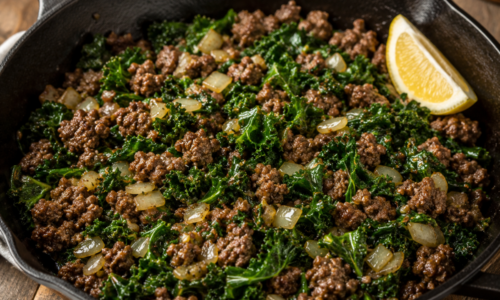
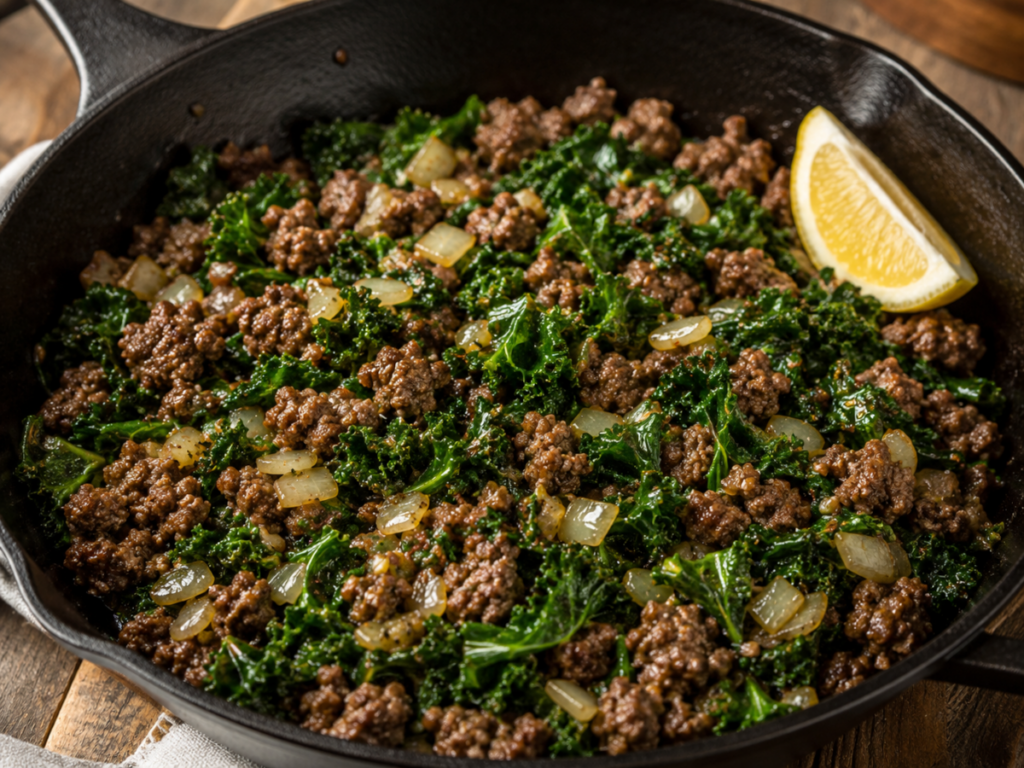
Some meals earn a regular place in the kitchen because they are impressive. Others earn it because they solve a problem. A skillet of grass-fed ground beef and kale belongs firmly in the second category, although a good batch happens to taste pretty satisfying too.
This is the kind of meal that works when dinner needs to happen quickly without turning into a scavenger hunt for specialty ingredients. Ground beef provides the hearty center of the dish, kale adds bulk and texture, and garlic, onion, herbs, and olive oil turn a short ingredient list into something that actually tastes like dinner rather than dietary compliance.
For someone following a low-lectin approach, the combination is especially useful. It avoids many ingredients commonly limited in stricter low-lectin eating patterns, including beans, grains, peanuts, and nightshade-based sauces, while still producing a substantial plate of food. That does not mean beef and kale possess some special ability to remove lectins from the diet or solve digestive problems. It means they can serve as practical building blocks when someone is intentionally reducing certain lectin-containing foods.
Why Ground Beef and Kale Work So Well Together
Ground beef is one of the easier proteins to keep around because there is very little planning involved. There is no marinade to prepare, no roasting schedule to calculate, and no need to worry about slicing against the grain. Once the skillet is hot, dinner is already moving.
Beef also contributes protein along with nutrients including vitamin B12, iron, and zinc. The exact nutritional profile varies with the cut, fat percentage, portion size, and preparation, which is why broad statements about beef should not be treated as guarantees about every package in the grocery case. USDA FoodData Central tracks those differences across numerous beef products rather than treating all ground beef as nutritionally identical.
Kale brings a completely different set of qualities to the skillet. It is a member of the Brassica family, alongside vegetables such as cabbage, broccoli, and Brussels sprouts, and it gives the meal the volume that ground beef alone would lack. The leaves soften considerably during cooking but retain enough structure that the finished dish does not become watery or mushy.
That contrast matters. A good skillet meal needs more than compatible nutrition; it needs ingredients that cook well together. The rendered beef juices coat the kale, the kale absorbs the garlic and herbs, and the slight bitterness of the greens cuts through the richness of the meat.
Where the Low-Lectin Perspective Fits
Lectins are carbohydrate-binding proteins found throughout the plant kingdom, and the amount and activity vary greatly among foods. Raw legumes and certain grains are among the better-known dietary sources, while cooking and other preparation methods can substantially reduce the activity of many lectins. Human research examining the long-term effects of dietary lectins remains limited, which makes sweeping claims about lectins causing chronic illness much stronger than the available evidence supports.
That distinction matters when building meals around a low-lectin framework. The goal does not need to be declaring every ingredient either perfectly safe or completely forbidden. A more workable approach is choosing foods that fit the eating pattern, preparing them properly, and watching how they fit into the individual’s overall diet and tolerance.
This skillet works well from that perspective because it does not depend on beans, corn, wheat, potatoes, tomatoes, or other ingredients that some low-lectin eaters choose to restrict. Kale gives the dish a substantial vegetable component without requiring those foods, while beef provides a straightforward animal protein.
Individual tolerance still matters. Someone who handles cooked tomatoes perfectly well may prefer adding them to a similar meal, while another person may be deliberately testing a period without nightshades. Keeping the base recipe simple makes those personal adjustments much easier.
Grass-Fed Beef Is a Preference, Not a Magic Ingredient
Grass-fed ground beef fits naturally into this recipe, particularly for people who already prioritize grass-fed animal products. Research comparing grass-fed and grain-fed beef has found differences in fatty acid composition, with grass-fed beef often containing somewhat higher concentrations of omega-3 fatty acids and a different omega-6 to omega-3 ratio. Those differences vary according to breed, feeding system, season, cut, and production practices, so the words “grass-fed” should not be treated as shorthand for a guaranteed nutritional outcome.
The label also describes an animal-raising claim rather than telling you everything about the finished package. Current USDA guidance requires producers using animal-raising claims such as “grass fed” on inspected meat products to support those claims with appropriate documentation. Fat percentage, farming practices, certification, price, and personal preference are still separate considerations.
For this skillet, an 85/15 or similarly moderate-fat ground beef tends to work especially well because the beef stays moist and provides enough fat to help cook and flavor the vegetables. Very lean beef is completely workable, but a little additional olive oil may be helpful.
If grass-fed beef is difficult to find or substantially more expensive, the recipe does not fall apart without it. Regular ground beef can be prepared exactly the same way. Long-term eating habits are easier to maintain when grocery decisions remain financially realistic rather than turning every ingredient into a purity test.
Grass-Fed Ground Beef & Kale Skillet
Servings: 4
Prep time: 10 minutes
Cook time: 20 minutes
Total time: About 30 minutes
Ingredients
- 1 pound grass-fed ground beef, preferably around 85% lean
- 1 large bunch kale, about 6 to 8 cups chopped
- 1 small yellow onion, diced
- 3 cloves garlic, minced
- 1 tablespoon extra-virgin olive oil, if needed
- 1 teaspoon dried oregano
- 1/2 teaspoon dried thyme
- 1/2 teaspoon sea salt, plus more to taste
- 1/4 teaspoon freshly ground black pepper
- 2 tablespoons water or unsalted broth, if needed
- 1 to 2 teaspoons fresh lemon juice, optional
Directions
Preparing the Kale
- Remove the thick center stems before chopping the kale. The thinner sections of stem near the leaves are usually tender enough to cook, but the large central stalks can remain chewy long after the leaves have softened.
- Wash the leaves thoroughly and let some water remain clinging to them. That small amount of moisture will help create steam once the kale reaches the skillet, making it easier to soften the leaves without adding much extra liquid.
Cooking the Skillet
- Brown the beef. Heat a large skillet over medium to medium-high heat and add the ground beef. Break it into bite-sized pieces with a wooden spoon or spatula and cook until browned, stirring occasionally so several surfaces make contact with the pan.
- Check the beef for safe doneness. Ground beef should reach an internal temperature of 160°F, measured with a food thermometer. USDA food-safety guidance recommends this temperature because color alone does not reliably indicate whether ground beef has reached a safe temperature.
- Manage the rendered fat. If the skillet contains an excessive amount of fat, carefully spoon some out, leaving enough behind to cook the vegetables. If the beef is very lean and the pan looks dry, add the tablespoon of olive oil.
- Add the aromatics. Push the beef toward the edges of the skillet and add the diced onion to the center. Cook for about 3 minutes, then add the garlic, oregano, thyme, salt, and black pepper and cook for another 30 to 60 seconds.
- Add the kale gradually. Place several handfuls of kale into the skillet and stir until the leaves begin to wilt. Continue adding kale in batches until all of it fits comfortably in the pan.
- Steam until tender. If the skillet looks dry, add 2 tablespoons of water or unsalted broth and cover for 2 to 3 minutes. Remove the lid, stir thoroughly, and continue cooking until the kale reaches the tenderness you prefer.
- Finish and adjust. Taste before adding additional salt because the beef and reduced cooking juices may already provide enough seasoning. A teaspoon or two of lemon juice added after the skillet comes off the heat can brighten the flavors without turning the dish into something noticeably citrusy.
Avoiding the Two Common Skillet Problems
The first problem with meals like this is overcooked beef. Ground beef does not improve by sitting in the pan for another fifteen minutes while everything else catches up, particularly when using a lean package. Browning it first and adding the kale soon afterward keeps the cooking window short.
The second problem is tough kale. Thick stems and large pieces can leave the finished meal feeling more like beef mixed with shrubbery than dinner. Removing the central stems, chopping the leaves into manageable pieces, and briefly trapping steam beneath the lid makes a noticeable difference.
There is also no prize for keeping the kale barely cooked if that makes it unpleasant for you to eat. Raw and lightly cooked greens have their place, but this recipe benefits from allowing the kale to become genuinely tender. Cooking changes texture and flavor, often making a large serving of greens much easier to incorporate into an ordinary meal.
Easy Ways to Change the Flavor Without Changing the Basic Meal
The oregano and thyme version is intentionally mild because it works well as a starting point. Rosemary can replace the thyme for a more savory flavor, while chopped parsley added at the end gives the skillet a fresher finish.
Mushrooms are another useful addition for people who tolerate them. Slice them and cook them with the onion before adding the garlic. They release moisture as they cook, so let that liquid reduce before the kale goes into the pan or the skillet can become more steamed than browned.
For additional richness, sliced avocado can be added after cooking. A spoonful of extra-virgin olive oil drizzled over the finished portion works too, particularly if very lean beef was used.
Cauliflower rice makes a practical companion when a larger meal is needed. It can be served underneath the skillet mixture, allowing the beef juices and seasonings to flavor the cauliflower without adding another sauce.
Using the Recipe for Meal Prep
This skillet also handles refrigeration better than many quick vegetable dishes. Kale is sturdy enough that it does not immediately collapse into an indistinguishable mass after reheating, and ground beef remains easy to portion into containers.
For meal prep, divide the finished skillet into individual servings and refrigerate them promptly in shallow containers. USDA guidance recommends refrigerating cooked leftovers within two hours and generally using refrigerated leftovers within three to four days. If four identical lunches sound monotonous, keep the base mixture plain and change the additions when serving.
One portion might get avocado and lemon. Another can be served over cauliflower rice, while a third can be reheated alongside roasted broccoli or cabbage. The same thirty-minute skillet can become several slightly different meals without requiring another full cooking session, which is often what makes a structured way of eating much easier to maintain during a busy week.