

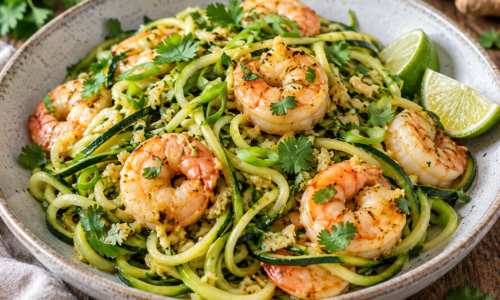
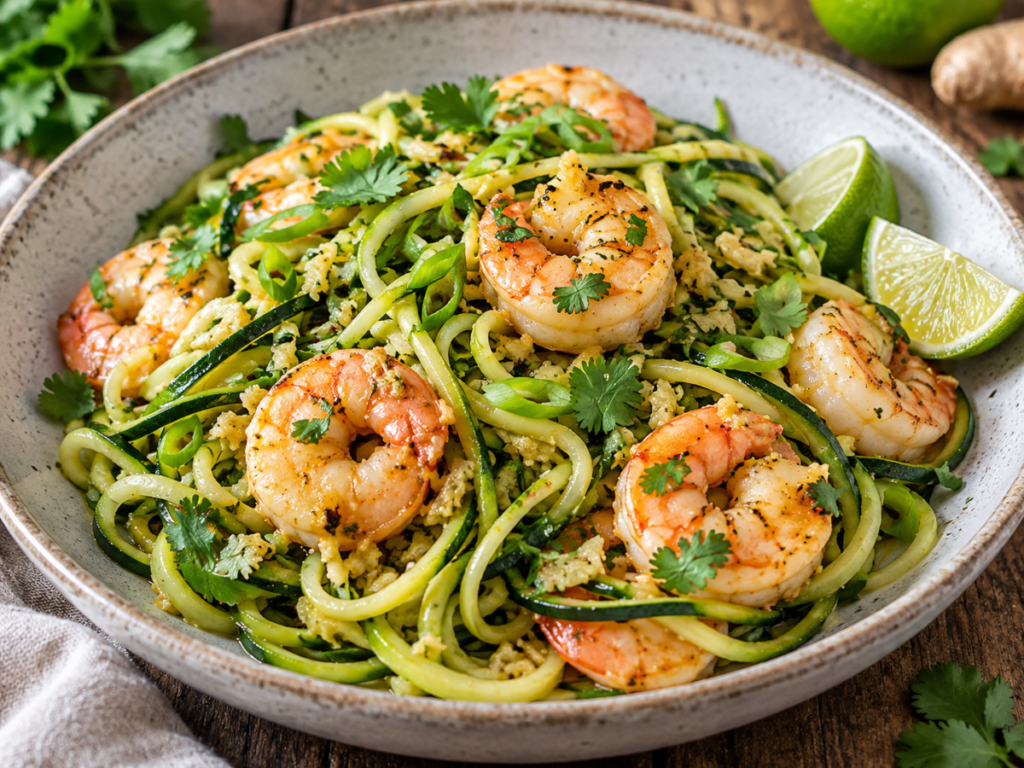
There is something satisfying about a meal that comes together in one pan, fills the kitchen with the aroma of garlic and fresh ginger, and delivers a generous plate of food without leaving you feeling overly full. Wild shrimp and zucchini noodle stir-fry fits that description beautifully. The shrimp provide a tender, protein-rich centerpiece, while spiralized zucchini offers a fresh alternative to conventional noodles.
For anyone following a low-lectin lifestyle, familiar stir-fry dishes can present a few challenges. Traditional recipes often rely on wheat noodles, soy sauce, soybean oil, and sauces containing ingredients that some lectin-conscious eaters prefer to limit. Fortunately, the flavors that make stir-fry appealing do not depend on those ingredients.
This recipe uses wild-caught shrimp, fresh zucchini, garlic, ginger, coconut aminos, and avocado oil to create a light but satisfying dish. The ingredients are straightforward, the cooking process is quick, and the finished meal offers enough flexibility to accommodate different preferences and food sensitivities.
Why Wild Shrimp Works Well in a Low-Lectin Kitchen
Shrimp is a convenient protein choice for meals built around a low-lectin approach. Unlike legumes and grains that contain certain plant lectins, shrimp does not introduce those same plant-derived compounds into a meal. It also provides high-quality protein, vitamin B12, selenium, and other nutrients that contribute to a balanced diet.
Wild-caught shrimp is appealing to people who prefer seafood harvested from natural environments. Depending on the species and where it was caught, wild shrimp may differ from farm-raised varieties in flavor, texture, and nutritional composition. However, wild-caught seafood is not automatically more nutritious or safer than farm-raised seafood, and the distinction does not establish any special advantage concerning lectin exposure.
Quality and handling are more useful considerations when selecting shrimp for this dish. Look for shrimp with a mild smell, firm flesh, and no obvious signs of deterioration. Frozen wild shrimp can be an excellent option, particularly when it has been processed and frozen promptly after harvesting.
Shrimp cooks quickly, which makes it particularly convenient for weeknight meals. Its naturally mild, slightly sweet flavor works with citrus, garlic, ginger, and herbs without requiring a heavy sauce.
Zucchini Noodles Offer a Different Approach to Stir-Fry
Zucchini noodles, often called zoodles, have become a popular alternative to traditional pasta and noodles. Their appeal extends beyond any particular dietary approach because they provide a convenient way to add vegetables to meals while changing the carbohydrate content and texture of the dish.
Zucchini has a mild flavor that works especially well with shrimp. It absorbs some of the surrounding seasonings while retaining a fresh taste that helps balance the richness of the cooking oil and seafood.
For individuals following stricter versions of a low-lectin lifestyle, peeling and deseeding zucchini may fit their preferred preparation practices. Removing the skin and central seed area is an optional personal dietary strategy, however, rather than a scientifically established requirement for making zucchini safe to eat. Many people who follow a less restrictive approach enjoy zucchini with its skin intact.
The biggest challenge with zucchini noodles is moisture. Zucchini contains considerable water, and excessive cooking can turn a promising stir-fry into a bowl of soft vegetables swimming in liquid. A short cooking time and careful preparation make an enormous difference.
Unlike wheat noodles, zucchini noodles do not need boiling before they enter the pan. They can be lightly sautéed for just a few minutes, making them particularly convenient when the rest of the meal is already nearly finished.
The Ingredients That Give This Stir-Fry Its Flavor
Asian-inspired stir-fry recipes frequently rely on soy sauce for saltiness and a deep savory flavor. Coconut aminos provides a useful soy-free alternative for people who prefer to avoid traditional soy products. Made from coconut-derived ingredients, it generally has a milder, slightly sweeter flavor than conventional soy sauce.
Coconut aminos is not an exact nutritional replacement for soy sauce, and sodium and sugar contents vary among brands. Choosing a product with a short ingredient list and adjusting the quantity to taste helps maintain control over the finished dish.
Fresh ginger contributes a warm, mildly spicy flavor that complements shrimp without overwhelming its natural sweetness. Garlic provides another layer of savory character, while lime juice adds acidity that brightens the other ingredients.
Avocado oil works particularly well for this preparation because refined avocado oil can tolerate the relatively high temperatures associated with stir-frying. Extra virgin olive oil can also be used at a moderate cooking temperature, although its flavor will be more noticeable.
These ingredients create a sauce that lightly coats the shrimp and zucchini without overwhelming the vegetables. The goal is a fresh, savory dish with enough moisture to bring the flavors together while preserving the texture of the noodles.
This recipe produces four moderate servings and works well as either lunch or dinner. A large skillet or wok is all that is needed, and most of the preparation can be completed before cooking begins.
Wild Shrimp & Zucchini Noodle Stir-Fry: A Fresh, Flavorful Low-Lectin Meal
Ingredients
- - 1¼ pounds wild-caught shrimp, peeled and deveined
- - 4 medium zucchini, spiralized into noodles
- - 1½ tablespoons avocado oil, divided
- - 3 cloves garlic, minced
- - 1 tablespoon fresh ginger, finely grated
- - 2 green onions, thinly sliced (optional)
- - Sea salt and freshly ground black pepper, to taste
- - 3 tablespoons coconut aminos
- - 1 tablespoon fresh lime juice
- - 1 teaspoon freshly grated ginger
- - 1 teaspoon extra virgin olive oil
- - 1 tablespoon water, if needed to thin the sauce
- - Fresh cilantro, chopped
- - Thinly sliced green onion tops
- - Additional lime wedges
Instructions
- Prepare the zucchini noodles. Wash the zucchini thoroughly and trim both ends. Use a spiralizer to create long noodles, or use a julienne peeler if a spiralizer is unavailable. For a stricter preparation approach, peel the zucchini first and stop spiralizing when you reach the central seed area.
- Remove excess moisture. Place the zucchini noodles on a clean kitchen towel or several layers of paper towels. Gently pat them dry to remove surface moisture, and leave them uncovered while preparing the remaining ingredients. Avoid squeezing them aggressively because this can damage their structure.
- Prepare the shrimp. If using frozen shrimp, thaw them safely in the refrigerator before cooking. Pat the shrimp dry with paper towels and season lightly with sea salt and black pepper. Removing surface moisture helps them cook more evenly and reduces unnecessary liquid in the skillet.
- Mix the sauce. In a small bowl, combine the coconut aminos, lime juice, grated ginger, and olive oil. Stir until thoroughly mixed, adding a small amount of water if a thinner consistency is preferred. Set the sauce aside so it is ready when the shrimp finishes cooking.
- Cook the shrimp. Heat 1 tablespoon of avocado oil in a large skillet or wok over medium-high heat. Add the shrimp in a single layer and cook for approximately 2 to 3 minutes per side, depending on their size, until they are fully cooked, pearly, and opaque. Transfer them to a clean plate rather than leaving them in the hot skillet.
- Sauté the aromatics. Reduce the heat to medium and add the remaining ½ tablespoon of avocado oil. Stir in the minced garlic, grated ginger, and white portions of the green onions if using. Cook for approximately 30 seconds, stirring continuously so the garlic becomes fragrant without burning.
- Cook the zucchini noodles. Add the zucchini noodles to the skillet and toss gently with the garlic and ginger. Cook for approximately 1 to 2 minutes, just long enough to warm the zucchini while preserving a slightly firm texture. If excess liquid accumulates, carefully drain it before adding the sauce.
- Combine the ingredients. Return the cooked shrimp to the skillet and pour in the prepared sauce. Toss gently for approximately 30 to 60 seconds, allowing everything to become evenly coated and heated through. Avoid prolonged cooking because the zucchini can soften quickly and the shrimp may become rubbery.
- Garnish and serve. Remove the skillet from the heat and divide the stir-fry among four plates or shallow bowls. Finish with fresh cilantro, green onion tops, or an extra squeeze of lime juice according to personal preference.
For food safety, the FDA recommends cooking seafood to an internal temperature of 145°F, with fully cooked shrimp appearing firm, pearly, and opaque. Keep raw shrimp separate from ready-to-eat vegetables and use clean utensils when transferring cooked seafood.
Getting the Texture Right Without Overcooking
The difference between a successful zucchini noodle stir-fry and a watery one often comes down to a few minutes of cooking. Zucchini softens rapidly when exposed to heat, especially after it has been sliced into thin strands.
A common mistake is treating zucchini noodles exactly like conventional pasta. Wheat noodles are designed to withstand boiling and additional cooking in a sauce, but zucchini noodles require much gentler handling. They should enter the skillet toward the end of the cooking process and spend only enough time over the heat to become warm and lightly tender.
Pan size also matters. A crowded skillet traps steam, which encourages zucchini to release additional moisture. Using a large skillet and working in batches when necessary allows the ingredients to cook more evenly.
Shrimp requires similar attention. Overcooked shrimp becomes firm and rubbery, losing the tender texture that makes it appealing. Cooking the shrimp separately before returning it to the pan gives better control over its texture while preventing the zucchini from spending too much time over the heat.
Making the Recipe Fit Different Low-Lectin Preferences
One advantage of this recipe is its flexibility. The basic combination of shrimp, zucchini, garlic, ginger, and coconut aminos creates a reliable foundation that can accommodate several adjustments.
For people who prefer to remove zucchini skins and seeds, a julienne peeler can produce attractive vegetable noodles from the outer flesh. The central seed portion can be set aside for another use if appropriate for the individual’s preferences.
Someone who finds raw or lightly cooked vegetables uncomfortable may prefer a softer zucchini texture. Cooking the noodles a little longer can make them more tender, although additional moisture may need to be drained.
Other vegetables can also be introduced without substantially changing the character of the dish. Thinly sliced mushrooms, chopped bok choy, or small broccoli florets can add variety, provided they are prepared according to personal dietary preferences. Firmer vegetables should be cooked before the zucchini enters the pan so everything finishes at approximately the same time.
For a richer flavor, a small amount of ghee can replace part of the cooking oil. Ghee contributes a buttery taste and may appeal to individuals who choose clarified dairy fats, although it is not appropriate for everyone with dairy allergies or sensitivities.
The sauce can also be adjusted. Additional lime juice creates a sharper, brighter flavor, while a little more coconut aminos increases sweetness and savory depth. Fresh herbs offer another way to vary the finished meal without relying on complicated sauces.
What the Science Says About Lectins and Food Preparation
Lectins are proteins that can bind to particular carbohydrate structures. They occur in many foods, including certain legumes, grains, and vegetables, but their concentrations and biological activity differ considerably.
Research has established that some active lectins, particularly those found in raw or inadequately cooked kidney beans, can cause digestive illness. Proper preparation methods, including sufficient boiling, can substantially reduce the activity of many food lectins. Research on the broader long-term health effects of ordinary dietary lectin exposure in humans remains limited.
This distinction matters because low-lectin eating strategies often include ingredient substitutions and preparation preferences that extend beyond what clinical research has specifically demonstrated. Replacing wheat noodles with zucchini, for example, changes the composition of a meal, but it should not automatically be interpreted as evidence that the replacement will reduce inflammation or improve digestion for everyone.
Individual food tolerance involves numerous factors, including portion size, dietary fiber, fat content, food allergies, and existing digestive conditions. Someone who feels better after changing a particular ingredient may find that experience useful when planning future meals, even when the precise reason for the improvement is unclear.
For this stir-fry, the practical benefits are straightforward. It offers a way to prepare a soy-free, wheat-free meal using fresh vegetables, seafood, and a small collection of familiar ingredients.
Why This Meal Works for Busy Weeknights
Low-lectin meal planning becomes easier when the same ingredients can serve several purposes throughout the week. Shrimp is especially useful because it can be purchased frozen, portioned as needed, and incorporated into meals without lengthy preparation.
Keeping a bag of frozen wild shrimp available makes it possible to assemble a quick dinner without planning several days ahead. Proper thawing remains necessary, and seafood should never be left sitting at room temperature to defrost. Refrigerator thawing is a convenient method, while sealed packaging placed in cold water offers a faster alternative when the shrimp will be cooked immediately afterward.
Zucchini is similarly adaptable. It can be spiralized into noodles, sliced for roasting, added to soups, or sautéed alongside other vegetables. Purchasing several zucchini at once can provide ingredients for multiple meals, reducing the need for specialized products.
Preparing the sauce ahead of time can save additional effort. A small covered container of mixed coconut aminos, lime juice, and ginger can be refrigerated until needed, allowing the cook to focus on preparing the vegetables and seafood.
There is also very little cleanup involved. The entire meal can be prepared with one large skillet, a cutting board, a mixing bowl, and a few utensils.
Serving Ideas for a More Satisfying Meal
Although this stir-fry works well on its own, its light character makes it easy to pair with other foods. A small side of roasted cauliflower, sautéed mushrooms, or steamed asparagus can add volume and provide different textures.
For individuals who include certain grains or starches in their version of a low-lectin diet, a modest serving of properly prepared white rice or another tolerated starch may help make the meal more substantial. The appropriate choice depends on individual tolerance and dietary goals rather than a universal requirement.
Fresh avocado is another possible accompaniment. Its creamy texture contrasts with the firm shrimp and lightly cooked zucchini, and it contributes additional dietary fat. A few slices served alongside the stir-fry can make the plate feel more satisfying without changing the cooking process.
Portion sizes can also be adjusted according to appetite. Someone seeking a larger protein serving can increase the shrimp quantity, while another person may prefer extra vegetables or a side dish.
Storing Leftovers Without Losing Quality
Shrimp and zucchini noodles have different storage characteristics, which becomes noticeable when leftovers are reheated. Cooked shrimp generally keeps its flavor reasonably well under proper refrigeration, but zucchini noodles continue releasing moisture as they sit.
For the best texture, the stir-fry is ideally eaten soon after preparation. If leftovers are expected, consider storing the cooked shrimp separately and preparing fresh zucchini noodles when the meal is reheated.
Cooked leftovers should be placed in shallow, covered containers and refrigerated promptly at 40°F or below. Reheat leftovers thoroughly to 165°F, avoiding prolonged heating beyond what is necessary for food safety.
Another practical approach is to cook only the shrimp needed for the current meal while keeping the remaining ingredients ready for another day. The sauce can be divided into smaller portions, and whole zucchini can remain refrigerated until it is time to prepare fresh noodles.
This approach takes advantage of what makes the recipe convenient in the first place. With the ingredients already available and the preparation steps familiar, a fresh serving of wild shrimp and zucchini noodle stir-fry can be assembled quickly, with tender shrimp, lightly crisp zucchini, and a bright garlic-ginger sauce.
