Travel has a habit of exposing every weak spot in a food routine. A delayed flight becomes a bag of chips. A long drive turns into a fast-food stop. A hotel without a microwave leaves yesterday’s carefully packed dinner sitting untouched in the refrigerator. For someone eating low-lectin, the problem is rarely a lack of discipline. The problem is poor meal design.
Most homemade meals are built around the assumption that a stove, microwave, plate, and twenty quiet minutes will be available. Travel removes those comforts. A useful travel meal has to taste good cold, survive transport, provide enough protein to feel like real food, and remain safe until it is eaten. That sounds restrictive. It is not. Once cold meals are treated as their own category rather than reheated meals that never reached a microwave, the choices become far more appealing.
Cold Food Should Be Designed to Taste Cold
Some foods simply do not age well in a lunch container. Cold roasted chicken can be excellent. Cold steamed fish may be unpleasant. A chilled vegetable salad can become more flavorful after several hours, while a reheatable casserole may turn stiff and greasy. Travel-friendly meals work best when temperature is considered from the beginning.
Proteins should be tender enough to eat cold without becoming chewy. Vegetables should hold their texture after refrigeration. Dressings should add moisture without soaking everything into mush. Strong flavors such as lemon, herbs, garlic, olive oil, mustard, vinegar, and approved spices often taste better cold than delicate sauces do.
A chicken breast cooked until dry will not improve in a cooler. Chicken thighs, shredded chicken, sliced turkey, hard-boiled eggs, and firm cheeses usually perform better. Leftover steak can also work when sliced thinly across the grain and paired with a bright dressing. The meal needs contrast. Crunchy greens, creamy avocado, salty cheese, tender protein, and an acidic dressing can make a cold meal feel complete rather than compromised.
Start With Protein, Not Snack Foods
A travel bag can fill quickly with low-lectin snacks while still failing to contain a meal. A handful of walnuts, a cheese stick, and a square of dark chocolate may help during a delay, but that combination may not carry someone through a long afternoon. Protein gives the meal structure.
Good no-reheat protein choices include chilled roasted chicken, shredded pressure-cooked chicken, sliced turkey, hard-boiled eggs, tuna, salmon, sardines, leftover steak, compliant meatballs, goat cheese, sheep cheese, and A2 dairy products for those who tolerate them.
The right portion depends on appetite, body size, activity, and personal goals. The practical test is simpler. The container should look like lunch, not an assortment of emergency bites.
A common mistake is packing a large salad with a few decorative strips of chicken. That meal may look healthy, but it can leave someone hunting for airport food two hours later. A more reliable approach is to give the protein a visible share of the container, then build vegetables and healthy fats around it.
The Cold Chicken Box
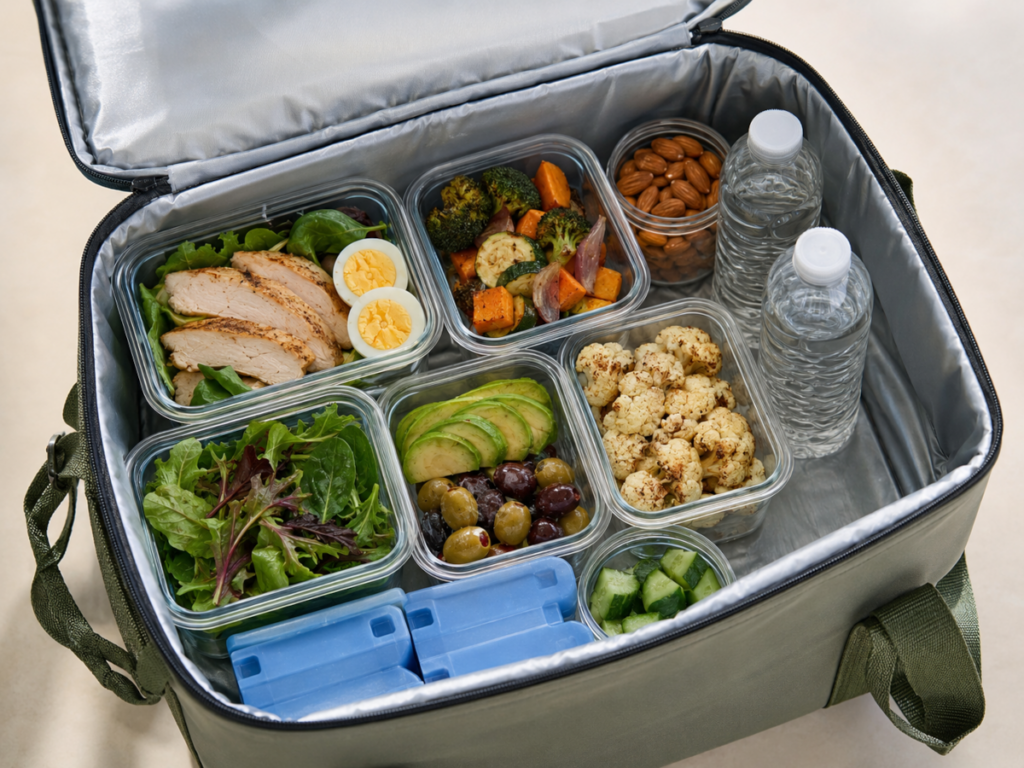
A well-built chicken box is one of the easiest travel meals to repeat without getting bored. Start with roasted or pressure-cooked chicken. Thigh meat tends to stay moist, though sliced breast meat works when it has not been overcooked. Add vegetables that remain pleasant when chilled, such as asparagus, broccoli, cauliflower, mushrooms, carrots, cabbage, celery, or leafy greens.
A small container of dressing keeps the vegetables fresh until mealtime. Olive oil with lemon juice and herbs works well. An avocado oil mayonnaise dressing can make the meal richer. Pesto made without questionable fillers can turn plain chicken into something worth looking forward to.
Finish the box with olives, avocado, goat cheese, walnuts, macadamia nuts, or pecans. These additions provide flavor and staying power without turning lunch into a heavy restaurant meal. The ingredients can also be wrapped in large lettuce leaves at mealtime. Pack the leaves separately so they remain crisp.
Egg-Based Meals Travel Better Than Expected
Hard-boiled eggs are not glamorous, but they solve several travel problems at once. They are portioned, filling, easy to prepare, and comfortable to eat cold. A basic egg box can include two or three peeled eggs, sliced cucumbers if they fit the individual’s plan, celery, avocado, olives, and a small serving of cheese. For a stricter low-lectin approach, replace seeded vegetables with cooked asparagus, broccoli florets, cabbage slaw, or leafy greens.
Egg salad is another strong option. Make it with avocado oil mayonnaise, mustard, celery, herbs, salt, and pepper. It can be served in lettuce cups, spooned over greens, or eaten directly from a sealed container.
Packing peeled eggs saves trouble on the road, but it also increases the need for clean preparation and reliable refrigeration. Keep them in a tightly sealed container so the smell does not announce lunch to everyone in the car, train, or terminal.
Low-Lectin Salad Does Not Mean Lettuce Alone
Travel salads fail when they are treated as bowls of leaves. Greens provide freshness, but they are not enough by themselves. A satisfying cold salad needs protein, cooked vegetables, healthy fat, texture, and seasoning. One dependable version combines shredded chicken, chopped cabbage, cooked broccoli, avocado, olives, herbs, and a lemon vinaigrette. Another uses sliced steak, arugula, mushrooms, goat cheese, and an olive oil dressing.
Cooked vegetables often make better travel salads than raw ones. Roasted cauliflower, asparagus, mushrooms, carrots, and Brussels sprouts can be chilled and dressed without losing their identity. They also make the salad feel more substantial.
Keep wet ingredients away from delicate greens until eating. A divided container helps, but separate small jars work just as well. Put the dressing at the bottom only when the salad ingredients are sturdy enough to sit in it.
Tuna, Salmon, and Sardine Meals
Shelf-stable fish can rescue a travel day, though the setting matters. Opening sardines in a crowded airplane cabin will not earn many friends. Tuna and salmon pouches are easier to pack than cans and usually do not require draining. Ingredient labels still deserve attention. Some flavored products contain sugar, seed oils, soy, starches, or seasoning blends that do not fit a person’s plan.
A fish meal can be assembled with a plain tuna or salmon pouch, an avocado, olive oil packets, compliant crackers, lettuce leaves, or a container of cooked vegetables. A small fork, napkin, and sealable waste bag make the meal much easier to handle.
Prepared tuna salad also travels well in a properly chilled cooler. Mix tuna with avocado oil mayonnaise, celery, herbs, mustard, and chopped pickles if tolerated. Pack it beside lettuce cups or cabbage leaves rather than bread. Sardines provide protein and beneficial fats in a compact package. They are best saved for a roadside picnic, hotel room, or outdoor stop where the aroma is less intrusive.
Meatballs Without the Pasta
Cold meatballs may sound unusual until they are prepared for that purpose. Small, well-seasoned meatballs can be eaten with a fork, packed into lettuce wraps, or paired with vegetables and dipping sauce. Use beef, turkey, chicken, or lamb. Avoid breadcrumbs and grain-based fillers. Eggs, grated compliant cheese, herbs, and finely chopped mushrooms can help with moisture and structure.
A yogurt-herb dip made with tolerated A2, goat, or sheep dairy can accompany lamb meatballs. Chicken meatballs work well with avocado oil mayonnaise mixed with lemon and herbs. Beef meatballs can be paired with olives, roasted mushrooms, and a simple vinaigrette.
Cook them thoroughly, cool them promptly, and refrigerate them before packing. Warm food placed directly into a closed travel container can raise the temperature inside and create excess condensation.
Lettuce Wraps That Do Not Collapse
Lettuce wraps are useful only when the leaves and filling are packed separately. Assemble them too early and they become damp, torn bundles before lunch. Choose broad, sturdy leaves such as romaine, butter lettuce, or green leaf lettuce. Wash and dry them completely. Even a small amount of trapped water can soften the leaves during travel.
Pack fillings in a separate container. Shredded chicken with avocado oil mayonnaise, sliced turkey with goat cheese, egg salad, salmon salad, or chopped steak all work. Add avocado shortly before eating when possible, since cut avocado darkens quickly.
Cabbage leaves are sturdier than lettuce and can handle heavier fillings. Brief blanching can soften them enough to fold while preserving some crunch. Once cooled and dried, they make durable wraps for road trips and packed lunches.
A Better Kind of Snack Plate
A snack plate becomes a meal when it includes enough food and enough variety. Start with a serious protein portion, such as turkey slices, chicken, eggs, tuna, or cheese. Add one or two vegetables, a healthy fat, and a small item that makes the plate enjoyable. That might be berries, a piece of approved dark chocolate, or a few nuts.
One practical combination includes sliced turkey, goat cheese, celery, olives, avocado, and walnuts. Another uses eggs, chilled asparagus, sheep cheese, berries, and macadamia nuts. A third might contain cold chicken, cabbage slaw, avocado dressing, and a few compliant crackers.
This format is especially useful for people who dislike mixed dishes. It also allows food to be eaten gradually during a long travel period without turning into a random stream of snacks.
Food Safety Is Part of Meal Planning
A beautiful chicken salad is useless if it has spent five hours warming in a tote bag. Cold perishable food should be kept at 40°F or below. USDA and FDA guidance also recommends discarding perishable food that has remained at room temperature for more than two hours, or more than one hour when the surrounding temperature is above 90°F. Meat, poultry, seafood, eggs, dairy products, and prepared leftovers all require careful temperature control.
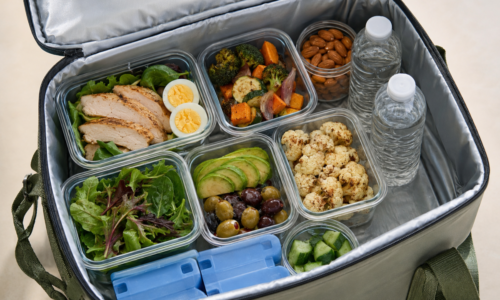
An insulated lunch bag with at least two frozen cold sources is far more reliable than a decorative lunch tote. Place cold packs above and below the food when possible. A frozen bottle of water can serve as an extra cold source and become a drink later.
Open the cooler as little as possible. Store it inside the air-conditioned passenger area rather than a hot trunk. During a hotel stay, confirm that the room refrigerator is actually cold before trusting it with meat, eggs, or dairy. A small refrigerator thermometer removes the guesswork. Food can still feel cool while sitting above the recommended storage temperature.
Preparing Beans and Other Higher-Lectin Foods
Many people following a low-lectin lifestyle avoid beans entirely, while others include selected legumes after thorough preparation. Tolerance differs, and the level of restriction should reflect the individual rather than a universal rule.
Raw or undercooked beans are not appropriate travel foods. Research confirms that insufficiently prepared legumes can retain active lectins, while soaking, boiling, and other forms of processing can reduce lectin activity. Pressure cooking is often chosen in low-lectin households because heat, moisture, and pressure provide a more intensive preparation method.
A pressure-cooked lentil or bean salad may fit the personal plan of someone who has already tested that food successfully. It should not become a travel experiment. Trips are the wrong time to test a questionable ingredient, especially when bathrooms, rest stops, and comfortable recovery space may be limited.
Pack Components Instead of Predicting Every Meal
Rigid meal schedules often fail during travel because delays change hunger and timing. Component packing gives more flexibility. Cook one protein, prepare two vegetables, portion a dressing, and add several small extras. Chicken can become a salad at noon and lettuce wraps later. Eggs can complete breakfast or reinforce a light dinner. Olives, nuts, cheese, avocado, and berries can adjust a meal without rebuilding it.
This method also reduces kitchen work. A tray of roasted vegetables, a batch of chicken, and several hard-boiled eggs can supply multiple travel meals without producing identical containers. Labeling containers helps during longer trips. Mark the contents and preparation date, especially when several meals look similar through frosted lids.
The Emergency Meal That Stays in the Bag
Not every travel meal needs refrigeration. A permanent emergency kit can prevent a delay from turning into a food decision made under pressure. A basic kit might contain plain tuna or salmon pouches, olive oil packets, approved nuts, compliant meat sticks, individually packaged olives, and low-lectin crackers that match the person’s tolerance. Include disposable utensils, napkins, salt packets, hand wipes, and a sealable bag for waste.
Ingredient labels matter more than the marketing on the front. Products described as keto, grain-free, paleo, natural, or plant-based can still contain peanuts, cashews, soy, corn derivatives, gums, seed oils, sugar, or other ingredients a low-lectin eater may be avoiding.
Rotate the emergency food before it expires. Replace anything damaged by heat, punctured packaging, or a broken seal. Keep the kit accessible rather than buried beneath luggage, because emergency food only works when it can be reached before hunger takes over.