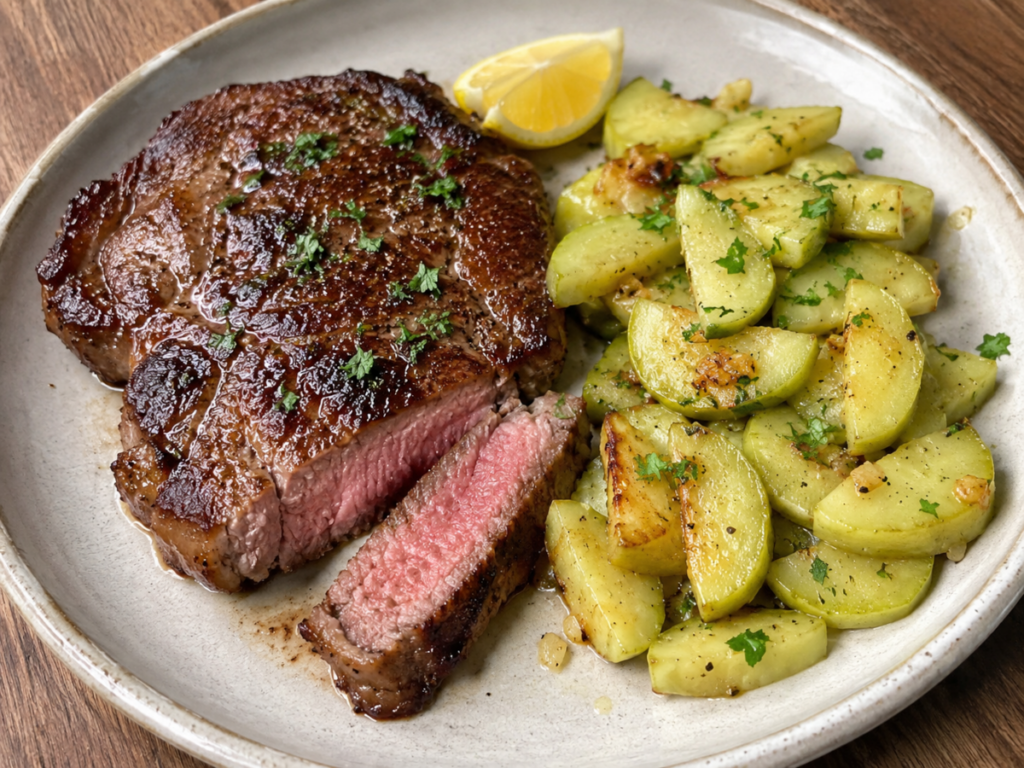
A ribeye and a skillet of zucchini can make a remarkably satisfying low-lectin dinner because the meal is built from simple ingredients and gives you direct control over preparation. The steak brings rich flavor and substantial protein, while the zucchini cooks quickly enough to share the same stovetop without turning dinner into a project. For people who follow a stricter low-lectin approach, peeling and deseeding the zucchini adds an extra preparation step that removes the skin and seed-bearing center, two plant parts some low-lectin plans choose to limit.
There is a useful scientific distinction here. Zucchini, a form of *Cucurbita pepo*, does contain lectin proteins, and researchers have identified lectins in the phloem sap of plants in the squash family. However, current research does not establish that ordinary zucchini flesh is a major dietary lectin source, nor does it quantify a specific percentage of lectin removed by peeling and deseeding. Studies of *Cucurbita pepo* lectins have focused largely on purified plant proteins and phloem exudate rather than on normal servings of cooked zucchini.
That makes peeling and deseeding best understood as a conservative preparation strategy rather than a proven requirement. If you have found that peeled, deseeded squash fits your personal tolerance better, the method is easy and leaves plenty of tender zucchini flesh for the pan. If whole zucchini works well for you, there is no strong evidence that everyone needs to remove the skin and seeds.
Why Ribeye Works Well in a Simple Low-Lectin Meal
Beef itself is not a plant food and does not contain the plant lectins that drive most low-lectin food discussions. A plain ribeye therefore starts with a short ingredient list and requires little more than salt, fat, heat, and enough restraint to keep from overcooking it. The cut also contains enough intramuscular fat to stay flavorful when cooked quickly in a hot skillet.
Grass-fed beef is often chosen in low-lectin households for reasons that go beyond lectins. Research comparing grass-fed and grain-finished beef has found differences in fatty-acid composition, with grass-fed samples often containing more omega-3 fatty acids and a lower omega-6 to omega-3 ratio. The size of that difference varies considerably among farms, finishing systems, cuts, and retail products, so the words “grass-fed” do not guarantee one exact nutritional profile. A recent North American comparison found meaningful differences on average but also wide variation among grass-fed samples.
Those differences are worth knowing, but they do not turn ribeye into a therapeutic food, and choosing grain-finished beef does not make a meal high in lectins. Grass-fed beef is simply an ingredient preference that can fit well with a whole-food cooking style. Taste, budget, availability, animal-raising practices, and how the steak cooks in your own kitchen are all reasonable factors in the decision.
Butter, Ghee, and the Searing Pan
Ribeye needs enough heat to brown its surface, but there is no benefit in smoking the kitchen to get there. A heavy stainless-steel or cast-iron skillet works well because it holds heat when the steak hits the pan. Ghee is especially convenient for searing because much of the water and non-fat milk material has been removed, while butter gives a deeper dairy flavor but needs closer attention at higher temperatures.
One practical method is to begin with ghee, then add a small amount of butter near the end if you want the flavor of browned butter without exposing it to the full searing time. Ghee is typically very low in lactose compared with butter, but residual milk protein can remain depending on how it is produced. Someone with a true milk allergy should therefore treat ghee as a milk-derived ingredient rather than assuming it is allergen-free.
The steak also benefits from a short rest after cooking. Resting gives the temperature time to stabilize and gives you a convenient window for finishing the vegetables. For food safety, the USDA recommends cooking whole cuts of beef to a minimum internal temperature of 145°F, followed by a rest of at least three minutes before carving or eating.
Preparing Zucchini for a Stricter Low-Lectin Approach
The zucchini side is intentionally simple because the preparation itself is part of the meal. Start by peeling the vegetable with a standard vegetable peeler, then cut it lengthwise. A spoon can scrape out the soft seed-bearing center before the firmer flesh is sliced into half-moons or thick strips.
Removing the peel and seed cavity also changes the way zucchini behaves in the skillet. Peeled zucchini becomes more delicate, while taking out the moist center can help the pieces release less water during cooking. This makes it easier to get light browning instead of ending up with a pan of soft vegetables steaming in their own liquid.
Garlic and olive oil are enough to finish the side. Garlic should go in after the zucchini has already begun cooking because finely chopped garlic can brown and turn bitter before the squash is tender. Salt can be added toward the end if you want to limit the amount of moisture drawn from the zucchini during the first few minutes in the pan.
Grass-Fed Beef Ribeye with Sautéed Zucchini
Ingredients
- 2 grass-fed ribeye steaks, about 8 to 10 ounces each and roughly 1 inch thick
- 1 tablespoon ghee or butter, plus a little more if needed
- Fine sea salt, to taste
- Freshly ground black pepper, optional
- 2 medium zucchini
- 1 1/2 tablespoons extra-virgin olive oil
- 2 garlic cloves, finely chopped or thinly sliced
- 1 tablespoon chopped fresh parsley, optional
- Lemon wedge, optional, for serving
Instructions
- Take the ribeyes from the refrigerator while you prepare the zucchini, then pat the steaks thoroughly dry with paper towels. Season both sides with salt and, if you use it, black pepper. A dry surface browns more readily than a wet one, so this small step has a noticeable effect on the finished crust.
- Heat a heavy skillet over medium-high heat until hot, then add the ghee or butter. If you are using regular butter, watch the pan carefully and reduce the heat slightly if the milk solids begin darkening too quickly. Lay the steaks in the pan with space between them and leave them undisturbed long enough to form a well-browned surface.
- Cook the steaks for about 3 to 5 minutes on the first side, depending on thickness and pan temperature, then flip and cook the second side. Use an instant-read thermometer rather than relying only on cooking time because two steaks of the same weight can still cook differently. For USDA food-safety guidance, whole beef steaks should reach at least 145°F and rest for three minutes before serving.
- Transfer the ribeyes to a plate or cutting board and let them rest while the zucchini finishes. Avoid repeatedly cutting into the meat to check the center because an instant-read thermometer gives you better information while leaving the steak intact.
- Peel both zucchini completely, trim the ends, and cut each one lengthwise. Use a spoon to scrape away the soft center containing the visible seeds, then slice the remaining flesh into pieces about 1/4 to 1/2 inch thick. Keeping the pieces fairly uniform helps them finish cooking at about the same time.
- Warm the olive oil in a large skillet over medium to medium-high heat. Add the zucchini in a single layer when possible and cook for 3 to 4 minutes before turning, allowing some pieces to develop light browning. Continue cooking for another 2 to 3 minutes until the zucchini is tender but still holds its shape.
- Add the garlic during the final minute or two and stir gently so it becomes fragrant without scorching. Season with salt after the zucchini is nearly finished, then add parsley if desired. Serve the zucchini beside the rested ribeye, with a lemon wedge if a little acidity sounds good with the richness of the beef.
Getting the Texture Right Without Overcomplicating Dinner
The difference between good sautéed zucchini and watery zucchini usually comes down to pan space and timing. If you double this recipe, cook the vegetables in two batches rather than piling them into one crowded skillet. More exposed surface area allows moisture to escape more quickly, which gives the finished zucchini a firmer bite and a little more browning.
The same restraint helps the ribeye. Moving the steak constantly, pressing it with a spatula, or repeatedly cutting into it all work against the texture you are trying to create. A properly heated skillet and an instant-read thermometer do more for consistency than complicated technique.
If the steak is much thicker than an inch, the stovetop sear can be followed by a brief finish in a moderate oven. If it is thinner, shorten the cooking time and begin checking the internal temperature earlier. Some grass-fed ribeyes are leaner than heavily marbled grain-finished steaks, so paying attention to temperature can help prevent them from cooking farther than intended.
Letting the Meal Fit Your Own Tolerance
Low-lectin eating tends to be more sustainable when preparation choices are tied to actual experience instead of an ever-growing collection of rules. Someone in a strict elimination period may choose peeled and deseeded zucchini every time because it reduces variables and makes meal tracking easier. Someone who has already eaten whole zucchini repeatedly without a problem may decide that removing the skin and seeds provides no noticeable personal benefit.
The same flexibility applies to garlic, dairy fat, portion size, and the richness of ribeye. Ribeye is a fatty cut, and some people simply feel better eating a smaller serving paired with more vegetables. Others tolerate it comfortably but prefer ghee to butter, or use less garlic because large amounts bother their digestion for reasons unrelated to lectins.
A meal log can make those distinctions easier to see. Recording the cut of beef, cooking fat, zucchini preparation, portion size, and how you felt afterward gives you more useful information than labeling the entire dinner as either “good” or “bad.” Over time, those details can help separate a repeatable food pattern from an isolated reaction that may have also been influenced by meal size, eating speed, alcohol, stress, or another food eaten at the same time.
This dinner also adapts easily without losing its basic character. Mushrooms, leafy greens, asparagus, or well-cooked cruciferous vegetables can replace the zucchini when you want a different side, while sirloin or a smaller filet can replace ribeye when you want a leaner cut. Keeping the cooking method familiar while changing one ingredient at a time can make personal food experiments easier to interpret.
The finished plate is straightforward: a deeply browned ribeye, tender zucchini with a little color at the edges, and garlic softened in olive oil rather than burned. The small number of ingredients leaves very little to troubleshoot, which is useful both on a busy evening and during a period of careful food tracking. It is the kind of dinner that can remain simple while still leaving room to adjust the preparation to the foods and portions that work best for the individual eating it.