

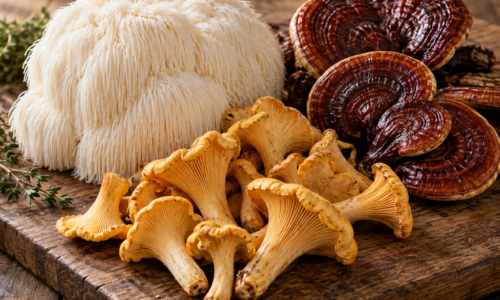
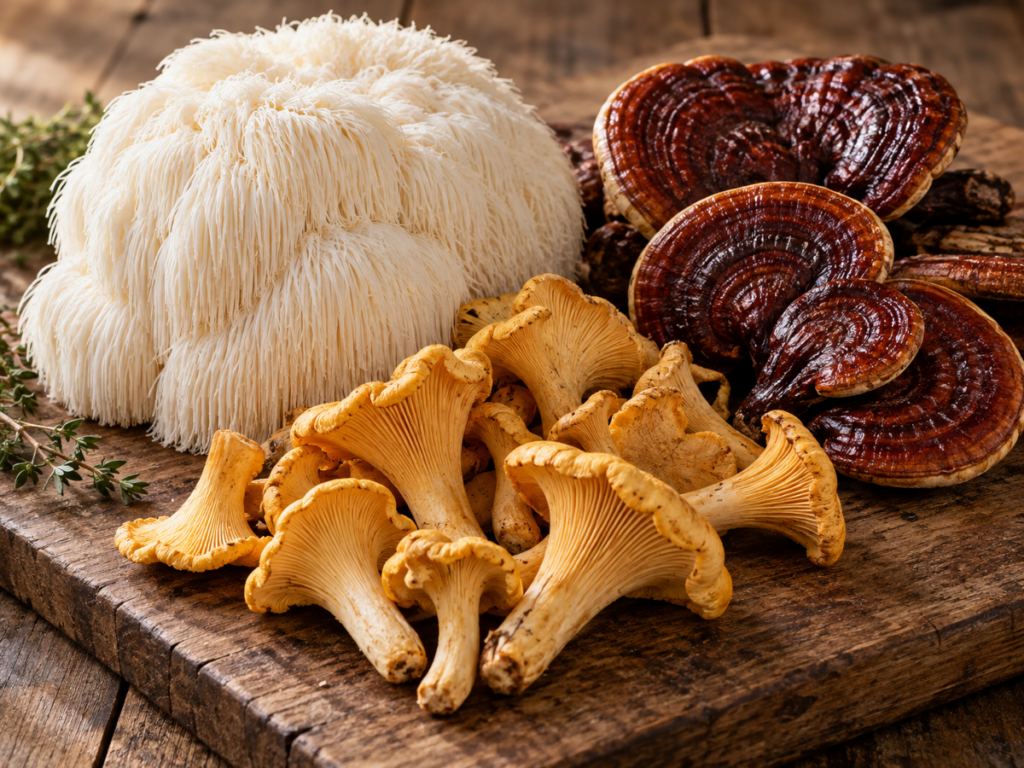
Mushrooms occupy an interesting place in the low-lectin kitchen. They offer deep, savory flavors, satisfying textures, and a range of naturally occurring compounds that have attracted considerable scientific interest. Yet they also raise questions for people trying to reduce dietary lectins, particularly as specialty varieties such as lion’s mane, reishi, and chanterelles become more widely available.
Unlike grains, beans, and vegetables, mushrooms belong to the fungal kingdom. Their cellular structures and nutritional chemistry differ considerably from those of plants, and those differences matter when evaluating their place in a lectin-conscious diet. Some mushrooms contain lectins of their own, but these proteins vary significantly in structure, biological activity, and potential effects.
For someone following a low-lectin lifestyle, the practical considerations extend beyond identifying individual compounds. Preparation methods, serving sizes, digestive tolerance, and the distinction between culinary mushrooms and concentrated extracts all influence how these foods fit into everyday eating.
Lion’s mane, reishi, and chanterelles offer three particularly interesting examples. Each brings different culinary possibilities, scientific questions, and considerations for people who want to enjoy mushrooms while remaining thoughtful about lectin exposure.
Understanding Lectins in Mushrooms
Lectins are proteins that recognize and bind to specific carbohydrate structures. They occur throughout nature, including in plants, animals, bacteria, and fungi. Although the term often appears in discussions about potentially irritating dietary compounds, lectins represent a broad family of proteins with very different properties.
The best-known dietary concerns involve certain plant lectins, particularly phytohemagglutinin found in raw or inadequately cooked kidney beans. In sufficient quantities, that lectin can cause acute gastrointestinal illness. Mushroom lectins should not automatically be treated as equivalent because their structures, concentrations, and biological activities can differ substantially.
Researchers have isolated lectins from numerous mushroom species, including lion’s mane and reishi. Laboratory investigations have explored how these proteins interact with carbohydrates, immune cells, and other biological systems. A scientific review titled [*Lectins from Edible Mushrooms*](https://pmc.ncbi.nlm.nih.gov/articles/PMC6272671/) describes the considerable diversity of these compounds.
However, identifying a lectin in a mushroom does not establish that eating a normal cooked serving causes digestive irritation or other health problems. Laboratory experiments frequently involve purified proteins, controlled concentrations, and conditions that differ from ordinary digestion. Human research specifically connecting mushroom lectin exposure with digestive symptoms remains limited.
This distinction matters for anyone attempting to make informed dietary decisions. A mushroom containing a measurable lectin is not necessarily problematic, while a mushroom with limited lectin research cannot automatically be described as lectin-free.
Mushrooms also contain chitin, a structural component of fungal cell walls, and various polysaccharides, including beta-glucans. These substances are chemically different from lectins and can influence digestive tolerance independently. Consequently, discomfort following a mushroom-containing meal does not establish that lectins caused the reaction.
Lion’s Mane: A Culinary Mushroom With Emerging Scientific Interest
Lion’s mane (*Hericium erinaceus*) is one of the most visually distinctive edible mushrooms. Its white, cascading spines create a shaggy appearance that resembles the mane of a lion. Beneath that unusual exterior is a tender mushroom with a delicate flavor often compared to crab or lobster.
For low-lectin cooking, lion’s mane offers an appealing alternative to conventional meat substitutes made with wheat gluten, soy, or heavily processed ingredients. Its naturally fibrous structure develops a satisfying texture when sliced and sautéed, making it useful in dishes that need substance without relying on grain-based fillers.
Lion’s mane contains several compounds of scientific interest, including polysaccharides, hericenones, and erinacines. Researchers have investigated these substances for possible effects on nerve growth, cognition, and neurological health. Some small human studies have reported encouraging findings involving memory or mood, although results are not consistent enough to establish reliable therapeutic benefits.
According to [Memorial Sloan Kettering Cancer Center](https://www.mskcc.org/cancer-care/integrative-medicine/herbs/lions-mane-mushroom), human clinical evidence remains limited, and some investigations have found no meaningful improvement in cognitive performance. Laboratory findings involving nerve growth factors also cannot be assumed to translate directly into benefits from eating the mushroom.
Interestingly, researchers have isolated lectins from lion’s mane itself. These findings demonstrate that the mushroom is not scientifically established as lectin-free, even though its culinary use may fit comfortably within an individual’s lectin-conscious eating pattern.
The amount of active lectin remaining after ordinary cooking, its behavior during human digestion, and its relevance to symptoms associated with dietary sensitivity have not been adequately established. For practical meal planning, this means lion’s mane is best approached as an edible mushroom whose individual tolerability can be evaluated, rather than as a guaranteed lectin-free food.
Preparing Lion’s Mane for a Low-Lectin Meal
Fresh lion’s mane benefits from careful preparation because its delicate structure can absorb substantial moisture. Gently removing debris and trimming any discolored or tough sections helps preserve its texture. If washing is necessary, a brief rinse followed by thorough drying is preferable to leaving it submerged in water.
One useful cooking method involves cutting the mushroom into thick slices and placing them in a dry skillet over medium heat. As moisture is released and evaporates, the mushroom becomes firmer and develops a more concentrated flavor. A small amount of extra virgin olive oil, avocado oil, or ghee can then be added to encourage browning.
Garlic, thyme, rosemary, lemon juice, and sea salt complement lion’s mane without requiring complicated sauces. For a satisfying meal, the cooked slices can be paired with roasted asparagus, sautéed spinach, cauliflower mash, or other vegetables selected according to personal tolerance.
Cooking also provides an opportunity to assess how texture affects digestion. Some people find thoroughly cooked mushrooms more comfortable than lightly cooked or raw preparations, although this does not prove that lectins have been eliminated.
A modest serving alongside familiar ingredients can help establish whether lion’s mane agrees with an individual’s digestive system before it becomes a regular part of meal planning.
Reishi: Traditional Use, Concentrated Extracts, and Important Safety Considerations
Reishi is considerably different from lion’s mane in both texture and culinary application. Often associated with *Ganoderma lucidum* and related *Ganoderma* species, reishi produces a firm, woody fruiting body that may display a glossy reddish-brown surface.
Its long history of use in East Asian traditions has contributed to its popularity in teas, powders, capsules, and concentrated extracts. Unlike tender culinary mushrooms, mature reishi is generally too tough and bitter to prepare as an ordinary sautéed vegetable.
Reishi contains polysaccharides, including beta-glucans, and compounds known as triterpenes. These substances have been investigated for possible effects on immune activity, inflammation, and other biological processes. Much of the supporting research comes from laboratory studies and animal experiments, while human clinical evidence remains insufficient to support many of the health claims associated with commercial products.
Reishi also contains identifiable lectins. Researchers have purified a lectin from the fruiting body of *Ganoderma lucidum* and examined its carbohydrate-binding properties. The findings, published in *Biochimica et Biophysica Acta*, demonstrate biological activity under laboratory conditions but do not establish that ordinary reishi preparations cause harmful lectin exposure in humans.
This creates an interesting question for people following a low-lectin lifestyle. Reishi cannot reasonably be classified as lectin-free, yet available research does not provide a dependable measurement of its dietary lectin risk in commonly consumed preparations.
Reishi Tea and the Difference Between Brewing and Supplementation
Traditional reishi tea is generally prepared by simmering dried mushroom pieces in water and straining the liquid. This prolonged heating allows water-soluble compounds to enter the beverage, although the precise composition depends on the mushroom species, preparation time, temperature, and amount used.
Hot-water extraction is not the same as scientifically verified lectin removal. Some proteins lose activity when exposed to heat, while others demonstrate greater temperature resistance. Without species-specific testing of the finished beverage, it would be inaccurate to assume that simmering eliminates all relevant mushroom lectins.
Concentrated reishi powders and extracts deserve additional attention because they are not necessarily comparable to traditional tea. Extraction methods may concentrate particular substances, and different products can contain substantially different amounts of active compounds.
Reishi supplements also present safety considerations beyond lectin content. Memorial Sloan Kettering [identifies potential interactions](https://www.mskcc.org/cancer-care/integrative-medicine/herbs/reishi-mushroom) with anticoagulant medications and immunosuppressants, and reports adverse effects that include nausea and liver injury.
People taking prescription medications, managing autoimmune conditions, receiving cancer treatment, or dealing with liver problems should discuss reishi supplements with their healthcare professional before using them. Concentrated mushroom products should not be treated as interchangeable with everyday culinary ingredients simply because both originate from fungi.
For someone whose primary goal is maintaining a sustainable low-lectin eating pattern, reishi is an optional specialty product rather than a necessary dietary addition.
Chanterelles: A Flavorful Wild Mushroom for Everyday Cooking
Chanterelles bring a different character to the kitchen. These golden, funnel-shaped mushrooms are prized for their delicate texture, rich aroma, and subtle fruity notes. Depending on the species and growing conditions, their flavor may suggest apricots, earthiness, or a gentle peppery finish.
The familiar golden chanterelle is often associated with *Cantharellus cibarius*, although several related species are also sold or collected under the broader chanterelle name. Many grow in association with living trees and appear seasonally in forest environments.
For low-lectin meal preparation, chanterelles offer considerable flexibility. They can add savory depth to vegetable dishes, complement pasture-raised eggs, or accompany simply prepared chicken, fish, and grass-fed beef.
Their appeal lies largely in their flavor and texture. A small quantity can make an otherwise simple meal more satisfying without requiring flour-based sauces, soy products, or processed flavoring mixes.
What Is Known About Chanterelle Lectins?
Scientific information about lectins in chanterelles is less developed than research involving some other edible mushrooms. Lectin activity has been investigated in certain *Cantharellus* species, but those findings should not be generalized automatically to every mushroom sold as a chanterelle.
There is currently insufficient human evidence to assign commonly eaten chanterelles a reliable dietary lectin rating or to establish whether ordinary servings create meaningful lectin-related digestive problems.
That uncertainty leaves room for a practical approach based on preparation and individual response. Chanterelles do not need to be labeled either inherently troublesome or universally safe for every person following a low-lectin diet.
Their fibrous cell walls, serving size, cooking method, and accompanying ingredients may all influence digestive comfort. Someone who tolerates a small portion of sautéed chanterelles may find larger servings less comfortable, particularly when combined with rich sauces or other unfamiliar foods.
Cooking Chanterelles Without Overcomplicating the Meal
Fresh chanterelles frequently contain bits of forest debris that need attention before cooking. A soft brush can remove loose dirt, while a quick rinse may be necessary for more stubborn particles. The mushrooms should be dried afterward to prevent excessive steaming in the skillet.
Larger chanterelles can be torn into manageable pieces, allowing their natural shape to remain visible. Beginning with a moderately heated skillet encourages excess moisture to evaporate before adding a small amount of olive oil or ghee.
Once the mushrooms soften and begin developing golden edges, garlic, fresh parsley, thyme, or a squeeze of lemon can complete the dish. They pair especially well with roasted chicken, grilled fish, or a simple plate of sautéed greens.
Long cooking is not always necessary to achieve a desirable texture, but chanterelles should be cooked thoroughly rather than eaten raw. Cooking improves palatability and provides a more appropriate starting point for evaluating digestive tolerance.
One safety issue deserves particular attention because many chanterelles are wild harvested. Poisonous look-alikes exist, including jack-o’-lantern mushrooms, which can cause significant gastrointestinal illness if eaten.
The [Illinois Poison Center](https://www.illinoispoisoncenter.org/health-safety/house-garden-and-garage/mushrooms/) specifically identifies jack-o’-lantern mushrooms as a source of confusion with edible chanterelles. Purchasing mushrooms from knowledgeable, reputable suppliers is considerably safer than attempting to identify unfamiliar wild mushrooms through photographs or brief online descriptions. Cooking does not reliably make a poisonous look-alike safe.
Cooking Methods and Their Relationship to Mushroom Lectins
Food preparation plays an important role in many low-lectin dietary strategies. Pressure cooking certain beans, for example, is useful because appropriately applied heat can inactivate problematic lectins. Mushrooms require a more individualized interpretation of that principle.
Mushroom lectins vary in their sensitivity to heat, and the available research does not establish a universal cooking temperature or duration that reliably inactivates every mushroom lectin. A preparation technique that affects one isolated protein may not produce the same result with another species.
Sautéing, roasting, and simmering can still be sensible approaches because they improve texture, flavor, and general food preparation. They may also alter some proteins and other compounds, but the magnitude of lectin reduction cannot be assumed without direct testing.
Pressure cooking mushrooms is generally unnecessary for ordinary culinary purposes, and there is no established evidence that it makes lion’s mane or chanterelles more suitable for a low-lectin diet than conventional thorough cooking. Reishi, meanwhile, is typically consumed in extracted preparations because of its woody texture.
These differences reinforce the value of choosing cooking methods based on the specific mushroom rather than applying a single rule to every fungal ingredient.
Mushroom Fiber, Gut Bacteria, and Individual Digestive Tolerance
Mushrooms contain dietary fiber and structural carbohydrates that behave differently from many plant fibers. Chitin contributes to the firmness of fungal cell walls, while beta-glucans are among the polysaccharides that have attracted interest for their potential interactions with the gut microbiome and immune system.
Some mushroom-derived polysaccharides may be fermented by intestinal microorganisms. Research has explored whether these compounds influence microbial populations and the production of substances such as short-chain fatty acids, which participate in normal intestinal function.
Nevertheless, evidence involving purified mushroom polysaccharides, animal models, or concentrated supplements cannot establish that eating a particular mushroom will improve an individual’s microbiome or relieve digestive symptoms.
For some people, fermentable components of mushrooms may contribute to gas, bloating, or changes in bowel habits. Others tolerate mushrooms comfortably and appreciate the variety they introduce into their meals.
Mushrooms may also contain sugar alcohols and other carbohydrates that influence digestive comfort. These factors complicate attempts to attribute every reaction to lectins alone.
A person who experiences symptoms after eating a large mushroom-based meal might respond to the quantity of fiber, the overall composition of the dish, the cooking method, or a separate ingredient. Identifying patterns requires considering the complete meal and the circumstances surrounding it.
Choosing Mushrooms and Supplements With Greater Confidence
Freshness and sourcing deserve as much attention as nutritional claims. Culinary mushrooms should come from reputable growers or sellers, with firm textures, normal coloration, and no evidence of spoilage. Refrigeration, appropriate packaging, and timely preparation help maintain quality.
Lion’s mane is increasingly available from specialty mushroom farms and selected grocery stores. Chanterelles are often seasonal and may be sold fresh, dried, or frozen. Reishi is more commonly encountered as dried pieces, tea ingredients, or processed supplements.
For dried culinary mushrooms, choosing products that clearly identify the species and supplier helps reduce uncertainty. Rehydration should follow the manufacturer’s directions, and the mushrooms should be cooked appropriately before serving.
Supplement shopping requires additional scrutiny. Labels may refer to the fruiting body, mycelium, extracts, polysaccharide concentrations, or beta-glucan content, but these descriptions do not necessarily provide enough information to compare products accurately.
A fruiting-body powder and a concentrated extract may differ substantially in composition. Products should clearly disclose their ingredients, serving amounts, extraction details where applicable, and any added fillers or carriers. Independent testing for identity and contaminants provides another useful quality indicator.
The U.S. Food and Drug Administration [does not approve dietary supplements for safety and effectiveness before marketing](https://www.fda.gov/food/dietary-supplements). Claims suggesting that a mushroom product has received such approval should therefore be treated cautiously.
People seeking primarily culinary variety may find that fresh mushrooms provide everything they need without introducing the additional uncertainties associated with concentrated supplements.
Making Mushrooms Part of a Personalized Low-Lectin Diet
Introducing mushrooms into a lectin-conscious eating pattern works best when the preparation is simple and the serving size is manageable. A person who already tolerates olive oil, garlic, and roasted vegetables might begin with a small portion of cooked lion’s mane or chanterelles alongside those familiar foods.
Keeping the rest of the meal relatively consistent makes it easier to recognize whether the new ingredient agrees with digestion. If several unfamiliar foods are introduced simultaneously, identifying the source of any discomfort becomes considerably more difficult.
A brief food record can help capture details that are otherwise forgotten. Recording the mushroom variety, approximate portion, cooking method, accompanying ingredients, and any symptoms over the following day or two may reveal useful patterns.
Delayed digestive symptoms deserve careful interpretation because timing alone cannot establish a particular food as the cause. Sleep, stress, meal size, medications, and other dietary factors may influence how someone feels.
If mushrooms consistently cause discomfort, reducing the portion or avoiding the troublesome variety may be reasonable while the pattern is evaluated. Persistent or significant symptoms deserve medical assessment rather than repeated dietary experimentation.
For those who tolerate them well, mushrooms can contribute welcome variety to weekly meals. Lion’s mane offers a satisfying centerpiece for a vegetable-forward dinner, while chanterelles bring distinctive flavor to eggs, fish, and simple roasted dishes.
Reishi occupies a separate place because its usual preparation and concentration introduce different considerations. Its traditional history and scientific interest may appeal to some people, but neither makes supplementation essential for a low-lectin lifestyle.
The most useful distinction remains between what laboratory research identifies and what people actually experience when eating prepared food. For lion’s mane, chanterelles, and other culinary mushrooms, careful sourcing, thorough cooking, reasonable portions, and attentive observation provide a practical basis for deciding how often they belong on the menu.
