

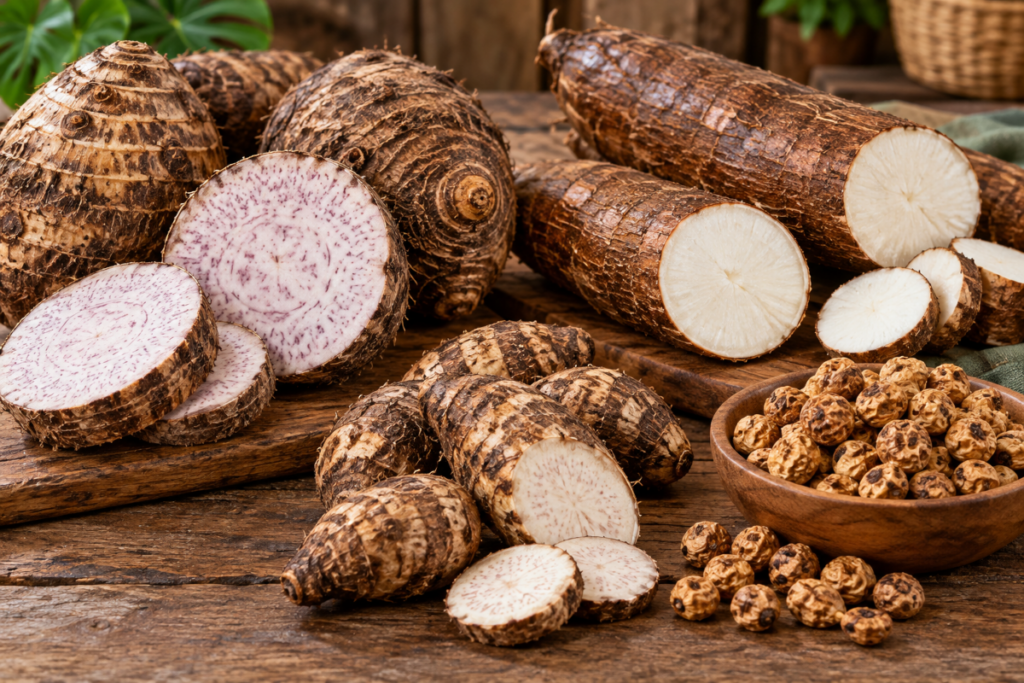
Long before potatoes became familiar staples in European and North American kitchens, tropical communities were cultivating underground crops that could be boiled, mashed, roasted, ground into flour, or prepared as beverages. Taro, yuca, malanga, and tiger nuts are four examples of these enduring foods, each with a different botanical background, nutritional composition, and culinary character. Their histories extend across several continents, and their traditional preparations reveal how much can be done with ingredients that remain unfamiliar to many modern home cooks.
For people following a low-lectin lifestyle, these foods offer possibilities beyond commonly used alternatives such as sweet potatoes, white rice, and cassava flour. Some provide satisfying substitutes for potatoes and wheat-based ingredients, while others bring distinctive textures and flavors to soups, baked goods, and vegetable dishes. Understanding how each ingredient behaves, particularly during cooking, is essential because their natural plant compounds and preparation requirements differ considerably.
Understanding the Difference Between Roots, Corms, and Tubers
Although these four foods are frequently grouped together as tubers, their underground structures are not botanically identical. Yuca, also called cassava, develops enlarged storage roots, while taro produces swollen underground stems called corms. Malanga, particularly varieties belonging to the Xanthosoma genus, commonly produces edible side growths known as cormels. Tiger nuts are true tubers produced by a sedge, a grasslike plant that is unrelated to botanical nuts.
These differences help explain their behavior in the kitchen. Cassava has a firm, starchy flesh that becomes tender but substantial when properly cooked, while taro develops a softer consistency suitable for smooth preparations. Malanga often produces a comparatively dense mash, and tiger nuts contain more fat and fiber than the other three ingredients, giving them a distinctly nutty character.
Their geographic histories are equally varied. Cassava and malanga originated in the tropical Americas, taro has ancient associations with Asia and the Pacific, and tiger nuts have a long history of consumption in Africa and the Mediterranean. Each crop became established in regional food traditions through cultivation practices and preparation methods suited to its particular characteristics.
Taro: An Ancient Staple with a Creamy Texture
Taro (Colocasia esculenta) is among the oldest cultivated food crops still widely consumed today. It has an extensive history across Asia, Africa, and the Pacific, where it appears in curries, soups, boiled dishes, and mashed preparations such as Hawaiian poi. A 2020 genetic study examining the evolutionary origins of taro identified cultivated lineages with apparent origins in Southeast Asia, although its long cultivation history and the movement of plants between regions make the full story of domestication difficult to reconstruct.
The edible corm generally has a rough brown exterior surrounding pale flesh that may contain purple or pinkish markings. Once thoroughly cooked, taro develops a mildly nutty, earthy flavor with a subtle sweetness. Its starch and other plant components contribute to a soft, cohesive texture that works particularly well in pureed soups, coconut-based dishes, and preparations where a creamy consistency is desirable.
Nutritionally, taro is primarily a source of carbohydrates, with smaller amounts of dietary fiber, potassium, and other minerals. Its composition varies by cultivar, growing conditions, and cooking method, so nutritional values from one variety should not automatically be applied to another. In meal planning, taro generally serves the role of a starchy vegetable rather than a replacement for protein-rich foods or leafy greens.
Why Taro Must Be Prepared Properly
Raw taro contains calcium oxalate crystals, including needle-shaped structures known as raphides, that can irritate the mouth and throat. These crystals are unrelated to lectins and contribute to the sharp, prickling sensation associated with raw or inadequately prepared taro. The Hong Kong Centre for Food Safety explains how calcium oxalate crystals cause irritation, including the role of accompanying plant enzymes and why cooking improves the acceptability of cultivated edible taro.
Cooking does not simply destroy every calcium oxalate crystal. Insoluble crystals are heat resistant, while boiling may reduce certain soluble oxalates and heat can deactivate enzymes associated with irritation. This distinction explains why cultivated edible taro is routinely cooked and consumed, yet wild taro containing particularly irritating crystals may remain unsafe even after heating.
For ordinary kitchen preparation, purchase cultivated taro intended for eating from a reliable food supplier. Wash the corm, peel it, and cook it thoroughly using an established method appropriate for the variety. Boiling is particularly convenient for mashed taro, while steaming is another traditional method used with edible cultivars. Wild taro and unidentified ornamental relatives should never be substituted for commercially sold edible taro.
Properly cooked taro can be mashed with olive oil, roasted garlic, and warm broth for a savory side dish. It also combines well with ginger, coconut milk, and tender vegetables in blended soups, where its starch helps provide body. For people following a medically prescribed low-oxalate diet, the remaining oxalate content is a separate nutritional consideration that cooking does not necessarily eliminate.
Yuca: The Versatile Cassava Root
Yuca (Manihot esculenta) is one of the world’s major tropical food crops. Native to South America, it eventually spread throughout Africa, Asia, and other warm regions, where it became an important source of dietary energy. Also known as cassava or manioc, it should not be confused with yucca, the similarly named group of ornamental plants.
Fresh yuca has a thick brown exterior surrounding firm white or cream-colored flesh, usually with a fibrous central core. Proper cooking softens the root while preserving a substantial texture that makes it suitable for boiled side dishes, mashed preparations, and other savory recipes. Its relatively mild flavor pairs well with garlic, citrus, herbs, and seasoned oils.
Cassava is predominantly a carbohydrate-rich food, with relatively modest amounts of protein and fat. Fresh roots may supply vitamin C and minerals, although their concentrations depend on the variety and preparation process. Commercial cassava products also differ nutritionally because extracting starch removes much of the fiber and other components found in the root.
Cassava Contains Naturally Occurring Cyanogenic Compounds
The most significant preparation concern associated with cassava involves cyanogenic glucosides, primarily linamarin and lotaustralin. These naturally occurring substances can release hydrogen cyanide when plant tissues are damaged and undergo chemical breakdown. Raw or inadequately processed cassava can therefore cause serious poisoning, making correct identification and preparation essential.
Cassava varieties differ substantially in their concentrations of cyanogenic compounds and are commonly described as sweet or bitter. The names refer broadly to differences in cyanogenic potential, but flavor alone cannot reliably establish whether a particular root is safe. Growing conditions also influence these compounds, meaning that the same general type of cassava may vary in composition.
The Hong Kong Centre for Food Safety provides guidance on cyanide poisoning and cassava preparation. Lower-cyanide sweet cassava can generally be made safe through appropriate peeling and thorough cooking, while bitter varieties require more extensive processing involving established techniques such as grating, soaking, fermentation, and subsequent heating. Simply boiling an unidentified or high-cyanide variety is not a reliable safety procedure.
For home cooking, commercially supplied sweet cassava specifically intended for direct culinary preparation is the practical choice. Remove the peel completely, follow the supplier’s preparation directions, and cook the root thoroughly, discarding the cooking water when boiling is specified. If the variety or necessary processing method is uncertain, choose a commercially prepared cassava product instead of experimenting with an unfamiliar raw root.
Cassava Flour and Tapioca Starch Serve Different Purposes
Cassava also provides two common ingredients used in gluten-free and grain-free cooking. Cassava flour is produced from properly processed root material and generally retains more of the root’s fiber and nonstarch components. Tapioca starch, sometimes labeled tapioca flour, is refined starch extracted from cassava and contains comparatively little fiber or protein.
These differences matter considerably in baking. Cassava flour can form the main dry ingredient in tortillas, flatbreads, and some baked goods, although recipes may still require additional binding ingredients. Tapioca starch is commonly incorporated into flour blends to thicken mixtures or contribute a chewy, elastic texture. Replacing cassava flour with tapioca starch in equal amounts can leave a recipe overly gummy or unable to maintain its intended structure.
Commercial processing is particularly relevant because correctly manufactured cassava ingredients undergo procedures designed to reduce cyanogenic compounds. Products should come from reputable food manufacturers rather than being made from inadequately processed raw cassava. Their usefulness in a low-lectin kitchen comes from their culinary properties and ability to replace particular grain-based ingredients, without implying that every cassava product has a verified absence of lectins.
Malanga: A Traditional Root with a Substantial Texture
Malanga is a common name for several edible tropical plants, particularly species belonging to the genus Xanthosoma. One widely discussed species is Xanthosoma sagittifolium, although the naming of cultivated varieties can be inconsistent. Depending on the region, related crops may be called yautia, tannia, or cocoyam, with some names also applied to taro.
The naming confusion reflects genuine botanical and agricultural overlap. Taro and malanga belong to the same plant family, Araceae, and both produce edible underground structures rich in starch. A 2018 review of cocoyam cultivation and food applications discusses the overlapping terminology and identifies how differences between Colocasia and Xanthosoma complicate comparisons of their nutritional and processing characteristics.
Malanga originated in the tropical Americas and became established in Caribbean, Central American, South American, and African food traditions. The edible cormels often have a coarse brown exterior and pale flesh, although color and texture vary among cultivated types. Once cooked, many varieties develop a pleasantly earthy flavor and a dense, smooth consistency suitable for mashing.
This texture makes malanga useful in dishes that require a substantial starchy base. Cooked malanga can be mashed with garlic and olive oil, incorporated into thick soups, or prepared as part of traditional dumpling and fritter recipes. It can also replace potatoes in some preparations, offering an option for people who prefer to avoid nightshade vegetables.
Malanga is primarily a source of starch, with smaller contributions from fiber, protein, and minerals. Its nutritional composition depends on the species, cultivar, and growing conditions. Although sometimes described as particularly easy to digest, such a broad claim should not be applied to every variety or interpreted as proof that malanga prevents digestive discomfort.
Oxalates and the Importance of Cooking
Like taro, malanga may contain calcium oxalate crystals and other compounds that make raw or inadequately cooked portions irritating. Peeling and thorough cooking are established parts of traditional preparation, particularly boiling for dishes that require softened flesh. The amount and form of oxalates vary, so preparation findings from one cultivar should not be assumed to apply identically to another.
A study published in the Journal of Food Science and Technology examined how boiling affected oxalate and hydrocyanic acid concentrations in samples of Xanthosoma sagittifolium and Colocasia esculenta. The researchers observed substantial reductions in measured compounds under the experimental conditions and also conducted a limited feeding experiment involving mice. These results support the importance of appropriate processing, but they do not establish a universal cooking duration for every commercially available malanga variety or demonstrate specific health benefits in people.
For home use, purchase cultivated malanga intended for eating and prepare it according to directions appropriate for the variety. Peel and cook it thoroughly before mashing or incorporating it into other dishes. Once softened, malanga pairs well with garlic, broth, herbs, and olive oil, while combining it with cooked cauliflower can produce a less dense mash without losing its characteristic texture.
Tiger Nuts: Small Tubers with a Nutty Flavor
Tiger nuts (Cyperus esculentus) are the most unusual member of this group because their culinary characteristics differ substantially from those of taro, yuca, and malanga. Despite their name, they are not tree nuts but small underground tubers produced by a sedge plant. They have a long history of consumption in parts of Africa and the Mediterranean and are especially associated with the Spanish beverage horchata de chufa.
Dried tiger nuts are small, wrinkled, and firm, with a naturally sweet, mildly earthy flavor. Their texture can be quite chewy, which explains why they are often soaked before consumption or processed into beverages. Ground tiger nuts are also sold as flour, and their oil is used in certain specialty food applications.
Unlike the other three crops, tiger nuts contain appreciable amounts of fat along with starch and dietary fiber. Much of their fat is composed of unsaturated fatty acids, including oleic acid, which is also prominent in olive oil. Their nutritional composition makes them distinct from conventional starchy roots, although they are not a particularly concentrated source of protein.
A 2022 review published in Foods examined tiger nut composition, processing, food applications, and laboratory research involving bioactive compounds. The review documents differences in nutritional composition and explains how processing methods influence the resulting ingredients. Laboratory findings concerning antioxidant activity or other biological effects should not be interpreted as established evidence that consuming tiger nuts treats digestive, inflammatory, or metabolic conditions.
Baking and Preparing Tiger Nuts
Tiger nut flour has a naturally sweet flavor and a somewhat coarse character that can work well in cookies, muffins, pancakes, and certain quick breads. Its fiber and fat content influence moisture absorption and the texture of baked goods, while the absence of gluten affects how doughs hold together. Recipes specifically developed for tiger nut flour are more reliable than attempting to replace wheat flour or tapioca starch in equal amounts.
Whole dried tiger nuts can be softened by soaking them in clean water according to the product’s directions, keeping them refrigerated during extended soaking. They may then be eaten as a snack or blended into a beverage. Because the tubers originate underground and are often used without a heat treatment, purchasing food-grade products and following hygienic preparation practices is especially important.
Freshly prepared tiger nut beverages also require careful handling. A review of preservation methods for horchata de chufa identifies microbial spoilage and food safety as concerns for these nutrient-containing beverages. Homemade, unpasteurized tiger nut drinks should be refrigerated promptly and should not be treated as shelf-stable products.
Tiger nuts are botanically separate from tree nuts, but this distinction does not guarantee that a product is suitable for everyone with a food allergy. Individual reactions are possible, and packaged tiger nut products may be manufactured in facilities handling other allergens. Ingredient labels and cross-contact statements remain relevant, particularly when buying flour or commercially prepared snacks.
Where These Ingredients Fit Into a Low-Lectin Lifestyle
Taro, yuca, malanga, and tiger nuts frequently appear in discussions of gluten-free cooking, grain alternatives, and diets that limit legumes or nightshades. Their botanical differences make them useful replacements for certain familiar ingredients, although plant classification alone cannot establish their lectin activity. Being a root, corm, or tuber does not automatically mean a food contains no lectins.
Reliable comparative measurements of biologically active lectins in these four foods, especially after normal household preparation, remain limited. Lectins are a diverse group of proteins with different properties, and their responses to processing cannot be reduced to a single rule. Describing these ingredients as suitable options within a low-lectin eating pattern is more defensible than declaring them universally lectin-free.
Their preparation concerns also illustrate why different plant compounds should be evaluated separately. Calcium oxalate irritation in taro and malanga is distinct from the cyanogenic glucosides found in cassava, and neither problem should be explained simply as lectin exposure. Cooking methods that address one of these compounds may not have the same effects on another.
In practical terms, these ingredients can help someone avoid a food they prefer to exclude while retaining familiar textures and meal formats. Malanga provides a potato-like side dish without belonging to the nightshade family, while cassava flour can replace wheat-based ingredients in appropriately developed recipes. Whether a particular substitution changes someone’s digestive symptoms is a separate question that cannot establish lectins as the cause of a reaction.
Starch, Fiber, and Digestive Considerations
Taro, yuca, and malanga supply substantial amounts of starch, while tiger nuts contain a different combination of starch, fiber, and fat. Their carbohydrate content remains relevant even when they replace wheat, potatoes, or other ingredients avoided within a particular dietary approach. Gluten-free and grain-free descriptions do not indicate that a food is low in carbohydrates.
Starch is generally digested into glucose, although some starch resists digestion in the small intestine and reaches the colon. Cooking, cooling, processing, and the physical structure of a food can influence its resistant starch content. The magnitude of these changes differs among ingredients and preparations, so cooling cooked cassava or taro should not be assumed to produce a particular blood glucose response or digestive benefit.
Tiger nuts introduce additional considerations because of their dietary fiber. Increasing fiber intake rapidly can contribute to gas, bloating, or changes in bowel habits, especially when someone is unfamiliar with a high-fiber ingredient. Beginning with a modest portion of tiger nut flour or whole tiger nuts provides a practical way to become familiar with their texture and fiber content before making them a regular part of meals.
The form of an ingredient also affects its nutritional characteristics. Whole cooked cassava retains components that are largely absent from refined tapioca starch, while a strained tiger nut beverage may contain considerably less fiber than the original tubers. Reading nutrition labels is particularly useful when comparing whole-root foods with packaged flour blends, beverages, or prepared snacks.
Choosing the Right Ingredient for a Recipe
Successful substitutions depend heavily on the texture and cooking behavior required by a recipe. A smooth vegetable puree needs different properties from a crisp roasted side dish or an elastic flatbread. Choosing an ingredient because it resembles the original food in appearance does not guarantee that it will behave the same way when heated.
Taro is particularly useful in soups and purees because its cooked starch creates a soft consistency. Malanga works well in firmer mashed preparations and dishes where the starch needs to retain more body. Properly prepared yuca is a good choice when substantial pieces are desirable, while cassava flour and tapioca starch provide separate options for grain-free baking.
Tiger nut flour belongs in another category because its sweetness, fat, and fiber affect flavor and moisture absorption. It can be combined with other suitable flours in recipes formulated to accommodate those characteristics. It should not be treated as a direct replacement for extracted starches that provide thickening or chew.
Shopping terminology can introduce additional confusion. A package marked cocoyam might refer to taro or a Xanthosoma crop, while tapioca flour usually refers to refined tapioca starch rather than whole-root cassava flour. Checking the botanical name, product description, and preparation instructions can prevent mistakes before cooking begins.
Fresh roots should be purchased from suppliers familiar with edible varieties, particularly when buying taro, malanga, or cassava for the first time. Choose firm specimens without extensive softening, visible mold, or obvious deterioration, and store them according to the supplier’s guidance. Frozen commercially prepared roots can be convenient, but products requiring cooking must still be prepared as directed, even when already peeled or cut.
Exploring Traditional Preparations in a Modern Kitchen
Traditional dishes offer useful examples of how these ingredients behave when prepared correctly. Hawaiian poi uses cooked taro to produce a smooth, cohesive food, while Caribbean cuisines incorporate malanga into soups, mashed preparations, and fritters. South American cassava dishes demonstrate how properly processed yuca can be paired with garlic, citrus, and savory proteins, while Spanish horchata de chufa uses soaked and ground tiger nuts to create a distinctive beverage.
These traditions also show why identifying the actual ingredient matters. Recipes developed around taro may not produce the same result with malanga, and a cassava preparation requiring commercially processed flour should not be attempted with an unidentified fresh root. Traditional techniques often reflect generations of experience with particular cultivated varieties, including their textures and preparation requirements.
For everyday meals, cooked taro can form the base of a ginger and coconut soup served with fish, while malanga can become a garlic-infused mash alongside roasted vegetables and chicken. Properly prepared sweet cassava can accompany grilled seafood, and tiger nut flour can contribute a naturally sweet, nutty character to baked goods. Each ingredient offers a different culinary function, making recipe selection and correct preparation more useful than treating all four as interchangeable substitutes for potatoes or wheat.
