

Nut and seed butters earn their place in the kitchen because they solve so many small food problems at once. A spoonful can add richness to a smoothie, turn fruit into a more filling snack, thicken a sauce, provide body to a dressing, or become the creamy base for a quick breakfast. For someone following a low-lectin lifestyle, however, the familiar jar of peanut butter may no longer be the automatic choice.
Peanuts are legumes rather than true tree nuts, and they contain a lectin called peanut agglutinin. Research has found peanut agglutinin to be relatively resistant to cooking and digestion, with small amounts detectable in circulation after peanut consumption. That observation is scientifically interesting, but it does not establish that ordinary peanut consumption causes disease in humans. Much of the broader research concerning lectins and human health remains incomplete, and the effects of one isolated lectin cannot simply be applied to every food containing lectins.
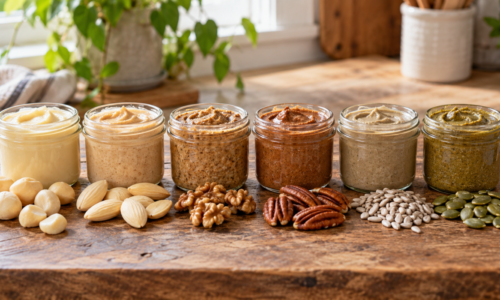
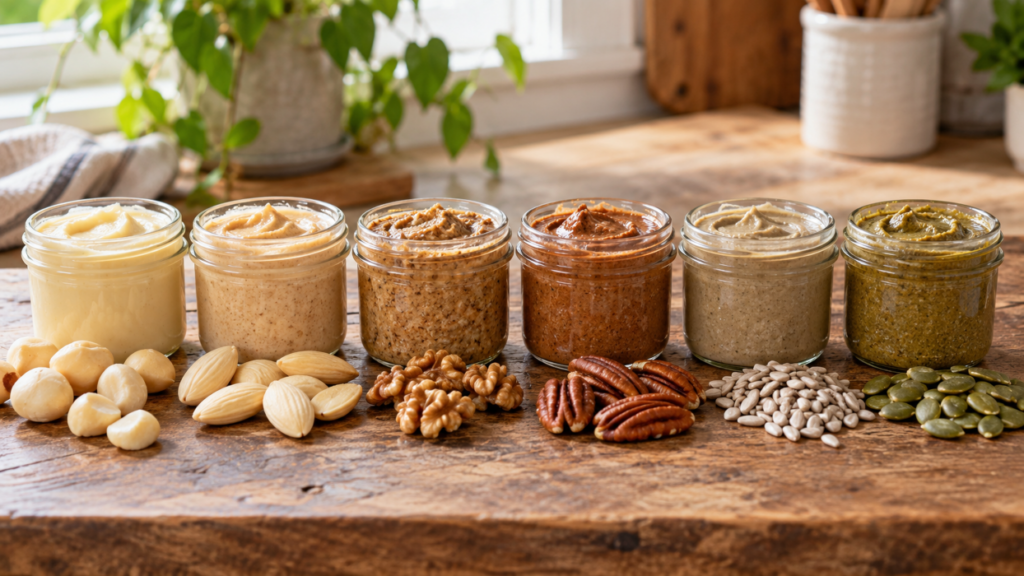
For people who personally choose to limit peanuts and cashews as part of a low-lectin approach, the good news is that giving up peanut or cashew butter does not mean giving up creamy spreads. Macadamias, blanched almonds, walnuts, pecans, sunflower seeds, and other ingredients can all fill parts of that role. The better question becomes which butter works best for the particular job.
Why Peanut Butter Gets Special Attention
Peanut butter presents an unusual case because peanuts belong to the Fabaceae family, the same botanical family that includes beans, peas, lentils, and other legumes. Studies measuring active lectins across plant foods generally find some of the highest activity within this family, although the amount and biological activity vary greatly between species. Food preparation can also change lectin activity, sometimes dramatically.
Peanut agglutinin deserves separate attention from the lectins associated with improperly cooked kidney beans. The latter are a recognized food-safety problem at sufficiently high active concentrations, while the significance of the quantities of peanut agglutinin encountered in an ordinary diet is much less certain. Research showing that peanut agglutinin can survive processing or enter circulation should therefore be viewed as a reason for scientific interest, not proof that peanut butter is harmful to everyone.
This distinction matters in a low-lectin lifestyle. A person may decide that peanuts are an unnecessary source of lectins and replace them while still recognizing that the evidence does not support labeling peanut butter as universally dangerous. Dietary experimentation works better when it is based on specific choices and observed tolerance rather than fear.
Cashew butter often becomes the first replacement because its mild flavor and creamy texture are so useful. Some low-lectin approaches, however, also limit cashews, which sends the search in a different direction. Fortunately, there is no need to find one perfect substitute. Different nuts and seeds can replace different qualities of peanut and cashew butter.
Macadamia Butter Offers an Exceptionally Creamy Alternative
Macadamia butter is one of the most useful options for someone seeking a rich nut butter without relying on peanuts or cashews. Macadamias have a naturally high fat content, and their fat is heavily weighted toward monounsaturated fatty acids. That composition gives macadamia butter a smooth mouthfeel and a rich consistency without requiring a long ingredient list. Research comparing edible nuts has consistently found macadamias to be particularly rich in oil.
Flavor is another advantage. Macadamias are mild, buttery, and slightly sweet, which makes their butter adaptable to both sweet and savory recipes. It can be spread on compatible breads, stirred into smoothies, blended into sauces, or combined with coconut milk and seasonings to create creamy dressings.
The main drawback is cost. Macadamia butter is usually more expensive than peanut, almond, or sunflower seed butter, and it may be difficult to find in an ordinary supermarket. Making it at home can help, especially if whole macadamias are available at a better price.
A food processor can turn macadamias into butter surprisingly quickly because of their high oil content. Process the nuts until they move from crumbs to a thick paste and eventually a smooth butter, stopping occasionally to scrape the bowl. A small amount of avocado oil or macadamia oil can be added if a thinner consistency is desired, although it is often unnecessary.
Blanched Almond Butter Changes More Than the Texture
Almond butter is widely available and familiar enough that it does not feel like an unusual substitute. For a low-lectin kitchen, blanched almond butter can be especially useful because blanching removes the brown almond skin and produces a smoother, milder spread.
Removing the skin also changes the concentration of some compounds naturally associated with the outer portion of the almond. This should not be interpreted as making blanched almonds completely free of every antinutrient or plant defense compound. It simply makes blanched almonds a practical choice for people who prefer peeled nuts as part of their personal dietary approach.
Blanched almond butter works particularly well in baking. Its fairly neutral flavor allows it to disappear into muffins, cookies, pancakes, sauces, and other recipes more easily than stronger-tasting nut butters. It can also provide some of the body that wheat flour or conventional peanut butter contributes to certain recipes.
Commercial almond butter deserves a label check. Some products contain only almonds and salt, while others add sugar, oils, flavorings, or stabilizers. Those additions are not automatically a problem, but a simple ingredient list makes it easier to know exactly what is being tested when someone is tracking individual food tolerance.
Walnut and Pecan Butters Bring Stronger Flavor
Walnuts and pecans create very different butters from almonds or macadamias. Both have pronounced flavors, and that can be an advantage in recipes where the nut butter is supposed to contribute character rather than disappear into the background.
Walnut butter has an earthy flavor and a softer consistency when freshly ground. Walnuts are also distinctive nutritionally because their fatty-acid composition includes appreciable alpha-linolenic acid, an omega-3 fatty acid found in plants. That does not turn walnut butter into a medical food, but it does give walnuts a nutritional profile different from many other nuts.
Pecan butter tends to taste sweeter and richer. It pairs naturally with cinnamon, coconut, vanilla, apples, pears, and baked sweet potatoes, making it particularly useful for breakfast foods and desserts. A homemade version made from gently toasted pecans can develop a deep roasted flavor without needing added sugar.
Both walnut and pecan butter can oxidize over time because of their unsaturated fats. Buying smaller containers, keeping the butter refrigerated after opening when appropriate, and paying attention to aroma and flavor can help prevent an expensive jar from sitting around until it becomes rancid.
Seed Butters Fill a Different Role
Seed butters can expand the pantry further, particularly for households where tree nuts are restricted. Sunflower seed butter is probably the most familiar example. It has a thick texture that can perform many of the same practical jobs as peanut butter, from spreading on fruit to binding ingredients in baked foods.
Seeds are not automatically lectin-free simply because they are not legumes. Lectins occur throughout the plant kingdom, and researchers have documented active lectins in foods from several botanical families. The amount, activity, preparation method, serving size, and individual food all matter, which is one reason broad claims that every seed or nut is either “high lectin” or “lectin-free” should be treated cautiously.
Sunflower butter also has a noticeably earthy flavor. Some people enjoy it immediately, while others find it stronger than almond or macadamia butter. In sauces and smoothies, that flavor can often be balanced with ingredients such as coconut milk, cinnamon, vanilla, lemon, or a small amount of an appropriate sweetener.
Pumpkin seed butter is another option, although its dark green color and pronounced seed flavor make it less convincing as a direct peanut butter replacement. It works better when treated as its own ingredient. Savory dressings, herb sauces, vegetable dips, and certain smoothies can make good use of it.
Tahini, made from sesame seeds, belongs in the same broad category of seed pastes, but sesame is one of the nine major food allergens recognized in the United States. It also has a distinctive bitter, toasted flavor that makes it better suited to dressings, dips, sauces, and savory dishes than to recipes intended to mimic conventional peanut butter.
There Is No Universal Lectin Score for Nut Butter
One frustration with shopping for low-lectin foods is the desire for a simple numerical ranking. It would be convenient to say that one nut contains a precise amount of active lectin, another contains half as much, and a third contains none. The available science does not support that degree of certainty across all commercially available nuts and seed butters.
Lectin research is complicated by differences in laboratory methods, plant varieties, processing conditions, and the biological activity being measured. Researchers studying lectin activity in commonly eaten plant foods have specifically called for better standardization of testing and risk assessment. This makes sweeping internet charts assigning every food a precise lectin category more confident than the underlying evidence often permits.
Processing adds another variable. Soaking, boiling, fermentation, milling, germination, and other techniques can alter antinutritional compounds in plant foods, although the effect depends on the specific compound and food. High heat is very effective against certain lectins, particularly those in properly cooked beans, while some lectins are considerably more resistant.
Nut butter also undergoes grinding, and commercial products may be roasted before grinding. That creates a processed food with characteristics different from the raw nut or seed. It is therefore better to discuss individual ingredients and preparation methods than to assume every food sold as a “nut butter” behaves identically.
Reading the Jar Matters as Much as Choosing the Nut
A low-lectin shopping decision does not stop at the ingredient named on the front label. A jar labeled almond butter, for example, might contain almonds and nothing else, or it might contain added oils, sweeteners, salt, flavorings, and other ingredients.
For the simplest option, look for a short ingredient list built around the nut or seed itself. Added sugar may be unnecessary for everyday use, and additional oils can change both flavor and nutritional composition. Natural separation, where oil rises to the top of the jar, is normal in many minimally formulated nut butters and can usually be corrected by stirring.
People with diagnosed food allergies need to approach substitution differently from someone who is simply reducing dietary lectins. Peanuts, several tree nuts, and sesame are major allergens under U.S. labeling rules, and manufacturing cross-contact can also matter. Someone with a true food allergy should follow appropriate medical guidance and allergen labeling rather than assuming that a low-lectin alternative is automatically an allergy-safe alternative.
That distinction becomes especially relevant with sunflower seed butter, which is often marketed as a nut-free alternative. A seed butter may suit a recipe perfectly while still being produced in a facility that handles peanuts or tree nuts. Ingredient labels and allergen statements deserve attention whenever allergy rather than dietary preference is involved.
Matching the Butter to the Food Works Better Than Seeking One Replacement
Replacing peanut butter becomes easier once the goal changes from finding an exact duplicate to choosing the right ingredient for each use. Macadamia butter can provide richness and an exceptionally creamy texture. Blanched almond butter offers versatility and a relatively neutral flavor. Walnut and pecan butters bring deeper flavors, while sunflower and pumpkin seed butters broaden the possibilities for people who use seeds.
For smoothies, macadamia or blanched almond butter can disappear easily into fruit, coconut milk, greens, or protein ingredients. For baking, blanched almond butter often provides the predictable texture that recipes need. Pecan butter works beautifully where cinnamon, vanilla, coconut, or naturally sweet flavors are already present, while walnut butter can add depth to recipes that benefit from a more assertive nut flavor.
Savory cooking creates another set of possibilities. Nut butter can be loosened with water, coconut milk, olive oil, vinegar, or citrus juice and combined with herbs and spices to make sauces and dressings. A creamy macadamia sauce, for example, can replace a cashew-based sauce without requiring the finished dish to taste like peanut butter.
This approach also makes a low-lectin kitchen less dependent on any single ingredient. Keeping two or three compatible butters available provides more flexibility than trying to force one substitute into every recipe.
Homemade Butter Gives You Complete Control Over the Ingredients
Making nut butter at home is one of the simplest ways to control what goes into the jar. Nuts can be purchased blanched, raw, or roasted according to personal preference, then processed without sweeteners, industrially added oils, emulsifiers, or flavorings.
A basic homemade butter requires little more than a sufficiently powerful food processor and patience. The nuts first become a meal, then clump together, and eventually release enough of their natural oils to form a paste. Macadamias generally become creamy quickly, while lower-fat or drier ingredients may require more processing time.
Small batches are particularly useful for walnut and pecan butter because freshness matters. Instead of buying a large jar that takes months to finish, a modest amount can be prepared and refrigerated for upcoming meals. Homemade batches also make experimentation easier, since cinnamon, coconut, sea salt, vanilla, or other compatible ingredients can be added without committing an entire pantry shelf to another specialty product.
Personal Tolerance Still Belongs in the Decision
The scientific discussion around dietary lectins is broader and less settled than many simplified food lists suggest. Active lectins from improperly prepared legumes are a documented food-safety issue, but that does not establish that every lectin-containing food causes digestive or inflammatory problems in ordinary serving sizes. Human responses to foods also involve far more than lectins alone.
That uncertainty leaves room for a practical, observational approach. Someone replacing peanut or cashew butter might introduce blanched almond butter for several meals and note digestion, appetite, energy, bowel changes, or any other personally meaningful pattern before adding several more new foods. A food journal can make this easier because memory becomes unreliable once meals, ingredients, sleep, stress, and symptoms begin overlapping.
There is also no prize for collecting every alternative butter on the grocery shelf. If macadamia butter works well in sauces and almond butter works well for breakfast, those two choices may cover nearly everything a household needs. Walnut or pecan butter can then become occasional ingredients chosen for flavor rather than dietary obligation.
A low-lectin kitchen becomes much easier to maintain when substitutions improve the food instead of merely removing something from it. Peanut and cashew butter may be familiar, but they are far from the only ways to add richness, texture, and satisfying fat to a meal. Once macadamias, blanched almonds, walnuts, pecans, and selected seeds are treated as distinct cooking ingredients rather than consolation prizes, the pantry becomes considerably more interesting.
