

Vinegar occupies an unusual place in the kitchen. A tablespoon can brighten roasted vegetables, balance a rich dressing, sharpen a marinade, preserve food, or rescue a sauce that tastes flat. For someone following a low-lectin lifestyle, vinegar can be especially useful because it adds intensity without requiring grain-based sauces, sugary condiments, or complicated ingredient blends.
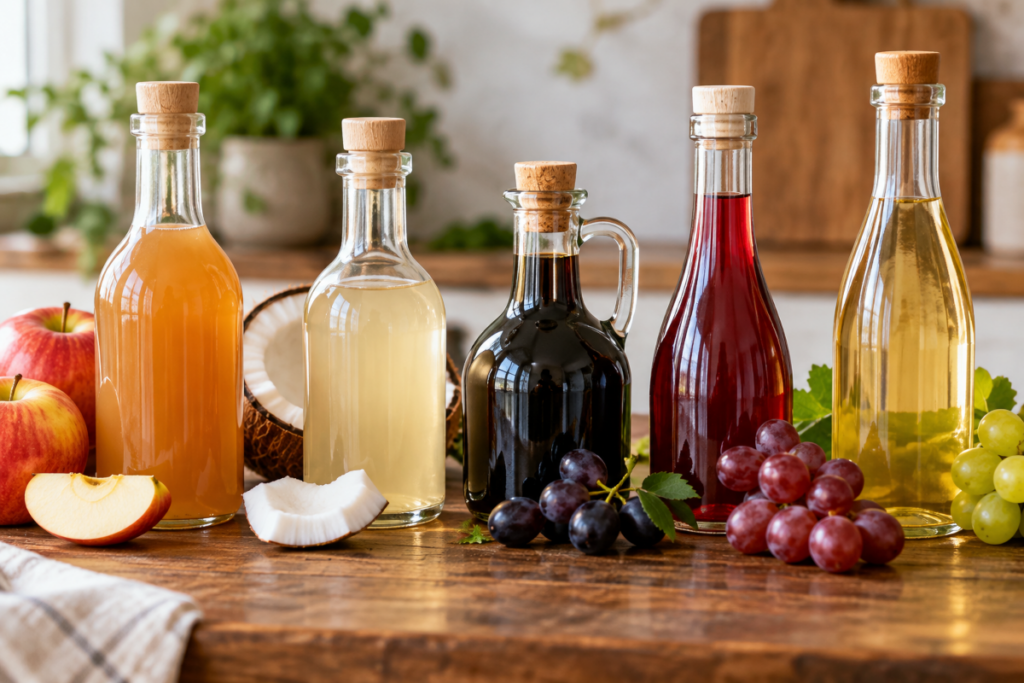
The bottles lined up in the vinegar aisle can make the category look simpler than it really is. Apple cider vinegar, coconut vinegar, balsamic vinegar, red wine vinegar, and white wine vinegar all bring acidity, but they do not taste the same, start with the same raw materials, or contain identical amounts of residual sugars and flavor compounds. Understanding those differences makes it easier to choose vinegar for flavor and dietary preferences rather than treating every bottle as interchangeable.
What Turns a Fermented Liquid Into Vinegar?
Traditional vinegar production generally involves two biological steps. First, yeast converts sugars into alcohol. Acetic acid bacteria then convert much of that alcohol into acetic acid, producing the characteristic sourness associated with vinegar. FDA labeling guidance describes cider vinegar as the product of alcoholic and subsequent acetous fermentation of apple juice, while wine vinegar follows the same basic process using grape juice. The agency’s guidance also states that these vinegars should contain at least 4 grams of acetic acid per 100 milliliters.
Acetic acid is the common thread, but vinegar contains more than acetic acid and water. Fermentation and the original food source can leave behind small amounts of aromatic compounds, organic acids, esters, and other substances that contribute to flavor and aroma. FDA laboratory work has historically distinguished fermented vinegar from a simple solution of diluted acetic acid, which is one reason food-grade diluted acetic acid is not considered equivalent to vinegar for labeling purposes.
That distinction matters in cooking. The acidity of two bottles may be similar while their flavors are dramatically different. Apple cider vinegar can taste fruity and assertive, red wine vinegar can carry wine-like depth, and balsamic can bring sweetness and concentrated grape flavors. Choosing among them is partly chemistry and partly cooking judgment.
Apple Cider Vinegar: Familiar, Sharp, and Versatile
Apple cider vinegar begins with apples. Their sugars are fermented into alcohol and then converted through acetous fermentation into vinegar. The finished product has a recognizable fruit character underneath its acidity, although flavor varies considerably between filtered, unfiltered, aged, and mass-produced versions.
Unfiltered apple cider vinegar often contains cloudy material commonly called the “mother.” This material is associated with the fermentation process and may include cellulose produced by acetic acid bacteria along with microorganisms and other fermentation residues. Its presence can be interesting from a traditional-food standpoint, but a cloudy bottle should not automatically be treated as nutritionally superior to every clear vinegar.
Apple cider vinegar has also accumulated an extraordinary number of health claims. Human research provides a more restrained picture. Recent systematic reviews have reported improvements in some measures of glycemic control among people with type 2 diabetes, including fasting blood glucose and HbA1c, but individual studies differ in design, duration, dose, and quality. A broader 2026 umbrella review of randomized-trial meta-analyses found evidence for modest effects of vinegar on several cardiometabolic measurements, while also finding no significant effects for a number of other outcomes.
Those findings are interesting, but they do not turn apple cider vinegar into a treatment for diabetes, weight problems, digestive disorders, or other medical conditions. Claims that it reliably produces meaningful long-term weight loss remain poorly supported, and drinking large amounts is unnecessary. Its acidity can irritate some people and can damage tooth enamel when repeatedly consumed undiluted.
For everyday low-lectin cooking, its culinary usefulness is far less controversial. Apple cider vinegar works well in cabbage slaws, leafy salads, marinades, braised greens, homemade mayonnaise-based dressings, and sauces that need acidity without a strong wine character. A small splash can also balance fatty ingredients such as extra-virgin olive oil, avocado oil, tahini alternatives, or rich cuts of meat.
Coconut Vinegar: A Different Flavor Behind a Familiar Name
Coconut vinegar is sometimes assumed to be simply apple cider vinegar made from coconut, but the category deserves closer inspection. Depending on the producer and regional tradition, coconut vinegar may be made from fermented coconut sap or other coconut-derived liquids. That starting material influences both flavor and composition.
Coconut sap vinegar can have a softer, slightly earthy or fermented character compared with the sharper fruitiness of apple cider vinegar. Some varieties carry subtle sweetness or tropical notes, although good vinegar should still taste distinctly acidic rather than like coconut syrup.
For low-lectin cooking, coconut vinegar can be useful when a recipe needs acidity but apple cider vinegar seems too recognizable. It fits naturally into coconut-aminos-based sauces, Asian-inspired vegetable dishes, marinades, seafood preparations, and dressings containing ginger, garlic, lime, or herbs. The result does not necessarily taste strongly of coconut, which makes the ingredient more flexible than its name suggests.
Marketing claims surrounding coconut vinegar deserve the same restraint applied to apple cider vinegar. A bottle may contain trace minerals or fermentation-derived compounds, but vinegar is normally eaten in small amounts. It should not be relied upon as a major source of vitamins or minerals simply because its starting material contains them.
The label remains worth reading. Products sold under similar names can differ in their source ingredients, added sweeteners, flavorings, and production methods. Someone buying coconut vinegar specifically to simplify a low-lectin pantry is better served by checking the ingredient list than assuming every bottle is identical.
Balsamic Vinegar Is Its Own Category
Balsamic vinegar creates more confusion because the word “balsamic” covers products that can vary enormously in price, age, production method, sweetness, and concentration. A thin supermarket balsamic intended for salad dressing and a traditionally aged balsamic can behave almost like different ingredients.
Grapes are central to balsamic production, particularly concentrated grape must. This gives balsamic its characteristic combination of acidity, fruitiness, and sweetness. Because grape sugars can remain in the finished product, balsamic vinegar generally deserves more attention to carbohydrate and sugar content than sharper vinegars such as red wine or apple cider vinegar.
That does not make balsamic incompatible with a low-lectin lifestyle. Lectin-conscious eating and carbohydrate restriction are separate dietary questions. Someone who tolerates balsamic well may find that a teaspoon drizzled over roasted vegetables, leafy greens, pasture-raised meat, or aged cheese provides enough flavor that very little is needed.
The practical issue is portion and formulation. Some inexpensive balsamic-style products use concentrated must, caramel coloring, thickeners, or other ingredients to imitate characteristics associated with longer aging. A short ingredient list does not automatically guarantee better flavor, but reading the bottle helps distinguish traditional vinegar from a heavily formulated condiment.
Balsamic reductions require another layer of awareness. Reducing balsamic vinegar evaporates water and concentrates its flavors, but it also concentrates the sugars already present. Commercial balsamic glazes may contain additional sugar or syrups. A light drizzle and a generous pour therefore have very different nutritional consequences.
Red Wine Vinegar: Strong Enough for Savory Food
Red wine vinegar begins with wine and carries some of the aromatic character of its grape and fermentation history into the finished vinegar. Its flavor tends to be assertive, dry, and well suited to savory cooking.
It works particularly well with extra-virgin olive oil, garlic, oregano, rosemary, parsley, mustard that fits the individual’s dietary preferences, and strongly flavored greens. It can also cut through the richness of beef, lamb, dark-meat poultry, or roasted mushrooms.
In a low-lectin kitchen, red wine vinegar can help replace bottled dressings that contain soybean oil, corn-derived sweeteners, gums, or other ingredients someone may prefer to limit. A basic vinaigrette made from olive oil, red wine vinegar, herbs, salt, and pepper gives the cook much more control over the final ingredient list.
The word “wine” occasionally causes concern for people avoiding alcohol. Vinegar production converts alcohol into acetic acid, although finished vinegar can contain small residual amounts depending on the product and manufacturing process. Someone who needs strict alcohol avoidance for medical, religious, recovery-related, or personal reasons should check the manufacturer’s information rather than assuming every wine vinegar meets the same standard.
White Wine Vinegar: Lighter and Easier to Hide
White wine vinegar provides many of the same practical advantages as red wine vinegar but generally has a lighter flavor and color. That makes it useful when acidity is needed without darkening a dish or competing with delicate ingredients.
It works particularly well with fish, chicken, light-colored vegetables, herb sauces, cucumber preparations, and simple vinaigrettes. A small amount can also brighten cauliflower mash or a creamy sauce that tastes heavy without making the dish noticeably vinegary.
This is one reason keeping more than one vinegar in the pantry is worthwhile. Red wine vinegar might dominate a delicate seafood dressing where white wine vinegar fits quietly into the background. Apple cider vinegar might bring fruitiness where coconut vinegar gives a softer fermented character. Balsamic may contribute sweetness where a dry wine vinegar would make the same dish seem sharper.
Vinegar and Lectins: Keep the Relationship in Perspective
Vinegar frequently appears in discussions of fermentation and low-lectin food preparation, which can create the impression that adding vinegar automatically neutralizes lectins in food. That is too broad a claim. Lectins are proteins found in many plants, and their stability varies considerably depending on the specific lectin, food, temperature, moisture, processing method, and other conditions.
Acidic marinades can change food texture and affect some proteins, but pouring vinegar onto a high-lectin ingredient should not be treated as a proven substitute for preparation methods known to reduce certain lectins effectively. Proper cooking remains especially relevant for foods such as beans. Pressure cooking is a practical option for people who include legumes but want a preparation method built around high heat and pressure.
Fermentation itself can alter food compounds through microbial activity, yet the extent varies with the food and fermentation process. The fact that vinegar is fermented does not establish that it can be used as a universal lectin-removal tool.
The more straightforward advantage is that most plain vinegars are simple condiments used in relatively small quantities. They can make low-lectin meals more interesting without requiring a long list of processed ingredients. That matters because a dietary pattern becomes much easier to maintain when the food actually tastes good.
Acidity Can Help a Marinade Without Performing Miracles
Vinegar is particularly useful in marinades because acidity affects the surface of foods and changes flavor perception. Combined with olive or avocado oil, herbs, garlic, citrus, and seasonings, it can create a flavorful coating for meat, poultry, seafood, or vegetables.
More vinegar does not automatically make a better marinade. Strong acid exposure for too long can alter the exterior texture of delicate proteins, particularly seafood. A marinade should be designed around the food being prepared rather than treated as a chemical bath that needs maximum acidity.
Vinegar also cannot make spoiled food safe or compensate for poor handling. Standard refrigeration, clean utensils, appropriate cooking temperatures, and safe storage remain separate from whatever vinegar contributes to flavor or preservation.
Choosing a Bottle Without Overcomplicating the Pantry
A practical vinegar collection does not need to occupy an entire cabinet. Apple cider vinegar is a strong general-purpose choice for dressings, marinades, slaws, and cooked vegetables. Red or white wine vinegar expands the flavor options for Mediterranean-style cooking, while balsamic provides sweetness and depth when used deliberately. Coconut vinegar earns a place when its softer character works particularly well with the foods someone cooks regularly.
Ingredient labels become more useful when vinegar moves beyond the plain varieties. Added sugars, syrups, colors, flavorings, and thickeners may matter more than whether the front label uses words such as raw, artisan, traditional, or premium. Acidity is also worth checking when vinegar is being used for food preservation rather than ordinary seasoning, since preservation recipes depend on tested acidity and should not be improvised by substituting weaker homemade vinegar.
Personal tolerance deserves a place in the decision as well. Someone with reflux or another condition aggravated by acidic foods may find vinegar uncomfortable regardless of its lectin content. There is little evidence supporting apple cider vinegar as a treatment for heartburn, despite that claim appearing frequently online.
For people who tolerate vinegar comfortably, the most useful question is often culinary: what kind of acidity does this meal need? Apple cider vinegar offers fruity sharpness, coconut vinegar contributes a softer fermented character, wine vinegars bring clean savory acidity, and balsamic adds sweetness along with its sour edge. A low-lectin kitchen does not need a single “correct” vinegar. It benefits more from a few well-chosen bottles that make simple ingredients easier to cook, season, and enjoy consistently.
