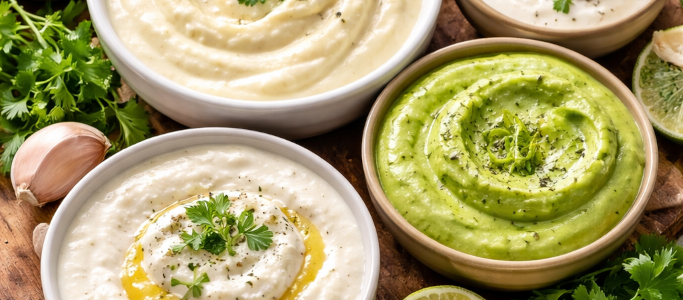
Creamy Textures Without Dairy or Gums
Creaminess has a reputation problem. For decades, we’ve been trained to associate rich, smooth textures with dairy products, thickeners, and stabilizers. Cream comes from cream.


Creaminess has a reputation problem. For decades, we’ve been trained to associate rich, smooth textures with dairy products, thickeners, and stabilizers. Cream comes from cream.
One of the simplest instructions you will see repeated in traditional cooking, ancestral food preparation, and modern low-lectin guidance is this: boil the food and discard the water.
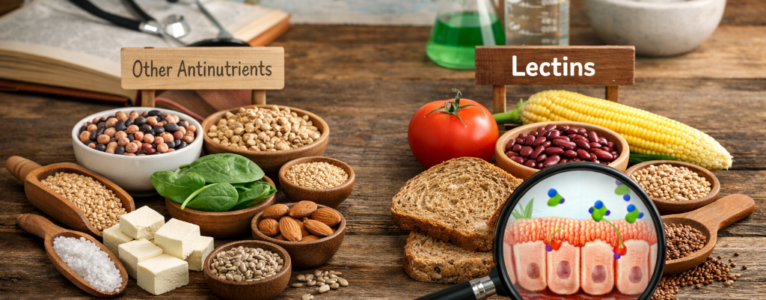
The word antinutrient has become a catch-all term in modern nutrition discussions. It appears in podcasts, blog posts, comment sections, and food debates, often framed as something to fear, eliminate, or ignore entirely.
Freezing is one of the most common food preservation methods in the modern world. It is quiet, convenient, and largely invisible once food is tucked away behind a freezer door.
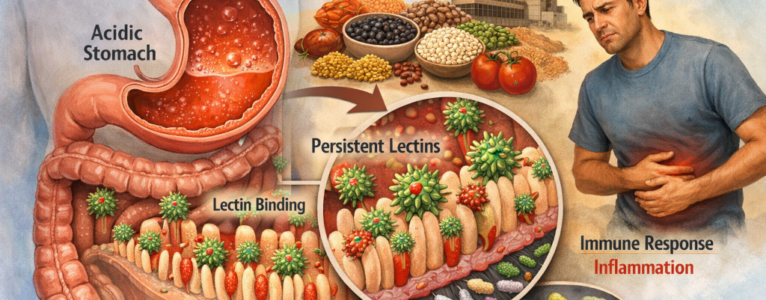
Digestion is often imagined as a powerful, unforgiving process. Food enters the mouth as something recognizable and exits the stomach and intestines as broken-down nutrients, reduced to amino acids, fatty acids, and simple sugars.
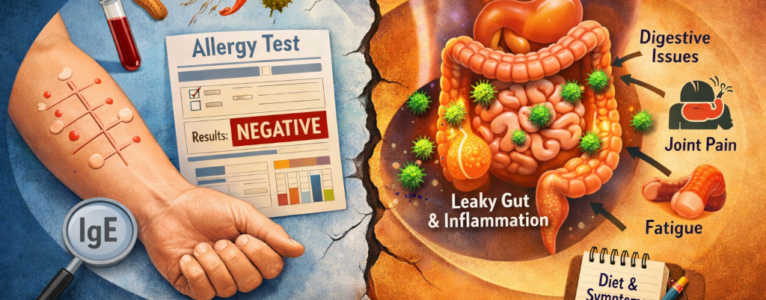
For many people beginning a low-lectin journey, the first instinct is to seek confirmation. If food is causing symptoms, there must be a test that can identify the culprit.
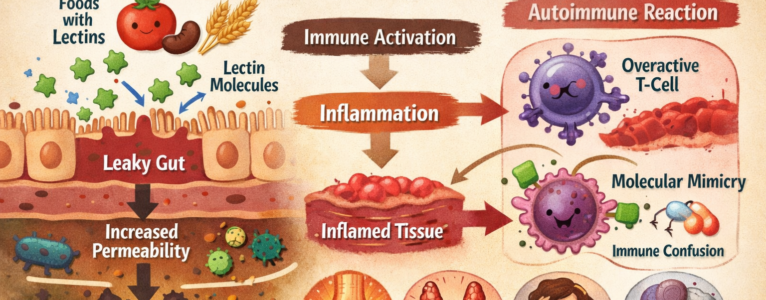
Autoimmune conditions are often described as if they all belong to the same family, sharing a single cause and a single solution. In reality, they behave more like distant relatives who share a surname but live very different lives.
Most people think of sleep and food as two separate pillars of health. You eat during the day. You sleep at night.
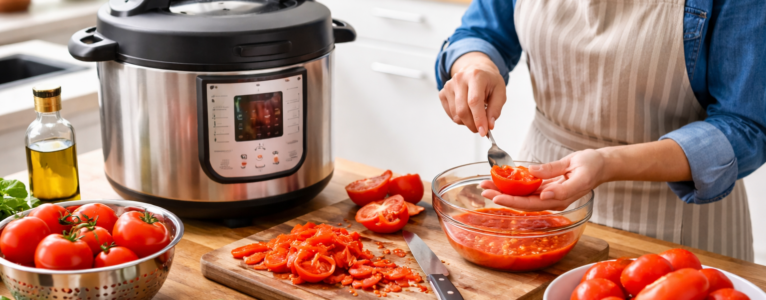
Tomatoes occupy a complicated place in many kitchens. They are central to sauces, soups, stews, and countless comfort foods, yet they also belong to the nightshade family, a group of plants often discussed in relation to lectins and digestive sensitivity.
Many people begin a low-lectin lifestyle because of obvious reactions. Bloating after meals. Joint stiffness the next morning. Brain fog that seems to drift in and out without warning.