Slow cookers have earned a cozy reputation. They promise convenience, comfort food, and the satisfaction of letting dinner quietly make itself while you tend to the rest of your day. For most households, that’s a culinary dream. But for people navigating a low-lectin lifestyle or anyone trying to reduce plant compounds that may irritate digestion, that dream comes with a scientific catch. The very feature that makes slow cookers appealing, their low, steady temperature, is the reason they fall short when it comes to significantly reducing lectins.
Understanding why requires stepping into the world of heat, protein chemistry, and how certain ingredients respond to cooking. Once you see the full picture, the slow cooker looks less like a kitchen hero and more like a tool that simply can’t finish the job where lectin reduction is concerned.
Why Heat Matters: The Chemistry of Lectins
Lectins are specialized proteins found in many plant foods. In nature, they serve as defense compounds, helping plants resist pests and survive in challenging environments. In the human digestive system, however, some lectins, especially those in beans, legumes, grains, and nightshades, can be irritating. They may bind to the lining of the gut, resist digestion, or trigger immune responses in sensitive individuals.
The good news is that lectins are sensitive to heat. High enough temperatures can denature these proteins, meaning they unwind, lose their structure, and become harmless. This is where pressure cooking shines: high heat plus steam forces lectins to break down reliably. In contrast, slow cookers are gentle, too gentle.
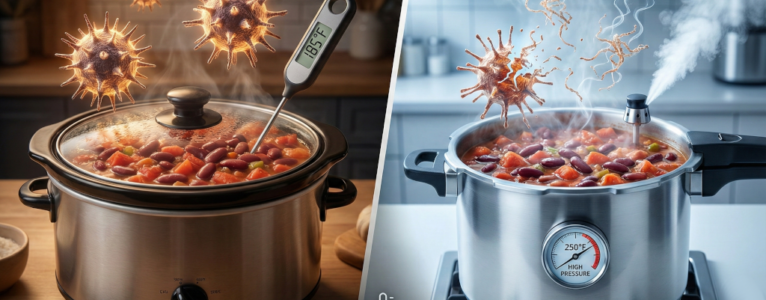
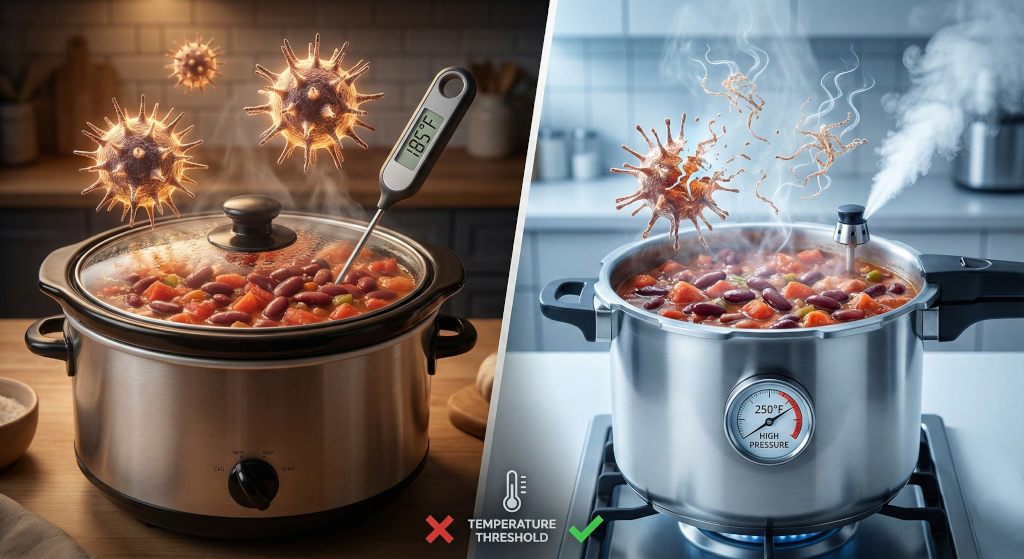
To reduce lectins effectively, foods must reach temperatures high enough to break the proteins apart. Slow cookers hover between 170°F and 200°F (76°C–93°C). This range is sufficient for safe cooking in the general sense, but it is nowhere near the level required to disable lectins efficiently.
Most lectin-containing foods need temperatures closer to 240°F (115°C) or higher, which only occurs under pressure.
Without enough heat, lectins remain structurally intact. And that is the central issue.
Why Slow Cookers Fall Short for Beans, Grains, and Legumes
Let’s start with the biggest example: beans.
Beans naturally contain some of the highest concentrations of lectins. Red kidney beans, for instance, contain phytohemagglutinin, a lectin so potent that improperly cooked beans can cause severe gastrointestinal reactions.
A slow cooker cannot reach the temperature needed to neutralize this compound. In fact, research has shown that slow-cooking kidney beans can increase toxicity, because heating them gently for a long period may activate lectins before destroying them. Because the slow cooker’s heat is too low to finish the breakdown process, the beans become more dangerous than if they had been left raw.
This slow-but-not-hot-enough danger zone applies to other legumes as well: black beans, white beans, lentils, chickpeas, and soybeans all require adequate high temperatures to reliably reduce lectins.
Similarly, grains such as barley, quinoa, and wheat berries don’t fare well in slow cookers. The temperatures simply cannot reach the threshold required to reduce their lectin load.
The same pattern applies broadly: if a food contains lectins that are reduced by heat, but the heat is too low, the slow cooker will never complete the transformation.
Why Low Moisture + Low Heat Is the Worst Combo
Slow cookers work by trapping steam in a sealed ceramic chamber. They create a humid cooking environment but without the intense steam pressure found in a pressure cooker. That pressure isn’t just about speeding up cooking. It raises the boiling point of water so the food can reach higher temperatures.
Without that pressure, water cannot rise above 212°F (100°C). And slow cookers rarely exceed 200°F (93°C). This means lectin-rich foods sit for hours in a warm, moist environment, conditions that soften beans and grains, but don’t remodel the lectin proteins themselves.
Textures may improve. Flavors may deepen. But from a lectin-reduction standpoint, the food is largely unchanged.
Nightshades and Their Unique Challenge
Nightshades like tomatoes, potatoes, peppers, and eggplant contain lectins primarily in their seeds and skins. Peeling and deseeding helps, but heat is still important.
Slow cookers struggle here, too.
Tomato sauces, for example, thicken beautifully in a slow cooker, but the temperatures remain low enough that the lectins may not break down effectively. Pressure cooking tomato sauces or purees, even briefly, can significantly reduce lectins in a way slow cooking cannot.
Potatoes, especially white and russet varieties, also contain lectins that respond well to high-heat cooking. Slow-cooked potatoes may become tender but retain more lectins than those cooked under pressure or roasted at high temperatures.
Peppers and eggplant follow the same pattern: the slow cooker softens them, but does not deactivate lectins thoroughly.
Why Long Cooking Time Doesn’t Equal High Heat
One of the biggest misconceptions about slow cookers is the idea that cooking something “long enough” compensates for low heat. In reality, heat intensity, not time, is what denatures lectins.
A food sitting at 190°F for 10 hours still never reaches the temperature necessary for meaningful lectin reduction.
Compare that to a pressure cooker:
- 240°F+ under pressure
- Steam-driven heat transfer
- Complete denaturation within minutes for many lectins
A short pressure-cooking cycle can accomplish what a slow cooker cannot achieve in a full day.
It’s not about patience. It’s about physics.
“But My Chili Always Feels Fine…” – A Common Question
Many people feel they tolerate slow-cooked chili, soups, or stews just fine. And that’s valid. Not everyone is sensitive to lectins, and many recipes instinctively reduce lectins through other steps, e.g., pre-boiling beans before adding them to the slow cooker.
However, for those who are lectin-sensitive or simply want to follow a low-lectin lifestyle, “fine” isn’t good enough. You deserve certainty, not guesswork.
If lectins are a known trigger for your inflammation, digestive discomfort, or autoimmune flares, then relying on a slow cooker leaves too much margin for error. A single batch of improperly prepared beans can cause hours or days of symptoms.
Once people switch to pressure cooking for their lectin-rich foods, many report fewer digestive issues, clearer energy patterns, and far more consistency in how their body responds.
Slow Cookers Are Still Great… for the Right Ingredients
Avoiding slow cookers doesn’t mean exiling them from your kitchen forever. They just need to be used strategically.
Here are ingredients that do work well in slow cookers:
- High-quality meats (especially tougher cuts like brisket, pork shoulder, chuck roast)
- Non-lectin vegetables such as carrots, onions, celery, garlic, squash
- Broths and stocks
- Lectin-free legumes (e.g., properly processed lupini beans, depending on your diet)
- Pre-pressure-cooked ingredients
In fact, one of the best uses of a slow cooker for low-lectin living is finishing a dish after pressure cooking the core lectin-rich items. For example:
- Pressure cook beans, tomatoes, or potatoes to reduce lectins.
- Transfer them to a slow cooker with seasonings, aromatics, and meats.
- Let flavors meld on low heat for hours.
This gives you convenience and flavor without risking your gut health.
How Pressure Cooking Protects Digestion (and Why It’s the Better Tool)
The reason pressure cooking is recommended for lectin reduction comes down to precise, reliable, repeated results.
Pressure cookers:
- Reach 240°F or more, unlike slow cookers
- Maintain high temperature uniformly
- Break down lectins rapidly
- Preserve nutrients better than boiling or long simmering
- Reduce cooking time dramatically
- Improve digestibility even for people who aren’t lectin-sensitive
To someone following a low-lectin lifestyle, the pressure cooker isn’t an optional gadget. It’s a foundational tool. It’s the method that consistently transforms high-lectin foods into something gentle, safe, and enjoyable.
In many ways, the pressure cooker is the opposite of the slow cooker: it uses high intensity in a short burst rather than low intensity over an extended period.
When the goal is lectin reduction, intensity wins.
Why Slow Cookers Can Mislead New Cooks
Slow cookers often give beginners a sense of culinary confidence, “Just throw everything in, set it, and forget it.” But this mindset becomes dangerous with lectin-rich foods, because it implies:
- All cooking methods are interchangeable
- Everything will turn out safe as long as it cooks long enough
- Softness equals doneness
But softness is not safety.
Lectins don’t respond to time the same way carbohydrates or proteins do. A bean may be tender yet chemically unchanged where lectins are concerned. A tomato may fall apart while its lectins remain intact. A potato may mash beautifully but still challenge your digestion.
The slow cooker creates the illusion of proper cooking, especially with foods that look done long before they are safe for sensitive guts.
How Too-Low Temperatures Affect Texture vs Chemistry
Slow cookers excel at slowly dissolving connective tissue in meats. They create silky broths and tender stews. But these transformations are primarily physical, not chemical.
Lectins, being proteins, must be denatured, not just softened. They need a certain threshold of heat where their folded shapes unravel. A slow cooker merely warms them. Imagine trying to melt a cube of ice with a lukewarm breeze. The edges will soften, droplets may form, but the cube stays intact. To change its state, it needs enough energy or enough heat. Lectins require that same threshold.
Historical Cooking Methods and the “Missing Heat” Problem
Before pressure cookers existed, traditional cultures often reduced lectins through other means:
- Long soaking
- Fermentation
- Sprouting
- Boiling vigorously for extended periods
- Roasting over high heat
- Drying and pounding, then cooking again
These methods all involved either high heat or biological processes that change the structure of lectins. Slow cookers mimic none of these conditions. They sit in a limbo space: too warm for fermentation, too cool for destruction, too gentle for denaturation. They represent an entirely modern invention, one that was never designed with lectin reduction in mind.
Why Avoiding Slow Cookers Matters for Gut Health
If you’re living low-lectin, you’re probably familiar with how sensitive the digestive system can be. Lectins can:
- bind to gut lining
- disrupt intestinal permeability
- trigger inflammation
- promote bloating or gas
- aggravate autoimmune conditions
- cause fatigue or joint discomfort
If you’re actively trying to protect and heal your gut, slow-cooked high-lectin foods can undo progress in a single meal.
Removing slow cookers from the early stages of a low-lectin journey is often transformative. Many people report:
- Better digestion
- More stable energy
- Improved mood
- Clearer skin
- Less joint pain
- Fewer flare-ups
Simply choosing the right cooking method can shift your entire experience.
The Smart Way to Use Your Slow Cooker if You Love It
Maybe your slow cooker feels like an old friend because you’ve made chili, pulled pork, and Sunday stews with it for years. Great. You don’t have to banish it. You just have to use it wisely.
Here are safe strategies:
1. Pressure Cook First, Slow Cook Second – Use a pressure cooker to neutralize lectins, then transfer everything to a slow cooker for flavor development.
2. Avoid Putting Raw Beans in a Slow Cooker Completely – Even pre-soaked beans must never go straight into a slow cooker.
3. Peel and Deseed Nightshades Before Slow Cooking – This reduces the lectin load, though pressure cooking is still better.
4. Use Slow Cookers Mainly for Meat-Based Recipes – This avoids the lectin issue entirely.
5. Treat Slow Cookers as a “Low-Lectin Finishing Tool,” Not a Primary One – This simple shift keeps your meals safe and your gut happier.
In the End, It’s About Control and Certainty
Slow cookers offer convenience, but they cannot offer certainty… not for lectins. You deserve to know that the food you’re eating supports your health goals, your comfort, and your daily well-being. Pressure cooking provides that confidence, while slow cooking leaves too much to chance.
When lectin reduction is the priority, avoiding slow cookers isn’t about fear or strict rules. It’s about understanding the science. Too-low temperatures simply cannot transform high-lectin foods into something safe for sensitive systems.
Once that truth settles in, the solution becomes clear. Use the cooking method that gives you control, consistency, and comfort in every meal. Your gut will thank you.