Parents rarely struggle because they cannot identify a technically acceptable snack. The real challenge is finding something a child will eat without a negotiation, a dramatic inspection, or a last-minute demand for the packaged food everyone else seems to have.
Low-lectin snacking adds another layer. Many familiar children’s snacks depend heavily on wheat flour, corn, peanuts, cashews, soy, conventional dairy, sugary cereals, or highly processed ingredients. Remove those defaults and the snack cabinet can suddenly look empty. It does not have to stay that way.
A child-friendly low-lectin snack should still feel familiar, taste good, travel reasonably well, and provide enough substance to carry a child to the next meal. Children do not need tiny versions of complicated adult wellness recipes. They need simple food presented in a form they recognize.
There is also room for flexibility. A low-lectin lifestyle is not a contest to create the smallest possible food list. Children have different nutritional needs, tolerances, preferences, allergies, and medical histories. Parents considering a restrictive eating pattern for a growing child should discuss it with the child’s pediatrician or a registered dietitian, particularly if several food groups are being removed.
Start With What a Snack Is Supposed to Do
A snack is not just entertainment between meals. It can provide protein, fat, produce, calcium, fiber, and energy that a child may not have eaten during breakfast or lunch.
The most useful low-lectin snacks usually combine two simple elements. One provides staying power, such as eggs, poultry, avocado, approved dairy, coconut, or a tolerated nut butter. The other provides color, texture, or natural sweetness, such as berries, sliced pear, peeled apple, celery, cucumber, or another tolerated fruit or vegetable.
This combination works better than handing a child a bag of low-lectin crackers and hoping it holds them for three hours. Crackers may be convenient, but they rarely make a complete snack by themselves.
Children also tend to eat better when snacks appear at reasonably consistent times instead of being available continuously. Regular snack periods help preserve hunger for meals and reduce the habit of grazing all afternoon. The American Academy of Pediatrics recommends structured meal and snack times rather than allowing children to carry food around throughout the day. Keep portions modest at first. A child can always ask for more. A plate piled with unfamiliar food often feels like an assignment.
Familiar Shapes Make New Ingredients Less Strange
Presentation matters more with children than many adults want to admit. A child may refuse roasted cauliflower at dinner but accept the same vegetable when it is formed into a small baked tot and served with a dip. This is not trickery. The ingredient is still visible and can still be named. The goal is simply to place less familiar food into a format the child already understands.
Mini patties, roll-ups, wedges, dipping sticks, small muffins, skewers for older children, and divided snack boxes can all make low-lectin foods feel more ordinary. A snack does not have to announce itself as healthy. In fact, that announcement may work against you. Children usually respond better to “chicken bites” than “protein-rich lectin-conscious poultry pieces.” Keep the nutrition lecture out of the kitchen. Serve the food.
Eggs Are the Quiet Snack Hero
Eggs solve several low-lectin snack problems at once. They contain protein and fat, are easy to prepare ahead of time, and can be served in several child-friendly forms.
Hard-boiled egg wedges are the simplest option. Add a little sea salt, or serve them with avocado mash for dipping. Some children dislike the dry texture of a hard-boiled yolk, so chopped egg mixed with avocado or an approved mayonnaise may work better.
Mini egg muffins are another practical choice. Whisk eggs with finely chopped mushrooms, spinach, broccoli, or leftover chicken, then bake the mixture in a greased mini-muffin pan. Refrigerate the finished bites and warm them briefly as needed.
Keep the flavor mild at first. Children who are still getting used to vegetables may accept one finely chopped ingredient more easily than a muffin packed with five different colors and textures.
Eggs are one of the nine major food allergens recognized in the United States, so school rules and individual allergy plans still apply even when a snack fits a low-lectin approach.
Avocado Can Become More Than Toast
Avocado is soft, filling, and easy to pair with both savory and mildly sweet flavors. It does not need wheat toast to become a child-friendly snack. Mash avocado with a pinch of salt and serve it with cucumber half-moons, celery sticks for older children, homemade almond-flour crackers, or cassava-based crackers with a short ingredient list. Avocado can also be spread inside a small cassava wrap with sliced chicken or turkey.
For children who prefer smoother textures, blend avocado with unsweetened cocoa powder, a splash of coconut milk, and a small amount of approved sweetener. This creates a pudding-like snack without relying on conventional flour or a large dose of added sugar.
The result should still taste like a treat. Do not strip away every trace of sweetness and expect a child accustomed to commercial pudding to applaud the earthy complexity. Reduce sweetness gradually.
Build a Better Fruit Snack
Fruit can fit into many low-lectin plans, but serving size and selection matter. Whole fruit offers texture and fiber that juice does not provide, and current CDC guidance favors whole fruit over fruit juice for young children.
Berries are especially convenient. Strawberries, blueberries, blackberries, and raspberries can be served with unsweetened coconut yogurt, approved plain dairy yogurt, or a small portion of whipped coconut cream. Sliced pear and peeled apple can be paired with thinly spread almond, walnut, macadamia, or another tolerated nut butter. A dusting of cinnamon gives the snack a dessert-like flavor without turning it into candy.
Frozen berries are useful too. Let them soften slightly, then mix them into yogurt or blend them with coconut milk for a thick smoothie bowl. Smoothies are easy to overbuild, so keep them simple. Fruit, an unsweetened liquid, and perhaps avocado or yogurt are usually enough.
For younger children, fruit must be prepared according to developmental ability. Whole grapes, firm raw apple chunks, large berries, and other round or hard foods can present choking risks. Grapes and similar foods should be cut lengthwise into appropriately small pieces, while hard fruit may need to be cooked, grated, peeled, or sliced very thinly.
Turn Leftover Protein Into Tomorrow’s Snack
Parents often think of meat as meal food, but small portions of leftover protein make excellent snacks. Cold chicken pieces can be packed with cucumber slices and avocado dip. Thin turkey slices can be rolled around a strip of approved cheese or a little mashed avocado. Leftover pork can be chopped finely and added to an egg muffin. Small salmon cakes can be made with cooked wild-caught salmon, egg, herbs, and almond flour.
These snacks are particularly useful for children who become hungry again soon after eating fruit or crackers. Protein and fat generally create a more substantial snack than a sweet carbohydrate by itself.
Watch the ingredient lists on deli meats. Many contain sugar, corn-derived additives, soy ingredients, starches, flavoring blends, or preservatives a family may prefer to limit. A freshly cooked chicken thigh sliced at home is often simpler than trying to decode a turkey package with fifteen ingredients. Make extra protein at dinner on purpose. That turns tomorrow’s snack into assembly instead of cooking.
Use Approved Dairy Thoughtfully
Some low-lectin households include dairy from sheep, goats, buffalo, or cows producing A2 beta-casein. Others avoid dairy completely. The right choice depends on the family’s approach and the child’s individual tolerance.
For families including it, plain yogurt can become a fast snack with berries, cinnamon, or a small amount of unsweetened coconut. Cheese cubes or thin slices can be paired with pear, cucumber, or leftover chicken.
Choose unsweetened products whenever practical. Flavored children’s yogurts can carry enough added sugar to function more like dessert than a balanced snack. Sugary drinks, desserts, and sweet snacks remain major sources of added sugars in children’s diets.
Children who cannot tolerate dairy may do well with unsweetened coconut yogurt, but labels require attention. Some brands contain rice starch, corn ingredients, gums, added sugar, or long blends of stabilizers. A product marketed as plant-based is not automatically compatible with every low-lectin plan.
Homemade Crunch Without the Standard Snack Aisle
Crunch is one of the hardest textures to replace. Many packaged crunchy snacks are built from corn, wheat, rice, soy, or potato starch, often followed by industrial oils and flavoring powders.
Homemade almond-flour crackers can fill that gap. A basic dough made from blanched almond flour, egg, olive or avocado oil, salt, and herbs can be rolled thin and baked until crisp. Cassava-flour crackers are another option, though cassava remains a concentrated starch and should not become the only food a child accepts.
Roasted broccoli florets, cauliflower pieces, kale chips, and thinly sliced sweet potato rounds can also provide crisp edges. The texture will not perfectly duplicate a cheese puff. That is fine. Children do not need every homemade food to impersonate something from a factory.
Cauliflower tots are often an easier starting point than vegetable chips. Mix cooked, well-drained cauliflower with egg, approved cheese if used, and a small amount of almond or cassava flour. Shape the mixture into small pieces and bake until browned. Serve them with a familiar dip. A child who controls the dipping process is often more willing to try the food.
Pack Snack Boxes Instead of Recreating Lunch
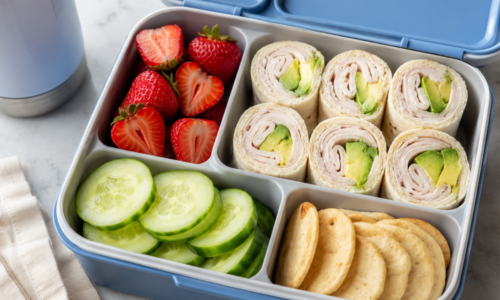
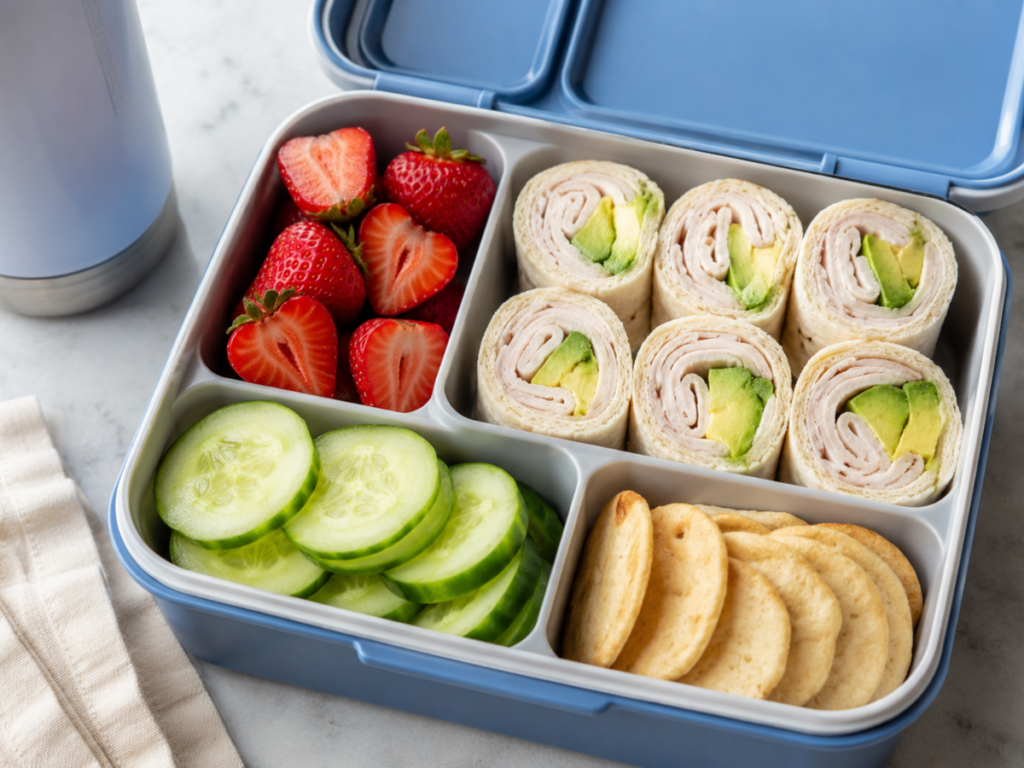
A divided snack box works because it offers choice without requiring several separate recipes. Fill two or three compartments rather than every available space. A practical box might contain sliced chicken, blueberries, and cucumber rounds. Another could hold an egg muffin, pear slices, and a small portion of coconut yogurt. For older children, almond-flour crackers, cheese, and avocado mash make a compact snack that feels more like a store-bought kit.
Do not pack a large assortment of new foods at once. Include at least one item the child reliably eats. Exposure works better when the child does not feel trapped by an entire container of uncertainty.
School and daycare policies matter here. Tree nuts, eggs, dairy, fish, and sesame are among the major allergens that must be declared on regulated food labels, and many schools place additional limits on what can enter classrooms. A low-lectin snack is not helpful if it violates another child’s allergy plan.
Make Sweet Snacks Less Dependent on Sugar
Children enjoy sweet food. Pretending otherwise creates unnecessary conflict. The better strategy is to make sweetness one part of the snack instead of its entire structure. A berry yogurt cup contains fruit and protein. An avocado cocoa pudding contains fat and fiber. A small almond-flour muffin can include egg, olive oil, cinnamon, and blueberries rather than being made almost entirely from refined flour and sugar.
Mini portions help. Children often want the experience of a muffin, cookie, or pudding more than they need an adult-sized serving. Possible homemade options include coconut flour mini muffins, almond flour blueberry bites, baked cinnamon pear, frozen coconut yogurt drops, and chia pudding for children old enough to safely manage the texture. Each recipe can be adjusted to the family’s preferred ingredients and the child’s tolerance.
Sweeteners still count, even when they sound natural. Honey, maple syrup, coconut sugar, and date syrup are forms of added sugar. Honey should never be given to a child younger than 12 months because of the risk of infant botulism.
Choking Safety Changes the Menu
Several foods common in low-lectin snack recipes can be unsafe for young children if served in the wrong form. Whole nuts, seeds, popcorn, hard raw vegetables, large meat or cheese chunks, whole grapes, and spoonfuls of thick nut butter are recognized choking hazards for young children. Nut butter should be spread thinly or diluted into another food rather than offered as a thick lump.
A snack that is nutritionally thoughtful can still be physically unsafe. Texture, shape, size, and the child’s developmental ability matter as much as the ingredient list. Children should sit while eating rather than walking, running, playing, or riding in a moving vehicle with food in their mouths. Supervision matters, especially with a new texture.
For a toddler, a suitable snack might be soft scrambled egg, mashed avocado, or very soft pear pieces. An older child may safely handle sliced raw vegetables, whole nuts, or firmer crackers, depending on maturity and chewing ability.
Keep the Rules Simple Enough to Live With
A workable family snack system does not require preparing six recipes every Sunday. Choose a few categories and keep them available. Cook eggs in batches. Wash and portion berries. Save dinner protein. Keep avocados at different stages of ripeness. Make one homemade crunchy item when time permits, then freeze or store it in portions.
Packaged foods can still have a place. Read the entire ingredient list rather than trusting claims printed on the front. “Gluten-free,” “grain-free,” “natural,” and “plant-based” do not tell you whether a product contains corn, rice, soy, peanuts, cashews, added sugar, or an ingredient your child does not tolerate.
Avoid turning every bite into a purity test. A child’s diet is built across days and weeks, not judged by one imperfect snack eaten at a birthday party.
Easy Low-Lectin Snack Combinations
The following combinations require little cooking and can be adjusted for age, allergies, school rules, and individual tolerance.
- Hard-boiled egg wedges with avocado mash
- Plain coconut yogurt with blueberries and cinnamon
- Sliced pear with thinly spread almond butter
- Chicken pieces with cucumber and an approved dip
- Mini egg muffins with mushrooms or broccoli
- Cassava wrap pinwheels with turkey and avocado
- Cauliflower tots with plain yogurt dip
- Approved cheese slices with strawberries
- Almond-flour crackers with mashed avocado
- Wild-caught salmon bites with soft vegetable pieces
- Coconut flour mini muffins with blueberries
- Baked apple or pear with cinnamon
- Unsweetened cocoa avocado pudding
- Celery filled with a thin layer of tolerated nut butter for older children
- Leftover pork or chicken folded into a small egg scramble
Rotate a few dependable combinations rather than demanding novelty every day. Familiarity often helps children accept food. A snack they rejected on Monday may seem completely ordinary after seeing it several more times without pressure.