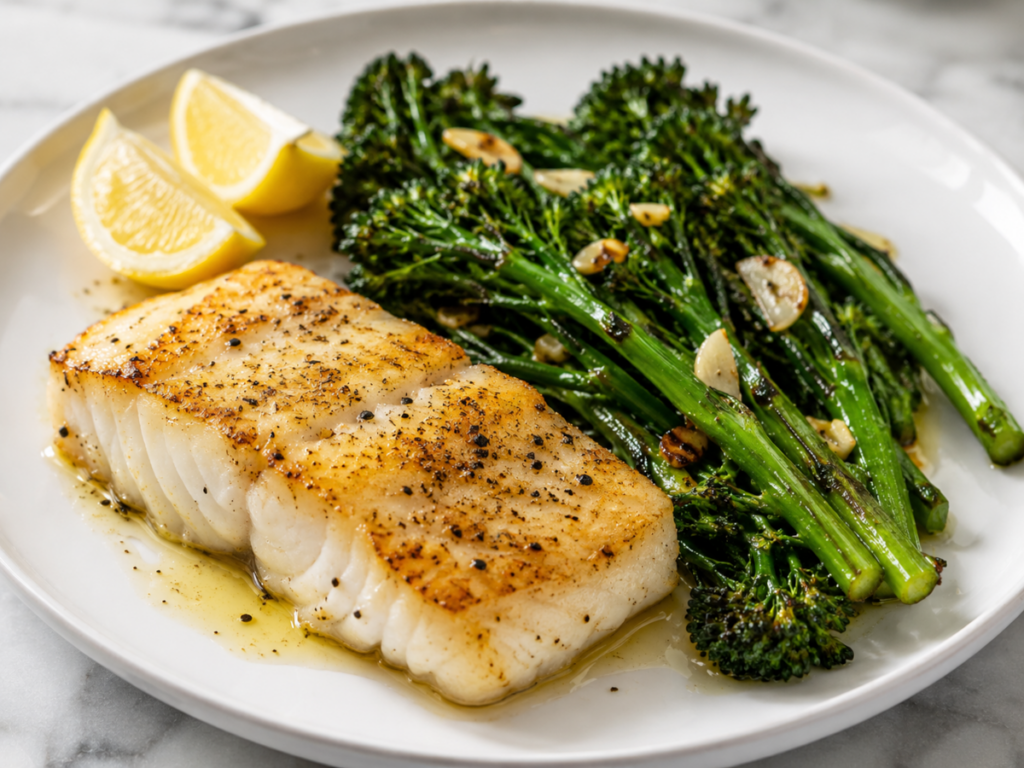
Some dinners try too hard. They pile on sauces, starches, garnishes, and enough ingredients to turn a weeknight meal into a kitchen project. Pan-seared cod with sautéed broccolini takes the opposite approach. It relies on clean ingredients, careful heat, and good timing.
The result is light without feeling skimpy. The cod develops a delicate golden surface while staying moist and flaky inside. Lemon juice cuts through the richness of the olive oil, and the broccolini brings a mild bitterness that keeps the plate from tasting flat. Garlic flakes add savory depth without taking over.
This is exactly the kind of meal that makes a low-lectin routine feel normal. There are no specialty substitutes, no complicated flour blends, and no long list of ingredients pretending to be something else. It is simply fish, vegetables, olive oil, lemon, garlic, salt, and pepper, cooked with enough attention to make them taste like more than the sum of their parts.
Why Cod Works So Well for a Simple Dinner
Cod is a lean, mild fish with firm flakes and a clean flavor. That mildness is sometimes treated as a weakness, but it is really an advantage. Cod accepts lemon, herbs, garlic, and olive oil easily, yet it does not need a heavy sauce to become interesting.
It is also a practical protein for people who want dinner on the table quickly. A fillet that is about one inch thick often cooks in under ten minutes. There is little trimming, no marinating requirement, and no long resting period after cooking.
Nutritionally, cod provides protein along with micronutrients commonly found in seafood, including vitamin B12 and selenium. The FDA also places cod in its “Best Choices” category for lower-mercury seafood, which makes it a useful option for people trying to include fish regularly while paying attention to mercury exposure.
Wild-caught cod is the preferred choice for this recipe because it usually has a firm texture and distinct, clean flavor. Availability varies by region and season, so frozen wild-caught fillets are perfectly acceptable. In fact, frozen fish can be the more dependable option because it is often frozen soon after harvest.
The key is thawing it properly. Place frozen cod in the refrigerator overnight, then pat it very dry before seasoning. Surface moisture is the enemy of browning. Wet fish steams before it sears, leaving the outside pale and soft.
A Low-Lectin Plate Without the Fuss
Fish is naturally free of plant lectins, so cod fits easily into a low-lectin eating pattern. Broccolini is a cruciferous vegetable related to broccoli. It contains fiber and a range of plant compounds associated with cruciferous vegetables, while offering a softer stem and slightly sweeter flavor than mature broccoli.
Low-lectin eating should not become a contest to remove every trace of every plant protein from the diet. The more practical approach is to focus on foods that are known to be troublesome for a particular person, prepare foods appropriately, and build meals around ingredients that are generally well tolerated.
This plate follows that logic. The protein is straightforward. The vegetable is cooked rather than served raw. The fat comes from extra-virgin olive oil. There are no beans, wheat-based breading, corn coatings, or seed-heavy sauces.
Extra-virgin olive oil also brings flavor that butter cannot duplicate. Its fruity, peppery character works especially well with lemon and green vegetables. Olive oil is rich in monounsaturated fat, and replacing some saturated fats with monounsaturated fats can support a more heart-conscious eating pattern.
For this recipe, the oil is heated over medium to medium-high heat rather than pushed until smoking. That gives the cod enough heat to brown while protecting the flavor of the oil and reducing the chance of scorching the fish.
The Real Secret Is Heat Control
Cod has a small margin between perfectly cooked and dry. Its lean flesh does not have much internal fat to protect it from overcooking. That means the pan matters, the thickness of the fillet matters, and the cook needs to pay attention.
Start with a fully heated skillet. The oil should shimmer, but it should not smoke. Place the fish in the pan and leave it alone. Constantly lifting or sliding the fillet prevents the surface from developing color and increases the chance that the fish will break.
Cook the first side slightly longer than the second. This creates the attractive seared surface and does most of the cooking before the fillet is turned. Once flipped, the fish may need only two or three minutes.
Cod is done when the flesh changes from translucent to opaque and separates into moist flakes with gentle pressure. The USDA’s general safe minimum internal temperature for fish is 145°F. A thermometer inserted into the thickest section is the most dependable way to check without tearing apart the fillet.
Carryover heat continues to cook the fish briefly after it leaves the skillet. Pulling it from the pan as soon as it reaches the proper temperature helps keep it moist. Leaving it in a hot skillet while finishing the vegetables is a common way to ruin an otherwise good piece of cod.
Broccolini Deserves Better Than Boiling
Broccolini is often overcooked until the stems go limp and the florets lose their fresh green character. Sautéing gives it a better texture. The stems become tender with a slight bite, while the florets pick up browned edges.
The stems usually need a small head start. If the stalks are thick, slice them lengthwise. A tablespoon or two of water added to the skillet, followed by a brief cover, creates enough steam to soften the stems without turning the whole vegetable soggy.
Garlic flakes are useful here because they spread evenly and are less likely than fresh minced garlic to burn before the broccolini is ready. They also give the dish a mellow garlic flavor rather than a sharp raw bite.
The final drizzle of olive oil is not decorative. It restores the fresh, fruity flavor that can soften during cooking. Use a modest amount. Broccolini should glisten, not sit in a pool of oil.
Pan-Seared Cod with Sautéed Broccolini
Ingredients
- 2 wild-caught cod fillets, about 5 to 6 ounces each
- 1 tablespoon extra-virgin olive oil
- 1 tablespoon fresh lemon juice
- 1 teaspoon finely grated lemon zest, optional
- 1/2 teaspoon sea salt
- 1/4 teaspoon freshly ground black pepper
- Lemon wedges for serving
- 1 bunch broccolini, about 8 ounces
- 1 tablespoon extra-virgin olive oil
- 1/2 teaspoon garlic flakes
- 2 tablespoons water
- 1/4 teaspoon sea salt
- Freshly ground black pepper to taste
- 1 teaspoon extra-virgin olive oil for finishing
Instructions
- Prepare the cod. Pat the fillets dry on all sides with paper towels. Season both sides with sea salt and black pepper. Let the fish sit at room temperature for about five minutes while the skillet heats.
- Prepare the broccolini. Trim the dry ends from the stems. If any stems are thicker than a pencil, slice them lengthwise so they cook at roughly the same rate as the thinner pieces.
- Heat the cod skillet. Place a heavy stainless steel or well-seasoned cast-iron skillet over medium-high heat. Add one tablespoon of extra-virgin olive oil. Heat until the oil shimmers.
- Sear the first side. Place the cod in the skillet with the presentation side down. Press each fillet very gently with a fish spatula for the first few seconds so the surface makes even contact with the pan. Cook without moving for three to four minutes.
- Flip and finish. Turn the fillets carefully. Reduce the heat to medium and cook for another two to four minutes, depending on thickness. During the final minute, add the lemon juice around the fish rather than directly over the browned surface. Spoon a little of the warm lemon oil over the fillets.
- Check for doneness. The cod should be opaque, moist, and easy to separate into flakes. Check the thickest portion for an internal temperature of 145°F. Transfer the fish to warm plates immediately.
- Cook the broccolini. While the cod cooks, heat a second skillet over medium heat. Add one tablespoon of olive oil and the broccolini. Sauté for two minutes, turning occasionally.
- Steam briefly. Add two tablespoons of water and cover the skillet. Cook for two to three minutes, just until the stems begin to soften.
- Season and brown. Remove the lid. Add the garlic flakes, sea salt, and black pepper. Continue cooking for another two to three minutes, turning the broccolini until the water evaporates and a few edges become lightly browned.
- Finish the plate. Divide the broccolini between the plates. Drizzle it with the remaining teaspoon of olive oil. Add lemon zest over the cod if using, and serve with lemon wedges.
How to Keep the Cod from Sticking
Fish sticking to the skillet is usually a timing problem rather than a pan problem. A properly heated pan and dry fish will release more easily once a crust has formed. Trying to flip too early tears that forming crust away from the fillet.
Stainless steel works well if it is preheated before the oil goes in. Cast iron gives strong browning but needs to be well seasoned. A quality nonstick skillet is the easiest option, though the browning may be slightly lighter.
A thin fish spatula helps more than a broad wooden turner. Slide it under the fish from the side, supporting as much of the fillet as possible before lifting. Cod can separate along its natural flakes, so a confident, gentle turn works better than repeated nudging.
Useful Variations That Keep the Plate Simple
Fresh parsley can be scattered over the finished cod for a clean herbal note. Dill gives the meal a more classic seafood flavor. Chopped chives work well when a mild onion flavor is wanted.
For more richness, stir a teaspoon of capers into the lemon oil during the final minute of cooking. Check the label for simple ingredients and adjust the added salt because capers are already salty.
The broccolini can be replaced with broccoli florets, asparagus, or sliced cabbage. Cooking times will change slightly, but the same idea holds. Cook the vegetable until tender enough to enjoy while keeping some structure.
A pinch of red pepper flakes can be added with the garlic flakes for heat. People who personally avoid peppers or other nightshades can simply leave them out. The base recipe does not depend on spice to taste complete.
Buying and Storing the Ingredients
Fresh cod should smell clean and mild, never sharply fishy or sour. The flesh should look moist and firm rather than dry around the edges. If buying frozen fillets, choose packages without large ice crystals or obvious freezer damage.
Keep fresh cod refrigerated and cook it within one to two days. Thawed cod should not sit uncovered in the refrigerator where its surface can dry unevenly. Store it in a covered container, then pat it dry just before cooking.
Broccolini should have firm stems, tight florets, and a deep green color. Yellowing florets are a sign that it has been stored too long. Wrap the bunch loosely and keep it in the refrigerator crisper drawer until needed.
Extra-virgin olive oil should be stored away from heat and light. A dark glass bottle or metal tin helps slow oxidation. The cabinet above the stove is convenient but too warm for long-term storage. Fresh oil should smell grassy, fruity, or peppery, not waxy, stale, or like old nuts.
What to Serve with It
The cod and broccolini make a complete light meal on their own, especially for lunch or a smaller dinner. For a heartier plate, add cauliflower mash, roasted cauliflower, sautéed cabbage, or a small serving of pressure-cooked millet if that fits personal tolerance.
A simple avocado and leafy green salad can add more fat and texture. Dress it lightly so the plate does not become overloaded with competing acidic flavors. Since the cod already carries lemon, a mild olive oil dressing with salt is enough.
Leftover cod is best eaten cold or warmed very gently. High microwave heat dries it quickly. Flake it over greens with avocado and a squeeze of lemon, or tuck it beside leftover broccolini for an easy lunch. Store cooked fish in a sealed container in the refrigerator and use it promptly.