Wheat attracts attention in low-lectin eating for several reasons, and wheat germ agglutinin, usually shortened to WGA, is one of the least familiar. Most people know about gluten. Far fewer realize that wheat also contains a carbohydrate-binding lectin concentrated in the germ of the grain, or that this protein behaves quite differently from gluten once it reaches the digestive tract.
That distinction matters because WGA has several traits that make it unusually interesting from a low-lectin perspective. It can bind to specific sugar structures found on cell surfaces, it can resist digestion to some degree, and its activity is not always eliminated by ordinary food processing. Those characteristics help explain why WGA continues to appear in discussions of wheat tolerance, intestinal biology, and non-celiac wheat sensitivity, even though evidence that normal dietary exposure causes illness in humans remains limited.
WGA Is a Wheat Lectin, Not Another Name for Gluten
WGA and gluten are both proteins found in wheat, but they belong to different protein families and behave differently. Gluten provides much of the elasticity that allows wheat dough to stretch and hold gas. WGA is a lectin, meaning it has binding sites that recognize particular carbohydrate structures.
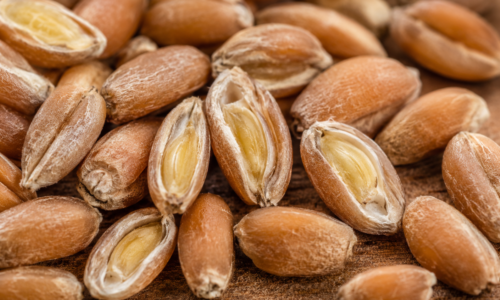
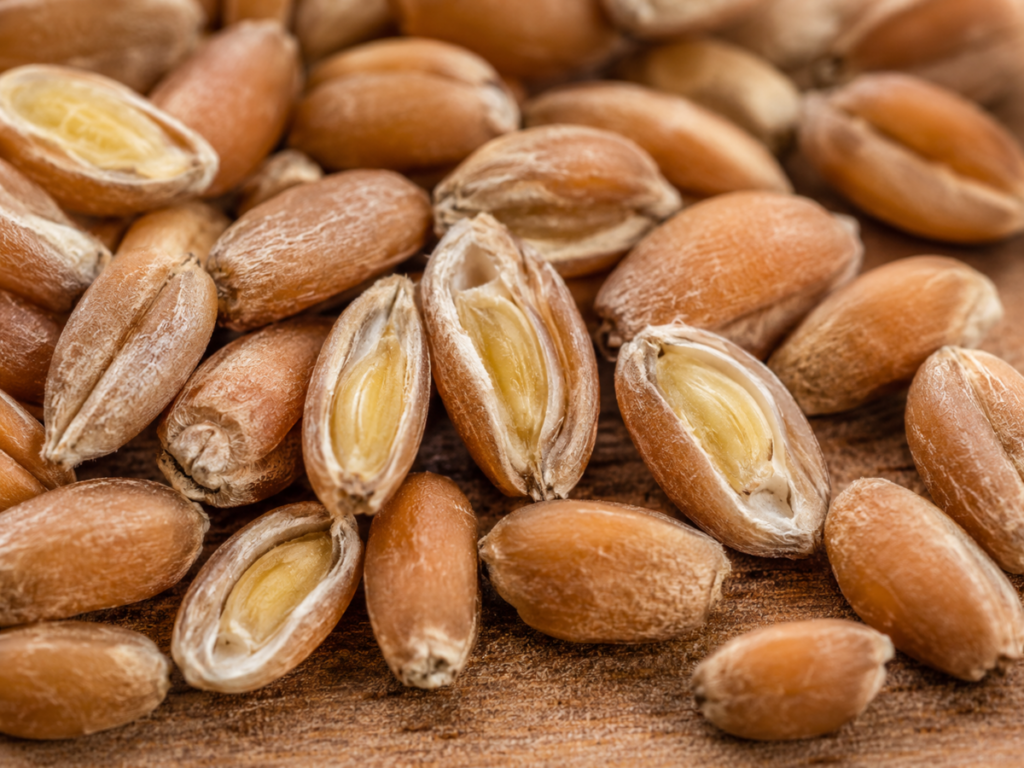
WGA is especially associated with the germ, the part of the wheat kernel that can develop into a new plant. This is one reason whole-grain wheat generally contains more WGA than refined white wheat flour, since refining removes most of the germ and bran. Researchers have even studied WGA as a possible marker for determining how much whole-wheat material is actually present in flour and pasta.
That does not mean refined wheat automatically becomes a good choice for someone following a low-lectin approach. Removing the germ changes WGA exposure, but refined wheat still contains gluten, starch, other wheat proteins, and compounds that may matter for different people. It simply illustrates an easily missed point: two foods made from wheat can expose the digestive system to different amounts of WGA.
The Sugar-Binding Ability Is What Makes WGA Biologically Interesting
Lectins are often described as proteins that bind carbohydrates, but that description can sound more abstract than it really is. Cell surfaces are covered with complex carbohydrate-containing molecules, including glycoproteins and glycolipids. WGA has an affinity for certain sugar structures, particularly those containing N-acetylglucosamine and related residues, which allows it to attach to biological surfaces rather than behaving like a protein that is immediately broken into amino acids.
Plants appear to use lectins such as WGA as part of their own defense biology. WGA can interact with chitin-related carbohydrate structures found in fungi and insects, which helps explain why a seed would contain such a protein in the first place. Human intestinal cells also display carbohydrate structures that WGA can recognize, creating the possibility of interactions that have been studied extensively in laboratory models.
This binding ability is one reason WGA has also been investigated in pharmaceutical research as a carrier for orally delivered drugs. Scientists are interested in the same property that concerns some people following a low-lectin diet: WGA can attach to gastrointestinal surfaces and can be taken up by cells under experimental conditions. The biological activity is real, but the health meaning of ordinary food exposure is a separate question.
Some WGA Can Survive the Human Digestive Tract
A protein does not need to remain completely intact forever to have biological activity. It only needs to retain enough of its structure long enough to interact with its target. WGA has drawn attention because at least some biologically intact WGA has been recovered from human intestinal contents after wheat germ was eaten.
A small human study published decades ago detected intact WGA in ileostomy effluent and fecal samples, showing that the lectin could pass through portions of the human digestive tract without being completely dismantled. That finding is useful because it establishes biological plausibility, but it does not establish that the surviving WGA caused symptoms, inflammation, or disease in those individuals. The study demonstrated survival, not clinical harm.
This is an area where low-lectin discussions can easily outrun the evidence. Resistance to digestion makes a lectin more capable of contacting the intestinal surface, but contact alone does not tell us how a person will respond. Dose, food preparation, gut physiology, the surrounding food matrix, and individual sensitivity may all affect what happens next.
Laboratory Studies Show Effects on Intestinal Cells, but Human Evidence Is Much Thinner
Experiments using human intestinal cell models have found that WGA can interact with epithelial cells and influence barrier behavior under laboratory conditions. In one widely cited experimental model, micromolar concentrations of WGA altered the integrity and permeability of cultured intestinal epithelial layers, while lower concentrations affected immune-cell signaling and cytokine production. These findings offer possible mechanisms worth studying, especially because WGA can bind to both epithelial and immune cells.
Cell-culture studies are valuable for discovering mechanisms, but they cannot tell us that eating a slice of whole-wheat bread produces the same exposure inside a living human intestine. Laboratory cells may encounter purified WGA directly at controlled concentrations, while food-derived WGA arrives mixed with starch, fiber, proteins, fats, minerals, digestive enzymes, microbes, and other compounds. Actual dietary intake of WGA in humans is not well characterized, and a 2024 review noted that reliable average-intake data are lacking.
For that reason, claims that WGA routinely damages the human intestine at normal food intakes go beyond the available clinical evidence. A more defensible position is that WGA has demonstrated biological activity, some of its properties could matter in susceptible people, and direct human trials are still needed to determine how often those mechanisms translate into meaningful symptoms.
Heat Helps, but Processing WGA Is More Complicated Than Simply Baking Wheat
Many lectins lose activity with sufficient heat, although different lectins respond very differently to temperature, moisture, and time. WGA is relatively resistant to moderate heating, and experimental work suggests that substantial loss of carbohydrate-binding activity can require higher temperatures and sustained exposure. The surrounding food also matters because the temperature printed on an oven dial is not the temperature reached throughout a loaf of bread.
Bread crust can become very hot, while the moist interior stays much closer to the boiling point of water. This helps explain why researchers have questioned whether every baking process fully eliminates WGA activity throughout a wheat product. A 2024 review concluded that heat treatment can substantially reduce WGA activity, while also emphasizing that the effect depends on the processing conditions and food matrix. Cooking wholemeal pasta appears to reduce WGA activity strongly, but equivalent data are not available for every wheat food or processing method.
This makes preparation relevant for someone who chooses to eat wheat occasionally rather than avoiding it completely. A heavily processed cracker, a traditionally fermented sourdough, boiled whole-wheat pasta, and raw wheat germ are not interchangeable exposures simply because they all begin with the same grain.
Sourdough Fermentation Can Reduce WGA, but the Effect Depends on the Fermentation
Traditional sourdough is especially interesting because fermentation changes wheat before baking begins. In a 2021 study, specific sourdough bacteria reduced measurable WGA in whole-wheat dough, with the degree of reduction varying by microorganism. The researchers found that the change appeared to involve thiol-related reactions affecting the protein rather than simple acidification alone.
That result supports a practical idea without turning sourdough into a universal solution. A long-fermented sourdough made with an active starter may differ meaningfully from quickly produced bread that uses flavoring or acid to imitate sourdough. The study also does not prove that every person who reacts to wheat will tolerate fermented wheat, because gluten, fructans, amylase-trypsin inhibitors, and other wheat components can still be relevant.
For someone experimenting with personal tolerance, preparation can therefore be treated as a variable rather than a guarantee. If wheat is intentionally reintroduced, comparing a traditionally fermented product with a conventional wheat product can provide more useful information than assuming all bread will behave the same way.
Whole-Grain Health Research Creates an Important Reality Check
WGA is concentrated in the germ, which creates an apparent tension. Whole grains retain the germ and therefore generally contain more WGA than highly refined wheat, yet large bodies of population research and randomized trials associate whole-grain intake with favorable metabolic and cardiovascular outcomes. Recent systematic reviews continue to report benefits or favorable associations for several measures of metabolic health.
Those findings do not prove that every whole grain suits every digestive system. They do show why it would be inaccurate to describe WGA as universally harmful simply because it can bind to intestinal cells in a laboratory. Foods are complex mixtures, and population-level outcomes reflect the combined effects of fiber, micronutrients, fermentation products, food replacement patterns, individual physiology, and many other factors.
A low-lectin approach therefore does not require rewriting the broader nutrition literature. Someone can recognize that whole grains perform well in many population studies while also deciding that wheat does not agree with them personally. Individual tolerance and population averages answer different questions.
Wheat Reactions Are Easy to Mislabel
A digestive reaction after eating bread does not identify WGA as the cause. Wheat contains gluten, fructans that can ferment rapidly in the gut, amylase-trypsin inhibitors, WGA, and other proteins. Commercial bread may also contain added fats, sweeteners, emulsifiers, dairy ingredients, seeds, or other compounds that complicate the picture.
Celiac disease, wheat allergy, and non-celiac wheat sensitivity also need to be kept separate. Celiac disease is an autoimmune condition triggered by gluten and requires proper medical evaluation and strict gluten avoidance once diagnosed. Wheat allergy involves an allergic immune response. Non-celiac wheat sensitivity is less clearly defined, and research suggests that different wheat components may contribute in different people.
This is why eliminating wheat and feeling better does not automatically prove that WGA was responsible. The response may still be meaningful, but identifying the exact trigger requires more controlled comparison than a single elimination provides.
A Practical Low-Lectin Approach Can Focus on Exposure and Tolerance
For someone who prefers to minimize WGA, the simplest strategy is to reduce wheat rather than trying to engineer every wheat food into a low-lectin version. Grain-free foods made with ingredients such as cassava, coconut, or blanched almond flour can replace wheat in many meals, while other tolerated starches can fill the role of bread, pasta, or baked goods without introducing WGA.
People who include some wheat can make preparation part of the decision. Traditionally fermented sourdough may reduce WGA before baking, and thorough moist cooking can reduce lectin activity in some wheat foods. Refined wheat tends to contain less WGA because much of the germ has been removed, although that change does not address gluten or other possible wheat triggers and does not make refined flour nutritionally equivalent to whole grain.
Tracking can be more informative than trying to assign every symptom to a single protein. Record the wheat food, portion, preparation method, other ingredients in the meal, and how digestion, energy, appetite, or other personally relevant symptoms change afterward. Repeating the comparison under similar conditions can help separate a consistent pattern from the ordinary variation that occurs from one meal or one day to the next.