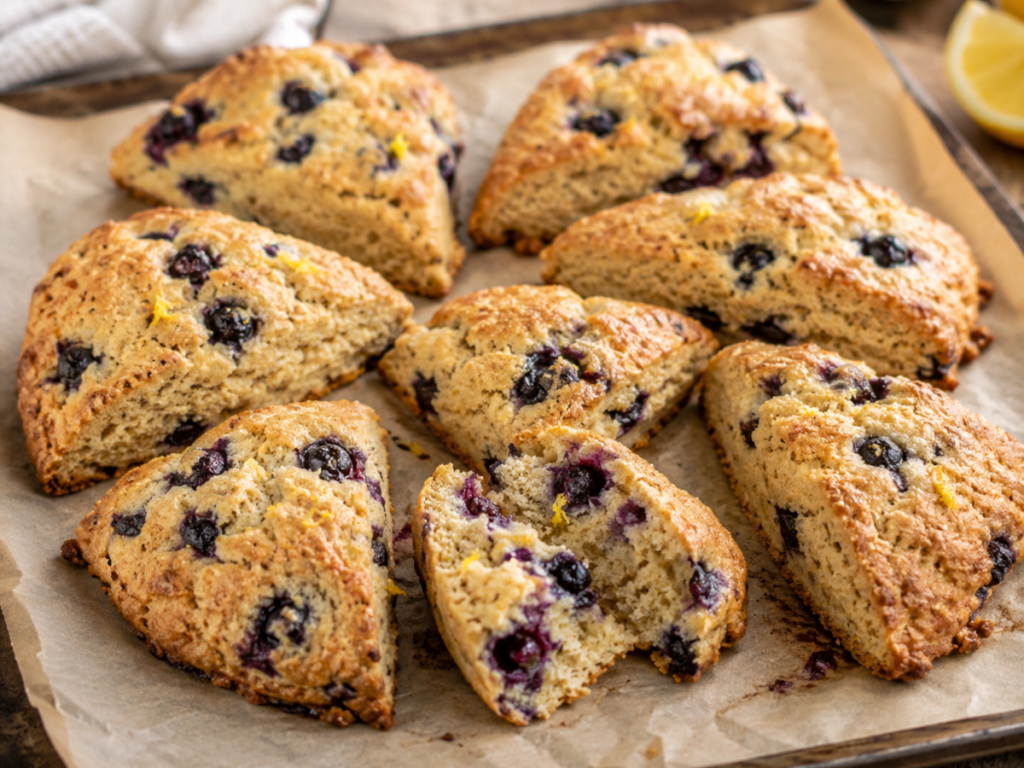
A good scone has a particular kind of balance. The outside should bake into lightly browned edges, the center should stay tender, and the flavor should be rich enough to feel like a real breakfast pastry without becoming a disguised slice of cake. Reaching that texture without wheat flour takes a little more thought, especially for someone eating in a low-lectin style and trying to keep the ingredient list practical.
Tiger nut flour works especially well here because it brings natural sweetness, a warm nutty flavor, and enough body to make a satisfying baked scone. Despite the name, tiger nuts are not tree nuts. They are small underground tubers from *Cyperus esculentus*, and their flour is naturally gluten-free. Research describing tiger nuts reports meaningful amounts of starch, fat, and dietary fiber, although the exact composition varies by cultivar, growing conditions, and processing method.
Paired with blueberries and fresh lemon zest, tiger nut flour produces a scone that feels familiar while fitting comfortably into a grain-free baking routine. The berries soften in the oven and release pockets of juice, while the lemon keeps the sweetness from tasting heavy. The result is a gently sweet breakfast or snack that works well with coffee, tea, eggs, or a more savory meal.
Why Tiger Nut Flour Behaves Differently From Wheat Flour
Wheat flour builds structure through gluten, a network of proteins that stretches and helps trap gases created during baking. Tiger nut flour does not contain gluten, so it cannot create that same elastic framework. Its starch, fat, and fiber give baked goods substance, but a recipe made entirely from tiger nut flour can become crumbly, dense, or slightly sandy if the moisture and binding ingredients are not balanced.
That is why this recipe pairs tiger nut flour with a modest amount of tapioca starch and two eggs. Tapioca contributes elasticity and helps the scones hold together, while the eggs provide protein and moisture. Cold butter or ghee creates small pockets of fat throughout the dough, which helps keep the finished texture tender rather than compact.
Food science research on tiger nut flour also supports the idea that it behaves differently from conventional wheat flour in dough systems. Studies examining wheat and tiger nut flour blends have found changes in water handling, dough stability, and gas retention as the proportion of tiger nut flour rises. Those studies are not direct tests of this grain-free scone recipe, but they help explain why tiger nut flour needs its own baking approach rather than a simple one-for-one substitution for wheat flour.
Where Tiger Nut Flour Fits in a Low-Lectin Kitchen
Tiger nut flour is popular in grain-free and low-lectin cooking partly because it comes from a tuber rather than wheat, corn, or a legume. It also gives bakers another option when they want to reduce reliance on almond flour or other nut-based baking ingredients. Its naturally sweet flavor can reduce how much added sweetener a recipe needs, which is especially useful in breakfast baking.
There is a limit to what can be claimed about its lectin content, however. Food composition research on tiger nuts describes their fiber, starch, oils, minerals, and other plant compounds, but there is not a widely accepted clinical database assigning every flour a dependable “lectin score.” That means tiger nut flour is best described as an ingredient commonly used in a low-lectin style of eating, rather than as a food with a medically proven lectin threshold.
That distinction matters because low-lectin eating is usually most useful as a practical framework rather than a promise that every person will react the same way to every ingredient. Someone who tolerates tiger nut flour well may find it an easy staple, while another person may notice that its fiber content feels heavy in larger portions. Starting with one scone and paying attention to digestion and satiety can tell you more about personal tolerance than a broad label on the ingredient.
Blueberries Bring More Than Sweetness
Fresh blueberries are a natural partner for tiger nut flour because their tartness offsets the flour’s mild sweetness. They also contain anthocyanins, the pigments responsible for much of their blue-purple color. Blueberry research has examined these compounds extensively, although translating findings about isolated anthocyanins into specific health effects from one serving of baked scones would go beyond the evidence.
Baking does affect some heat-sensitive plant compounds. Anthocyanins can degrade with heat, oxygen, time, and changes in pH, and the amount retained depends heavily on the food and cooking conditions. Even so, baking blueberries does not erase their value as a whole-food ingredient, and the fruit still contributes flavor, moisture, fiber, and naturally occurring plant compounds.
For the best texture, fresh blueberries are easiest to work with because they release less water into the dough before baking. Frozen blueberries can still be used, but they should go into the dough straight from the freezer. Thawing them first tends to release more juice, which can make the dough wetter and turn the interior of the scones streaky and soft.
Baked Tiger Nut Flour Blueberry Scones with Lemon Zest
These scones are lightly sweet rather than dessert-like, with crisp edges, a tender center, and fresh blueberry pockets throughout. The lemon zest provides most of the citrus character without adding enough juice to throw off the moisture balance of the dough.
Baked Tiger Nut Flour Blueberry Scones with Lemon Zest
Ingredients
- 2 cups tiger nut flour
- 1/2 cup tapioca starch
- 2 teaspoons baking powder, preferably corn-free if that matches your ingredient preferences
- 1/4 teaspoon fine sea salt
- 6 tablespoons cold unsalted butter or cold ghee, cut into small cubes
- 2 large eggs
- 1/3 cup full-fat coconut milk
- 2 tablespoons pure maple syrup
- 1 teaspoon vanilla extract
- Finely grated zest of 1 lemon
- 1 cup fresh blueberries, or frozen blueberries used directly from frozen
- 1 to 2 teaspoons coconut milk for brushing the tops, optional
Instructions
- Heat the oven to 400°F. Line a baking sheet with parchment paper so the bottoms of the scones release cleanly after baking.
- In a large bowl, whisk together the tiger nut flour, tapioca starch, baking powder, and sea salt. Add the cold butter or ghee and work it into the dry mixture with a pastry cutter, fork, or fingertips until the mixture resembles coarse crumbs with a few pea-sized pieces of fat remaining.
- In a separate small bowl, whisk the eggs, coconut milk, maple syrup, vanilla, and lemon zest until evenly combined. Pour the wet mixture into the dry ingredients and stir gently until a soft dough begins to form.
- Fold in the blueberries with as little mixing as possible. If the dough feels very sticky, let it rest for about 5 minutes so the tiger nut flour can absorb some moisture. If it still cannot be handled, dust in 1 tablespoon of tiger nut flour at a time rather than adding a large amount all at once.
- Transfer the dough to the prepared baking sheet and shape it into a round about 7 inches across and roughly 1 inch thick. Cut the round into 8 wedges with a sharp knife. Separate the wedges by about 1 inch so hot air can reach the sides.
- For slightly firmer edges and better shape retention, chill the shaped scones for 10 minutes before baking. Brush the tops lightly with coconut milk if you want a little more surface browning.
- Bake for 18 to 22 minutes, until the edges are lightly browned and the centers feel set when gently pressed. Because grain-free dough does not brown exactly like wheat dough, avoid judging doneness by color alone.
- Let the scones cool on the baking sheet for at least 10 minutes before moving them. They continue to firm as they cool, and handling them too soon can cause the tender wedges to break.
Getting the Texture Right
Tiger nut flour can vary from brand to brand in grind size and moisture absorption, so the dough should be judged by feel rather than by a rigid expectation. It should be soft and slightly tacky, but it should still hold a round shape once placed on the baking sheet. A dough that spreads like thick batter is too wet, while a dough that cracks apart before shaping is probably too dry.
Small corrections work better than large ones. If the dough is too wet, add tiger nut flour one tablespoon at a time. If it is too dry, add coconut milk one teaspoon at a time until the dough presses together without crumbling.
Cold fat also matters. If the butter melts before the scones reach the oven, it blends completely into the dough and the finished texture can feel heavier. Keeping the butter cold, mixing only until combined, and using the optional short chill are simple ways to improve the final crumb.
Ingredient Choices and Easy Substitutions
Ghee gives these scones a rich flavor and removes most milk solids, while regular butter produces a familiar bakery-style result. Coconut oil can work if it is firm rather than melted, although the texture may be slightly more compact and the coconut flavor will be more noticeable. Readers who include A2 dairy could also replace the coconut milk with a small amount of A2 cream or whole milk, watching the dough because thinner liquids may require a little less volume.
Maple syrup keeps the sweetness restrained and helps the dough retain moisture. Honey can replace it in the same general amount, but honey browns more readily and may give the edges a deeper color. For a less sweet scone, the maple syrup can be reduced to 1 tablespoon, although completely removing it changes both flavor and moisture.
Lemon zest is preferable to a large splash of lemon juice in this formula. The aromatic oils in the peel deliver strong citrus flavor without loosening the dough. If you want more lemon character after baking, a little extra fresh zest can be grated over a warm scone just before serving.
Portion Size, Fiber, and Personal Tolerance
Tiger nut products can contribute a substantial amount of dietary fiber, and research consistently describes tiger nut tubers as a fiber-containing food with a mix of starch and fat. Exact values differ by variety and how the flour is milled, so the nutrition panel on the specific bag of flour is more useful for calculating a serving than a single generic number.
For people who are not accustomed to fiber-rich baking, portion size can matter. A large amount of fiber at once may cause gas, fullness, or digestive discomfort in some people, especially when a new flour is introduced suddenly. That does not make the ingredient unsuitable across the board, but it is a good reason to treat personal response as useful information and adjust serving size accordingly.
A scone also does not need to carry the entire meal. Pairing one with eggs, unsweetened yogurt if tolerated, or another protein-rich food can make breakfast more substantial without requiring a second or third pastry. That kind of meal structure often makes specialty baking easier to fit into ordinary eating habits.
Storing and Reheating Tiger Nut Scones
Once completely cool, the scones can be kept in a covered container at room temperature for about a day, but refrigeration is better for longer storage because the blueberries add moisture. Refrigerated scones are best within several days, and a brief warming in a toaster oven or conventional oven helps restore the firmer outside texture.
They also freeze well. Place fully cooled scones in a freezer-safe container with parchment between layers, then thaw only the number you plan to eat. Reheating a thawed scone at about 325°F for several minutes brings back much of the fresh-baked texture without requiring another batch of dough.