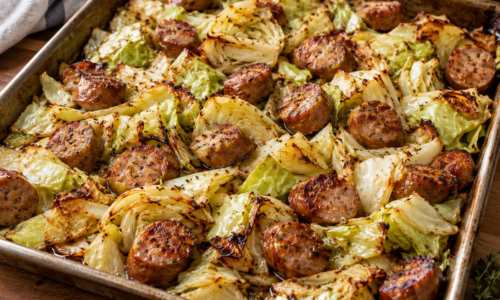
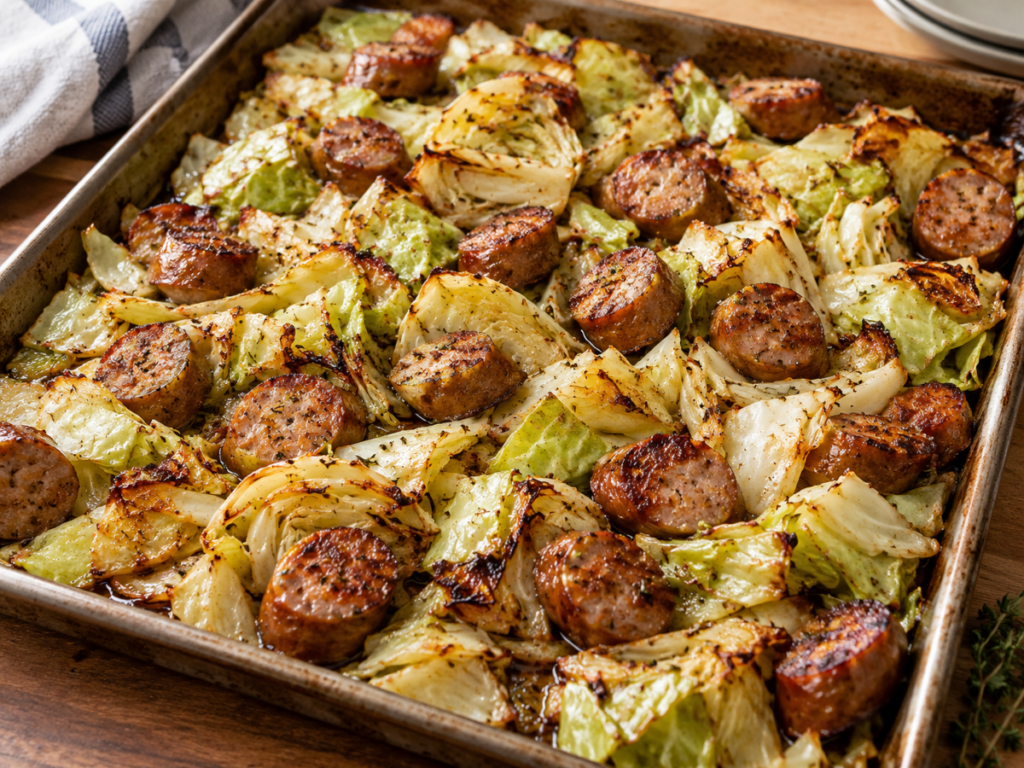
This would be the second Pork Sausage and Cabbage Recipe. Another one is available HERE. A sheet pan dinner earns its place in regular meal rotation by doing several things well at once. It keeps preparation simple, gives vegetables enough direct heat to develop browned edges, and turns a relatively short ingredient list into a complete meal without leaving a sink full of cookware behind.
Pork sausage and cabbage are especially well suited to this approach. The sausage releases savory juices as it cooks, while the cabbage softens, browns, and picks up some of that flavor across the tray. For someone following a low-lectin approach, the bigger consideration is usually the sausage ingredient list rather than the pork itself, since commercial sausage can contain paprika, chili pepper, red pepper, tomato-derived ingredients, and seasoning blends that may not fit a nightshade-free version of the meal.
This recipe keeps the formula deliberately simple: pastured pork sausage without nightshade seasonings, green cabbage, avocado oil, salt, and a few optional seasonings. The result is filling enough for dinner, practical enough for meal prep, and flexible enough to adjust around individual food tolerance.
Why Pork and Cabbage Work So Well on One Pan
Cabbage starts out bulky, firm, and slightly peppery. After roasting, its texture changes dramatically. The thicker pieces become tender while the thinner edges curl and brown, creating the mixture of soft and caramelized pieces that makes roasted cabbage much more interesting than simply boiling it.
Sausage contributes fat, seasoning, and protein at the same time. As the sliced sausage heats, some of its rendered fat coats nearby cabbage, which helps the vegetable brown while adding flavor without requiring a complicated sauce. Avocado oil provides additional coverage so the cabbage does not dry out before it has time to soften.
The arrangement on the pan matters. Cabbage piled deeply in the center tends to steam in its own moisture, while cabbage spread across a large surface has more contact with hot air and the pan itself. A crowded tray will still cook, but the result will be softer and less browned.
That difference is useful rather than something to obsess over. If tender cabbage is the goal, a slightly crowded pan works fine. If browned edges and deeper roasted flavor sound better, use a large rimmed sheet pan and give the ingredients some breathing room.
Choosing a Sausage That Fits the Meal
Pork itself is not a meaningful dietary source of plant lectins. With sausage, the ingredient list becomes more relevant because sausage is rarely made from pork alone. Seasonings, binders, starches, sweeteners, preservatives, and vegetable-derived ingredients can all appear depending on the brand and style.
For this recipe, look for a pork sausage made without paprika, cayenne, chili powder, crushed red pepper, bell pepper, jalapeño, tomato powder, or other nightshade-derived ingredients if avoiding nightshades is part of your low-lectin routine. Some labels simply list “spices,” which can make the exact seasoning mixture difficult to determine. In that situation, a manufacturer with a clearly disclosed ingredient list can make shopping much easier.
Garlic, onion, sage, thyme, rosemary, fennel, and black pepper can all appear in sausage without being nightshade vegetables. Black pepper comes from *Piper nigrum*, a completely different plant family from peppers such as bell peppers and chiles. Individual tolerance still matters, so a technically compatible ingredient does not have to become a personal requirement.
Pastured pork is specified here as an ingredient preference rather than a claim that pasture-raised meat changes the lectin content of the recipe. Lectins are carbohydrate-binding proteins found widely in plants, and discussions about dietary lectins primarily center on plant foods, particularly certain raw or inadequately cooked legumes and grains. Human research on broad lectin restriction remains limited, which is one reason a practical low-lectin approach can focus on preparation, ingredient selection, and personal response rather than treating every plant food as equally concerning.
Green Cabbage as the Base of the Meal
Green cabbage is inexpensive, widely available, and unusually useful for cooking in large batches. A single head can provide several meals, and it keeps its structure well enough to roast without turning into a puree.
Cabbage also belongs to the *Brassica* family, along with broccoli, kale, Brussels sprouts, and cauliflower. These vegetables contain naturally occurring compounds called glucosinolates. Research has shown that cooking method and duration can change glucosinolate levels, although this does not mean that longer cooking automatically makes cabbage healthier or less healthy. Different cooking methods alter different compounds in different ways.
Sheet-pan roasting creates a different result from boiling because the cabbage is not submerged in water. Studies of Brassica vegetables have found that boiling can move some water-soluble compounds into the cooking water, while shorter dry-heat methods can retain more of them. Those findings are interesting from a food-science standpoint, but they do not require turning dinner into a chemistry experiment.
The practical goal here is simpler. Roast the cabbage until it is tender enough to enjoy while leaving enough structure to provide texture beside the sausage.
Pork Sausage & Cabbage Sheet Pan
Ingredients
- 1 pound pastured pork sausage, made without nightshade spices or peppers
- 1 medium head green cabbage, about 2 pounds
- 2 tablespoons avocado oil
- 1/2 teaspoon sea salt, or to taste
- 1/2 teaspoon garlic powder, optional
- 1/2 teaspoon dried thyme or rubbed sage, optional
- Freshly ground black pepper to taste, optional if tolerated
Instructions
- Preheat the oven to **425°F (218°C)**. Use a large rimmed sheet pan so the cabbage has enough space to roast rather than simply steam.
- Remove any damaged outer leaves from the cabbage. Cut the cabbage into quarters, remove the dense center core, and chop the remaining leaves into coarse pieces roughly 1 1/2 to 2 inches wide.
- Place the cabbage directly on the sheet pan. Drizzle with the avocado oil, add the salt and any optional seasonings, then toss until the pieces are lightly coated.
- Spread the cabbage into a reasonably even layer. Slice the pork sausage into approximately 1/2-inch rounds and distribute the pieces across the cabbage.
- Roast for about **15 minutes**, then remove the pan and turn the cabbage with a spatula. Flip or stir the sausage pieces so another side has a chance to brown.
- Return the pan to the oven for another **10 to 15 minutes**, or until the cabbage is tender with browned edges and the sausage is thoroughly cooked.
- If using raw pork sausage, check the thickest pieces with a food thermometer. Ground pork and pork sausage should reach an internal temperature of **160°F (71°C)** according to U.S. food-safety guidance.
- Let the tray stand for a few minutes before serving. Tossing the cabbage once more at this point distributes the rendered sausage juices and browned pieces through the pan.
Getting Better Browning Without Drying the Cabbage
The most common sheet-pan problem is trying to fit too much food into too little space. Cabbage contains plenty of water, and as that moisture escapes during cooking, tightly packed pieces create steam around one another. That produces tender cabbage, but it limits browning.
A large pan solves much of the problem. Cutting the cabbage coarsely also helps because very fine shreds can dry and burn before the thicker sausage rounds have finished cooking. Pieces around two inches wide shrink substantially in the oven while retaining enough thickness to stay tender inside.
Avocado oil works particularly well here because its mild flavor lets the pork and cabbage remain the dominant flavors. Two tablespoons should lightly coat a medium head of cabbage without leaving oil pooling on the tray. If the cabbage head is unusually large, another teaspoon or two may be needed.
For extra browning, the tray can be placed under the broiler briefly after the sausage has reached a safe temperature. Watch closely, since cabbage leaves can move from browned to burned quickly under direct broiler heat.
Keeping the Seasoning Simple
Many sheet-pan recipes rely on bottled sauces or large spice mixtures. Those can be convenient, but they also make ingredient screening harder for someone trying to identify specific food triggers.
Sage and thyme pair naturally with pork without competing with the cabbage. Garlic powder adds another savory layer, while black pepper can provide mild heat without using chile peppers. Fresh rosemary can work as well, although a small amount is enough because its flavor becomes stronger as it roasts.
The sausage itself may provide enough seasoning that the cabbage only needs oil and salt. Tasting a small cooked piece of sausage before adding extra seasoning can prevent the finished meal from becoming overly salty.
This restrained seasoning approach has another advantage for anyone tracking food tolerance. Meals with ten or fifteen seasonings can make it harder to identify which ingredient may have contributed to a reaction. A simpler plate creates fewer variables while still tasting like a finished dinner.
Adjusting the Recipe for Different Appetites
Four servings works well when this is being served as the main dish, although appetite and meal composition will determine the actual portion size. Someone wanting more vegetables can increase the cabbage and use two pans rather than packing everything onto one tray.
A smaller portion can also work as part of a larger meal. The sausage and cabbage pair easily with leafy greens, cauliflower mash, roasted mushrooms, or another tolerated vegetable. Avocado slices can add richness after cooking without changing anything on the sheet pan.
For a less rich version, use slightly less sausage and more cabbage. Because sausage varies considerably in fat content, two brands can produce surprisingly different pans. A leaner sausage may need the full amount of avocado oil, while a fattier sausage will release enough fat that very little additional oil is needed after the first coating.
Making It Useful for Meal Prep
This recipe holds up well for make-ahead lunches because roasted cabbage stays substantial after refrigeration. Divide the cooked sausage and cabbage into shallow containers rather than leaving the entire hot batch packed into one deep container, which helps leftovers cool more quickly.
USDA food-safety guidance recommends refrigerating perishable cooked food within two hours and generally using cooked leftovers within three to four days. Reheated leftovers should reach 165°F.
The leftovers can be reheated in a skillet, oven, or air fryer if maintaining some browned texture matters. A microwave is faster, although it will soften the cabbage considerably. Neither result is wrong, and on a busy afternoon convenience may matter more than recreating the original roasted texture.
For batch cooking, chopping the cabbage ahead of time removes most of the prep work. Keep it refrigerated in a covered container, then toss it with oil immediately before roasting. The sausage can be sliced at the same time, making the actual dinner preparation little more than spreading everything across a pan and turning on the oven.
A Simple Meal That Leaves Room for Personal Tolerance
Low-lectin eating becomes much easier to sustain when some meals require very little interpretation. Pork sausage and cabbage can fill that role because the basic structure is easy to remember, and the ingredient list can stay short enough to evaluate without studying a complicated recipe every evening.
The sausage deserves the closest label check, especially for anyone avoiding nightshade peppers or trying to keep a food journal clean enough to identify patterns. Once a compatible sausage has been found, the rest of the meal is mostly cabbage, avocado oil, heat, and time.
That simplicity also leaves room for adjustment. One person may prefer cabbage deeply browned and very soft, while another may tolerate it better with less cooking or a smaller portion. Keeping the base recipe straightforward makes those changes easy without turning an ordinary sheet-pan dinner into a separate cooking project.