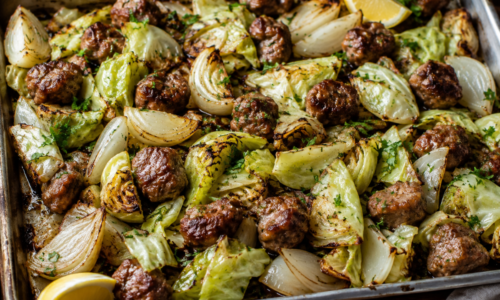
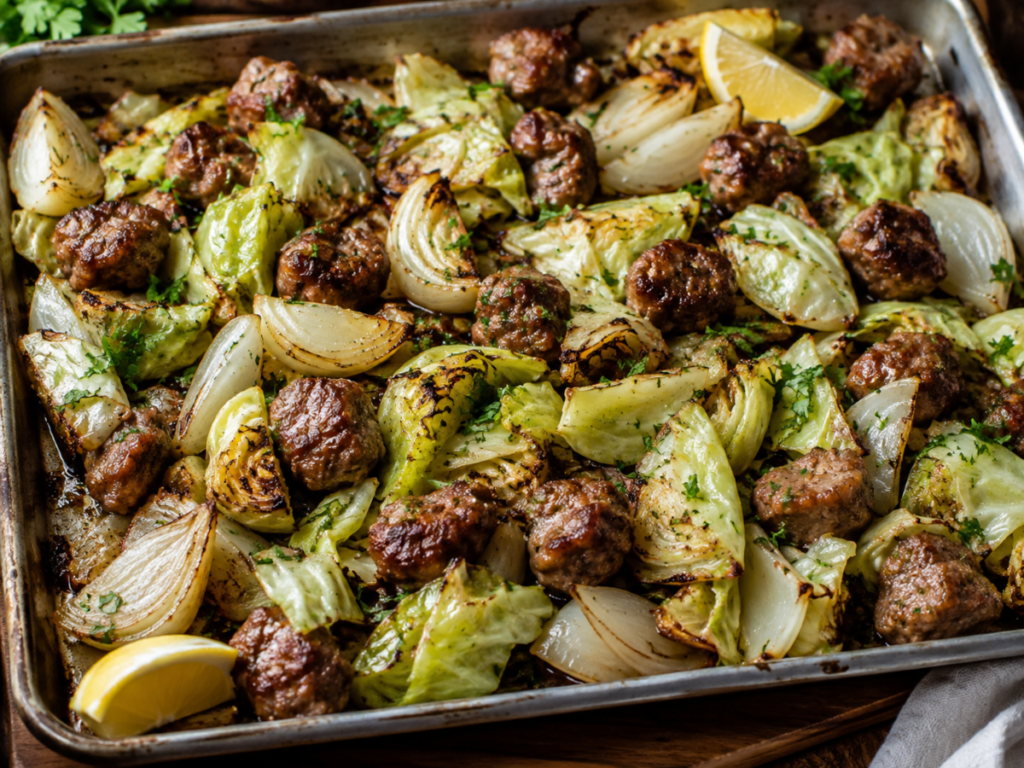
Some dinners earn a permanent place in the rotation because they solve several problems at once. They require little cleanup, use ingredients that are easy to find, reheat well, and do not demand an hour of active work at the stove. A pork sausage and cabbage sheet pan checks all of those boxes while fitting comfortably into a practical low-lectin approach when the sausage and seasonings are chosen carefully.
The combination is also a good example of how low-lectin cooking does not have to depend on specialty ingredients or elaborate substitutions. Cabbage becomes sweet and tender at high heat, while pork sausage contributes enough fat and seasoning to flavor the vegetables as everything roasts together. The result is hearty enough for dinner but simple enough for a weeknight when cooking motivation is running low.
Why Cabbage Works So Well on a Sheet Pan
Green cabbage can look fairly ordinary sitting in the produce section, but roasting changes it considerably. The edges brown, the thicker pieces soften, and some of the natural sulfurous sharpness associated with raw cabbage gives way to a sweeter, more savory flavor.
Cabbage is a member of the cruciferous vegetable family along with broccoli, cauliflower, kale, and Brussels sprouts. These vegetables contain naturally occurring compounds called glucosinolates, which can be converted into several biologically active compounds during food preparation and digestion. Research continues into their effects in human health, and results should not be interpreted as evidence that cabbage itself prevents or treats disease.
Cooking also changes the chemistry of cabbage. Studies examining different cooking methods have found that glucosinolate retention varies considerably depending on heat, time, and preparation method, with steaming, microwaving, boiling, and frying producing different results. For a home cook, the more immediate benefit of roasting is simpler: heat breaks down the vegetable’s structure and creates a softer texture that some people find easier to eat than a large serving of raw cabbage.
Individual digestive tolerance still matters. Cabbage contains fermentable carbohydrates and fiber, so someone who experiences bloating after cruciferous vegetables may prefer a smaller serving or more thoroughly cooked cabbage. A low-lectin lifestyle does not automatically make every otherwise compatible food comfortable for every digestive system.
The Low-Lectin Question Is Mostly About the Sausage
Pork itself is not one of the plant foods commonly discussed as a concentrated source of dietary lectins. The bigger issue with prepared sausage is everything that can be added to the meat.
A package labeled “pork sausage” can contain a surprisingly long seasoning list. Depending on the product, that might include sugar, corn-derived ingredients, soy-based fillers, breadcrumbs, potato starch, paprika, pepper-derived spices, or vague entries such as “spices” or “natural flavors.” None of that automatically makes a sausage unsuitable, but it can make ingredient tracking difficult for someone who is trying to follow a specific low-lectin framework.
For this recipe, I prefer either a very simply seasoned fresh pork sausage or plain ground pork that I season myself. Ground pork provides the most control because the ingredient list begins and ends with pork, while sage, thyme, garlic, onion, and salt can supply the familiar savory character of breakfast-style sausage without requiring a commercial seasoning blend.
There is also no universally accepted clinical definition of a “low-lectin diet.” Lectins are a diverse group of carbohydrate-binding proteins, and researchers continue to study both their potentially harmful and potentially beneficial biological effects. Current scientific reviews do not support treating all lectins or all lectin-containing foods as though they behave identically in the human body.
That distinction leaves room for a more practical approach. Ingredient selection, cooking method, portion size, personal tolerance, and meal tracking can be more useful than trying to divide every food into absolute categories.
One Pan Pork Sausage & Cabbage
Ingredients
- 1 1/2 pounds ground pork
- 1 medium green cabbage, about 2 pounds
- 1 medium yellow or red onion
- 3 tablespoons extra-virgin olive oil or avocado oil, divided
- 1 teaspoon dried rubbed sage
- 1 teaspoon dried thyme
- 1 teaspoon garlic powder
- 1/2 teaspoon onion powder
- 1 teaspoon fine sea salt, divided, plus more to taste
- 2 tablespoons chopped fresh parsley, optional
- 1 to 2 teaspoons fresh lemon juice, optional
Instructions
- Heat the oven to 425°F and line a large rimmed sheet pan with parchment paper, or lightly coat the pan with oil. A large pan is preferable because overcrowding traps steam, which makes it harder for the cabbage to develop browned edges.
- Place the ground pork in a mixing bowl and add the sage, thyme, garlic powder, onion powder, and about half of the salt. Mix gently with clean hands or a fork until the seasonings are distributed throughout the pork. Avoid working the meat excessively because tightly compressed ground pork tends to become denser as it cooks.
- Break the seasoned pork into rough pieces approximately 1 to 1 1/2 inches across. They do not need to be perfectly shaped meatballs. Irregular pieces actually work well here because their exposed edges brown nicely in the oven.
- Remove any damaged outer cabbage leaves and trim the base of the stem. Cut the cabbage into roughly 1 1/2-inch pieces, leaving some of the thicker portions intact so they do not disappear during roasting.
- Slice the onion into thick wedges. Place the cabbage and onion directly on the prepared sheet pan, drizzle with about 2 tablespoons of the oil, and season with the remaining salt. Toss everything until the vegetables are lightly coated, then spread them into a relatively even layer.
- Scatter the pork pieces among the cabbage rather than piling them on top of one another. Drizzle the remaining oil lightly over any cabbage pieces that still look dry.
- Place the sheet pan on the center rack and roast for about 15 minutes. Remove the pan carefully, turn the cabbage with a spatula, and rotate some of the pork pieces so more than one side has an opportunity to brown.
- Return the pan to the oven for another 15 to 20 minutes. The cabbage should be tender with browned edges, while the onion should be soft and lightly caramelized.
- Fresh sausage made with ground pork should reach a minimum internal temperature of 160°F as measured with a food thermometer, according to USDA food-safety guidance. Check one of the thicker sausage pieces rather than judging doneness only by exterior color.
- Once everything is cooked, sprinkle the parsley over the pan if using it. A small squeeze of fresh lemon can brighten the richness of the pork, although the dish is equally good without it.
Getting Better Browning Without Burning the Cabbage
A successful sheet-pan meal depends heavily on space. If a medium cabbage fills your pan almost completely before the sausage is added, dividing everything between two pans will usually produce better results.
Moisture released from cabbage and onions needs somewhere to escape. When vegetables are packed tightly together, they steam in their own moisture instead of roasting against the hot surface. The flavor will still be good, but the cabbage will be softer and paler.
Cut size matters as well. Very finely shredded cabbage can burn before thick pieces of sausage finish cooking, while enormous cabbage wedges may remain firm in the center. Rough pieces around 1 1/2 inches provide a useful middle ground between tenderness and browning.
Those deeply browned cabbage edges are worth keeping. They bring enough sweetness and roasted flavor to the meal that there is little need for sugary sauces or complicated seasoning blends.
Easy Ways to Change the Recipe
One advantage of such a simple base recipe is that small changes can create a noticeably different meal. Fresh rosemary can replace thyme, while additional sage pushes the pork toward a more traditional breakfast-sausage flavor.
Garlic lovers can add several whole or halved garlic cloves to the vegetables before roasting. If whole garlic bothers your digestion, garlic-infused olive oil can provide flavor while allowing greater control over the actual pieces of garlic in the meal.
Fennel is another possible addition for anyone who tolerates it and enjoys Italian-style sausage flavors. Thin wedges of fresh fennel bulb roast beautifully beside cabbage and add mild sweetness.
For a larger meal, roasted cauliflower can be added to the pan, although a second sheet pan may be necessary. Cauliflower mash also works well underneath the sausage and cabbage when you want something closer to a traditional meat-and-potatoes dinner without using potatoes.
Turning One Sheet Pan Into Several Meals
This recipe is particularly useful for batch cooking because the components hold up well after refrigeration. Instead of preparing a completely different lunch the following day, leftover sausage and cabbage can simply be reheated together.
Another option is to change the presentation. Chopped leftovers can be warmed in a skillet until the cabbage develops a few new browned edges, then served alongside eggs if those fit your eating plan. The same mixture can also be spooned over cauliflower mash or served beside roasted broccoli for a larger dinner.
Tracking leftovers can be useful if you are still learning which ingredients agree with you. If the first meal feels comfortable but a much larger second serving does not, portion size may be worth recording rather than immediately assuming that one ingredient needs to disappear completely.
That kind of observation is particularly helpful with cruciferous vegetables. Digestive responses can depend on quantity, cooking time, the rest of the meal, and individual gut fermentation, so a food journal can reveal more than a simple allowed-or-avoided label.
Simple Ingredients Make Troubleshooting Easier
Meals with short ingredient lists have another benefit beyond convenience. They make it easier to understand what you actually ate.
If a heavily processed sausage contains pork, several sweeteners, starches, spice blends, preservatives, and unidentified flavorings, any reaction afterward can be difficult to interpret. Preparing ground pork with a handful of familiar seasonings reduces the number of variables without making dinner bland.
The same principle applies across a low-lectin eating pattern. Restricting more foods is not automatically better, and dietary research does not establish that everyone benefits from broadly eliminating lectins. Using straightforward ingredients, appropriate cooking methods, and personal observations provides a more measured way to experiment with food tolerance.
On a busy evening, that philosophy can be as uncomplicated as a sheet pan of browned cabbage, onion, and savory pork coming out of the oven. There are no specialty substitutes to prepare and very little cleanup afterward, just a warm meal built from recognizable ingredients that can easily be adjusted the next time according to taste and tolerance.